Kirjailija
Concha Delgado Gaitan
Kirjat ja teokset yhdessä paikassa: 12 kirjaa, julkaisuja vuosilta 2001-2024, suosituimpien joukossa Building Culturally Responsive Classrooms. Vertaile teosten hintoja ja tarkista saatavuus suomalaisista kirjakaupoista.
Mukana myös kirjoitusasut: Concha Delgado-Gaitan
12 kirjaa
Kirjojen julkaisuhaarukka 2001-2024.
Crossing Cultural Borders (1991) examines the day-to-day interaction of immigrant children with adults, siblings and peers in the home, school and community at large as these families demonstrate their skill in using their culture to survive in a new society. Children of Mexican and Central American immigrant families in Secoya crossed a national border, and continue to cross linguistic, social and cultural borders that separate the home, school and outside world.
Originally published in 1996. During the author's decade of critical ethnography in Carpinteria, California, she has illuminated the intricate relationships between Latino families as together they build a sociopolitical community to bridge family and school alliances. How they extend their learning from the social networks to the family arena and to the personal, and in reverse, represents their protean responses to the diversity and adversity in their lives. This life-story captures the collective and individual texts of the Latino children, their parents and educators used to empower themselves to transform discontinuity in an age where continuity is increasingly foreign.
Educating Across Borders
María Teresa de la Piedra; Blanca Araujo; Alberto Esquinca; Concha Delgado Gaitan
University of Arizona Press
2018
nidottu
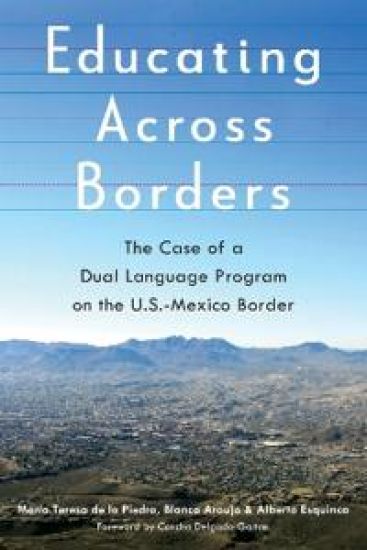
Educating Across Borders is an ethnography of the learning experience of transfronterizxs, border-crossing students living on the U.S.-Mexico border whose lives span two countries and two languages. Authors María Teresa de la Piedra, Blanca Araujo, and Alberto Esquinca examine language practices and funds of knowledge these students use as learning resources to navigate through their binational, dual language school experience. The authors, who themselves live and work on the border, question artificially created cultural and linguistic borders. To explore this issue, they employed participant-observation, focus groups, and individual interviews with teachers, administrators, and staff members to construct rich understandings of the experiences of transfronterizx students. These ethnographic accounts of their daily lives counter entrenched deficit perspectives about transnational learners. Drawing on border theory, immigration and border studies, funds of knowledge, and multimodal literacies, Educating Across Borders is a critical contribution toward the formation of a theory of physical and metaphorical border crossings that ethnic minoritized students in U.S. schools must make as they traverse the educational system.
Originally published in 1996. During the author's decade of critical ethnography in Carpinteria, California, she has illuminated the intricate relationships between Latino families as together they build a sociopolitical community to bridge family and school alliances. How they extend their learning from the social networks to the family arena and to the personal, and in reverse, represents their protean responses to the diversity and adversity in their lives. This life-story captures the collective and individual texts of the Latino children, their parents and educators used to empower themselves to transform discontinuity in an age where continuity is increasingly foreign.
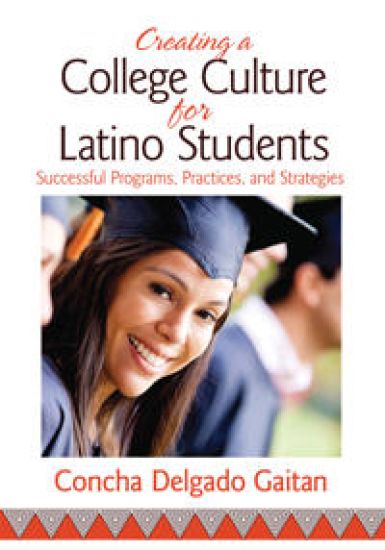
The mission statement of the Common Core State Standards couldn't be any clearer inádescribing expectations foráthe education ofáour nation's youth.The standards are designed to be robust and relevant to the real world, reflecting the knowledge and skills that our young people need for success in college and careers. With American students fully prepared for the future, our communities will be best positioned to compete successfully in the global economy.In the 21st century, a high school diploma without further education provides limited options for young adults: high school graduates currently have an unemployment rate of 32% -- approximately twice that of college graduates.á According to research conducted by the Pew Hispanic Center, despite recent increases inácollege attendanceáratesáfor Latino students (in 2010, approximately 32% of total college enrollmentsáin two and four schools), their numbers are low in comparison to Whites (43%), Asians (62%), and Blacks (38%).á Not surprisingly,áthe rates are muchálower foráchildren born into households in which parents or guardians weren't college-educated.á When we take into consideration the fact that Latinos are the fastest-growingádemographic in the U.S., the implications foráglobal competitiveness (not to mention the human toll of so much unrealized promise) are quite alarming.The proposed book provides teachers and educational leaders with a guide toácreating conditions in schools that are conducive to Latino students having access to higher education and --áby extension -- promising futures.á The author bases her recommendations on lessons learned fromásuccessful college bound programs in public schools, the non-profit sector, and recognized charter schools, as well asáa substantial body of quality research on Latino students and their families.áThe heart of the book builds on the premise that effective academic and social support practices intertwine with increased expectations, successfully leading underrepresented Latino students to college. Social capital builds the value, connectedness, and motivation of cultural, emotional, informational and instrumental networks that undergird studentsÆ readiness and aptitude to pursue a path to college.áá
This engaging and rich resource details how schools and diverse families throughout the country have formed partnerships that support and enhance student learning. It is designed for teachers who care deeply about students and welcome diverse families as partners, for parents who want to be active partners in educating their children, and for administrators in diverse schools or districts who know there is no quick fix for building lasting partnerships among families, schools, and the community.
Teachers are dealing with increasingly diverse classroom settings, yet the majority of teachers do not share the same culture as their students. Going beyond they typical heroes and holidays approach to cultural diversity, Gaitan shows that real culture is the day-to-day experience of students and their families and involves values, language, kinship, community and social networks, common history, attitudes, and rituals. By honoring "real culture," teachers will be better equipped to reach all their students effectively. Divided into two parts, this invaluable resource covers the classroom environment and the topics of discipline, arranging the classroom, and parent and community involvement first. In the second half of the book, Gaitan explains how teachers can be culturally responsive in the way in which they teach literacy, math, science, the interdisciplinary curriculum, and other content areas. Based on Gaitan's own interviews, observations, and audio & video recordings with teachers, parents, students, and community leaders, this book shows how teachers can transform the context and content to be culturally responsive to all their students. Each chapter follows a accessible and user-friendly format, making it ideal for mentoring pairs, group study, or teachers working individually: Personal reflection from a teacher related to the chapter topic Discussion of the topic as it relates to the culturally responsive classroom, incorporating the latest research and best practice Rich case example including dialogues between teachers and students, the author's observations, and teacher reflections about what occurred Guiding questions Reflective Questions Classroom applications
Teachers are dealing with increasingly diverse classroom settings, yet the majority of teachers do not share the same culture as their students. Going beyond they typical heroes and holidays approach to cultural diversity, Gaitan shows that real culture is the day-to-day experience of students and their families and involves values, language, kinship, community and social networks, common history, attitudes, and rituals. By honoring "real culture," teachers will be better equipped to reach all their students effectively. Divided into two parts, this invaluable resource covers the classroom environment and the topics of discipline, arranging the classroom, and parent and community involvement first. In the second half of the book, Gaitan explains how teachers can be culturally responsive in the way in which they teach literacy, math, science, the interdisciplinary curriculum, and other content areas. Based on Gaitan's own interviews, observations, and audio & video recordings with teachers, parents, students, and community leaders, this book shows how teachers can transform the context and content to be culturally responsive to all their students. Each chapter follows a accessible and user-friendly format, making it ideal for mentoring pairs, group study, or teachers working individually:Personal reflection from a teacher related to the chapter topic Discussion of the topic as it relates to the culturally responsive classroom, incorporating the latest research and best practice Rich case example including dialogues between teachers and students, the author's observations, and teacher reflections about what occurred Guiding questions Reflective Questions Classroom applications
This book covers five major areas: 1) Latino families and their educational aspirations for their children, 2) the communication systems needed between schools and Latino families, 3) techniques to foster Latino parent involvement, 4) how Latino families assist their children at home, and 5) how to organize parent involvement programmes. This will be a practical book full of techniques, strategies, examples of programmes that have worked, and teachers' and parents' voices and experiences.
Fifteen years ago, Concha Delgado-Gaitan began literacy research in Carpinteria, California. At that time, Mexican immigrants who labored in nurseries, factories, and housekeeping, had almost no voice in how their children were educated. Committed to participative research, Delgado-Gaitan collaborated with the community to connect family, school, and community. Regular community gatherings gave birth to the Comité de Padres Latinos. Refusing the role of the victim, the Comité paticipants organized to reach out to everyone in the community, not just other Latino families. Bound by their language, cultural history, hard work, respect, pain, and hope, they created possibilities that supported the learning of Latino students, who until then had too often dropped out or shown scant interest in school. In a society that accentuates individualism and independence, these men and women look to their community for leadership, support, and resources for children. The Power of Community is a critical work that shows how communities that pull together and offer caring ears, eyes, and hands, can ensure that their children thrive—academically, socially, and personally. It offers a fresh approach and workable solution to the problems that face schools today.