Kirjailija
Condoleezza Rice
Kirjat ja teokset yhdessä paikassa: 19 kirjaa, julkaisuja vuosilta 2008-2024, suosituimpien joukossa Extraordinary, Ordinary People: A Memoir of Family. Vertaile teosten hintoja ja tarkista saatavuus suomalaisista kirjakaupoista.
19 kirjaa
Kirjojen julkaisuhaarukka 2008-2024.
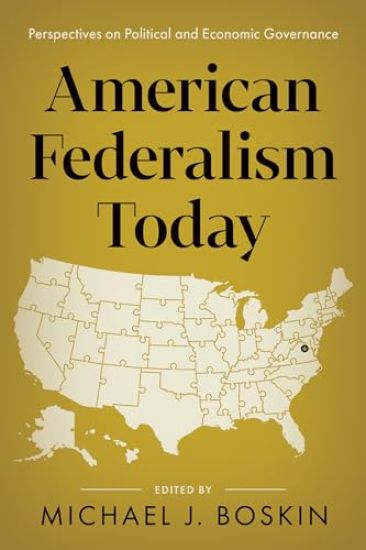
What are federalism’s challenges and opportunities today?The framers of the US Constitution enumerated specific powers for the federal government, leaving all else under the purview of states or the people. Over time, the federal government has expanded its role, yet the American people have more trust in state and local governments that are closer to them—and where co-partisanship is often a matter of necessity. Scholars and practitioners in policymaking gathered at the Hoover Institution in September 2023 to discuss the ramifications of federalism for contemporary issues. American Federalism Today presents those conference proceedings.Renowned experts from a range of disciplines, including economics, political science, history, and law, lay out the key priorities in evaluating and reinvigorating America’s federal system of governance. Among the topics they examine are infrastructure, education and healthcare financing, trust in government, and intergovernmental relations in an era of rising federal debt and unfunded state and local liabilities. Three influential governors—Mitch Daniels, Jeb Bush, and Jerry Brown—describe navigating the federalist system as they led their states through many challenges. This unique compilation draws on the remarkable expertise and experience of its contributors to probe federalism’s strengths, weaknesses, opportunities, and challenges in the nation’s political and economic governance.
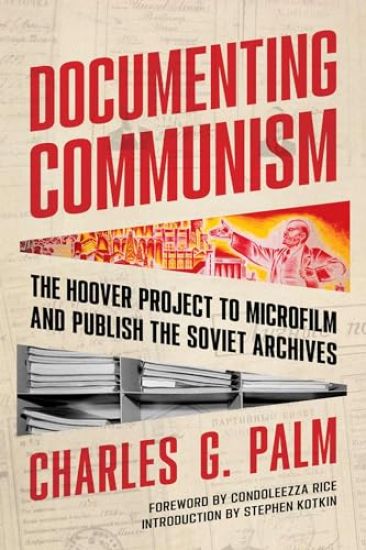
In late 1991, the Soviet Union was officially dissolved. Over the next 12 years, the Hoover Institution microfilmed and published the newly opened records of the Soviet Communist Party and the Soviet State. Among the 10 million pages were records of the central organs of the Communist Party; the NKVD, which regulated the ordinary lives of the Russian people; the GULAG, the secret police department that ran the forced labor camps; and the 1992 trial of the Communist Party. Charles Palm, who led this mission, details how he and his colleagues secured a historic agreement with the Russian Federation, then launched and successfully carried out the joint project with the Russian State Archives and their partner, Chadwyck-Healey Ltd. The success of the project hinged on managing logistics among the three partners across three continents, facing down critics in Russia and elsewhere, and navigating the unstable political terrain that prevailed in Russia during the 1990s. The Hoover Institution’s decisive action during a brief window of opportunity preserved on microfilm and provided worldwide access to the records of Soviet Communism and helped bring to account one of the most consequential ideologies of the 20th century.
In 1992, after the collapse of the Soviet Union, the Hoover Institution began a historic twelve-year effort to microfilm and publish the records of the Soviet Communist Party and State— ten million pages of newly opened archives documenting the history of Soviet communism.
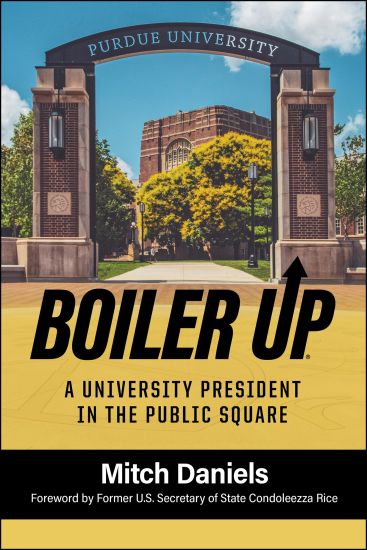
When former Indiana governor Mitch Daniels was named Purdue University's twelfth president, he became one of a small handful of nationally renowned figures to lead an institution of higher education. In an era when university presidents had largely abandoned the role of public intellectual, Daniels immediately captured broad attention for his willingness to take a thoughtful stand on America's most pressing challenges—in academia and far beyond.Boiler Up: A University President in the Public Square offers readers a fascinating compendium of commencement addresses, published columns, and transcripts of speeches and hosted events spanning ten years of insights and insightful interactions that put Mitch Daniels front and center among American thought leaders. Throughout the book, Daniels's sharp intellect, incisive analysis, and delightful sense of humor reign supreme. Via embedded QR codes, readers can "attend" recorded content, including evenings with Condoleezza Rice, Garry Kasparov, Walter Isaacson, and other fascinating people. Whether the reader seeks lessons on leadership or immersion in engaging ideas, Boiler Up is a tour de force of transformative thinking.
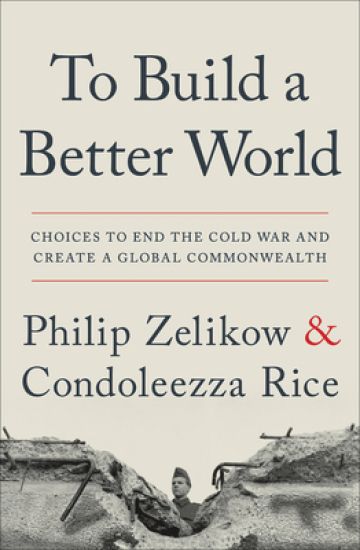
To Build a Better World: Choices to End the Cold War and Create a Global Commonwealth
Philip Zelikow; Condoleezza Rice
Twelve
2020
nidottu
A deeply researched international history and "exemplary study" (New York Times Book Review) of how a divided world ended and our present world was fashioned, as the world drifts toward another great time of choosing. Two of America's leading scholar-diplomats, Philip Zelikow and Condoleezza Rice, have combed sources in several languages, interviewed leading figures, and drawn on their own firsthand experience to bring to life the choices that molded the contemporary world. Zeroing in on the key moments of decision, the might-have-beens, and the human beings working through them, they explore both what happened and what could have happened, to show how one world ended and another took form. Beginning in the late 1970s and carrying into the present, they focus on the momentous period between 1988 and 1992, when an entire world system changed, states broke apart, and societies were transformed. Such periods have always been accompanied by terrible wars -- but not this time. This is also a story of individuals coping with uncertainty. They voice their hopes and fears. They try out desperate improvisations and careful designs. These were leaders who grew up in a "postwar" world, who tried to fashion something better, more peaceful, more prosperous, than the damaged, divided world in which they had come of age. New problems are putting their choices, and the world they made, back on the operating table. It is time to recall not only why they made their choices, but also just how great nations can step up to great challenges. Timed for the thirtieth anniversary of the fall of the Berlin Wall, To Build a Better World is an authoritative depiction of contemporary statecraft. It lets readers in on the strategies and negotiations, nerve-racking risks, last-minute decisions, and deep deliberations behind the dramas that changed the face of Europe -- and the world -- forever.
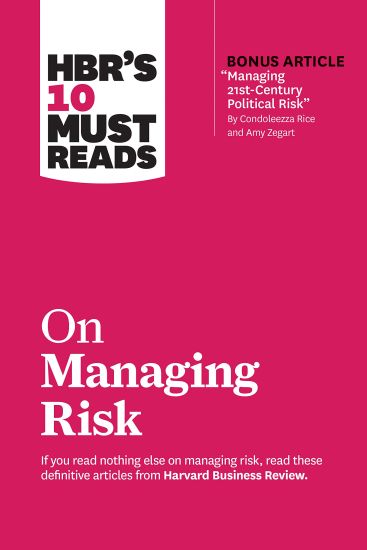
HBR's 10 Must Reads on Managing Risk (with bonus article "Managing 21st-Century Political Risk" by Condoleezza Rice and Amy Zegart)
Harvard Business Review; Robert S. Kaplan; Condoleezza Rice; Philip E. Tetlock; Paul J. H. Schoemaker
Harvard Business Review Press
2020
pokkari
Is your business playing it safe—or taking the right risks?If you read nothing else on managing risk, read these 10 articles. We've combed through hundreds of Harvard Business Review articles and selected the most important ones to help your company make smart decisions and thrive, even when the future is unclear.This book will inspire you to:Avoid the most common errors in risk managementUnderstand the three distinct categories of risk and tailor your risk-management processes accordinglyEmbrace uncertainty as a key element of breakthrough innovationAdopt best practices for mitigating political threatsUpgrade your organization's forecasting capabilities to gain a competitive edgeDetect and neutralize cyberattacks originating inside your companyThis collection of articles includes "Managing Risks: A New Framework," by Robert S. Kaplan and Anette Mikes; "How to Build Risk into Your Business Model," by Karan Girotra and Serguei Netessine; "The Six Mistakes Executives Make in Risk Management," by Nassim N. Taleb, Daniel G. Goldstein, and Mark W. Spitznagel; "From Superstorms to Factory Fires: Managing Unpredictable Supply-Chain Disruptions," by David Simchi-Levi, William Schmidt, and Yehua Wei; "Is It Real? Can We Win? Is It Worth Doing?: Managing Risk and Reward in an Innovation Portfolio," by George S. Day; “Superforecasting: How to Upgrade Your Company's Judgment," by Paul J. H. Schoemaker and Philip E. Tetlock; "Managing 21st-Century Political Risk," by Condoleezza Rice and Amy Zegart; "How to Scandal-Proof Your Company," by Paul Healy and George Serafeim; "Beating the Odds When You Launch a New Venture," by Clark Gilbert and Matthew Eyring; "The Danger from Within," by David M. Upton and Sadie Creese; and "Future-Proof Your Climate Strategy," by Joseph E. Aldy and Gianfranco Gianfrate.
An examination of the rapidly evolving state of political risk, and how to navigate it by former U.S. secretary of state Condoleezza Rice and Amy Zegart
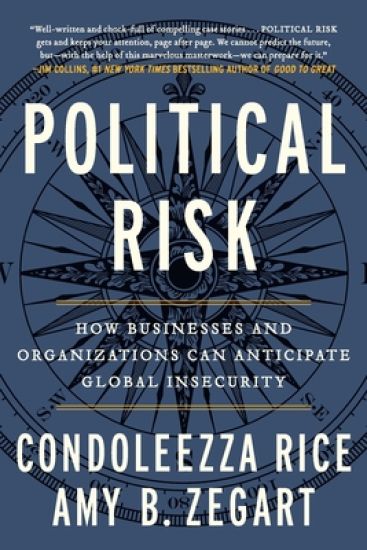
Political Risk: How Businesses and Organizations Can Anticipate Global Insecurity
Condoleezza Rice
Twelve
2019
nidottu
From New York Times bestselling author and former U.S. secretary of state Condoleezza Rice and Stanford University professor Amy B. Zegart comes an examination of the rapidly evolving state of political risk, and how to navigate it. The world is changing fast. Political risk-the probability that a political action could significantly impact a company's business-is affecting more businesses in more ways than ever before. A generation ago, political risk mostly involved a handful of industries dealing with governments in a few frontier markets. Today, political risk stems from a widening array of actors, including Twitter users, local officials, activists, terrorists, hackers, and more. The very institutions and laws that were supposed to reduce business uncertainty and risk are often having the opposite effect. In today's globalized world, there are no "safe" bets. POLITICAL RISK investigates and analyzes this evolving landscape, what businesses can do to navigate it, and what all of us can learn about how to better understand and grapple with these rapidly changing global political dynamics. Drawing on lessons from the successes and failures of companies across multiple industries as well as examples from aircraft carrier operations, NASA missions, and other unusual places, POLITICAL RISK offers a first-of-its-kind framework that can be deployed in any organization, from startups to Fortune 500 companies. Organizations that take a serious, systematic approach to political risk management are likely to be surprised less often and recover better. Companies that don't get these basics right are more likely to get blindsided.
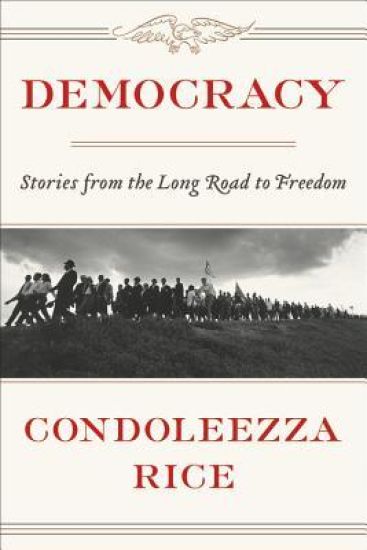
From the former secretary of state and bestselling author -- a sweeping look at the global struggle for democracy and why America must continue to support the cause of human freedom. "This heartfelt and at times very moving book shows why democracy proponents are so committed to their work...Both supporters and skeptics of democracy promotion will come away from this book wiser and better informed." -- The New York Times From the end of the Cold War and the collapse of the Soviet Union to the ongoing struggle for human rights in the Middle East, Condoleezza Rice has served on the front lines of history. As a child, she was an eyewitness to a third awakening of freedom, when her hometown of Birmingham, Alabama, became the epicenter of the civil rights movement for black Americans. In this book, Rice explains what these epochal events teach us about democracy. At a time when people around the world are wondering whether democracy is in decline, Rice shares insights from her experiences as a policymaker, scholar, and citizen, in order to put democracy's challenges into perspective. When the United States was founded, it was the only attempt at self-government in the world. Today more than half of all countries qualify as democracies, and in the long run that number will continue to grow. Yet nothing worthwhile ever comes easily. Using America's long struggle as a template, Rice draws lessons for democracy around the world -- from Russia, Poland, and Ukraine, to Kenya, Colombia, and the Middle East. She finds that no transitions to democracy are the same because every country starts in a different place. Pathways diverge and sometimes circle backward. Time frames for success vary dramatically, and countries often suffer false starts before getting it right. But, Rice argues, that does not mean they should not try. While the ideal conditions for democracy are well known in academia, they never exist in the real world. The question is not how to create perfect circumstances but how to move forward under difficult ones. These same insights apply in overcoming the challenges faced by governments today. The pursuit of democracy is a continuing struggle shared by people around the world, whether they are opposing authoritarian regimes, establishing new democratic institutions, or reforming mature democracies to better live up to their ideals. The work of securing it is never finished. NEW YORK TIMES BESTSELLER
From the former secretary of state and bestselling author -- a sweeping look at the global struggle for democracy and why America must continue to support the cause of human freedom. This heartfelt and at times very moving book shows why democracy proponents are so committed to their work...Both supporters and skeptics of democracy promotion will come away from this book wiser and better informed. -- The New York Times From the end of the Cold War and the collapse of the Soviet Union to the ongoing struggle for human rights in the Middle East, Condoleezza Rice has served on the front lines of history. As a child, she was an eyewitness to a third awakening of freedom, when her hometown of Birmingham, Alabama, became the epicenter of the civil rights movement for black Americans. In this book, Rice explains what these epochal events teach us about democracy. At a time when people around the world are wondering whether democracy is in decline, Rice shares insights from her experiences as a policymaker, scholar, and citizen, in order to put democracy's challenges into perspective. When the United States was founded, it was the only attempt at self-government in the world. Today more than half of all countries qualify as democracies, and in the long run that number will continue to grow. Yet nothing worthwhile ever comes easily. Using America's long struggle as a template, Rice draws lessons for democracy around the world -- from Russia, Poland, and Ukraine, to Kenya, Colombia, and the Middle East. She finds that no transitions to democracy are the same because every country starts in a different place. Pathways diverge and sometimes circle backward. Time frames for success vary dramatically, and countries often suffer false starts before getting it right. But, Rice argues, that does not mean they should not try. While the ideal conditions for democracy are well known in academia, they never exist in the real world. The question is not how to create perfect circumstances but how to move forward under difficult ones. These same insights apply in overcoming the challenges faced by governments today. The pursuit of democracy is a continuing struggle shared by people around the world, whether they are opposing authoritarian regimes, establishing new democratic institutions, or reforming mature democracies to better live up to their ideals. The work of securing it is never finished. NEW YORK TIMES BESTSELLER
For almost a decade, Freedom House's annual survey has highlighted a decline in democracy in most regions of the globe. While some analysts draw upon this evidence to argue that the world has entered a "democratic recession," others dispute that interpretation, emphasizing instead democracy's success in maintaining the huge gains it made during the last quarter of the twentieth century. Discussion of this question has moved beyond disputes about how many countries should be classified as democratic to embrace a host of wider concerns about the health of democracy: the poor economic and political performance of advanced democracies, the new self-confidence and assertiveness of a number of leading authoritarian countries, and a geopolitical weakening of democracies relative to these resurgent authoritarians. In Democracy in Decline?, eight of the world's leading public intellectuals and scholars of democracy-Francis Fukuyama, Robert Kagan, Philippe C. Schmitter, Steven Levitsky, Lucan Way, Thomas Carothers, and editors Larry Diamond and Marc F. Plattner-explore these concerns and offer competing viewpoints about the state of democracy today. This short collection of essays is essential reading for anyone wanting to understand the latest thinking on one of the most critical questions of our era.
The Soviet Union and the Czechoslovak Army, 1948-1983
Condoleezza Rice
Princeton University Press
2016
sidottu
This study of the tensions of military clientage focuses on Czechoslovakia to explore the ambiguous position of the military forces of East European countries and to show how the military's dual role as instrument of both national defense and the Soviet-controlled socialist alliance" fundamentally affects the interaction of military and political elites in Eastern Europe. Originally published in 1985. The Princeton Legacy Library uses the latest print-on-demand technology to again make available previously out-of-print books from the distinguished backlist of Princeton University Press. These editions preserve the original texts of these important books while presenting them in durable paperback and hardcover editions. The goal of the Princeton Legacy Library is to vastly increase access to the rich scholarly heritage found in the thousands of books published by Princeton University Press since its founding in 1905.
For almost a decade, Freedom House's annual survey has highlighted a decline in democracy in most regions of the globe. While some analysts draw upon this evidence to argue that the world has entered a "democratic recession," others dispute that interpretation, emphasizing instead democracy's success in maintaining the huge gains it made during the last quarter of the twentieth century. Discussion of this question has moved beyond disputes about how many countries should be classified as democratic to embrace a host of wider concerns about the health of democracy: the poor economic and political performance of advanced democracies, the new self-confidence and assertiveness of a number of leading authoritarian countries, and a geopolitical weakening of democracies relative to these resurgent authoritarians. In Democracy in Decline?, eight of the world's leading public intellectuals and scholars of democracy-Francis Fukuyama, Robert Kagan, Philippe C Schmitter, Steven Levitsky, Lucan Way, Thomas Carothers, and editors Larry Diamond and Marc F Plattner-explore these concerns and offer competing viewpoints about the state of democracy today. This short collection of essays is essential reading for anyone wanting to understand the latest thinking on one of the most critical questions of our era.
The Soviet Union and the Czechoslovak Army, 1948-1983
Condoleezza Rice
Princeton University Press
2014
pokkari
This study of the tensions of military clientage focuses on Czechoslovakia to explore the ambiguous position of the military forces of East European countries and to show how the military's dual role as instrument of both national defense and the Soviet-controlled socialist alliance" fundamentally affects the interaction of military and political elites in Eastern Europe. Originally published in 1985. The Princeton Legacy Library uses the latest print-on-demand technology to again make available previously out-of-print books from the distinguished backlist of Princeton University Press. These editions preserve the original texts of these important books while presenting them in durable paperback and hardcover editions. The goal of the Princeton Legacy Library is to vastly increase access to the rich scholarly heritage found in the thousands of books published by Princeton University Press since its founding in 1905.
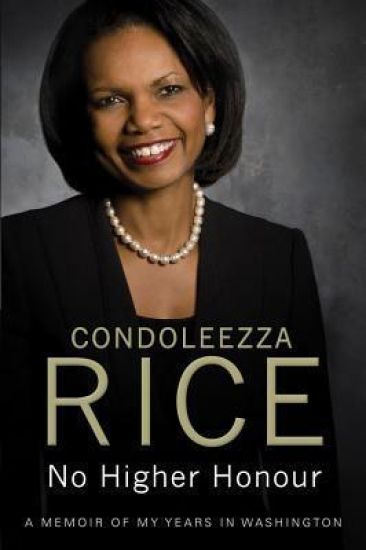
No Higher Honor: A Memoir of My Years in Washington
Condoleezza Rice
Crown Publishing Group (NY)
2012
nidottu
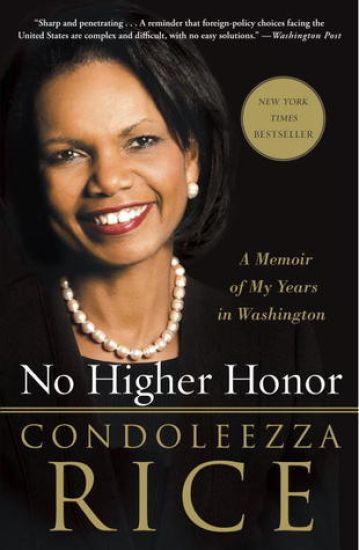
NEW YORK TIMES BESTSELLER - From the former national security advisor and secretary of state comes a "sharp and penetrating . . . reminder that foreign-policy choices facing the United States are complex and difficult, with no easy solutions" (The Washington Post). A native of Birmingham, Alabama, who overcame the racism of the civil rights era to become a brilliant academic and expert on foreign affairs, Condoleezza Rice first distinguished herself as an advisor to George W. Bush during the 2000 presidential campaign, and eventually became one of his closest confidantes. Once he was elected, she served first as his chief advisor on national security issues and later as America's chief diplomat. From the aftermath of September 11, 2001, when she stood at the center of the administration's efforts to protect the nation, to her efforts as secretary of state to manage the world's volatile relationships with North Korea, Iran, and Libya, her service to America led her to confront some of the worst crises the country has ever faced. This is her unflinchingly honest story of that remarkable time, from what really went on behind closed doors when the fates of Israel, the Palestinian Authority, and Lebanon often hung in the balance and how frighteningly close all-out war loomed in clashes involving Pakistan-India and Russia-Georgia, to her candid appraisal of her colleagues and contemporaries. In No Higher Honor, Condoleezza Rice delivers a master class in statecraft--but always in a way that reveals her essential warmth and humility and her deep reverence for the ideals on which America was founded.
The long-awaited memoir of US Secretary of State Condoleezza Rice's years in Washington
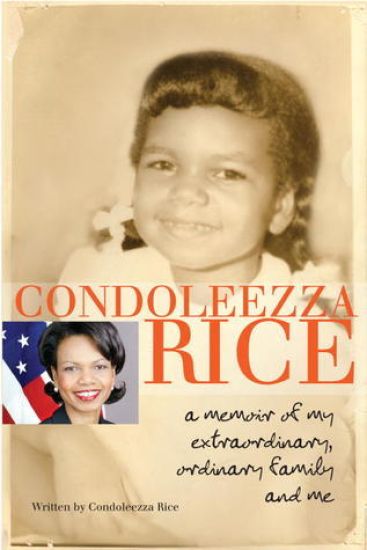
Condoleezza Rice: A Memoir of My Extraordinary, Ordinary Family and Me
Condoleezza Rice
Rh Childrens Books
2012
nidottu
From Condoleezza Rice, former secretary of state and New York Times bestselling author of Democracy: Stories from the Long Road to Freedom, comes a captivating memoir of her remarkable childhood. Condoleezza Rice's life began in Birmingham, Alabama in the 1950s, a place and time where black people lived in a segregated parallel universe away from their white neighbors. She grew up during the violent and shocking 1960s, when bloodshed became a part of daily life in the South. Rice's portrait of her parents, John and Angelena, highlights their ambitions and frustrations and shows how much they sacrificed to give their beloved only child the best chance for success. Rice also discusses the challenges of being a precocious child who was passionate about music, ice skating, history, and current affairs. Her memoir reveals with vivid clarity how her early experiences sowed the seeds of her political beliefs and helped her become a vibrant, successful woman. Condoleezza Rice: A Memoir of My Extraordinary, Ordinary Parents and Me is a fascinating and inspirational story for young people, adapted from Condoleeza Rice's adult sensation Extraordinary, Ordinary People: A Memoir of Family. Includes a 16-page photo insert. Praise for Extraordinary, Ordinary People: A Memoir of Family "An origins story . . . memoir is teeming with fascinating detail." --The New York Times "A thrilling, inspiring life of achievement." --Publishers Weekly "Surprisingly engrossing . . ." --Daily Beast "Vivid and heartfelt writing . . . Highly recommended."--Library Journal
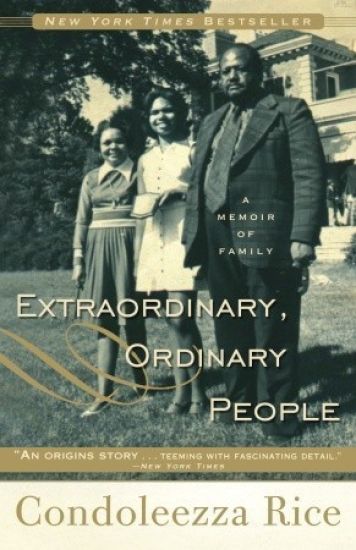
Extraordinary, Ordinary People: A Memoir of Family
Condoleezza Rice
Crown Publishing Group (NY)
2011
nidottu
Condoleezza Rice has excelled as a diplomat, political scientist, and concert pianist. Her achievements run the gamut from helping to oversee the collapse of communism in Europe and the decline of the Soviet Union, to working to protect the country in the aftermath of 9-11, to becoming only the second woman - and the first black woman ever -- to serve as Secretary of State. But until she was 25 she never learned to swim. Not because she wouldn't have loved to, but because when she was a little girl in Birmingham, Alabama, Commissioner of Public Safety Bull Connor decided he'd rather shut down the city's pools than give black citizens access. Throughout the 1950's, Birmingham's black middle class largely succeeded in insulating their children from the most corrosive effects of racism, providing multiple support systems to ensure the next generation would live better than the last. But by 1963, when Rice was applying herself to her fourth grader's lessons, the situation had grown intolerable. Birmingham was an environment where blacks were expected to keep their head down and do what they were told -- or face violent consequences. That spring two bombs exploded in Rice s neighborhood amid a series of chilling Klu Klux Klan attacks. Months later, four young girls lost their lives in a particularly vicious bombing. So how was Rice able to achieve what she ultimately did? Her father, John, a minister and educator, instilled a love of sports and politics. Her mother, a teacher, developed Condoleezza s passion for piano and exposed her to the fine arts. From both, Rice learned the value of faith in the face of hardship and the importance of giving back to the community. Her parents fierce unwillingness to set limits propelled her to the venerable halls of Stanford University, where she quickly rose through the ranks to become the university s second-in-command. An expert in Soviet and Eastern European Affairs, she played a leading role in U.S. policy as the Iron Curtain fell and the Soviet Union disintegrated. Less than a decade later, at the apex of the hotly contested 2000 presidential election, she received the exciting news just shortly before her father s death that she would go on to the White House as the first female National Security Advisor. As comfortable describing lighthearted family moments as she is recalling the poignancy of her mother s cancer battle and the heady challenge of going toe-to-toe with Soviet leaders, Rice holds nothing back in this remarkably candid telling. This is the story of Condoleezza Rice that has never been told, not that of an ultra-accomplished world leader, but of a little girl and a young woman -- trying to find her place in a sometimes hostile world and of two exceptional parents, and an extended family and community, that made all the difference. From the Hardcover edition."
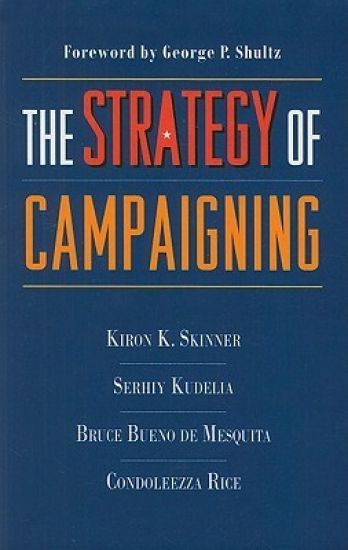
The Strategy of Campaigning
Kiron Skinner; Bruce Bueno de Mesquita; Serhiy Kudelia; Condoleezza Rice
The University of Michigan Press
2008
nidottu
The Strategy of Campaigning explores the political careers of Ronald Reagan and Boris Yeltsin, two of the most galvanizing and often controversial political figures of our time. Both men overcame defeat early in their political careers and rose to the highest elected offices in their respective countries. The authors demonstrate how and why Reagan and Yeltsin succeeded in their political aspirations, despite—or perhaps because of—their apparent “policy extremism”: that is, their advocacy of policy positions far from the mainstream. The book analyzes the viability of policy extremism as a political strategy that enables candidates to forge new coalitions and outflank conventional political allegiances.Kiron K. Skinner is Associate Professor of International Relations and Political Science at Carnegie Mellon University, a Research Fellow at the Hoover Institution, and a member of the Chief of Naval Operations Executive Panel and the National Security Education Board. Serhiy Kudelia is Lecturer of Politics at Kyiv-Mohyla Academy, Ukraine and advisor to Deputy Prime Minister of Ukraine. Bruce Bueno de Mesquita is Julius Silver Professor and Director of the Alexander Hamilton Center for Political Economy at New York University and a Senior Fellow at the Hoover Institution.Condoleezza Rice is on a leave of absence from Stanford University, where she was a Professor of Political Science and a Senior Fellow at the Hoover Institution. She is currently serving as U.S. Secretary of State.