Kirjojen hintavertailu. Mukana 12 520 588 kirjaa ja 12 kauppaa.
Kirjailija
Congressional Research Service
Kirjat ja teokset yhdessä paikassa: 687 kirjaa, julkaisuja vuosilta 2002-2024, suosituimpien joukossa GAO Bid Protests: An Overview of Time Frames and Procedures. Vertaile teosten hintoja ja tarkista saatavuus suomalaisista kirjakaupoista.
President Trump's budget request for FY2020 included approximately $134.1 billion for research and development (R&D). Several FY2019 appropriations bills had not been enacted at the time the President's FY2020 budget was prepared; therefore, the President's budget included the FY2018 actual funding levels, 2019 annualized continuing resolution (CR) levels, and the FY2020 request levels. On February 15, 2019, Congress enacted the Consolidated Appropriations Act, 2019 (P.L. 116-6). This act included each of the remaining appropriations acts, completing the FY2019 appropriations process. The act also rendered the CR levels identified in the budget no longer relevant, though for some agencies the exact amount of R&D funding in the act remained uncertain. The analysis of government-wide R&D funding in this report compares the President's request for FY2020 to the FY2018 level.
In response to the financial turmoil caused by the coronavirus disease 2019 (COVID-19), the Fed reopened four of these broadly-based programs and created two new ones in 2020. Treasury pledged $50 billion of assets from the Exchange Stabilization Fund (ESF) to protect the Fed against losses in most of these programs. H.R. 748, referred to by some as the "third coronavirus stimulus" bill, was passed by the Senate on March 25, 2020. The bill would provide between $454 billion and $500 billion to support Fed liquidity facilities. The bill states that applicable requirements of Section 13(3) shall apply to these facilities. Credit outstanding (extended in the form of cash or securities) authorized by Section 13(3) peaked at $710 billion in November 2008. All credit extended under Section 13(3) during the financial crisis was repaid with interest. Contrary to popular belief, the Fed earned profits of more than $30 billion and did not suffer any losses on transactions authorized by Section 13(3).
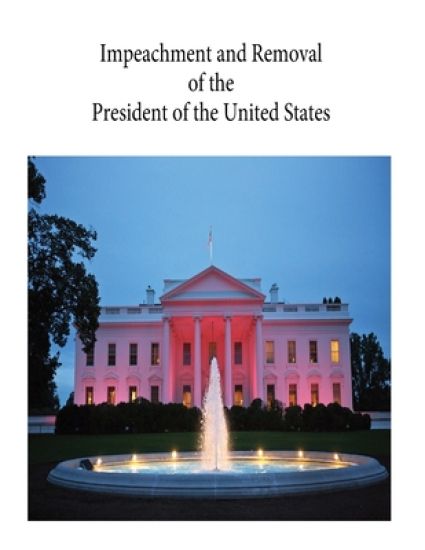
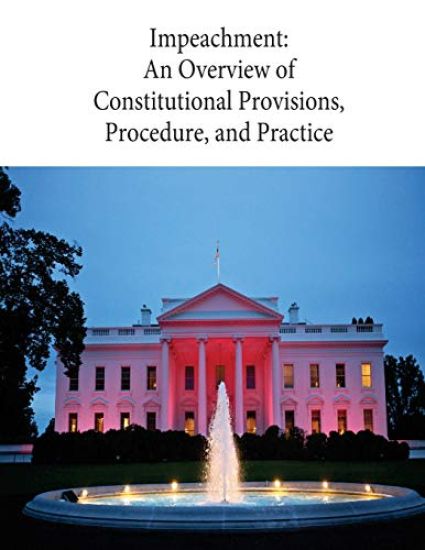
The impeachment process provides a mechanism for removal of the President, Vice President, and other "civil Officers of the United States" found to have engaged in "treason, bribery, or other high crimes and misdemeanors." The Constitution places the responsibility and authority to determine whether to impeach an individual in the hands of the House of Representatives. Should a simple majority of the House approve articles of impeachment specifying the grounds upon which the impeachment is based, the matter is then presented to the Senate, to which the Constitution provides the sole power to try an impeachment. A conviction on any one of the articles of impeachment requires the support of a two-thirds majority of the Senators present.Should a conviction occur, the Senate retains limited authority to determine the appropriate punishment. Under the Constitution, the penalty for conviction on an impeachable offense is limited to either removal from office, or removal and prohibition against holding any future offices of "honor, Trust or Profit under the United States." Although removal from office would appear to flow automatically from conviction on an article of impeachment, a separate vote is necessary should the Senate deem it appropriate to disqualify the individual convicted from holding future federal offices of public trust. Approval of such a measure requires only the support of a simple majority.
This report, divided into three main sections, examines the political and economic situation in Venezuela and U.S.-Venezuelan relations. The first section surveys the political transformation of Venezuela under the populist rule of President Hugo Ch vez (1999-2013) and the first two years of the government of President Nicol s Maduro, including the government's severe crackdown on opposition protests in 2014. The second section analyzes Venezuela's political and economic environment since 2015, including the opposition's December 2015 legislative victory and the Maduro government's attempts to thwart the powers of the legislature; efforts to remove President Maduro through a recall referendum; deteriorating economic and social conditions in the country; and the government's foreign policy orientation. The third section examines U.S. relations with Venezuela, including the imposition of sanctions on Venezuelan officials, and selected issues in U.S. relations-democracy and human rights, energy, counternarcotics, and terrorism concerns. Appendix A provides information on legislative initiatives in the 113th and 114th Congresses, and Appendix B provides links to selected U.S. government reports on Venezuela.
This report provides background information and potential oversight issues for Congress on the Coast Guard's programs for procuring 8 National Security Cutters (NSCs), 25 Offshore Patrol Cutters (OPCs), and 58 Fast Response Cutters (FRCs). These 91 planned cutters are intended as replacements for 90 aging Coast Guard cutters and patrol craft. The Coast Guard's proposed FY2017 budget requests a total of $467 million in acquisition funding for the three programs.The issue for Congress is whether to approve, reject, or modify the Coast Guard's funding requests and acquisition strategies for the NSC, OPC, and FRC programs. Congress's decisions on these three programs could substantially affect Coast Guard capabilities and funding requirements, and the U.S. shipbuilding industrial base.The NSC, OPC, and FRC programs have been subjects of congressional oversight for several years, and were previously covered in an earlier CRS report that is now archived. CRS testified on the Coast Guard's cutter acquisition programs on February 3, 2016. The Coast Guard's plans for modernizing its fleet of polar icebreakers are covered in a separate CRS report.
New START contains detailed definitions and counting rules that will help the parties calculate the number of warheads that count under the treaty limits. Moreover, the delivery vehicles and their warheads will count under the treaty limits until they are converted or eliminated according to the provisions described in the treaty's Protocol. These provisions are far less demanding than those in the original START Treaty and will provide the United States and Russia with far more flexibility in determining how to reduce their forces to meet the treaty limits.The monitoring and verification regime in the New START Treaty is less costly and complex than the regime in START. Like START, though, it contains detailed definitions of items limited by the treaty; provisions governing the use of national technical means (NTM) to gather data on each side's forces and activities; an extensive database that identifies the numbers, types, and locations of items limited by the treaty; provisions requiring notifications about items limited by the treaty; and inspections allowing the parties to confirm information shared during data exchanges.New START does not limit current or planned U.S. missile defense programs. It does ban the conversion of ICBM and SLBM launchers to launchers for missile defense interceptors, but the United States never intended to pursue such conversions when deploying missile defense interceptors. Under New START, the United States can deploy conventional warheads on its ballistic missiles, but these will count under the treaty limit on nuclear warheads. The United States may deploy a small number of these systems during the time that New START is in force.The Obama Administration and outside analysts argue that New START strengthens strategic stability and enhances U.S. national security. Critics, however, question whether the treaty serves U.S. national security interests, as Russia was likely to reduce its forces with or without an arms control agreement and because the United States and Russia no longer need arms control treaties to manage their relationship.
The crux of a presidential transition is the transfer of executive power from the incumbent to the President-elect. Yet the transition process encompasses a host of activities, beginning with pre-election planning and continuing through inauguration day. The process ensures that the federal government provides resources to presidential candidates' transition teams, and, eventually, the President-elect's team; and includes close coordination between the outgoing and incoming Administrations. The Presidential Transition Act (PTA) of 1963, as amended, established formal mechanisms to facilitate presidential transitions and authorizes the Administrator of General Services to provide facilities and services to eligible presidential candidates and the President-elect. A presidential transition facilitates the establishment of a new Administration and prepares it to govern. Additionally, as noted by the Senate Committee on Homeland Security and Governmental Affairs in a report on S. 1172 (114th Congress, Presidential Transitions Improvements Act of 2015), planning for a presidential transition helps to ensure the nation's security.The smooth and orderly transfer of power generally is a notable feature of presidential transitions, and a testament to the legitimacy and durability of the electoral and democratic processes. Yet, at the same time, a variety of events, decisions, and activities contribute to what some may characterize as the unfolding drama of a presidential transition. Interparty transitions in particular might be contentious. Using the various powers available, a sitting President might use the transition period to attempt to secure his legacy or effect policy changes. Some observers have suggested that, if the incumbent has lost the election, he might try to enact policies in the waning months of his presidency that would "tie his successor's hands." On the other hand, a President-elect, once in office, and eager to establish his policy agenda and populate his Administration with his appointees, will be involved in a host of decisions and activities, some of which might modify or overturn the previous Administration's actions or decisions.
The U.S. Secret Service (USSS) within the Department of Homeland Security (DHS) has two missions-criminal investigations and protection. Criminal investigation activities encompass financial crimes, identity theft, counterfeiting, computer fraud, and computer-based attacks on the nation's financial, banking, and telecommunications infrastructure. The protection mission is the more publicly visible of the two, covering the President, Vice President, their families, former Presidents, and major candidates for those offices, along with the White House and the Vice President's residence (through the Service's Uniformed Division). Protective duties of the Service also extend to foreign missions (such as embassies, consulates, and foreign dignitary residences) in the District of Columbia and to designated individuals, such as the Homeland Security Secretary and visiting foreign dignitaries. Separate from these specific mandated assignments, USSS is responsible for certain security activities such as National Special Security Events (NSSEs), which include presidential inaugurations, the major party quadrennial national conventions, as well as international conferences and events held in the United States.The most recent congressional action (not including appropriations) on the Service is the Federal Restricted Buildings and Grounds Improvement Act of 2011, enacted during the 112th Congress, which amended 18 U.S.C. 1752 and made it a crime for unauthorized individuals to enter a building that is secured by USSS. Congress, arguably, has begun to focus its attention on legislation related to the Service's financial and computer crime investigation mission activities. Legislation in the 113th Congress includes a House committee-referred bill on cyber privacy security; a House committee-referred bill on information technology security; a Senate committee-referred bill on data security and breaches; and a Senate committee-referred bill on personal data privacy and security. This report discusses potential policy questions concerning the Service's mission and organization through an examination of the USSS history and its statutory authorities, mission, and present activities within DHS. The policy questions presented in this report are only considerations, since the Service is widely perceived to be operating and performing its missions effectively for the past 11 years as part of DHS. Additionally, Appendix A provides a list of the direct assaults on and threats to Presidents, Presidents-Elect, and candidates. Appendix B provides a list of statutes addressing USSS activities.