Kirjojen hintavertailu. Mukana 12 595 353 kirjaa ja 12 kauppaa.

Kirjailija

Conor Gearty

Kirjat ja teokset yhdessä paikassa: 9 kirjaa, julkaisuja vuosilta 2005-2024, suosituimpien joukossa On Fantasy Island. Vertaile teosten hintoja ja tarkista saatavuus suomalaisista kirjakaupoista.

9 kirjaa

Kirjojen julkaisuhaarukka 2005-2024.

Homeland Insecurity

Homeland Insecurity

Conor Gearty

JOHN WILEY AND SONS LTD
2024
sidottu
In the decades following the 9/11 attacks, complex webs of anti-terrorism laws have come into play across the world, promising to protect ordinary citizens from bombings, hijackings and other forms of mass violence. But are we really any safer? Has freedom been secured by active deployment of state power, or fatally undermined? In this groundbreaking new book, Conor Gearty unpacks the history of global anti-terrorism law, explaining not only how these regulations came about, but also the untold damage they have wrought upon freedom and human rights. Ranging from the age of colonialism to the Cold War, through the perennial crises in the Middle East to the exponential growth of terrorism discourse compressed into the first two decades of the 21st century, the coercion these laws embody is here to stay. The ‘War on Terror’ was something that colonial and neo-colonial liberal democracies had always been doing—and something that is not going away. Anti-terrorism law no longer requires terrorism to survive. Wide-ranging, elegant and with a perceptive analytical sting, this book is essential reading for anyone seeking to understand the deep origins of terrorism and counter-terrorism, and how these concepts fundamentally shape the world we live in.
On Fantasy Island

On Fantasy Island

Conor Gearty

Oxford University Press
2016
sidottu
In the 2015 UK General Election, the Conservative party pledged to reset the UK's relations with Europe, holding an in-out referendum on membership of the European Union and repealing the Human Rights Act, to be replaced with a UK Bill of Rights. With the decision now taken to leave the EU, the future of the Human Rights Act and the UK's relations to the European Convention on Human Rights remains uncertain. Conor Gearty, one of the country's leading experts on human rights, here dissects the myths and fantasies that drive English exceptionalism over Europe, and shape the case for repealing the Human Rights Act. He presents a passionate case for keeping the existing legal framework for protecting human rights and our relationship with the European Convention. Analysing the reform agenda from the perspective of British law, history, politics, and culture, he lays bare the misunderstandings of the human rights system that have driven the debate so far. Structured in three parts, the book first exposes the myths that drive the anti-Human Rights Act argument. Second, Gearty outlines how the Act operates in practice and what its impact really is on the ground. Third, he looks to the future and the kind of Britain we want to live in, and how, for all its modesty, the survival or otherwise of the Human Rights Act will play a pivotal part in that future.
Liberty and Security

Liberty and Security

Conor Gearty

Polity Press
2013
sidottu
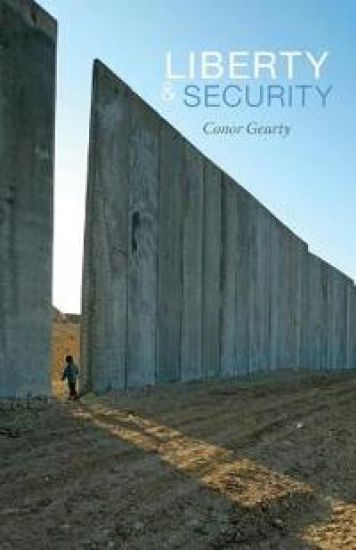
All aspire to liberty and security in their lives but few people truly enjoy them. This book explains why this is so. In what Conor Gearty calls our 'neo-democratic' world, the proclamation of universal liberty and security is mocked by facts on the ground: the vast inequalities in supposedly free societies, the authoritarian regimes with regular elections, and the terrible socio-economic deprivation camouflaged by cynically proclaimed commitments to human rights. Gearty's book offers an explanation of how this has come about, providing also a criticism of the present age which tolerates it. He then goes on to set out a manifesto for a better future, a place where liberty and security can be rich platforms for everyone's life.The book identifies neo-democracies as those places which play at democracy so as to disguise the injustice at their core. But it is not just the new 'democracies' that have turned 'neo', the so-called established democracies are also hurtling in the same direction, as is the United Nations. A new vision of universal freedom is urgently required. Drawing on scholarship in law, human rights and political science this book argues for just such a vision, one in which the great achievements of our democratic past are not jettisoned as easily as were the socialist ideals of the original democracy-makers.
Liberty and Security

Liberty and Security

Conor Gearty

Polity Press
2013
nidottu
All aspire to liberty and security in their lives but few people truly enjoy them. This book explains why this is so. In what Conor Gearty calls our 'neo-democratic' world, the proclamation of universal liberty and security is mocked by facts on the ground: the vast inequalities in supposedly free societies, the authoritarian regimes with regular elections, and the terrible socio-economic deprivation camouflaged by cynically proclaimed commitments to human rights. Gearty's book offers an explanation of how this has come about, providing also a criticism of the present age which tolerates it. He then goes on to set out a manifesto for a better future, a place where liberty and security can be rich platforms for everyone's life.The book identifies neo-democracies as those places which play at democracy so as to disguise the injustice at their core. But it is not just the new 'democracies' that have turned 'neo', the so-called established democracies are also hurtling in the same direction, as is the United Nations. A new vision of universal freedom is urgently required. Drawing on scholarship in law, human rights and political science this book argues for just such a vision, one in which the great achievements of our democratic past are not jettisoned as easily as were the socialist ideals of the original democracy-makers.
Debating Social Rights

Debating Social Rights

Conor Gearty; Virginia Mantouvalou

Hart Publishing
2010
nidottu
Debating Law is a new series that gives scholarly experts the opportunity to offer contrasting perspectives on significant topics of contemporary, general interest. In this second volume of the series, Conor Gearty argues that for rights to work effectively in the wider promotion of social justice, they need to be kept as far away as possible from the courts. He acknowledges the value of rights language in legal and political debate and accepts that human rights are not solely civil and political, with social rights language clearly having a progressive, emancipatory dimension. However he says that lawyers - even well-intentioned lawyers - damage the achievability of the kind of radical transformation in the priorities of states that a genuine commitment to social rights surely necessitates. Virginia Mantouvalou argues that social rights, defined as entitlements to the satisfaction of basic needs, are as essential for the well-being of the individual and the community as long-established civil and political rights. The real challenge, she suggests, is how best to give effect to social rights. Drawing on examples from around the world, she argues for their 'legalisation', and examines the role of courts and the role of legislatures in this process, both at a national and a international level.
Civil Liberties

Civil Liberties

Conor Gearty

Oxford University Press
2007
nidottu
This book provides a fresh, clear, and stimulating approach to civil liberties by tying the law and practice of the subject firmly to democratic and political rights. The author examines the key civil liberties of our democratic age: the right to vote; the rights to life, liberty and security of the person; the freedoms of thought, conscience, expression, association and assembly; the prohibition on torture and inhuman and degrading treatment; and discusses the contemporary challenges that civil liberties face, including globalisation and the war on terror.
Civil Liberties

Civil Liberties

Conor Gearty

Oxford University Press
2007
sidottu
This book traces the origins of the term civil liberties, unpicking its various layers of meaning and explaining what it has come to mean today. Gearty argues that the protection of civil liberties is a vital front in the struggle to preserve political freedom and that a proper understanding of and commitment to civil liberties has never been more important. Civil Liberties provides a fresh, clear, and stimulating approach to civil liberties by tying the law and practice of the subject firmly to democratic and political rights. The author examines the key civil liberties of our democratic age: the right to vote; the rights to life, liberty and security of the person; the freedoms of thought, conscience, expression, association and assembly; the prohibition on torture and inhuman and degrading treatment; and discusses the contemporary challenges that civil liberties face, including globalisation and the war on terror
Can Human Rights Survive?

Can Human Rights Survive?

Conor Gearty

Cambridge University Press
2006
pokkari
In this set of three essays, originally presented as the 2005 Hamlyn Lectures, Conor Gearty considers whether human rights can survive the challenges of the war on terror, the revival of political religion, and the steady erosion of the world's natural resources. He also looks deeper than this to consider the fundamental question: How can we tell what human rights are? In his first essay, Gearty asks how the idea of human rights needs to be made to work in our age of relativism, uncertainty and anxiety. In the second, he assesses how the idea of human rights has coped with its incorporation in legal form in the UK Human Rights Act, arguing that the record is much better and more democratic than many human rights enthusiasts allow. In his final essay, Gearty confronts the challenges that may destroy the language of human rights for the generations that follow us.
Principles of Human Rights Adjudication

Principles of Human Rights Adjudication

Conor Gearty

Oxford University Press
2005
nidottu
The Human Rights Act 1998 was one of the first pieces of legislation passed by New Labour. Some ministers believe that it is the greatest thing that they have done, whereas others view it as a dangerous mistake. This volume explains what the Act is about, where it fits into Britain's constitutional tradition, and explores whether or not it has achieved its goals. The Act has now been in force for three years, and a large body of case law has built up around it. The Act has enjoyed its fair share of controversies and has produced its own range of disappointments. It has become part and parcel of law courses in all universities, and has attracted the attention of practitioners from all areas of practice. It is now part of Britain's constitutional furniture, of interest and relevance not only to lawyers but also to political scientists, contemporary historians, and the general public. This book takes a fresh look at the place of the Human Rights Act in Britain's constitutional order. It locates the measure in its political and historical context and analyses the case law from the perspective not only of principle but also of practical experience. It examines the effect of the Act, and provides the reader with the tools to make informed predictions on the likely outcome of cases.