Kirjojen hintavertailu. Mukana 12 595 353 kirjaa ja 12 kauppaa.

Kirjailija

Conrad Charles Crane

Kirjat ja teokset yhdessä paikassa: 3 kirjaa, julkaisuja vuosilta 2016-2024, suosituimpien joukossa Winning Armageddon. Vertaile teosten hintoja ja tarkista saatavuus suomalaisista kirjakaupoista.

3 kirjaa

Kirjojen julkaisuhaarukka 2016-2024.

Cassandra in Oz

Cassandra in Oz

Conrad Charles Crane

Naval Institute Press
2024
pokkari
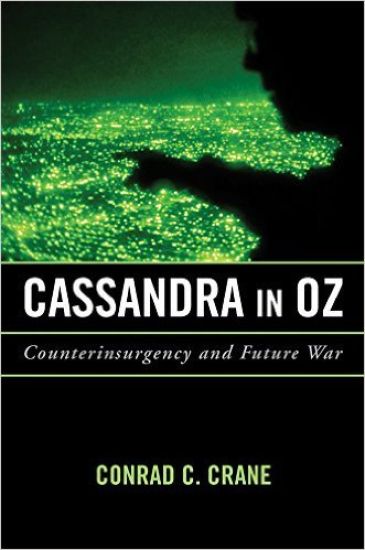
When Conrad Crane retired from active duty to become a research professor, he never expected to become a modern Cassandra, fated to tell truth to power without being heeded. After the world transformed on 9/11, he warned the Army that it was not prepared to execute stability operations, counterinsurgency, and the eventual reconstruction of Iraq. Crane's work attracted the attention of Generals David Petraeus and James Mattis, and he soon found himself in charge of a team tasked with creating the groundbreaking Field Manual 3-24/Marine Corps Warfighting Publication 3-33.5 Counterinsurgency, the very counterinsurgency doctrine he had pleaded for. A unique blend of traditional and modern theory, this manual would prove to be essential to the success of the Surge in Iraq that changed the course of the war. Crane's account of the creation and implementation of the manual addresses its many criticisms, details what went wrong in Iraq, and explains how the new doctrine was never properly applied in Afghanistan. From the debates over the content to the ways it was used in the field, Cassandra in Oz covers lessons that should be gleaned from years of global war and displays the American military as a learning organization at its best.
Winning Armageddon

Winning Armageddon

Trevor Albertson; Conrad Charles Crane

Naval Institute Press
2019
sidottu
Winning Armageddon provides definition to an all-too-long neglected figure of the Cold War General Curtis E. LeMay and tells the story of his advocacy for nuclear first strikes while leading Strategic Air Command--the Cold War Air Force's nuclear organization. This was despite a publicly proclaimed policy of deterrence. In telling this story Albertson builds for the reader a world that while not in the distant past has been forgotten by many; the lessons of that past however are as applicable today as they were 65 years ago. In weaving his story the author brings to life the challenges fears and responses of a Cold War United States that grappled with a problem to which it did not have a clean solution: nuclear war. It was this concern that LeMay sought to assuage through making his arguments for attacking first in a nuclear conflict--but only if and when it was clear that the enemy was preparing to launch their own surprise strike. This approach commonly referred to as preemption was designed to catch an attacker off-guard and prevent the destruction of one's own nation. In LeMay's case he made the argument that such attacks should initially be directed at an enemy's long-range air forces in an effort to deprive them of an ability to destroy American cities industry and its own military. In so doing LeMay hoped that rather than plunging the world into a fruitless nuclear exchange he could diffuse the conflict at its outset. It was a novel solution to a vexing problem.
Cassandra in Oz

Cassandra in Oz

Conrad Charles Crane

Naval Institute Press
2016
sidottu
When Conrad Crane retired from active duty to become a research professor,he never expected to become a modern Cassandra, fated to tell truth to powerwithout being heeded. After the world transformed on 9/11, he warned theArmy that it was not prepared to execute stability operations,counterinsurgency, and the eventual reconstruction of Iraq.Crane’s work attracted the attention of Generals David Petraeus and JamesMattis, and he soon found himself in charge of a team tasked with creatingthe groundbreaking Field Manual 3-24/Marine Corps Warfighting Publication 3-33.5Counterinsurgency, the very counterinsurgency doctrine he had pleaded for. Aunique blend of traditional and modern theory, this manual would prove to beessential to the success of the Surge in Iraq that changed the course of thewar.Crane’s account of the creation and implementation of the manual addressesits many criticisms, details what went wrong in Iraq, and explains how the newdoctrine was never properly applied in Afghanistan. From the debates over thecontent to the ways it was used in the field, Cassandra in Oz covers lessons that should be gleaned fromyears of global war and displays the American military as a learningorganization at its best.