Kirjojen hintavertailu. Mukana 12 595 353 kirjaa ja 12 kauppaa.
Kirjailija
Constance T. Fischer
Kirjat ja teokset yhdessä paikassa: 7 kirjaa, julkaisuja vuosilta 1994-2023, suosituimpien joukossa Individualizing Psychological Assessment. Vertaile teosten hintoja ja tarkista saatavuus suomalaisista kirjakaupoista.
Assessments by psychologists, educators, and other human-service professionals too often end with the client being reported in terms of scores, bell-shaped curves, traits, psychodynamic forces, or diagnostic labels. Individualizing Psychological Assessment uses these classification devices in ways that facilitate returning from them to the individual's life, both during the assessment session and in written reports.
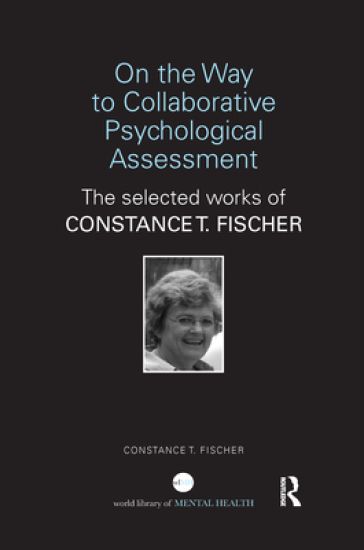
This collection of articles by Constance T. Fischer represents many of her major contributions to Collaborative Therapeutic Assessment. Fischer’s work on the conceptual foundations and practices for individualized/ collaborative psychological assessment are assembled in this volume. Also included are her thoughts about how to teach individualized assessment to students. This monograph will serve mental health professionals interested in Collaborative Therapeutic Assessment and instructors and students in graduate courses on psychological assessment.
This collection of articles by Constance T. Fischer represents many of her major contributions to Collaborative Therapeutic Assessment. Fischer’s work on the conceptual foundations and practices for individualized/ collaborative psychological assessment are assembled in this volume. Also included are her thoughts about how to teach individualized assessment to students. This monograph will serve mental health professionals interested in Collaborative Therapeutic Assessment and instructors and students in graduate courses on psychological assessment.
A guide to conducting Collaborative/Therapeutic Assessment to promote client growth Mental health professionals are increasingly enthusiastic about and ready to use psychological test data, research, and theory in life-relevant ways to improve diagnosis, client care, and treatment outcomes. With Collaborative/Therapeutic Assessment (C/TA), clients participate actively with the assessor in exploring how their test scores and patterns reflect who they are in their daily lives and how they can learn to help themselves cope with life's challenges. Using a case study approach to demonstrate how to apply C/TA in practice, Collaborative/Therapeutic Assessment provides practitioners with a variety of flexible and adaptable case examples featuring adults, children, adolescents, couples, and families from different backgrounds in need of treatment for assorted concerns. Designed for both experienced and novice clinicians, the book begins with a brief history of C/TA, and provides clear definitions of the distinctions among many common approaches. It uniquely presents: Eighteen diverse C/TA assessments covering: depression, multiple suicide attempts, severe abuse, dissociation, an adolescent psychiatric ward, custody evaluation, a couple in crisis, and collaborative neuropsychology Guidance on how both client and clinician can agree on the best course of action through joint exploration of assessment procedures, results, and implications Closely related approaches to psychological testing, including Individualized Assessment, Collaborative Assessment, Therapeutic Model of Assessment, Collaborative/Therapeutic Neuropsychological Assessment, and Rorschach-based psychotherapy Clearly labeled Teaching Points in each chapter Collaborative/Therapeutic Assessment provides psychologists in all areas of assessment, and at all levels of experience, with powerful C/TA examples that can dramatically illuminate and improve clients' lives.
This book is the first on the craft of effective writing structured expressly for the psychologist-assessor. Author J. B. Allyn, a professional writer who specializes in psychology, combines reference book with tutorial. She blends information on the qualities that create a writer’s unique presence on the page with illustrations of correct English grammar. All of the questions, answers, and illustrations evolved from the concerns of psychologist-assessors, as did the examples, which are grounded in their writing and communication needs. The result creates a guide for report writing that can be used by either practicing professionals or graduate psychology students. The book divides into three sections: The first and third sections discuss various aspects of effective communication, while the second is a handbook of common grammar problems. Helpful elements guide the reader through the text, including frequent bullet lists, tables and graphs, and grammar and style examples that are framed around assessment reports. It is also written in a conversational tone, which creates the same style it proposes for effectively written reports, and is a key tool for clear and appropriate communication. Readers will refer back to this book, both for quick tips on style and grammar, which are appropriate for any mental health practitioner, and for more detailed advice on writing and communication in assessment reports.
This book is the first on the craft of effective writing structured expressly for the psychologist-assessor. Author J. B. Allyn, a professional writer who specializes in psychology, combines reference book with tutorial. She blends information on the qualities that create a writer’s unique presence on the page with illustrations of correct English grammar. All of the questions, answers, and illustrations evolved from the concerns of psychologist-assessors, as did the examples, which are grounded in their writing and communication needs. The result creates a guide for report writing that can be used by either practicing professionals or graduate psychology students. The book divides into three sections: The first and third sections discuss various aspects of effective communication, while the second is a handbook of common grammar problems. Helpful elements guide the reader through the text, including frequent bullet lists, tables and graphs, and grammar and style examples that are framed around assessment reports. It is also written in a conversational tone, which creates the same style it proposes for effectively written reports, and is a key tool for clear and appropriate communication. Readers will refer back to this book, both for quick tips on style and grammar, which are appropriate for any mental health practitioner, and for more detailed advice on writing and communication in assessment reports.
Assessments by psychologists, educators, and other human-service professionals too often end with the client being reported in terms of scores, bell-shaped curves, traits, psychodynamic forces, or diagnostic labels. Individualizing Psychological Assessment uses these classification devices in ways that facilitate returning from them to the individual's life, both during the assessment session and in written reports. The book presents an approach and procedures through which a person's actual life becomes the subject matter of assessment. Thoroughly revised from the previous edition, the book presents a wide range of concrete examples and illustrative cases that will serve both students and practicing professionals alike in individualizing assessments.