Kirjojen hintavertailu. Mukana 12 402 617 kirjaa ja 12 kauppaa.

Kirjailija

Constantin Floros

Kirjat ja teokset yhdessä paikassa: 23 kirjaa, julkaisuja vuosilta 1993-2019, suosituimpien joukossa Gustav Mahler. Vertaile teosten hintoja ja tarkista saatavuus suomalaisista kirjakaupoista.

23 kirjaa

Kirjojen julkaisuhaarukka 1993-2019.

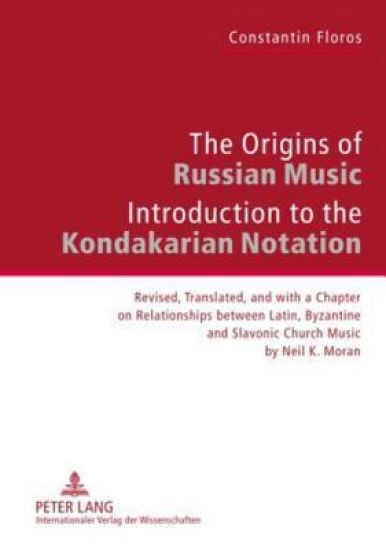
The Origins of Russian Music

The Origins of Russian Music

Constantin Floros

Peter Lang AG
2009
sidottu
Five kondakarian manuscripts dating from the 11th to 13th century belong among the oldest witnesses of Russian church music. The Slavonic church texts are accompanied by a peculiar notation which represents the most complex notational system of the European Middle Ages. For centuries this system has been viewed as being undecipherable. In 1962 the author of this book succeeded in deciphering this notation using various methods even though directly compatible Greek sources were unknown at that time. His research appeared in two issues of journal which ceased publication several years ago. After the publication of the first part of this study a Greek philologist discovered in Kastoria (Northern Greece) a unique manuscript with a system of notation similar to that of the Russian kondakaria, confirming there by his research results in a most unexpected and indubitable manner. This path-breaking study has been revised and brought up to date in the present publication. The prominent Russian scholar Yuri Keldysh was of the opinion that «no historian of Russian music would be able to proceed without taking into consideration this study».
HREN UND VERSTEHEN

HREN UND VERSTEHEN

CONSTANTIN FLOROS

SCHOTTCO
2008
nidottu
Es wird oft behauptet, Musik sei eine universale Sprache, die man ohne Vorwissen verstehen könne. Zugleich wird beklagt, die Kunst des Hörens und Verstehens werde zunehmend vernachlässigt. Dieser Tendenz stellt sich der renommierte Musikwissenschaftler Constantin Floros in seinem neuesten Buch entgegen: Er macht deutlich, dass sich das Hören von Musik keinesfalls ausschließlich an formal analytischen Kategorien orientieren darf. Mindestens ebenso wichtig ist es, Klangfarben, dynamische Prozesse und musikalische Gesten bewusst wahrzunehmen, denn nur so lässt sich die Intention des Komponisten entschlüsseln. Im Anschluss an allgemeine Überlegungen zur Kunst des Hörens enthält das Buch deshalb exemplarische Besprechungen von Werken der verschiedensten Gattungen. Die Liste der herangezogenen Komponisten reicht dabei von Mozart bis Bernstein. Ein Plädoyer für ein engagiertes Hören und ein besseres Verstehen - auch jenseits der Musik.