Kirjojen hintavertailu. Mukana 12 595 353 kirjaa ja 12 kauppaa.

Kirjailija

Constantine Issighos

Kirjat ja teokset yhdessä paikassa: 32 kirjaa, julkaisuja vuosilta 2008-2018, suosituimpien joukossa Gustave Eiffel: Art of Metal Structures, 3: Gustave Eiffel Exploration Series. Vertaile teosten hintoja ja tarkista saatavuus suomalaisista kirjakaupoista.

32 kirjaa

Kirjojen julkaisuhaarukka 2008-2018.

The Moral Necessity of Atheism: Illustrated narrative from the Big Bang to present day
This is a narrative about what is often referred to as, the natural evolution of atheism. This is not a mere shadow of doubt in God's existence or "walking with atheists" in order to convince the reader about the legitimacy of atheism. This would inappropriate and vulgar. My own life's experience is dotted with penalties, dangers and risks of exposing me as an atheist in primitive indigenous communities in the Andean Sierras of South America, when visiting the Shamans in the Amazon Rain Forest, and when I was living incognito within a fundamentalist Christian community in Peru. Those events are briefly described in my book, Prisoners of our Ideals. In a historical context, it is important to articulate the natural and historical evolution of atheism because, in current times, the intense commitments to different forms of monotheist religions have acquired such a strong and dangerous political connotation, especially between the fundamentalist Christianity and orthodox Islam. The widespread suspicion cast on atheists or disbelievers is becoming a real thread to free thought. For the politically motivated religious propagators, atheism is not a small and irrelevant group of free thinkers, but a growing social, intellectual and scientific force. They believe that atheism, science and free-thought would be corrosive to their religious dogma and they are worrying about it. I must admit that they are correct Atheism is corrosive to religious dogma, whose God states that, "If you do not believe inme, you'll burn in Hell forever." Contemporary atheists have preserved the long tradition of scepticism, for men and women have been sceptical in God's existence. For instance, Epicurus (341-270 BCE) said "Is God willing to prevent evil, but not able? Then he is not omnipotent. Is he able but not willing? Then he is malevolent...Is he neither able nor willing, then why call him God?" You see, books on the historical evolution of atheism are regarded as "subversive disbelieve" and such arguments paradoxically could only be found among believers. This is because Christianity; since the time of the Emperor Flavius Titus (39-81 AD), has continuously been redesigning itself and theologians often formulated the most dangerous sceptical arguments in an effort to test the strength of their faith....All of this dramatises the believers' attitude towards this life and the delusional hope in the existence of life-after-death. Their fear of death is but illusionary and meaningless. In the words of the atheist who influenced Thomas Jefferson, the Greek philosopher Epicurus: " Death does not concern us, because as long as we exist, death is not here. And when it does come, we no longer exist...Why should I fear death, if I am existing], then death is not, if death is, I am not. Why should I fear that which] does not exist, when I do exist]." He clearly did not believe in life-after death....The irony is that people in the US have forgotten, or are no longer taught, that their country was founded by secularists and atheists who were escaping from political oppression and religious persecution. Leaders of the American Revolution, Thomas Paine and Thomas Jefferson, were both secularist (deist) but not religious. In fact, the second President of the US, John Adams was an atheist; so were Abraham Lincoln, George Washington, Benjamin Franklin, James Buchanan and James Madison, among others. US President John Adams (1797-1801), stated that, "God is in essence nothing that we know off, and until this offal blasphemy is got rid off there never will be any liberal science in the world." ....This book is a scientific and historical narrative from the Big Bang formation of our universe, the Laws of Nature, Prehistoric societies, the Imperial Roman invention of Christianity, Islam's questionable beginning and origins to problems with religious morality. Enjoy the book, family recommended.
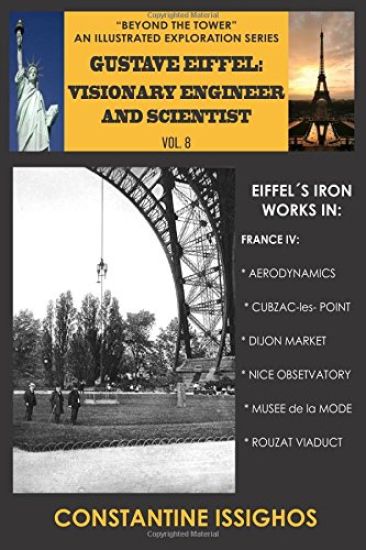
Gustave Eiffel: Visionary Engineer and Scientist: Eiffel Exploration Series
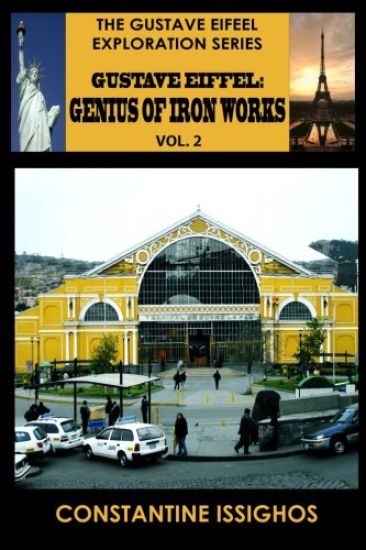
The Eiffel Illustrated Exploration Series is divided in a number of illustrated narrative volumes. Vol. 1 "Beyond the Tower" describes Eiffel's monuments in the USA, Mexico and Ecuador, Vol. 2 "Art of Metal Structures illustrates Eiffel's iron works in Peru and Chile, Vol. 3 "Genius of Iron Works" narrates Eiffel's historic monuments in Argentina and Bolivia. These 3 volumes completes Eiffel list of metal buildings and structures in the Americas.All illustrations in the Eiffel Exploration Series were taken by the author himself who traveled to each country and visited every of Eiffel's monuments. Vol. 4 "Art and Strength in Architecture" initiates the narrative of Eiffel's historic monuments in Portugal and Spain, Vol.5 "The Magician of Iron" presents Eiffel's creations in Southern France, Vol. 6 "The Iron Lady" is concentrated on Eiffel's historic monuments on the city of Paris, France, including the famous Eiffel Tower, Vol. 7 "Gustave Eiffel: Contribution to Belle Epoque" narrates Eiffel's creations in central France, Vol. 8 "Gustave Eiffel: Visionary Engineer and Scientist" describes Eiffel's iron works in Eastern-Europe, Latvia, Hungary, Romania and Turkey. The structural engineer, architect and entrepreneur Gustave Eiffel is known primarily for his iconic Paris Tower and the support system of the Statute of Liberty in NY. His iron structures around the world, have a lasting influence on contemporary engineers and architects. He was responsible for the eloquent interior of cast-iron skylights in many of his train stations in order to provide maximum daylight illumination. Eiffel's harmonious designs were not "mere" objects of admiration, for his glass and iron project presented in this volume were part of the up-coming socio-economic based of national infrastructures.
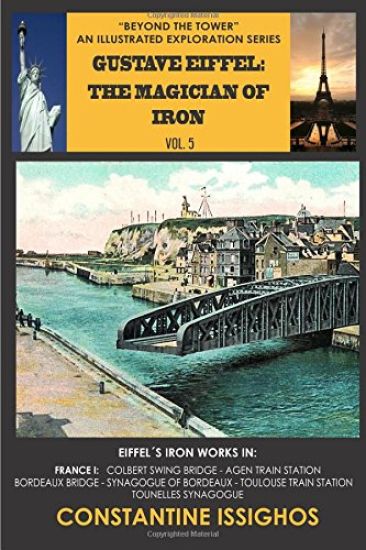
Gustave Eiffel: The Magician of Iron: Eiffel Exploration Series
The Eiffel Illustrated Exploration Series is divided in a number of illustrated volumes: Vol. 1 "Beyond the Tower" deals with Eiffel's iron works in USA, Mexico and Ecuador. Vol. 2 " Art of Metal Structures" deals with a number of Eiffel's metal projects in Peru and Chile, Vol. 3 "Genius of Iron Works" illustrates Eiffel's iron structures in Argentina and Bolivia. These 3 volumes completes Eiffel's list of metal works in the Americas. Vol. 4 "Art and Strength in Architecture" illustrates Eiffel iron buildings and structures in Portugal and Spain. In this Vol. 5 "The Magician of Iron" it illustrates a number of Eiffel' iron structures in Southern-France, Vol. 6 "The Iron Lady" concentrates on Eiffel's creations in the city of Paris including the famous Eiffel Tower, Vol. 7 "Genius of Harmonious Design" narrates Eiffel's works in central France, Vol.8 "Engineer and Scientist" describes Eiffel's various structures and his participation of telecommunication and aerodynamics. It also describes Eiffel's iron buildings and structures in Eastern Europe, Latvia, Hungary, Romania and Turkey. In the decades following the French Revolution of 1789, the city of Paris began to witness major changes in its architectural infrastructure based on economic and social considerations. Innovative technology in bridges, railways and street gas-lighting were not only conveniences but also necessity for the rise of a new economic and political class: the bourgeoisie or middle class. Paris was known for its narrow and dark street corridors. Female pedestrians tended to "chock" out of fear when passing these dark and dank corridors with their subterranean odours and atmosphere of profound danger. For the poor of Paris, the much needed "modernization" was a necessity and a relocation curse. Streets had to be surveyed and the areas marked which were to be renovated. All infrastructures were promoted by Napoleon III in an attempt to modernized Paris and to some degree the rest of the French country side.The "Age of Construction" saw a massive building program of Paris beatification of the 1850's and beyond. Eiffel's iron works were part of that program presented in this volume. This was the core desire of the revolutionary middle-class which boosted the events of the French Revolution. It took an authoritarian regime of Napoleon III to convince the capitalist of the day to initiate important projects which could benefit society as a whole, but not particular the poor who would left on their own. The basis of the economic development would be the financial institutions the likes of the Credit Lyonnais, which at the time went into considerable financial expansion and other private entrepreneurs who were financed by the banks and loans backed by the French State. During this time marked by the growth of of machinery, mass production factories and the rising for products and common necessities, country folks were enticed to move from agricultural work to cottage-industries and look for jobs in the cities. The middle-class was very active in participating and adopting advanced technology in transportation, medicine, machinery and architecture. This relatively new political class seemed to want for novelties in economics, arts and culture and the general re-organization of things as they were. As such there was an advanced opportunity for the middle-class to exhibit and enjoy their wealth in cafes, restaurants and theaters and fancy department stores. Eiffel's iron works in various projects contributed to the general renovation of the French society. This volume deals with such iron projects which contributed to the re-organization of urban structure witnessed today by million of visitors.
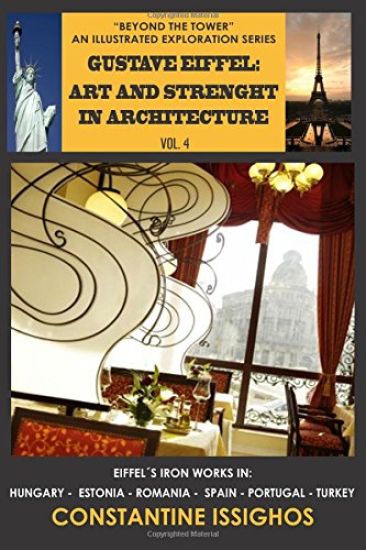
Gustave Eiffel: Art and Strength in Architecture: The Eiffel Illustrated Exploration Series
The Vol. 1 " Beyond the Tower"of the Eiffel Illustrated Exploration Series covers Eiffel's iron works in Mexico, USA and Ecuador. The Vol. 2 " Art of Metal Structures" covers Eiffel Iron Works in Peru, and Chile, the Vol. 3 " Genius of Iron Works" covers Eiffel's iron works in Argentine and Bolivia. These 3 Vol. completes Eiffel's entire Iron Works in the Americas. This is the 4th volume " Art and Strength in Architecture" in the Eiffel Exploration Series. It covers the Eiffel Iron Works in Portugal and Spain, Vol.5 "The Magician of Iron" presents Eiffel's historical monuments in Southern France, Vol.6 "The Iron Lady" concentrates on Eiffel's creations on the city of Paris including the famous Eiffel Tower, Vol.7 "Gustave Eiffel: Contribution to Belle Epoque" narrates Eiffel's iron works in central-France, Vol. 8 "Gustave Eiffel: Visionary Engineer and Scientist" describes Eiffel's various metal structures and his contribution to telecommunications and aerodynamics. "Gustave Eiffel: Place in History" narrates Eiffel's Iron projects in Eastern-Europe, Latvia, Hungary, Romania and Turkey. Gustave Eiffel designed the structures of many, now famous, artistic architectural buildings and structures around the world. All of those buildings and structures were made with iron support system. While other architects were attracted to Romanesque style, Eiffel was discovering the Industrial Revolution style of balancing iron columns and beams in harmony with the Art of Industrial Heritage. As such, Eiffel created a cultural landscape out of the material used in the Industrial Revolution. During the last part of the Industrial Revolution in the 19th century, the timber and masonry tradition of constructing buildings, viaducts, bridges and aqueducts was coming to an eclipse by the expanded use of iron which was much cheaper and stronger than stone. Bridges and buildings could now be constructed with wrought iron or cast-iron and any thickness of metal plates could be utilized for exterior or interior walls. Eiffel's artistic designing skills were remarkable as we can also witness in the engineering structures of Saint Joseph Church of of 1863, the massive skylight glass roof of Mussee de la Mode in 1873, and the exposed iron-works of the magnificent Synagogue of Toulouse. These two metals, cast-iron and wrought-iron components can be found in buildings such as the Palacio de Hierro in Orizaba, Mexico, or on the walls of the San Marco's Church in Arica, Chile, among others. Now, let us consider the 1875 Royal Portuguese Railway Company's choice of an engineering structural design for a bridge to serve the Lisbon-Porto railway traffic across the inhospitable river gorge of the fast flowing Douro River---the Maria Pia Bridge. As shown in the pictures taken of the Maria Pia Bridge, the beauty of this bridge is in the strength of its industrial style wrought-iron material and style of metal work. Its two-hinged crescent arch was built to carry the load of the railway for the 350 meter trip across the River Douro at 60 meters height above the river's surface. On its inauguration day in 1877, the Maria Pia Bridge was the longest single iron arch in the world. Its design was very simple yet extremely graceful and its single arch is effective and efficient against strong winds and fast flowing water. In any case, part of the success of Eiffel's Maria Pia bridge was that it inspired other structural engineers to pay attention to societal components of bridges. The bridges functioned to allow the movement of goods and people across inhospitable terrains and river gorges. A good number of Eiffel's bridges served the Industrial Revolution demand for more railway transportation, so this helped expand the infrastructure of Portugal and Spain and many other countries In Europe, Asia and South America. Therefore, Eiffel earned the name "The Magician of Iron."
Gustave Eiffel: The Iron Lady: The Eiffel Exploration Series
The Eiffel Illustrated Exploration Series is divided in a number of illustrated narrative volumes. Vol. 1 "Beyond the Tower" describes Eiffel's monuments in the USA, Mexico and Ecuador. Vol. 2 "Art of Metal Structures" illustrates Eiffel's iron works in Peru and Chile. Vol. 3 "Genius of Iron Works" presents Eiffel illustrated narrative of Argentina and Bolivia. These 3 volumes completes Eiffel's list of metal structures in the American Continent. All illustrations in this Series were taken by the author himself who traveled in each country and visited every Eiffel's monuments. Vol. 4 "Art and Strength in Architecture" begins to describe the illustrated narrative of Eiffel's iron works in Portugal and Spain. Vol. 5 "The Magician of Iron" presents Eiffel's metal works in Southern-France. Vol. 6 " The Iron Lady" is focused on Eiffel's iron works in the city of Paris including the famous Eiffel Tower, Vol. 7 "Contribution to Belle Epoque" concentrates on Eiffel's monuments in central France, Vol. 8 "Engineer and Scientist" narrates Eiffel's creations and his participation in telecommunications and aerodynamics of his time and Paris most prominent Eiffel works. Aside from the Eiffel Tower, the most familiar feature of Paris is its broad tree-lined boulevards with nearly identical buildings with apartments on the upper floors and shops, cafes and restaurants on the sidewalk level. This urban setting, while very Parisian in setting and some which were designed by Eiffel, is the result of 19th century city planning and inspiration. This period included the Belle Epoque (the Beautiful Era) which lasted until the beginning of WWI in 1914. These six decades (1850's-1914) were characterized by national optimism, the introduction of innovative technology, scientific discoveries in aerodynamics, relative peace and prosperity and the flourishing of the arts, literature, music and theater. Gustave Eiffel's was not the only engineering and architectural company actively participating in the renovation of Paris. Many more must be credited with the construction of public works. When the Haussmann renovation system was implemented in the 1850's, the French government expropriated urban lands which were in the way of the renovation. Thus, Baron Haussmann had the the opportunity of working in the legislative and regulatory context that was adopted specifically for the renovations. The newly rich middle class (nouveau-riche) emerging from the panic of the German-French War of 1871, overlapped the late era of the decadent aristocracy. The celebrations tied to the Exposition Universalle of 1889 indicated the public's nostalgia for the previous several decades and were based largely on the peace and prosperity connected with it in retrospect. French Colonialism was in its prime and Paris became the center of global cultural influence. Its educational, scientific and medical influence including its structural innovations in engineering, were in the leading edge of the western world. Who would have thought that cast-iron and wrought iron of the Industrial Revolution would be used to create a marvelous masterpiece of art like the Eiffel Tower? Gustave Eiffel was able to benefit from from the prosperity of the Belle Epoque and was drawn towards iron structures that were housing a new form of light entertainment and consumerism within the middle-class women of Paris. Cabarets like the 'Cabaret Latin" are landmarks designed by Eiffel in the 1890's and still open for business today became influential in the habits and fads of the city's elite social class, known as the "beautiful people" then known as Tout-Paris or "everyone in Paris."
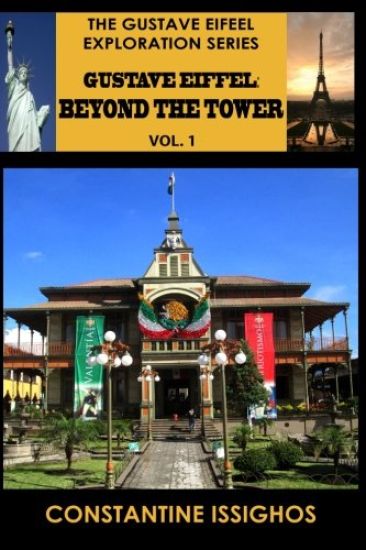
Gustave Eiffel: Beyond The Tower, I: Gustave Eiffel Exploration Series
Guestave Eiffel: Beyond the Tower Vol. I contains full-colour pictures of Eiffel's monuments in the American Continent. All of the pictures found in all of the three volumes of the Gustave Eiffel Exploration Series were taken by the author, Constantine Issighos, in his quest to unravel the mysteries and locations of the Eiffel monuments in the Americas. After starting as a novice construction engineer, Eiffel began his ground-breaking, impressive and creative career as a structural engineer with the completion of dozen of iron works around the world. When talking about Gustave Eiffel, we usually think of his two prominent monuments, the Eiffel Tower in Paris and the Statute of Liberty in New York. Eiffel's creation of the Statute's central support system made it possible for it to withstand strong winds and other climatic changes. The widening, curved base at its foundation resists the lateral load caused by strong winds. Eiffel's Tower, built in 1889, was the first 324 meter (1065 foot) tall structure at the time. Visitors were enchanted to view the metropolitan city of Paris from such a height--a "first in the world" accomplishment for Eiffel. However, what is not well known is that Eiffel's designs and construction of metal structures can be found on most continents. It took the author over five (5) years and thousand of miles of traveling to discover Eiffel's monuments in the American continent alone. The three volumes of the Gustave Eiffel Exploration Series show how orders were taken in France and then shipped as portable "Kids" with all the re-assembly instructions, including nuts, bolts, and double steel "U", "T" and "Angle" support parts. Today, it is possible to visit Eiffel's bridges, pavilions, mansions, train stations, churches and cathedrals, including pir-docks, fruit and vegetable markets, factories and ornamental water-fountains in several countries. The works of Gustave Eiffel were not limited to those mentioned above, for Eiffel experimented in telecommunications, aerodynamics and weather patterns, thus creating a practical use for his Tower. Without a doubt Gustave Eiffel was one of the most influential structural engineers and ornamental artist of all times. His immense impact on the field of structural architecture is unquestionable. While his most well-known structure is the Eiffel Tower, in this book you will discover that he designed many other awe-inspiring iron projects as well.