Kirjojen hintavertailu. Mukana 12 595 353 kirjaa ja 12 kauppaa.

Kirjailija

Cooke Mervyn

Kirjat ja teokset yhdessä paikassa: 5 kirjaa, julkaisuja vuosilta 1993-2017, suosituimpien joukossa Benjamin Britten: Billy Budd. Vertaile teosten hintoja ja tarkista saatavuus suomalaisista kirjakaupoista.

5 kirjaa

Kirjojen julkaisuhaarukka 1993-2017.

Pat Metheny

Pat Metheny

Cooke Mervyn

Oxford University Press Inc
2017
nidottu
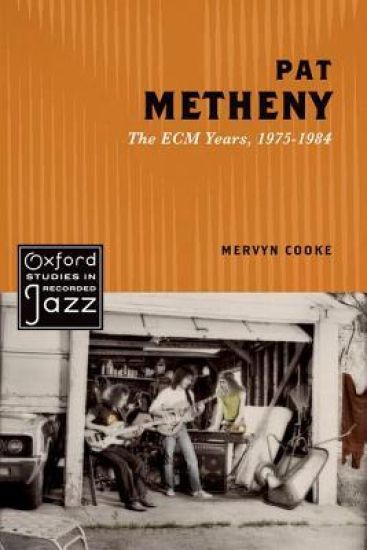
The guitarist and composer Pat Metheny ranks among the most popular and innovative jazz musicians of all time. In Pat Metheny: The ECM Years, 1975-1984, Mervyn Cooke offers the first in-depth account of Metheny's early creative period, during which he recorded eleven stunningly varied albums for the pioneering European record label ECM (Edition of Contemporary Music). This impressive body of recordings encompasses both straight-ahead jazz playing with virtuosic small ensembles and the increasingly complex textures and structures of the Pat Metheny Group, a hugely successful band also notable for its creative exploration of advanced music technologies which were state-of-the-art at the time. Metheny's music in all its shapes and forms broke major new ground in its refusal to subscribe to either of the stylistic poles of bebop and jazz-rock fusion which prevailed in the late 1970s. Through a series of detailed analyses based on a substantial body of new transcriptions from the recordings, this study reveals the close interrelationship of improvisation and pre-composition which lies at the very heart of the music. Furthermore, these analyses vividly demonstrate how Metheny's music is often conditioned by a strongly linear narrative model: both its story-telling characteristics and atmospheric suggestiveness have sometimes been compared to those of film music, a genre in which the guitarist also became active during this early period. The melodic memorability for which Metheny's compositions and improvisations have long been world-renowned is shown to be just one important element in an unusually rich and flexible musical language that embraces influences as diverse as bebop, free jazz, rock, pop, country & western, Brazilian music, classical music, minimalism, and the avant-garde. These elements are melded into a uniquely distinctive soundworld which, above all, directly reflects Metheny's passionate belief in the need to refashion jazz in ways which can allow it to speak powerfully to each new generation of youthful listeners.
Pat Metheny

Pat Metheny

Cooke Mervyn

Oxford University Press Inc
2017
sidottu
The guitarist and composer Pat Metheny ranks among the most popular and innovative jazz musicians of all time. In Pat Metheny: The ECM Years, 1975-1984, Mervyn Cooke offers the first in-depth account of Metheny's early creative period, during which he recorded eleven stunningly varied albums for the pioneering European record label ECM (Edition of Contemporary Music). This impressive body of recordings encompasses both straight-ahead jazz playing with virtuosic small ensembles and the increasingly complex textures and structures of the Pat Metheny Group, a hugely successful band also notable for its creative exploration of advanced music technologies which were state-of-the-art at the time. Metheny's music in all its shapes and forms broke major new ground in its refusal to subscribe to either of the stylistic poles of bebop and jazz-rock fusion which prevailed in the late 1970s. Through a series of detailed analyses based on a substantial body of new transcriptions from the recordings, this study reveals the close interrelationship of improvisation and pre-composition which lies at the very heart of the music. Furthermore, these analyses vividly demonstrate how Metheny's music is often conditioned by a strongly linear narrative model: both its story-telling characteristics and atmospheric suggestiveness have sometimes been compared to those of film music, a genre in which the guitarist also became active during this early period. The melodic memorability for which Metheny's compositions and improvisations have long been world-renowned is shown to be just one important element in an unusually rich and flexible musical language that embraces influences as diverse as bebop, free jazz, rock, pop, country & western, Brazilian music, classical music, minimalism, and the avant-garde. These elements are melded into a uniquely distinctive soundworld which, above all, directly reflects Metheny's passionate belief in the need to refashion jazz in ways which can allow it to speak powerfully to each new generation of youthful listeners.
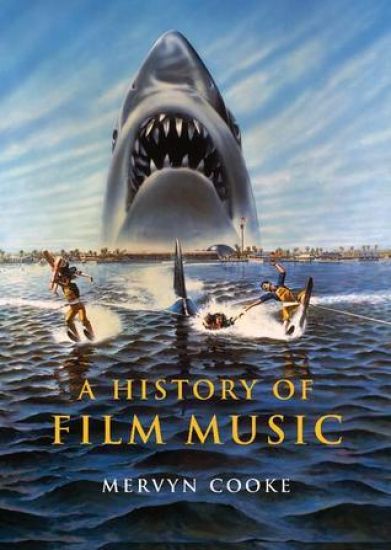
A History of Film Music

A History of Film Music

Cooke Mervyn

Cambridge University Press
2008
sidottu
This book provides a comprehensive and lively introduction to the major trends in film scoring from the silent era to the present day, focussing not only on dominant Hollywood practices but also offering an international perspective by including case studies of the national cinemas of the UK, France, India, Italy, Japan and the early Soviet Union. The book balances wide-ranging overviews of film genres, modes of production and critical reception with detailed non-technical descriptions of the interaction between image track and soundtrack in representative individual films. In addition to the central focus on narrative cinema, separate sections are also devoted to music in documentary and animated films, film musicals and the uses of popular and classical music in the cinema. The author analyses the varying technological and aesthetic issues that have shaped the history of film music, and concludes with an account of the modern film composer's working practices.
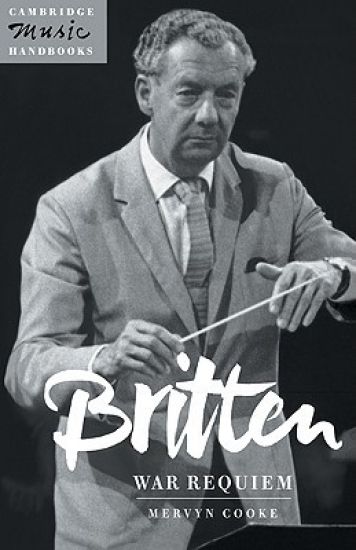
Britten: War Requiem

Britten: War Requiem

Cooke Mervyn

Cambridge University Press
1996
sidottu
Widely regarded as one of the greatest choral works of the twentieth century, Britten's War Requiem was first performed at the consecration of the new Coventry Cathedral in 1962. It provocatively juxtaposes the vivid anti-war poetry of Wilfred Owen with the Latin Requiem Mass in a passionate outcry against man's inhumanity to man. This handbook explores the background to Britten's use of the Owen texts, charting the development of the composer's lifelong pacifist beliefs and (in a chapter contributed by Philip Reed of the Britten-Pears Library, Aldeburgh) detailing the process of composition from hitherto unpublished correspondence and manuscript sources. The musical structure is investigated, and the work's compositional idiom related to Britten's output as a whole. A concluding chapter surveys the fluctuating critical responses to the score, and includes discussion of the composer's legendary 1963 recording and Derek Jarman's controversial interpretation on film.
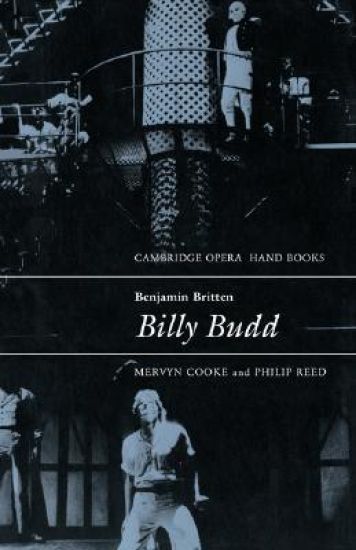
Benjamin Britten: Billy Budd

Benjamin Britten: Billy Budd

Cooke Mervyn; Philip Reed

Cambridge University Press
1993
pokkari
Billy Budd, based on Herman Melville’s nautical allegory, is one of Britten’s most challenging operas. This comprehensive guide considers the work from both literary and musical viewpoints. Melville’s novella is discussed, as is the interpretation given to the novella by the librettists E. M. Forster and Eric Crozier. A detailed synopsis guides the reader through the musical and dramatic action of the opera and in a chapter devoted to the music, Britten’s distinctive technique of tonal symbolism is analysed to demonstrate the effectiveness of his musical response to the dramatic suggestions of Melville’s story. The most important critical writings on Billy Budd are represented by an expanded version of Donald Mitchell’s 1979 notebook on the opera. A final chapter charts the opera’s stage history and fluctuating critical reception.