Kirjojen hintavertailu. Mukana 12 595 353 kirjaa ja 12 kauppaa.

Kirjailija

Corinna Elsenbroich

Kirjat ja teokset yhdessä paikassa: 4 kirjaa, julkaisuja vuosilta 2013-2026, suosituimpien joukossa Becoming an Agent-Based Modeller. Vertaile teosten hintoja ja tarkista saatavuus suomalaisista kirjakaupoista.

4 kirjaa

Kirjojen julkaisuhaarukka 2013-2026.

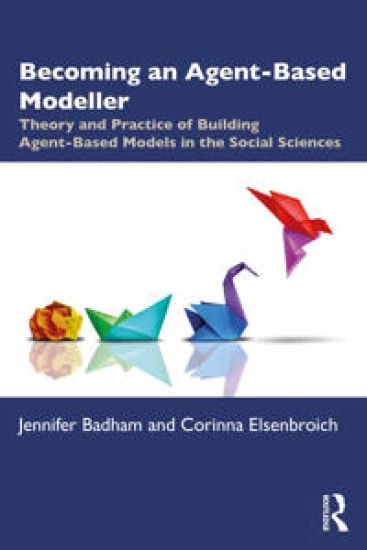
Becoming an Agent-Based Modeller

Becoming an Agent-Based Modeller

Jennifer Badham; Corinna Elsenbroich

TAYLOR FRANCIS LTD
2026
sidottu
Becoming an Agent-based Modeller takes you on a journey, from curiosity about social phenomena to generating them with a computer simulation. The book introduces agent-based modelling as a method to understand societies as complex systems, systems of interconnected, interdependent and interacting agents. The book is structured like a course rather than a textbook or reference book. The core of the book is an extended tutorial introducing the NetLogo programming language. Using the example of an epidemic, it explores how an agent-based model of social influence, situational awareness, and contextual decisions by individual agents about protective behaviour can help us understand plausible epidemic trajectories. The tutorial demonstrates how to build an agent-based model from scratch and use it in research, including the conceptualisation stage, the operationalisation and implementation, experimentation and interpretation. This practical part of the book is embedded in chapters on theory, epistemology and ethics of agent-based modelling. With pedagogical tools including key discussion points, illustrations, and highlighted concepts, this is an ideal resource for courses on ABM, and for postgraduate students, and researchers in the social sciences and beyond, who wish to develop their understanding of agent-based modelling.
Becoming an Agent-Based Modeller

Becoming an Agent-Based Modeller

Jennifer Badham; Corinna Elsenbroich

TAYLOR FRANCIS LTD
2026
nidottu
Becoming an Agent-based Modeller takes you on a journey, from curiosity about social phenomena to generating them with a computer simulation. The book introduces agent-based modelling as a method to understand societies as complex systems, systems of interconnected, interdependent and interacting agents. The book is structured like a course rather than a textbook or reference book. The core of the book is an extended tutorial introducing the NetLogo programming language. Using the example of an epidemic, it explores how an agent-based model of social influence, situational awareness, and contextual decisions by individual agents about protective behaviour can help us understand plausible epidemic trajectories. The tutorial demonstrates how to build an agent-based model from scratch and use it in research, including the conceptualisation stage, the operationalisation and implementation, experimentation and interpretation. This practical part of the book is embedded in chapters on theory, epistemology and ethics of agent-based modelling. With pedagogical tools including key discussion points, illustrations, and highlighted concepts, this is an ideal resource for courses on ABM, and for postgraduate students, and researchers in the social sciences and beyond, who wish to develop their understanding of agent-based modelling.
Modelling Norms

Modelling Norms

Corinna Elsenbroich; Nigel Gilbert

Springer
2015
nidottu
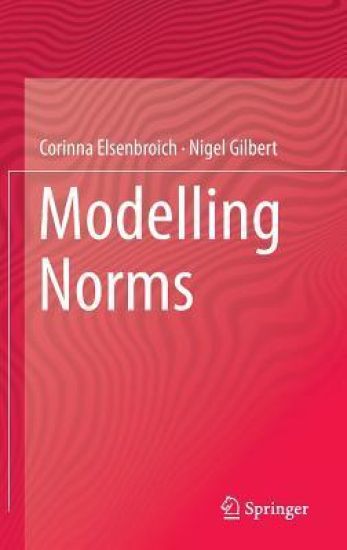
The book focusses on questions of individual and collective action, the emergence and dynamics of social norms and the feedback between individual behaviour and social phenomena. It discusses traditional modelling approaches to social norms and shows the usefulness of agent-based modelling for the study of these micro-macro interactions. Existing agent-based models of social norms are discussed and it is shown that so far too much priority has been given to parsimonious models and questions of the emergence of norms, with many aspects of social norms, such as norm-change, not being modelled. Juvenile delinquency, group radicalisation and moral decision making are used as case studies for agent-based models of collective action extending existing models by providing an embedding into social networks, social influence via argumentation and a causal action theory of moral decision making. The major contribution of the book is to highlight the multifaceted nature of the dynamics of social norms, consisting not only of emergence, and the importance of embedding of agent-based models into existing theory.
Modelling Norms

Modelling Norms

Corinna Elsenbroich; Nigel Gilbert

Springer
2013
sidottu
The book focusses on questions of individual and collective action, the emergence and dynamics of social norms and the feedback between individual behaviour and social phenomena. It discusses traditional modelling approaches to social norms and shows the usefulness of agent-based modelling for the study of these micro-macro interactions. Existing agent-based models of social norms are discussed and it is shown that so far too much priority has been given to parsimonious models and questions of the emergence of norms, with many aspects of social norms, such as norm-change, not being modelled. Juvenile delinquency, group radicalisation and moral decision making are used as case studies for agent-based models of collective action extending existing models by providing an embedding into social networks, social influence via argumentation and a causal action theory of moral decision making. The major contribution of the book is to highlight the multifaceted nature of the dynamics of social norms, consisting not only of emergence, and the importance of embedding of agent-based models into existing theory.