Kirjojen hintavertailu. Mukana 12 595 353 kirjaa ja 12 kauppaa.

Kirjailija

Costas Spirou

Kirjat ja teokset yhdessä paikassa: 6 kirjaa, julkaisuja vuosilta 2003-2021, suosituimpien joukossa Building the City of Spectacle. Vertaile teosten hintoja ja tarkista saatavuus suomalaisista kirjakaupoista.

6 kirjaa

Kirjojen julkaisuhaarukka 2003-2021.

Building the City of Spectacle

Building the City of Spectacle

Costas Spirou; Dennis R. Judd

Cornell University Press
2016
sidottu
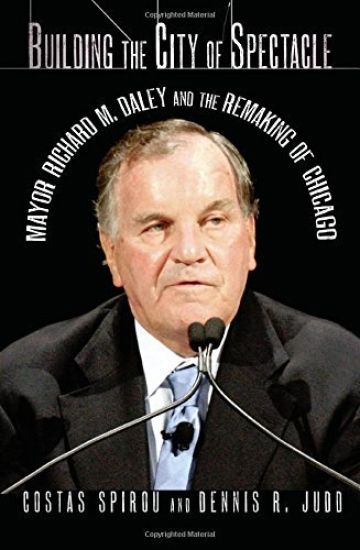
By the time he left office on May 16, 2011, Mayor Richard M. Daley had served six terms and more than twenty-two years at the helm of Chicago's City Hall, making him the longest serving mayor in the city's history. Richard M. Daley was the son of the legendary machine boss, Mayor Richard J. Daley, who had presided over the city during the post–World War II urban crisis. Richard M. Daley led a period of economic restructuring after that difficult era by building a vibrant tourist economy. Costas Spirou and Dennis R. Judd focus on Richard M. Daley's role in transforming Chicago's economy and urban culture. The construction of the "city of spectacle" required that Daley deploy leadership and vision to remake Chicago's image and physical infrastructure. He gained the resources and political power necessary for supporting an aggressive program of construction that focused on signature projects along the city's lakefront, including especially Millennium Park, Navy Pier, the Museum Campus, Northerly Island, Soldier Field, and two major expansions of McCormick Place, the city's convention center. During this period Daley also presided over major residential construction in the Loop and in the surrounding neighborhoods, devoted millions of dollars to beautification efforts across the city, and increased the number of summer festivals and events across Grant Park. As a result of all these initiatives, the number of tourists visiting Chicago skyrocketed during the Daley years. Daley has been harshly criticized in some quarters for building a tourist-oriented economy and infrastructure at the expense of other priorities. Daley left his successor, Rahm Emanuel, with serious issues involving a long-standing pattern of police malfeasance, underfunded and uneven schools, inadequate housing opportunities, and intractable budgetary crises. Nevertheless, Spirou and Judd conclude, because Daley helped transform Chicago into a leading global city with an exceptional urban culture, he also left a positive imprint on the city that will endure for decades to come.
Anchoring Innovation Districts

Anchoring Innovation Districts

Costas Spirou

Johns Hopkins University Press
2021
sidottu
As universities transform cities with their innovation districts, what works in these new public-private partnerships?In recent years, the successful revitalization of urban areas has turned them into magnets for those looking for opportunities in a fast-paced and rapidly unfolding technology-based economy. After the economic crisis of 2008, many colleges and universities attempted to generate alternative sources of revenue and pursued aggressive economic development strategies. Some universities even began to actively invest resources in the rebirth (and rebranding) of urban cores, encouraging the development of entrepreneurial, technology-oriented innovation districts. In Anchoring Innovation Districts, Costas Spirou explains that these districts have emerged as geographic clusters of technology startups, business incubators, and accelerators. They aim to take advantage of intellectual capital, commercialize knowledge, and give their associated institutions a way to enter into the market. The outcome of robust private-public partnerships and complex real estate strategies, these initiatives also complement other urban revitalization efforts and reshape the socioeconomic makeup of city neighborhoods. Presenting readers with six case studies that explore the role of technological innovation, Spirou argues that higher education–anchored innovation districts can make significant contributions to economic expansion, job growth, and the institutions that guide their development. He also points out that these districts nonetheless raise questions about the impact of the Ivory Tower on the urban environment. Spirou focuses on Midtown Atlanta's Tech Square (Georgia Tech), Cambridge's Kendall Square (MIT), Philadelphia's University City (the University of Pennsylvania, Drexel University, and the University of the Sciences), the PHX Core (Arizona State University), and the role that the University of West Florida in Pensacola and the University of Tennessee at Chattanooga play in developing innovation ecosystems. Anchoring Innovation Districts provides unique insight into the transformative opportunities offered and the challenges faced by higher education in the built environment. University administrators, board members, policy makers, and scholars will find Spirou's analysis thought-provoking and helpful.
Urban Tourism and Urban Change

Urban Tourism and Urban Change

Costas Spirou

Routledge
2010
nidottu
Urban Tourism and Urban Change: Cities in a Global Economy provides both a sociological / cultural analysis of change that has taken place in many of the world's cities. This focused treatment of urban tourism examines the implications of these changes for urban management and planning sense, for success and failure in metropolitan change. Uniquely suited for teaching purposes, Costas Spirou integrates numerous case studies of cities to illuminate the significant impact and promise of tourism on urban image and economic development.
Urban Tourism and Urban Change

Urban Tourism and Urban Change

Costas Spirou

Routledge
2010
sidottu
Urban Tourism and Urban Change: Cities in a Global Economy provides both a sociological / cultural analysis of change that has taken place in many of the world's cities. This focused treatment of urban tourism examines the implications of these changes for urban management and planning sense, for success and failure in metropolitan change. Uniquely suited for teaching purposes, Costas Spirou integrates numerous case studies of cities to illuminate the significant impact and promise of tourism on urban image and economic development.
It's Hardly Sportin'

It's Hardly Sportin'

Costas Spirou; Larry Bennett

Northern Illinois University Press
2003
pokkari
Across the nation, stadiums and sports centers are a vital aspect of urban redevelopment. How do these projects affect the communities near the new facilities? Focusing on the controversies surrounding three major Chicago projects-the United Center, Comiskey Park, and lighting Wrigley Field-It's Hardly Sportin' suggests fresh ways for cities to coordinate the expansion of sports facilities with neighborhood life. Shared interest in the home team's triumphs and tragedies can unify a city. But when disputes arise over new and improved sports stadiums, who wins and who loses at the neighborhood level? Using Chicago as a case study, Spirou and Bennett show what happens to neighborhoods when cities use sports as a strategy for revitalization. They argue that stadiums serve as effective tools for urban revitalization only if community organizations and local conditions are closely involved in the planning process. Offering provocative insights into the challenges of contemporary urban economic development, It's Hardly Sportin' calls attention to the crucial role of sports centers in American culture.