Kirjojen hintavertailu. Mukana 12 225 637 kirjaa ja 12 kauppaa.

Kirjailija

Craig A. Evans

Kirjat ja teokset yhdessä paikassa: 35 kirjaa, julkaisuja vuosilta 1993-2025, suosituimpien joukossa Word and Glory. Vertaile teosten hintoja ja tarkista saatavuus suomalaisista kirjakaupoista.

Mukana myös kirjoitusasut: Craig A Evans

35 kirjaa

Kirjojen julkaisuhaarukka 1993-2025.

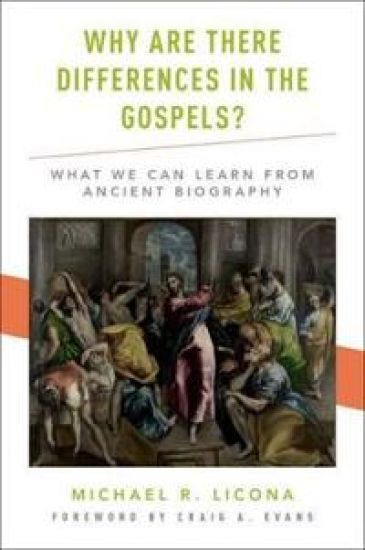
Why Are There Differences in the Gospels?

Why Are There Differences in the Gospels?

Michael R. Licona; Craig A. Evans

Oxford University Press Inc
2017
sidottu
Anyone who reads the Gospels carefully will notice that there are differences in the manner in which they report the same events. These differences have led many conservative Christians to resort to harmonization efforts that are often quite strained, sometimes to the point of absurdity. Many people have concluded the Gospels are hopelessly contradictory and, therefore, historically unreliable accounts of Jesus. The majority of New Testament scholars now hold that most if not all of the Gospels belong to the genre of Greco-Roman biography and that this genre permitted some flexibility in the manner that historical events were narrated. However, few scholars provide a robust discussion on how this plays out in Gospel pericopes (self-contained passages). Why Are There Differences in the Gospels? provides a fresh approach to the matter by examining the works of Plutarch, a Greek essayist who lived in the first and second centuries CE. Michael R. Licona discovers three-dozen pericopes narrated two or more times in Plutarch's Lives, identifies differences between the accounts, and views these differences in light of compositional devices acknowledged by classical scholars to have been commonly employed by ancient authors. The book then uses the same approach with nineteen pericopes narrated in two or more Gospels to demonstrate that the major differences found in them likely result from the same compositional devices employed by Plutarch. By suggesting that both the strained harmonizations and the hasty dismissals of the Gospels as reliable accounts are misguided, Licona invites readers to view the Gospels in light of their biographical genre in order to gain a clearer understanding of why the differences are present.
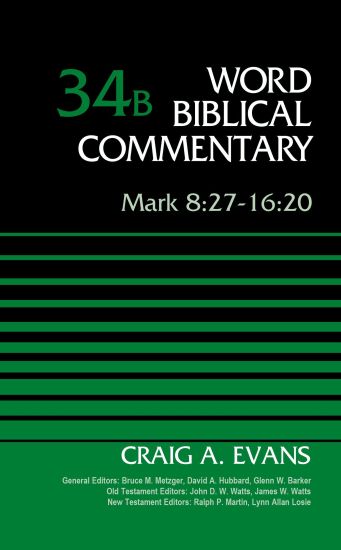
Mark 8:27-16:20, Volume 34B

Mark 8:27-16:20, Volume 34B

Craig A. Evans

Zondervan
2015
sidottu
The Word Biblical Commentary delivers the best in biblical scholarship, from the leading scholars of our day who share a commitment to Scripture as divine revelation. This series emphasizes a thorough analysis of textual, linguistic, structural, and theological evidence. The result is judicious and balanced insight into the meanings of the text in the framework of biblical theology. These widely acclaimed commentaries serve as exceptional resources for the professional theologian and instructor, the seminary or university student, the working minister, and everyone concerned with building theological understanding from a solid base of biblical scholarship.Overview of Commentary OrganizationIntroduction—covers issues pertaining to the whole book, including context, date, authorship, composition, interpretive issues, purpose, and theology.Each section of the commentary includes:Pericope Bibliography—a helpful resource containing the most important works that pertain to each particular pericope.Translation—the author’s own translation of the biblical text, reflecting the end result of exegesis and attending to Hebrew and Greek idiomatic usage of words, phrases, and tenses, yet in reasonably good English.Notes—the author’s notes to the translation that address any textual variants, grammatical forms, syntactical constructions, basic meanings of words, and problems of translation.Form/Structure/Setting—a discussion of redaction, genre, sources, and tradition as they concern the origin of the pericope, its canonical form, and its relation to the biblical and extra-biblical contexts in order to illuminate the structure and character of the pericope. Rhetorical or compositional features important to understanding the passage are also introduced here.Comment—verse-by-verse interpretation of the text and dialogue with other interpreters, engaging with current opinion and scholarly research.Explanation—brings together all the results of the discussion in previous sections to expose the meaning and intention of the text at several levels: (1) within the context of the book itself; (2) its meaning in the OT or NT; (3) its place in the entire canon; (4) theological relevance to broader OT or NT issues.General Bibliography—occurring at the end of each volume, this extensive bibliographycontains all sources used anywhere in the commentary.
From Synagogue to Ecclesia

From Synagogue to Ecclesia

Charles E. Carlston; Craig A. Evans

Mohr Siebeck
2014
sidottu
Charles E. Carlston and Craig A. Evans examine in detail five major motifs in the theology of Matthew: Christology, Law, Church, Scripture and Tradition, as well as History and Eschatology.In this study they reveal a Jewish-Christian author who attempts to mediate the traditions of Judaism and early Christianity to Christian churches in his area that are becoming increasingly composed of former Gentiles. Diversity then, as now, offers both a challenge and an opportunity. The evangelist, moreover, was faced with rejection by the synagogue and strongly voiced skepticism with regard to the proclamation of Jesus as Israel's Messiah. To encourage believers and defend the story of Jesus, the evangelist shows how prophetic Scripture and the demands of Torah have been fulfilled.While not all of the specifics of Matthew's program are immediately usable today, the evangelist offers valuable guidance for the contemporary church in our vastly different historical situation.
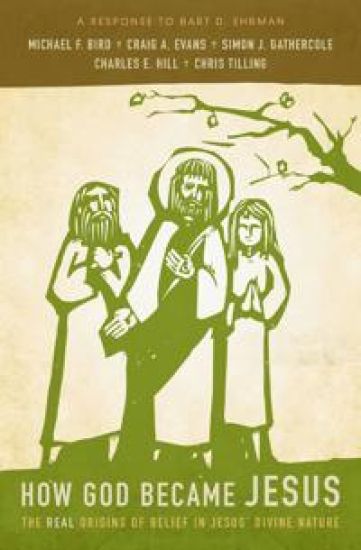
How God Became Jesus

How God Became Jesus

Michael F. Bird; Craig A. Evans; Simon Gathercole; Charles E. Hill; Chris Tilling

Zondervan
2014
nidottu
In his recent book How Jesus Became God: The Exaltation of a Jewish Preacher From Galilee historian Bart Ehrman explores a claim that resides at the heart of the Christian faith— that Jesus of Nazareth was, and is, God. According to Ehrman, though, this is not what the earliest disciples believed, nor what Jesus claimed about himself. The first response book to this latest challenge to Christianity from Ehrman, How God Became Jesus features the work of five internationally recognized biblical scholars. While subjecting his claims to critical scrutiny, they offer a better, historically informed account of why the Galilean preacher from Nazareth came to be hailed as “the Lord Jesus Christ.” Namely, they contend, the exalted place of Jesus in belief and worship is clearly evident in the earliest Christian sources, shortly following his death, and was not simply the invention of the church centuries later.
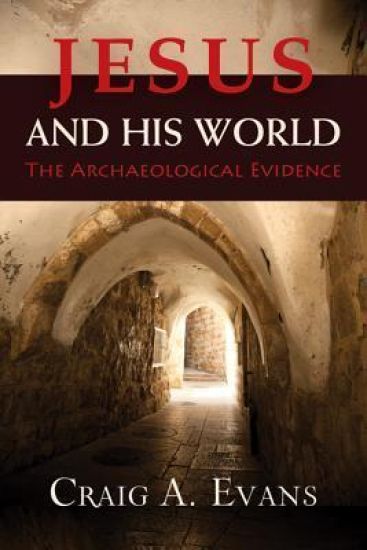
Jesus and His World

Jesus and His World

Craig A Evans

WESTMINSTER/JOHN KNOX PRESS,U.S.
2013
pokkari
In this provocative work, world-renowned scholar Craig A. Evans presents the most important archaeological discoveries that shed light on the world of Jesus of Nazareth. Evans challenges many sensational claims that have been proposed in recent books and peddled in the media by using archaeological findings to uncover the truth about several key pieces of Jesus' world. For example, what was the village of Nazareth actually like in the time of Jesus? Did synagogues really exist, as the Gospels say? What does archaeology tell us about the ruling priests who condemned Jesus to death? Has the tomb of Jesus really been found? Evans's engaging prose enables readers to understand and critique the latest theories--both the sober and the sensational--about who Jesus was and what he lived and died for.This new paperback edition includes an additional appendix with questions for discussion and reflection, making it ideal for both group and individual study.
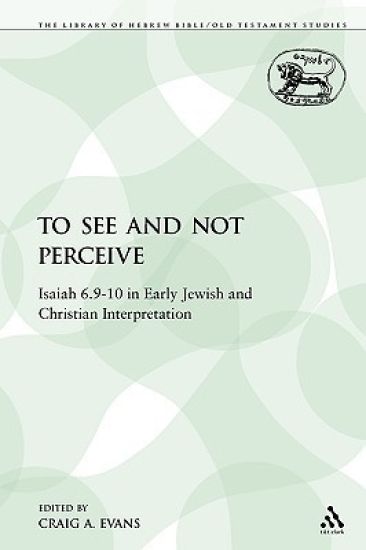
To See and Not Perceive

To See and Not Perceive

Craig A. Evans

Continuum International Publishing Group Ltd.
2009
nidottu
In his famous vision of the enthroned and exalted Lord, Isaiah is told to harden the hearts of his people, 'lest they repent' (Isa. 6.9-10). According to Mark's Gospel, which cites this text, Jesus speaks in parables for the same reason. Interpreters of all generations have, not unnaturally, found the text difficult and disturbing. This study is concerned with the fascinating variety of early Jewish and Christian interpretations and modifications that have attempted to cope with the difficulty. At different stages in Judaism and Christianity the Isaianic vision of God is more clearly perceived than at other times. Isa. 6.9-10 is itself indeed shocking and disturbing, but this is not inappropriate in the context of the prophetic message.
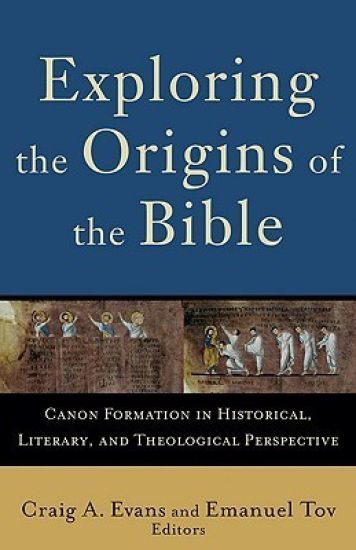
Exploring the Origins of the Bible – Canon Formation in Historical, Literary, and Theological Perspective

Exploring the Origins of the Bible – Canon Formation in Historical, Literary, and Theological Perspective

Craig A. Evans; Emanuel Tov; Craig Evans; Lee Mcdonald

Baker Academic, Div of Baker Publishing Group
2008
nidottu
How did the Bible we have come to be? What do biblical scholars mean when they talk about canon, the Septuagint, the Apocrypha, or the Masoretic Text? All this biblical study is interesting, but does it really matter? Leading international scholars explain that it does. This thought-provoking and cutting-edge collection will help you go deeper in your understanding of the biblical writings, how those writings became canonical Scripture, and why canon matters. Beginning with an explanation of the different versions of the Hebrew Bible, scholars in different areas of expertise explore the complexities and issues related to the Old and New Testament canons, why different Jewish and Christian communities have different collections, and the importance of canon to theology.
Of Scribes and Sages, Vol 2

Of Scribes and Sages, Vol 2

Craig A. Evans

T. T.Clark Ltd
2004
sidottu
Of Scribes and Sages focuses primarily on early interpretation of Scripture, including the emergence of Scripture as Scripture in its various versions and contexts. It examines recent research into the relationship of the Old Testament to the New and how sacred Scripture was interpreted during New Testament times. It also provides stimulating examples to students, scholars, and clergy in how the task of interpretation is to be done.
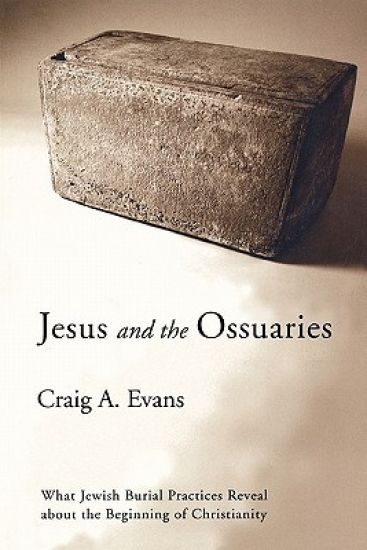
Jesus and the Ossuaries

Jesus and the Ossuaries

Craig A. Evans

Baylor University Press
2003
nidottu
In Jesus and the Ossuaries, Craig A. Evans helps all readers, expert and layperson alike, understand the importance this recent find might have for the quest for the historical Jesus and any historical reconstruction of early Christianity. Evans does this by providing an overview of the most important archaeological discoveries before examining nine other inscriptions (six on ossuaries, three on stone slabs) that pertain in one way or another to the historical Jesus. He then surveys the arguments for and against the authenticity and identification of the recently discovered James Ossuary. Evans concludes his volume with a measured consideration of the historical value of the archaeological data afforded by the several inscriptions.
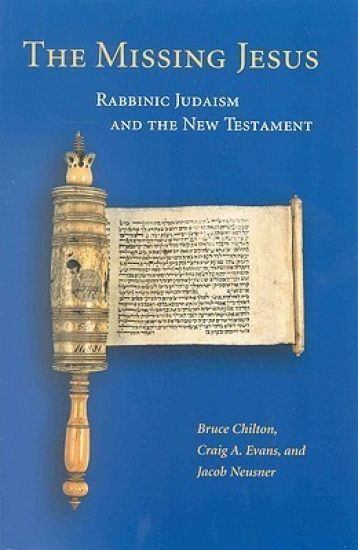
The Missing Jesus

The Missing Jesus

Bruce D. Chilton; Craig A. Evans; Jacob Neusner

Brill
2003
nidottu
How can Jesus be said to be “missing”? What is “missing” is not by any means reference to Jesus: what is missing is rather an entire dimension of his identity. The “missing” Jesus is Jesus within Judaism. This publication has also been published in hardback please click here for details.
Jesus and His Contemporaries

Jesus and His Contemporaries

Craig A. Evans

Brill
2001
nidottu
Jesus was a man from Nazareth who died in Jerusalem. But he was nor ordinary man, or was he? That Jesus existed we are all quite sure, but what were the real, historical facts of his life and death? What, about all that has been said of him, is truly authentic? Who is the real Jesus? With Evans’ research, a more accurate portrait of Jesus begins to emerge. Ironically, the most important and obvious fact to bear in mind when trying to understand Jesus is that he was, in fact, a Jew. Embracing the historical and cultural context in which Jesus lived goes against the tide of Jesus research, specifically, Evans takes on the research from the Jesus Seminar. In the first part of his book, Evans shows us through comparative studies, the diversity of beliefs and actions that existed in the Jewish culture of which Jesus was indeed a part. Evans’ goal is to understand better the Sitz im Leben Jesu. In the second part of the book, Evans pits Jesus against his opponents, seeking to identify Jesus’ teachings and actions that led to his death. Not only does Evans paint a realistic portrait of Jesus, but he helps lay a firmer foundation upon which one can begin to understand the emergence of Christian theology. This publication has also been published in hardback (no longer available).
Jesus in Context

Jesus in Context

Bruce Chilton; Craig A. Evans; Bruce Chilton

Brill
1997
sidottu
The Proclamation of Jesus seeks to place Jesus in the context of first-century Palestinian Judaism. The authors hope to discern the essence of his preaching, his concept of the kingdom of God, and the place of purity in his teaching and activities. Better methods for assessing not simply the authenticity of reported sayings and deeds, but for tracing the development of tradition are considered. The authors are convinced that most of the Synoptic tradition is authentic, but that much of it has been reinterpreted and recontextualized. Herein lies the real challenge for those investigating the historical Jesus. The Proclamation of Jesus opens up new avenues of study and makes new proposals for understanding Jesus in the context of his place and time.