

Kirjailija
Craig Eisendrath
Kirjat ja teokset yhdessä paikassa: 7 kirjaa, julkaisuja vuosilta 1999-2011, suosituimpien joukossa National Insecurity. Vertaile teosten hintoja ja tarkista saatavuus suomalaisista kirjakaupoista.
7 kirjaa
Kirjojen julkaisuhaarukka 1999-2011.


Provides a revealing study of the U.S. government's plan to put weapons into outer space, examining military uses of space from a historical perspective, the current program that would put kinetic, laser, nuclear bombardment, and anti-satellite weaponry into space, and the role of the U.S. in obstructing an international treaty banning weapons from outer space.

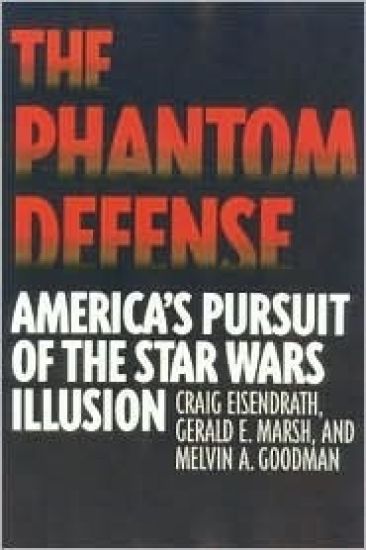
The Phantom Defense
Craig Eisendrath; Melvin A. Goodman; Gerald E. Marsh
Praeger Publishers Inc
2001
sidottu
Drawn from the authors' insider information and expertise, a thought-provoking book discusses the effectiveness of the United States missile defense system and shows how thoughtful diplomacy is the key to meeting security goals.
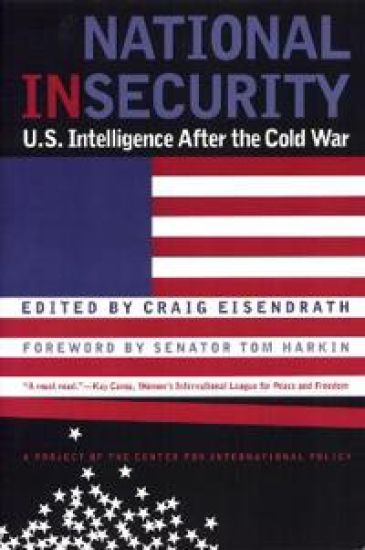
A drastic reform of intelligence activities is long overdue. The Cold War has been over for ten years. No country threatens this nation's existence. Yet, we still spend billions of dollars on covert action and espionage. In National Insecurity ten prominent experts describe, from an insider's perspective, what went wrong with U.S. intelligence and what will be necessary to fix it. Drawing on their experience in government administration, research, and foreign service, they propose a radical rethinking of the United States' intelligence needs in the post-Cold War world. In addition, they offer a coherent and unified plan for reform that can simultaneously protect U.S. security and uphold the values of our democratic system. As we now know, even during the Cold War, when intelligence was seen as a matter of life and death, our system served us badly. It provided unreliable information, which led to a grossly inflated military budget, as it wreaked havoc around the world, supporting corrupt regimes, promoting the drug trade, and repeatedly violating foreign and domestic laws. Protected by a shroud of secrecy, it paid no price for its mistakes. Instead it grew larger and more insulated every year. Taking into consideration our strategic interests abroad as well as the price of covert operations in dollars, reliability, and good will, every American taxpayer can be informed by and will want to read this book. National Insecurity is essential for readers interested in contemporary political issues, international relations, U.S. history, public policy issues, foreign policy, intelligence reform, and political science.
A drastic reform of intelligence activities is long overdue. The Cold War has been over for ten years. No country threatens this nation's existence. Yet, we still spend billions of dollars on covert action and espionage. In National Insecurity ten prominent experts describe, from an insider's perspective, what went wrong with U.S. intelligence and what will be necessary to fix it. Drawing on their experience in government administration, research, and foreign service, they propose a radical rethinking of the United States' intelligence needs in the post-Cold War world. In addition, they offer a coherent and unified plan for reform that can simultaneously protect U.S. security and uphold the values of our democratic system. As we now know, even during the Cold War, when intelligence was seen as a matter of life and death, our system served us badly. It provided unreliable information, which led to a grossly inflated military budget, as it wreaked havoc around the world, supporting corrupt regimes, promoting the drug trade, and repeatedly violating foreign and domestic laws. Protected by a shroud of secrecy, it paid no price for its mistakes. Instead it grew larger and more insulated every year. Taking into consideration our strategic interests abroad as well as the price of covert operations in dollars, reliability, and good will, every American taxpayer can be informed by and will want to read this book. National Insecurity is essential for readers interested in contemporary political issues, international relations, U.S. history, public policy issues, foreign policy, intelligence reform, and political science.