Kirjojen hintavertailu. Mukana 12 378 572 kirjaa ja 12 kauppaa.

Kirjailija

Craig Kallendorf

Kirjat ja teokset yhdessä paikassa: 8 kirjaa, julkaisuja vuosilta 1999-2023, suosituimpien joukossa Early Printed Virgil Editions from 1500--1800. Vertaile teosten hintoja ja tarkista saatavuus suomalaisista kirjakaupoista.

8 kirjaa

Kirjojen julkaisuhaarukka 1999-2023.

The Virgilian Tradition II

The Virgilian Tradition II

Craig Kallendorf

TAYLOR FRANCIS LTD
2023
nidottu
The Virgilian Tradition II brings together thirteen essays by historian Craig Kallendorf. The essays present a distinctive approach to the reception of the canonical classical author Virgil, that is focused around the early printed books through which that author was read and interpreted within early modern culture. Using the prefaces, dedicatory letters, and commentaries that accompanied the early modern editions of Virgil’s Eclogues, Georgics, Aeneid, and Appendix Virgiliana, they demonstrate how this paratextual material was used by early readers to develop a more nuanced interpretation of Virgil’s writings than twentieth-century scholars believed they were capable of. The approach developed throughout this volume shows how the emerging field of book history can enrich our understanding of the reception of Greek and Latin authors.This book will appeal to scholars and students of early modern history, as well as those interested in book history and cultural history. (CS 1103).
The Virgilian Tradition II

The Virgilian Tradition II

Craig Kallendorf

Routledge
2021
sidottu
The Virgilian Tradition II brings together thirteen essays by historian Craig Kallendorf. The essays present a distinctive approach to the reception of the canonical classical author Virgil, that is focused around the early printed books through which that author was read and interpreted within early modern culture. Using the prefaces, dedicatory letters, and commentaries that accompanied the early modern editions of Virgil’s Eclogues, Georgics, Aeneid, and Appendix Virgiliana, they demonstrate how this paratextual material was used by early readers to develop a more nuanced interpretation of Virgil’s writings than twentieth-century scholars believed they were capable of. The approach developed throughout this volume shows how the emerging field of book history can enrich our understanding of the reception of Greek and Latin authors.This book will appeal to scholars and students of early modern history, as well as those interested in book history and cultural history. (CS 1103).
The Virgilian Tradition

The Virgilian Tradition

Craig Kallendorf

Routledge
2019
nidottu
The essays in this collection approach the reception of the Roman poet Virgil in early modern Europe from the perspective of two areas at the center of current scholarly work in the humanities: book history and the history of reading. The first group of essays uses Virgil's place in post-classical culture to raise questions of broad scholarly interest: How, exactly, does modern reception theory challenge traditional notions of literary practice and value? How do the marginal comments of early readers provide insight into their character and mind? How does rhetoric help shape literary criticism? The second group of essays begins from the premise that the material form in which early modern readers encountered this most important of Latin poets played a key role in how they understood what they read. Thus title pages and illustrations help shape interpretation, with the results of that interpretation in turn becoming the comments that early modern readers regularly entered into the margins of their books. The volume concludes with four more specialized studies that show how these larger issues play out in specific neo-Latin works of the early modern period.
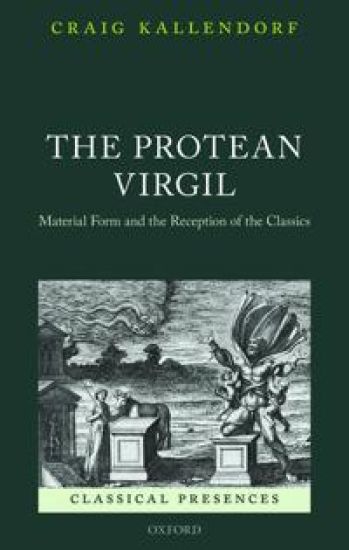
The Protean Virgil

The Protean Virgil

Craig Kallendorf

Oxford University Press
2015
sidottu
The Protean Virgil argues that when we try to understand how and why different readers have responded differently to the same text over time, we should take into account the physical form in which they read the text as well as the text itself. Using Virgil's poetry as a case study in book history, the volume shows that a succession of material forms - manuscript, printed book, illustrated edition, and computer file - undermines the drive toward textual and interpretive stability. This stability is the traditional goal of classical scholarship, which seeks to recover what Virgil wrote and how he intended it to be understood. The manuscript form served to embed Virgil's poetry into Christian culture, which attempted to anchor the content into a compatible theological truth. Readers of early printed material proceeded differently, breaking Virgil's text into memorable moral and stylistic fragments, and collecting those fragments into commonplace books. Furthermore, early illustrated editions present a progression of re-envisionings in which Virgil's poetry was situated within a succession of receiving cultures. In each case, however, the material form helped to generate a method of reading Virgil which worked with this form but which failed to survive the transition to a new union of the textual and the physical. This form-induced instability reaches its climax with computerization, which allows the reader new power to edit the text and to challenge the traditional association of Virgil's poetry with elite culture.
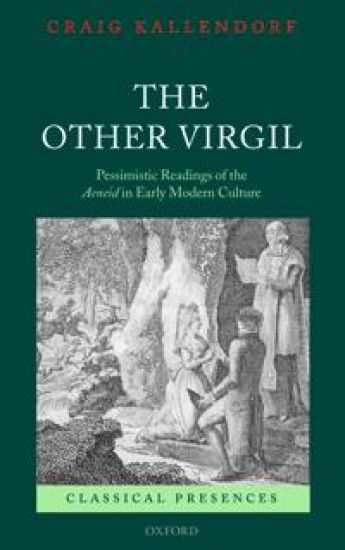
The Other Virgil

The Other Virgil

Craig Kallendorf

Oxford University Press
2007
sidottu
The Other Virgil tells the story of how a classic like the Aeneid can say different things to different people. As a school text it was generally taught to support the values and ideals of a succession of postclassical societies, but between 1500 and 1800 a number of unusually sensitive readers responded to cues in the text that call into question what the poem appears to be supporting. This book focuses on the literary works written by these readers, to show how they used the Aeneid as a model for poems that probed and challenged the dominant values of their society, just as Virgil had done centuries before. Some of these poems are not as well known today as they should be, but others, like Milton's Paradise Lost and Shakespeare's The Tempest, are; in the latter case, the poems can be understood in new ways once their relationship to the 'other Virgil' is made clear.
The Virgilian Tradition

The Virgilian Tradition

Craig Kallendorf

Ashgate Publishing Limited
2007
sidottu
The essays in this collection approach the reception of the Roman poet Virgil in early modern Europe from the perspective of two areas at the center of current scholarly work in the humanities: book history and the history of reading. The first group of essays uses Virgil's place in post-classical culture to raise questions of broad scholarly interest: How, exactly, does modern reception theory challenge traditional notions of literary practice and value? How do the marginal comments of early readers provide insight into their character and mind? How does rhetoric help shape literary criticism? The second group of essays begins from the premise that the material form in which early modern readers encountered this most important of Latin poets played a key role in how they understood what they read. Thus title pages and illustrations help shape interpretation, with the results of that interpretation in turn becoming the comments that early modern readers regularly entered into the margins of their books. The volume concludes with four more specialized studies that show how these larger issues play out in specific neo-Latin works of the early modern period.
Virgil and the Myth of Venice

Virgil and the Myth of Venice

Craig Kallendorf

Clarendon Press
1999
sidottu
This book, which is the first comprehensive study of its subject, shows how one traditionally esteemed author, the Roman poet Virgil, played an unexpectedly significant role in the shaping of Venetian Renaissance culture. The author draws on reception theory, the sociology of literature, and history of the book to argue that Virgil's poetry became a best-seller because it sometimes challenged, but more often confirmed, the specific moral, religious, and social values its Venetian readers brought with them to their texts. The texts that are used are the printed books of the fifteenth and sixteenth century printed books in which readers of the period encountered Virgil, the prefaces and commentaries that guided their responses, and, the marginal notes that record those responses. How the Renaissance Venetians saw themselves when they looked into their literary past tells us a good deal about them, but it also illuminates a number of issues at the centre of humanistic studies today, ranging from how reading takes place to the role of class and gender in fashioning interpretation. The wide range of interests that are touched on should make this book of value to scholars in the disciplines of classics, history, Renaissance studies, and Italian studies, as well as English literature and cultural studies.