Kirjojen hintavertailu. Mukana 12 595 353 kirjaa ja 12 kauppaa.
Kirjailija
Craig L Nessan
Kirjat ja teokset yhdessä paikassa: 24 kirjaa, julkaisuja vuosilta 2003-2026, suosituimpien joukossa Paul Leo. Vertaile teosten hintoja ja tarkista saatavuus suomalaisista kirjakaupoista.
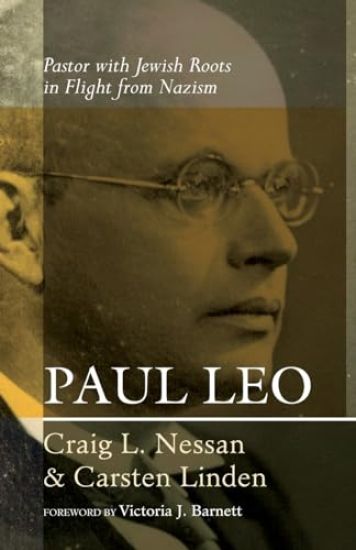
Although baptized as a child and serving faithfully as a pastor and theologian in the German Evangelische Kirche, Paul Leo was persecuted, removed from his church position, and imprisoned by the Nazi regime due to his Jewish ancestry. Leo was a descendent of Moses Mendelssohn, the famous Jewish philosopher, and Fanny Hensel nee Mendelssohn-Bartholdy, the composer and pianist. The book carefully documents how the Nazis took severe measures against Leo, a Christian minister, because of his Jewish lineage. This eventuated in his incarceration in Buchenwald concentration camp before he was able to flee Germany as an exile to the United States. His escape from Germany was mediated through a refugee camp in the Netherlands and emigration to the US through the sponsorship of his colleague and friend Otto Piper, on the faculty of Princeton Theological Seminary. The story of Paul Leo in America includes his teaching at Western Theological Seminary in Pittsburgh, pastorates in southern Texas, and professorship at Wartburg Theological Seminary in Dubuque, Iowa. This book highlights the teaching and scholarly publications by Leo and his marriage to the accomplished artist Eva (Dittrich) Leo.
Although baptized as a child and serving faithfully as a pastor and theologian in the German Evangelische Kirche, Paul Leo was persecuted, removed from his church position, and imprisoned by the Nazi regime due to his Jewish ancestry. Leo was a descendent of Moses Mendelssohn, the famous Jewish philosopher, and Fanny Hensel nee Mendelssohn-Bartholdy, the composer and pianist. The book carefully documents how the Nazis took severe measures against Leo, a Christian minister, because of his Jewish lineage. This eventuated in his incarceration in Buchenwald concentration camp before he was able to flee Germany as an exile to the United States. His escape from Germany was mediated through a refugee camp in the Netherlands and emigration to the US through the sponsorship of his colleague and friend Otto Piper, on the faculty of Princeton Theological Seminary. The story of Paul Leo in America includes his teaching at Western Theological Seminary in Pittsburgh, pastorates in southern Texas, and professorship at Wartburg Theological Seminary in Dubuque, Iowa. This book highlights the teaching and scholarly publications by Leo and his marriage to the accomplished artist Eva (Dittrich) Leo.
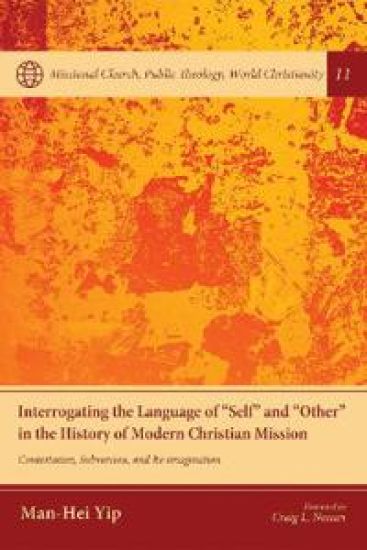
This book offers a critical analysis of the use of language in mission studies. Language and Christian missionary activity intersect in complicated ways to objectify the other in cross-cultural situations. Rethinking missiological language is both urgent and necessary to subvert narratives that continue to fetishize the other as cultural stereotypes. The project takes a step forward to reconceptualize otherness as gift, and such an affirmation should create a pathway for human flourishing and furthermore, open new avenues for missiological exploration to address issues arising from a world dominated by bigoted discourses, lies, and hate speech.
This book offers a critical analysis of the use of language in mission studies. Language and Christian missionary activity intersect in complicated ways to objectify the other in cross-cultural situations. Rethinking missiological language is both urgent and necessary to subvert narratives that continue to fetishize the other as cultural stereotypes. The project takes a step forward to reconceptualize otherness as gift, and such an affirmation should create a pathway for human flourishing and furthermore, open new avenues for missiological exploration to address issues arising from a world dominated by bigoted discourses, lies, and hate speech.
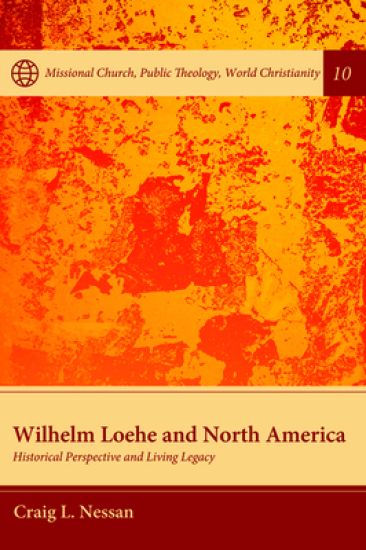
Wilhelm Loehe is one of the most significant nineteenth-century figures for North American church life and mission, whose influence continues into the present. Loehe is unique for joining together aspects of the Christian life often held to be antithetical: worship and mission, orthodoxy and pietism, evangelical proclamation and diakonia, and theological imagination and practical skill in administration. Already in the nineteenth century Loehe contributed a vital principle for advancing ecumenical understanding: the idea of ""open questions."" When the church confesses core teachings as one, there does not need to be agreement on all secondary matters in order to live together in church fellowship. This book explores Loehe's historical activity as a pastor, as a supporter of mission in North America, as an organizer (together with Friedrich Bauer) of theological education in North America, and as a founder of deaconess institutions in Neuendettelsau, Germany, that still exist today. The central themes represented by Loehe not only constitute a matrix that has significance for the church and its mission today but also constitute an agenda for the church of the future.
Wilhelm Loehe is one of the most significant nineteenth-century figures for North American church life and mission, whose influence continues into the present. Loehe is unique for joining together aspects of the Christian life often held to be antithetical: worship and mission, orthodoxy and pietism, evangelical proclamation and diakonia, and theological imagination and practical skill in administration. Already in the nineteenth century Loehe contributed a vital principle for advancing ecumenical understanding: the idea of ""open questions."" When the church confesses core teachings as one, there does not need to be agreement on all secondary matters in order to live together in church fellowship. This book explores Loehe's historical activity as a pastor, as a supporter of mission in North America, as an organizer (together with Friedrich Bauer) of theological education in North America, and as a founder of deaconess institutions in Neuendettelsau, Germany, that still exist today. The central themes represented by Loehe not only constitute a matrix that has significance for the church and its mission today but also constitute an agenda for the church of the future.
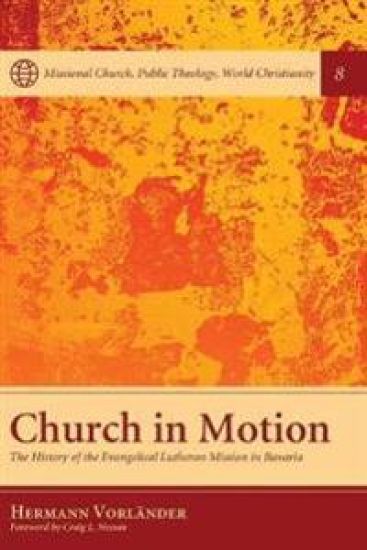
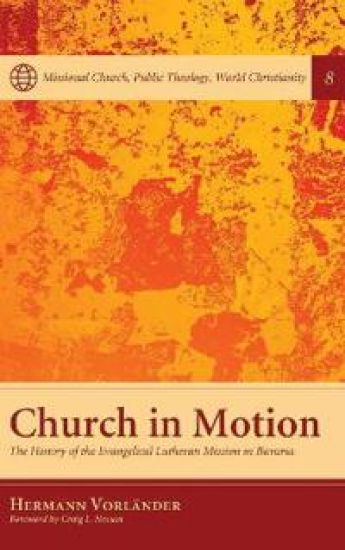
""Mission is nothing but the one church of God in motion."" With these words the famous German Lutheran theologian Wilhelm Loehe described the essence of missionary work. Mission moves the church and crosses boundaries to form the one universal church. In 1842, Loehe started missionary work in the small Bavarian town of Neuendettelsau in southern Germany, as he sent two young men as ""emergency helpers"" to North America. He supported the formation of Lutheran congregations that later joined together to become the Evangelical Lutheran Church in America (ELCA) and the Lutheran Church-Missouri Synod (LCMS). Together with Friedrich Bauer he founded a mission seminary that sent, until 1985, nearly 900 graduates as pastors and missionaries not only to the USA, but also to Australia, Papua New Guinea, Brazil, Africa, Eastern Europe, and Palestine. From this the present center Mission One World of the Evangelical Lutheran Church in Bavaria developed, which maintains partnership relations to churches in Africa, Asia/Pacific, and Latin America. This book describes the history of this missionary movement up to the present time and puts the Bavarian missionary work into the context of mission theology and strategies in the twentieth century. ""Out of an obscure village in Germany emerged a church in motion that has changed the globe This is at the heartbeat of the amazing story documented in this book, which begins with Wilhelm Loehe. Hermann Vorlaender is one of his successors, who knows this history from the inside out, having served many years as director of the missional institution Loehe grounded. Detailing the historical developments among the global partner churches through relationships of accompaniment extending from Neuendettelsau, the book locates these efforts in relationship to many other mission institutions that also were at work during this fruitful period. Even more insightful is the analysis of the diverse meanings of mission that come to expression through this history."" --Craig L. Nessan, Wartburg Theological Seminary, Dubuque, Iowa ""The mission movements among German Protestants in the nineteenth century involved a radical premise: that the life and work of the church transcends national boundaries. Vorlaender's excellent and comprehensive account of the Neuendettelsau Mission, originating with Wilhelm Loehe and Friedrich Bauer's efforts among German immigrants and Native Americans in North America, shows how this new and generative understanding of the church's mission has unfolded in the context of Bavarian Lutheranism. The impact continues to this day in the emergence of the church as a trans-national, global communion."" --Thomas H. Schattauer, Professor, Wartburg Theological Seminary, Dubuque, Iowa Hermann Vorlander worked as professor at the Near East School of Theology in Beirut (Lebanon) and until 2007 as executive director of Mission One World--Centre for Partnership, Development and Mission of the Evangelical Lutheran Church in Bavaria (Germany).
""Mission is nothing but the one church of God in motion."" With these words the famous German Lutheran theologian Wilhelm Loehe described the essence of missionary work. Mission moves the church and crosses boundaries to form the one universal church. In 1842, Loehe started missionary work in the small Bavarian town of Neuendettelsau in southern Germany, as he sent two young men as ""emergency helpers"" to North America. He supported the formation of Lutheran congregations that later joined together to become the Evangelical Lutheran Church in America (ELCA) and the Lutheran Church-Missouri Synod (LCMS). Together with Friedrich Bauer he founded a mission seminary that sent, until 1985, nearly 900 graduates as pastors and missionaries not only to the USA, but also to Australia, Papua New Guinea, Brazil, Africa, Eastern Europe, and Palestine. From this the present center Mission One World of the Evangelical Lutheran Church in Bavaria developed, which maintains partnership relations to churches in Africa, Asia/Pacific, and Latin America. This book describes the history of this missionary movement up to the present time and puts the Bavarian missionary work into the context of mission theology and strategies in the twentieth century. ""Out of an obscure village in Germany emerged a church in motion that has changed the globe This is at the heartbeat of the amazing story documented in this book, which begins with Wilhelm Loehe. Hermann Vorlaender is one of his successors, who knows this history from the inside out, having served many years as director of the missional institution Loehe grounded. Detailing the historical developments among the global partner churches through relationships of accompaniment extending from Neuendettelsau, the book locates these efforts in relationship to many other mission institutions that also were at work during this fruitful period. Even more insightful is the analysis of the diverse meanings of mission that come to expression through this history."" --Craig L. Nessan, Wartburg Theological Seminary, Dubuque, Iowa ""The mission movements among German Protestants in the nineteenth century involved a radical premise: that the life and work of the church transcends national boundaries. Vorlaender's excellent and comprehensive account of the Neuendettelsau Mission, originating with Wilhelm Loehe and Friedrich Bauer's efforts among German immigrants and Native Americans in North America, shows how this new and generative understanding of the church's mission has unfolded in the context of Bavarian Lutheranism. The impact continues to this day in the emergence of the church as a trans-national, global communion."" --Thomas H. Schattauer, Professor, Wartburg Theological Seminary, Dubuque, Iowa Hermann Vorlander worked as professor at the Near East School of Theology in Beirut (Lebanon) and until 2007 as executive director of Mission One World--Centre for Partnership, Development and Mission of the Evangelical Lutheran Church in Bavaria (Germany).
The condition of stuck is a condition well known by pastoral caregivers and leaders. In When All Else Fails, Wayne Menking argues that the way out of stuckness is not through the acquisition of faddish techniques, but through a deep rethinking of our pastoral vocation and what our pastoral work is to be about. Pastoral care and leadership are not indistinguishable, just as priestly work can never be separated from prophetic work. They are always one and the same. Pastoral care and leadership, then, are not about helping people relieve their anxiety through the offering of palliative comfort, but rather helping people to engage the powers that have hold of their life so as to leave what is old for what is new. In this engagement, the caregiver will always encounter powers against which niceness and unconditional love will not work. Using biblical images and narratives that depict God as a deeply empathic and compassionate God, yet one who is never adaptively sympathetic, Menking asserts that pastoral caregivers and leaders must shed their niceness and adaptivity so as to employ their God-given power if they are to help people effectively leave what is old for what is new.