Kirjojen hintavertailu. Mukana 12 390 323 kirjaa ja 12 kauppaa.

Kirjailija

Craig N. Murphy

Kirjat ja teokset yhdessä paikassa: 8 kirjaa, julkaisuja vuosilta 1994-2021, suosituimpien joukossa Egalitarian Politics in the Age of Globalization. Vertaile teosten hintoja ja tarkista saatavuus suomalaisista kirjakaupoista.

8 kirjaa

Kirjojen julkaisuhaarukka 1994-2021.

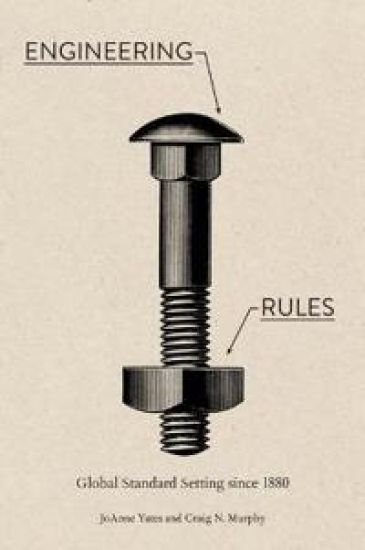
Engineering Rules

Engineering Rules

JoAnne Yates; Craig N. Murphy

Johns Hopkins University Press
2021
pokkari
The first global history of voluntary consensus standard setting.Finalist, Hagley Prize in Business History, The Hagley Museum and Library / The Business History ConferencePrivate, voluntary standards shape almost everything we use, from screw threads to shipping containers to e-readers. They have been critical to every major change in the world economy for more than a century, including the rise of global manufacturing and the ubiquity of the internet. In Engineering Rules, JoAnne Yates and Craig N. Murphy trace the standard-setting system's evolution through time, revealing a process with an astonishingly pervasive, if rarely noticed, impact on all of our lives. This type of standard setting was established in the 1880s, when engineers aimed to prove their status as professionals by creating useful standards that would be widely adopted by manufacturers while satisfying corporate customers. Yates and Murphy explain how these engineers' processes provided a timely way to set desirable standards that would have taken much longer to emerge from the market and that governments were rarely willing to set. By the 1920s, the standardizers began to think of themselves as critical to global prosperity and world peace. After World War II, standardizers transcended Cold War divisions to create standards that made the global economy possible. Finally, Yates and Murphy reveal how, since 1990, a new generation of standardizers has focused on supporting the internet and web while applying the same standard-setting process to regulate the potential social and environmental harms of the increasingly global economy.Drawing on archival materials from three continents, Yates and Murphy describe the positive ideals that sparked the standardization movement, the ways its leaders tried to realize those ideals, and the challenges the movement faces today. Engineering Rules is a riveting global history of the people, processes, and organizations that created and maintain this nearly invisible infrastructure of today's economy, which is just as important as the state or the global market.
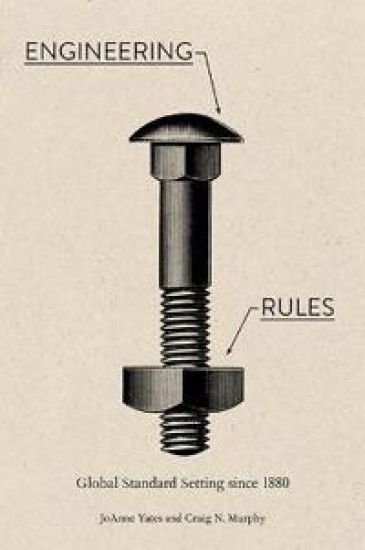
Engineering Rules

Engineering Rules

JoAnne Yates; Craig N. Murphy

Johns Hopkins University Press
2019
sidottu
The first global history of voluntary consensus standard setting.Finalist, Hagley Prize in Business History, The Hagley Museum and Library / The Business History ConferencePrivate, voluntary standards shape almost everything we use, from screw threads to shipping containers to e-readers. They have been critical to every major change in the world economy for more than a century, including the rise of global manufacturing and the ubiquity of the internet. In Engineering Rules, JoAnne Yates and Craig N. Murphy trace the standard-setting system's evolution through time, revealing a process with an astonishingly pervasive, if rarely noticed, impact on all of our lives. This type of standard setting was established in the 1880s, when engineers aimed to prove their status as professionals by creating useful standards that would be widely adopted by manufacturers while satisfying corporate customers. Yates and Murphy explain how these engineers' processes provided a timely way to set desirable standards that would have taken much longer to emerge from the market and that governments were rarely willing to set. By the 1920s, the standardizers began to think of themselves as critical to global prosperity and world peace. After World War II, standardizers transcended Cold War divisions to create standards that made the global economy possible. Finally, Yates and Murphy reveal how, since 1990, a new generation of standardizers has focused on supporting the internet and web while applying the same standard-setting process to regulate the potential social and environmental harms of the increasingly global economy.Drawing on archival materials from three continents, Yates and Murphy describe the positive ideals that sparked the standardization movement, the ways its leaders tried to realize those ideals, and the challenges the movement faces today. Engineering Rules is a riveting global history of the people, processes, and organizations that created and maintain this nearly invisible infrastructure of today's economy, which is just as important as the state or the global market.
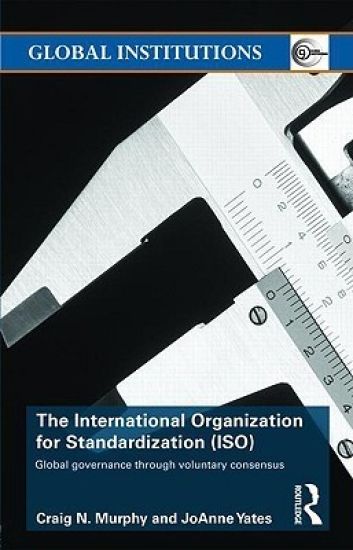
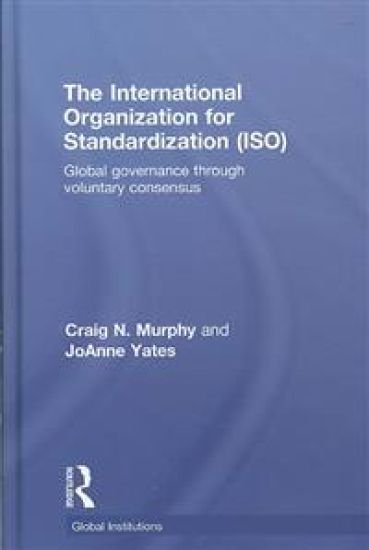
The International Organization for Standardization (ISO)

The International Organization for Standardization (ISO)

Craig N. Murphy; Joanne Yates

Routledge
2008
nidottu
The International Organization for Standardization (ISO) is the first full-length study of the largest nongovernmental, global regulatory network whose scope and influence rivals that of the UN system. Much of the interest in the successes and failures of global governance focuses around high profile organisations such as the United Nations, World Bank and World Trade Organisation. This volume is one of few books that explore both the International Organization for Standardization's (ISO) role as a facilitator of essential economic infrastructure and the implication of ISO techniques for a much wider realm of global governance. Through detailing the initial rationale behind the ISO and a systematic discussion of how this low profile organization has developed, Murphy and Yates provide a comprehensive survey of the ISO as a powerful force on the way commerce is conducted in a changing and increasingly globalized world.
The International Organization for Standardization (ISO)

The International Organization for Standardization (ISO)

Craig N. Murphy; Joanne Yates

Routledge
2008
sidottu
The International Organization for Standardization (ISO) is the first full-length study of the largest nongovernmental, global regulatory network whose scope and influence rivals that of the UN system. Much of the interest in the successes and failures of global governance focuses around high profile organisations such as the United Nations, World Bank and World Trade Organisation. This volume is one of few books that explore both the International Organization for Standardization's (ISO) role as a facilitator of essential economic infrastructure and the implication of ISO techniques for a much wider realm of global governance. Through detailing the initial rationale behind the ISO and a systematic discussion of how this low profile organization has developed, Murphy and Yates provide a comprehensive survey of the ISO as a powerful force on the way commerce is conducted in a changing and increasingly globalized world.
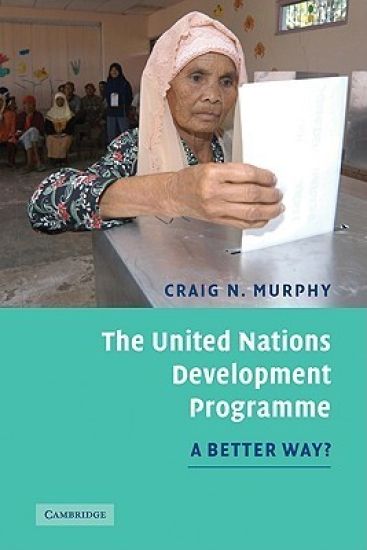
The United Nations Development Programme

The United Nations Development Programme

Craig N. Murphy

Cambridge University Press
2006
pokkari
The United Nations Development Programme is the central network co-ordinating the work of the United Nations in over 160 developing countries. This 2006 book provides the first authoritative and accessible history of the Programme and its predecessors. Based on the findings of hundreds of interviews and archives in more than two dozen countries, Craig Murphy traces the history of the UNDP's organizational structure and mission, its relationship to the multilateral financial institutions, and the development of its doctrines. He argues that the principles on which the UNDP was founded remain as relevant in a world divided by terrorism as they were in the immediate aftermath of the Second World War, as are the fundamental problems that have plagued the Programme from its origin, including the opposition of traditionally isolationist forces in the industrialized world.
The United Nations Development Programme

The United Nations Development Programme

Craig N. Murphy

Cambridge University Press
2006
sidottu
The United Nations Development Programme is the central network co-ordinating the work of the United Nations in over 160 developing countries. This 2006 book provides the first authoritative and accessible history of the Programme and its predecessors. Based on the findings of hundreds of interviews and archives in more than two dozen countries, Craig Murphy traces the history of the UNDP's organizational structure and mission, its relationship to the multilateral financial institutions, and the development of its doctrines. He argues that the principles on which the UNDP was founded remain as relevant in a world divided by terrorism as they were in the immediate aftermath of the Second World War, as are the fundamental problems that have plagued the Programme from its origin, including the opposition of traditionally isolationist forces in the industrialized world.
Egalitarian Politics in the Age of Globalization

Egalitarian Politics in the Age of Globalization

Craig N. Murphy

Palgrave Macmillan
2001
nidottu
In recent years women's movements and democracy movements appear to have been more successful in promoting social equality than labour movements or development movements. Wage gaps between men and women have narrowed. New democracies have flourished. Yet, gaps between the rich and poor remain. Do differences in organization and strategy account for the differences in outcomes? Through in-depth studies of the United States, Eastern and Western Europe, Latin America, Africa, China, and north- and southeast Asia the contributors to this volume provide some thought-provoking answers.