Kirjojen hintavertailu. Mukana 12 571 931 kirjaa ja 12 kauppaa.

Kirjailija

Craig Paterson

Kirjat ja teokset yhdessä paikassa: 8 kirjaa, julkaisuja vuosilta 2008-2022, suosituimpien joukossa Law, Ethics and Society. Vertaile teosten hintoja ja tarkista saatavuus suomalaisista kirjakaupoista.

8 kirjaa

Kirjojen julkaisuhaarukka 2008-2022.

Criminology for the Police

Criminology for the Police

Craig Paterson; Ed Pollock

TAYLOR FRANCIS LTD
2022
sidottu
This book offers an applied approach to criminology suitable for prospective police officers. It covers the fundamentals of criminological knowledge, theory and research, and their relevance to policing. The book is split into two parts, the first introducing the basics of criminology, and the second connecting criminological research to police practice. It focuses on the principles of evidence-based practice and encourages students to think critically about the issues covered. Core content includes the following: A history of policing in England and Wales, through a criminological lens. An overview of the literature on police culture, bias and discretion. A review of the challenges of applying criminological insights to policing, and the impact of the College of Policing code of ethics on police practice. An exploration of the challenges of contemporary policing, including complex crime, transnational investigation, digital and organised crime. A critical overview of evidence, and public sources of evidence. An examination of the contested definitions and perspectives on Evidence-Based Policing. An introduction to criminological research, including quantitative, qualitative and mixed methods. A review of problem solving in policing, including SARA and Atlas models. This book is essential reading for all students studying degrees in Professional Policing, as well as students of criminology engaged in criminal justice knowledge and practice.
Criminology for the Police

Criminology for the Police

Craig Paterson; Ed Pollock

TAYLOR FRANCIS LTD
2022
nidottu
This book offers an applied approach to criminology suitable for prospective police officers. It covers the fundamentals of criminological knowledge, theory and research, and their relevance to policing. The book is split into two parts, the first introducing the basics of criminology, and the second connecting criminological research to police practice. It focuses on the principles of evidence-based practice and encourages students to think critically about the issues covered. Core content includes the following: A history of policing in England and Wales, through a criminological lens. An overview of the literature on police culture, bias and discretion. A review of the challenges of applying criminological insights to policing, and the impact of the College of Policing code of ethics on police practice. An exploration of the challenges of contemporary policing, including complex crime, transnational investigation, digital and organised crime. A critical overview of evidence, and public sources of evidence. An examination of the contested definitions and perspectives on Evidence-Based Policing. An introduction to criminological research, including quantitative, qualitative and mixed methods. A review of problem solving in policing, including SARA and Atlas models. This book is essential reading for all students studying degrees in Professional Policing, as well as students of criminology engaged in criminal justice knowledge and practice.
Law, Ethics and Society

Law, Ethics and Society

Craig Paterson; Stephan U Breu

Johann Heinrich Pestalozzi University Press
2019
sidottu
This Law, Ethics & Society collection reflects the result of interactive academic work initiated by Johann Heinrich Pestalozzi University Inc., Miami, Florida, during the academic year 2018, and also the scholarly work of academics supporting our University. The authors include international academics from the United States of America, Great Britain, Croatia, Bosnia-Herzegovina, Switzerland, Austria, Serbia and Macedonia.
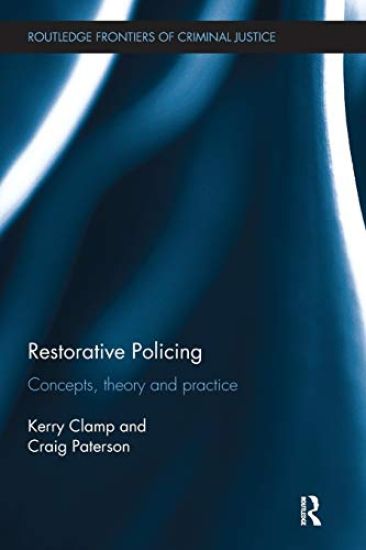
Restorative Policing

Restorative Policing

Kerry Clamp; Craig Paterson

Routledge
2018
nidottu
In the UK and elsewhere, restorative justice and policing are core components of a range of university programmes; however, currently no such text exists on the intersection of these two areas of study. This book draws together these diverse theoretical perspectives to provide an innovative, knowledge-rich text that is essential reading for all those engaged with the evolution and practice of restorative policing.Restorative Policing surveys the twenty-five year history of restorative policing practice, during which its use and influence over criminal justice has slowly grown. It then situates this experience within a criminological discussion about neo-liberal responses to crime control. There has been insufficient debate about how the concepts of ‘restorative justice’ and ‘policing’ sit alongside each other and how they may be connected or disconnected in theoretical and conceptual terms. The book seeks to fill this gap through an exploration of concepts, theory, policy and practice. In doing so, the authors make a case for a more transformative vision of restorative policing that can impact positively upon the shape and practice of policing and outline a framework for the implementation of such a strategy. This pathbreaking book will be of interest to undergraduate and postgraduate students taking courses on restorative justice, policing and crime control, as well as professionals interested in the implementation of restorative practices in the police force.
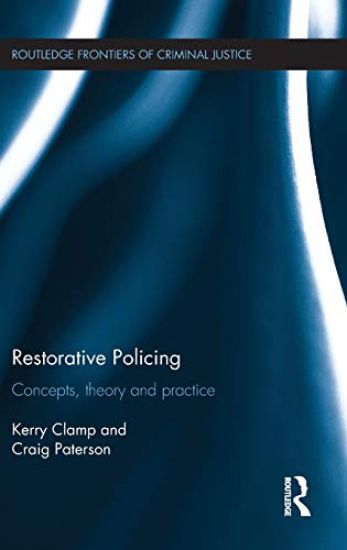
Restorative Policing

Restorative Policing

Kerry Clamp; Craig Paterson

Routledge
2016
sidottu
In the UK and elsewhere, restorative justice and policing are core components of a range of university programmes; however, currently no such text exists on the intersection of these two areas of study. This book draws together these diverse theoretical perspectives to provide an innovative, knowledge-rich text that is essential reading for all those engaged with the evolution and practice of restorative policing.Restorative Policing surveys the twenty-five year history of restorative policing practice, during which its use and influence over criminal justice has slowly grown. It then situates this experience within a criminological discussion about neo-liberal responses to crime control. There has been insufficient debate about how the concepts of ‘restorative justice’ and ‘policing’ sit alongside each other and how they may be connected or disconnected in theoretical and conceptual terms. The book seeks to fill this gap through an exploration of concepts, theory, policy and practice. In doing so, the authors make a case for a more transformative vision of restorative policing that can impact positively upon the shape and practice of policing and outline a framework for the implementation of such a strategy. This pathbreaking book will be of interest to undergraduate and postgraduate students taking courses on restorative justice, policing and crime control, as well as professionals interested in the implementation of restorative practices in the police force.
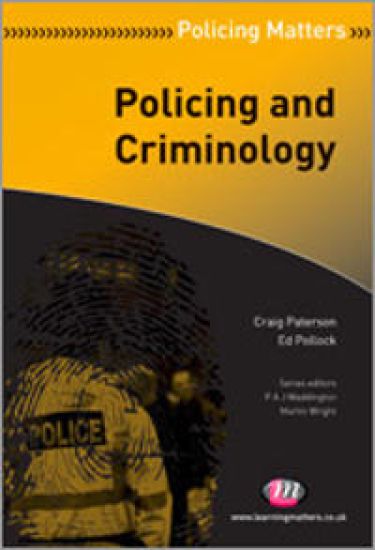
Policing and Criminology

Policing and Criminology

Craig Paterson; Ed Pollock

Learning Matters Ltd
2011
nidottu
A concise and up to date introduction to criminology for those undertaking degrees and foundation degrees in policing, police studies and related subjects. It provides an introduction to criminological perspectives on the development of the police service over the last 200 years alongside an overview of contemporary themes. Key topics include the changing role of policing, police governance and accountability, policing philosophies and strategies and the globalisation of policing. The book also examines the role criminology has played in the modernisation agenda and police reform, the shift to evidence-led policing, and the relationship between criminological theory and police practice.
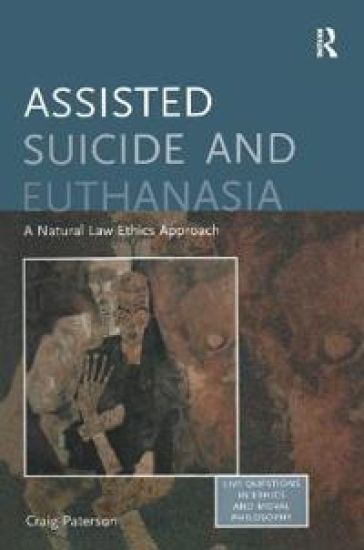
Assisted Suicide and Euthanasia

Assisted Suicide and Euthanasia

Craig Paterson

Ashgate Publishing Limited
2008
nidottu
As medical technology advances and severely injured or ill people can be kept alive and functioning long beyond what was previously medically possible, the debate surrounding the ethics of end-of-life care and quality-of-life issues has grown more urgent. In this lucid and vigorous book, Craig Paterson discusses assisted suicide and euthanasia from a fully fledged but non-dogmatic secular natural law perspective. He rehabilitates and revitalises the natural law approach to moral reasoning by developing a pluralistic account of just why we are required by practical rationality to respect and not violate key demands generated by the primary goods of persons, especially human life. Important issues that shape the moral quality of an action are explained and analysed: intention/foresight; action/omission; action/consequences; killing/letting die; innocence/non-innocence; person/non-person. Paterson defends the central normative proposition that ’it is always a serious moral wrong to intentionally kill an innocent human person, whether self or another, notwithstanding any further appeal to consequences or motive’.