Kirjailija
Craig Taylor
Kirjat ja teokset yhdessä paikassa: 21 kirjaa, julkaisuja vuosilta 2007-2025, suosituimpien joukossa Londoners: The Days and Nights of London Now--As Told by Those Who Love It, Hate It, Live It, Left It, and Long for It. Vertaile teosten hintoja ja tarkista saatavuus suomalaisista kirjakaupoista.
21 kirjaa
Kirjojen julkaisuhaarukka 2007-2025.
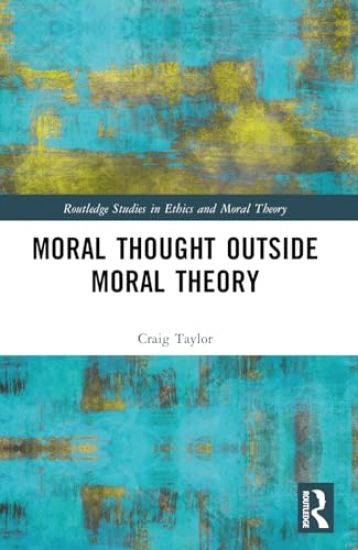
This book argues there can be no theory of ethics and that any attempt at such a theory ends up distorting the moral phenomena that it is supposed to explain. It presents clear examples of moral thought outside moral theorising through literature and Wittgenstein’s later philosophy.The book’s precise target is moral theory understood as a theory of right action. The author begins by arguing against the assumption central to moral theory that moral judgments are universalizable; that what it is right for one agent to do in a given situation is what is right for any agent in that same situation. Rather, moral judgements are essentially first personal. The author's specific contention here is that our understanding of moral thought in literature provides grounds for rejecting the assumption that moral judgements are universalizable. The author then goes on to argue that there is some determinate and objective content to ethics connected to recognising another human being as a limit to our will. He presents several literary examples that have influenced his thinking about the nature of moral value. He combines these readings with insights from Wittgenstein’s later writings to demonstrate the ways in which moral theorising fails to capture important aspects of moral thought.Moral Thought Outside Moral Theory will be of interest to scholars and advanced students working in ethics and moral theory, literature and philosophy, and Wittgenstein.
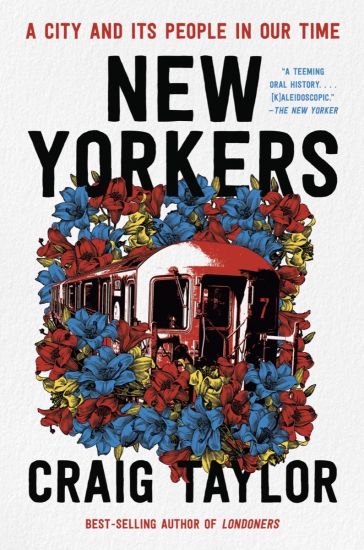
In the first twenty years of the twenty-first century, New York City has been convulsed by terrorist attack, blackout, hurricane, recession, social injustice, and pandemic. New Yorkers weaves the voices of some of the city's best talkers into an indelible portrait of New York in our time--and a powerful hymn to the vitality and resilience of its people.Best-selling author Craig Taylor has been hailed as "a peerless journalist and a beautiful craftsman" (David Rakoff), acclaimed for the way he "fuses the mundane truth of conversation with the higher truth of art" (Michel Faber). In the wake of his celebrated book Londoners, Taylor moved to New York and spent years meeting regularly with hundreds of New Yorkers as diverse as the city itself. New Yorkers features 75 of the most remarkable of them, their fascinating true tales arranged in thematic sections that follow Taylor's growing engagement with the city.Here are the uncelebrated people who propel New York each day--bodega cashier, hospital nurse, elevator repairman, emergency dispatcher. Here are those who wire the lights at the top of the Empire State Building, clean the windows of Rockefeller Center, and keep the subway running. Here are people whose experiences reflect the city's fractured realities: the mother of a Latino teenager jailed at Rikers, a BLM activist in the wake of police shootings. And here are those who capture the ineffable feeling of New York, such as a balloon handler in the Macy's Thanksgiving Day Parade or a security guard at the Statue of Liberty.Vibrant and bursting with life, New Yorkers explores the nonstop hustle to make it; the pressures on new immigrants, people of color, and the poor; the constant battle between loving the city and wanting to leave it; and the question of who gets to be considered a "New Yorker." It captures the strength of an irrepressible city that--no matter what it goes through--dares call itself the greatest in the world.
From the best-selling author of Londoners, a symphony of contemporary New York in the magnificent words of its people.
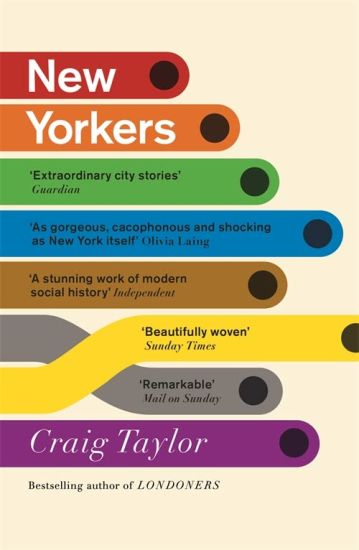
'Beautifully woven' Sunday Times'Extraordinary city stories ... ambitious and entertaining ... [Taylor] does a fine job of telling the New York story' GuardianA symphony of contemporary New York told through the magnificent words of its people - from the best-selling author of Londoners.In the first twenty years of the twenty-first century, New York City has been convulsed by terrorist attack, blackout, hurricane, recession, social injustice, and pandemic. New Yorkers weaves the voices of some of the city's best talkers into an indelible portrait of New York in our time - and a powerful hymn to the vitality and resilience of its people. Vibrant and bursting with life, New Yorkers explores the nonstop hustle to make it; the pressures on new immigrants, people of colour, and the poor. It captures the strength of an irrepressible city that - no matter what it goes through - dares call itself the greatest in the world. Drawn from millions of words, hundreds of interviews, and six years in the making, New Yorkers is a grand portrait of an irrepressible city and a hymn to the vitality and resilience of its people.
In the first twenty years of the twenty-first century, New York City has been convulsed by terrorist attack, blackout, hurricane, recession, social injustice, and pandemic. New Yorkers weaves the voices of some of the city's best talkers into an indelible portrait of New York in our time--and a powerful hymn to the vitality and resilience of its people.Best-selling author Craig Taylor has been hailed as "a peerless journalist and a beautiful craftsman" (David Rakoff), acclaimed for the way he "fuses the mundane truth of conversation with the higher truth of art" (Michel Faber). In the wake of his celebrated book Londoners, Taylor moved to New York and spent years meeting regularly with hundreds of New Yorkers as diverse as the city itself. New Yorkers features 75 of the most remarkable of them, their fascinating true tales arranged in thematic sections that follow Taylor's growing engagement with the city.Here are the uncelebrated people who propel New York each day--bodega cashier, hospital nurse, elevator repairman, emergency dispatcher. Here are those who wire the lights at the top of the Empire State Building, clean the windows of Rockefeller Center, and keep the subway running. Here are people whose experiences reflect the city's fractured realities: the mother of a Latino teenager jailed at Rikers, a BLM activist in the wake of police shootings. And here are those who capture the ineffable feeling of New York, such as a balloon handler in the Macy's Thanksgiving Day Parade or a security guard at the Statue of Liberty.Vibrant and bursting with life, New Yorkers explores the nonstop hustle to make it; the pressures on new immigrants, people of color, and the poor; the constant battle between loving the city and wanting to leave it; and the question of who gets to be considered a "New Yorker." It captures the strength of an irrepressible city that--no matter what it goes through--dares call itself the greatest in the world.
Greenhouses have a rich history. They have a noble beginning as well. According to Pliny the Elder, when royal physicians informed the emperor Tiberius in first century Rome that he should eat a cucumber a day, construction began on a special house for plants. The material for the roof allowed sunlight to enter and the walls of stone permitted heat from fires outside to warm the air inside. This early greenhouse assured a continual supply of cucumbers, which in turn preserved the health of the ruler of the Roman Empire.Since the first century, greenhouses have continued to evolve. Materials such as glass, fiberglass, and plastic have replaced the stone walls and early roof made from mica or selenite. Contemporary heating systems, fans, and computers are now available to maintain the correct air temperature for a plethora of crops. The physical materials, construction methods, and techniques have changed over the years; however, the purpose has remained the same.We still need greenhouses to ensure a continual supply of certain crops. With the aid of a greenhouse, a gardener can determine the temperature and humidity that the plants need. The greenhouse offers a place of protection. Although careful maintenance is still required, a greenhouse aids in the development of desired outcomes.The local church has significant correlations to a greenhouse. The local church was born to be a place where God's people grow. The King of Kings ushered in the church to not only protect his children from false teachers, but also to feed his sheep. Over the years, the physical shape of the church building has changed. Bricks, mortar, and steel have replaced the open fields and tents where people used to gather to hear the Word. Contemporary sound and lighting systems have replaced the simple amenities of house churches. The purpose of the local church, however, remains unchanged. The local church is still the place where God's people grow to become spiritual leaders.Some pastors and church leaders have drifted away from the church's purpose. The church is not a club or a business, although some attitudes and behaviors that prevail in some churches would indicate otherwise. In order to provide optimal spiritual growth among believers and produce spiritual leaders, the church must recover its purpose. The local church must return to what it was intended to be-a greenhouse. That is what my church experience over the years has taught me.Although I desire to become who God intended for me to be, I have found it difficult to focus on my areas of strength instead of constantly worrying about meeting people's expectations of me. I felt confined for the first ten years of my professional pastoral ministry. After serving in four churches for an average of 2 1/2 years in each church, I pleaded with God for anything different than another assignment that robbed me from me. I was an emerging leader hungry for opportunities to learn and grow. My passion was to help others discover their God-given strengths and give ministry away. However, most of my time was spent attending meetings, planning youth activities, leading Bible studies, and putting out fires. I wish things were different in the local church.
Leveraging the Impact of 360-Degree Feedback
John W. Fleenor; Sylvster; Craig Taylor; Chappelow
Berrett-Koehler Publishers
2020
nidottu
From the Center for Creative Leadership (CCL), this essential guide is updated with new insights, tips, and tools to help organizations get the most out of 360-degree feedback. This is a hands-on guide for implementing effective 360-degree feedback systems as part of leadership development initiatives in organizations. Written for professionals who work inside organizations and external consultants working with clients, the book draws on over twenty years of research and practice by the Center for Creative Leadership (CCL). The book provides step-by-step guidelines for successful 360-degree feedback as well as best practices observed and tested with CCL's broad base of clients. The second edition is updated with advances in the field over the past ten years and features new chapters on ensuring validity, why the process can fail, and the future of leadership development. The book includes worksheets, checklists, and other tools to use or adapt with a 360-degree process in any organization. Center for Creative Leadership (CCL) is a top-ranked, global provider of programs that develop better leaders through its exclusive focus on leadership education and research.
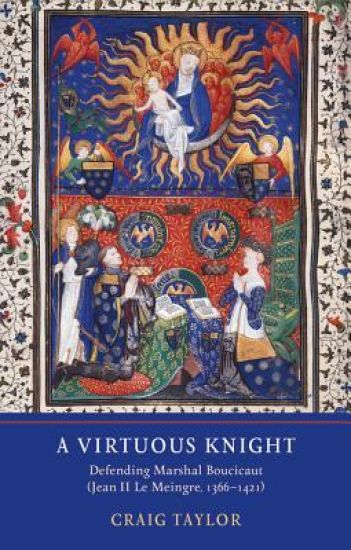
A radical re-interpretation of the chivalric biography of Boucicaut. The Livre des fais du bon messire Jehan le Maingre (1409) is one of the most famous chivalric biographies of the Middle Ages. It presents Jean II Le Meingre, known as Boucicaut (1366-1421), as an ideal knight and role model, and has frequently been seen by modern scholars as a last-ditch effort to defend traditional chivalric values that were supposedly in decline. Here, however, Craig Taylor argues that the biography is a much more complex and interesting text, fusing traditional notions of chivalry with the most fashionable new ideas in circulation at the French court at the start of the fifteenth century. Rather than a nostalgic criticism of contemporary knighthood, it should be seen as a showcase of the latest ideas on chivalry, written to renew the enthusiasm of the great French princes for a man who was in grave danger of falling out of favour: its purpose was to celebrate and to defend a beleaguered Boucicaut against his critics at the royal court, and to explain his actions as governor of Genoa, his failed crusading enterprises in the Eastern Mediterranean and his unsuccessful efforts to broker a solution to the Papal Schism. CRAIG TAYLOR is a Reader in Medieval History at the University of York; he was Director of its Centre for Medieval Studies from 2010 to 2011 and from 2014 to 2017.
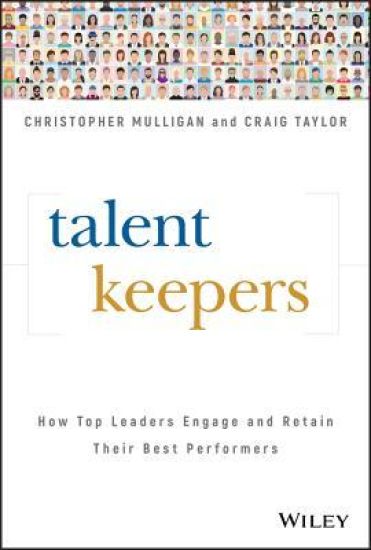
Achieve higher levels of workforce engagement and retain more employees A strong U.S. economy with record-low unemployment rates and the shift to Millennials—now the largest generation in the workforce—are driving specific challenges for organizations to engage and retain employees. Engaged employees don't just happen, they are nurtured by organizations with great cultures and strong leadership. Talent Keepers puts a new spin on a systematic approach to employee engagement and retention with precise tactics that have achieved proven results. This book includes research-based methods of engaging employees, beginning the moment they are hired. With six client case studies that focus on how the organization put an engagement plan into practice and achieved success, readers will come away with specific, actionable strategies they can begin implementing immediately in their organization. Put an engagement plan into actionFind actionable strategiesImplement ways to retain your best employeesAchieve success starting today If you're a top leader looking to engage and retain your best performers, Talent Keepers has you covered.
Chivalry and the Ideals of Knighthood in France during the Hundred Years War
Craig Taylor
Cambridge University Press
2016
pokkari
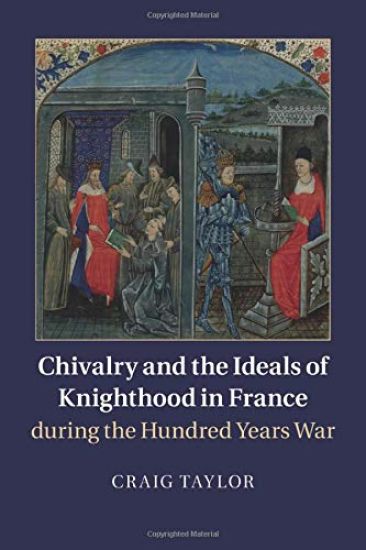
Craig Taylor's study examines the wide-ranging French debates on the martial ideals of chivalry and knighthood during the period of the Hundred Years War (1337–1453). Faced by stunning military disasters and the collapse of public order, writers and intellectuals carefully scrutinized the martial qualities expected of knights and soldiers. They questioned when knights and men-at-arms could legitimately resort to violence, the true nature of courage, the importance of mercy, and the role of books and scholarly learning in the very practical world of military men. Contributors to these discussions included some of the most famous French medieval writers, led by Jean Froissart, Geoffroi de Charny, Philippe de Mézières, Honorat Bovet, Christine de Pizan, Alain Chartier and Antoine de La Sale. This interdisciplinary study sets their discussions in context, challenging modern, romantic assumptions about chivalry and investigating the historical reality of debates about knighthood and warfare in late medieval France.
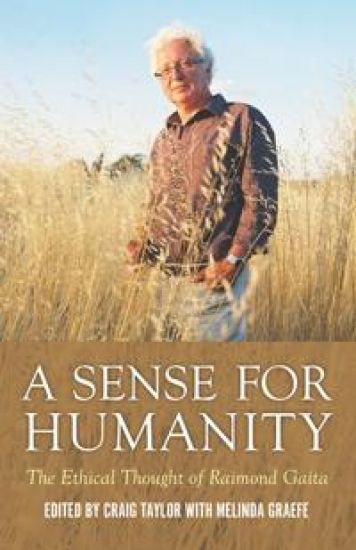
Raimond Gaita has developed an original, powerful, and sometimes controversial conception of the nature of ethical thought, and has made an outstanding contribution to moral philosophy, not least for his distinctive vision of the nature of moral philosophy as an academic discipline. However, the influence of Gaita's ethical thought extends well beyond academic philosophy. The essays in this collection examine the influence of Gaita's ethical thought in this broader sense, and particularly within Australian society and culture where it has been most significant. Through his various works, including his acclaimed biography Romulus: My Father, Raimond Gaita's ethical thought has had a considerable impact on the intellectual and cultural life of Australia. The book is unique for its survey of this influence, with contributions from significant Australian writers and academics from a diverse range of disciplines, including politics, law, social work, and philosophy. Other features of the book include a new poem for Gaita by poet and screenwriter Nick Drake and an interview with Gaita by Anne Manne, in which he reflects on the origins and development of his ethical thought as a form of lucidity. (Series: Philosophy)
Chivalry and the Ideals of Knighthood in France during the Hundred Years War
Craig Taylor
Cambridge University Press
2013
sidottu
Craig Taylor's study examines the wide-ranging French debates on the martial ideals of chivalry and knighthood during the period of the Hundred Years War (1337–1453). Faced by stunning military disasters and the collapse of public order, writers and intellectuals carefully scrutinized the martial qualities expected of knights and soldiers. They questioned when knights and men-at-arms could legitimately resort to violence, the true nature of courage, the importance of mercy, and the role of books and scholarly learning in the very practical world of military men. Contributors to these discussions included some of the most famous French medieval writers, led by Jean Froissart, Geoffroi de Charny, Philippe de Mézières, Honorat Bovet, Christine de Pizan, Alain Chartier and Antoine de La Sale. This interdisciplinary study sets their discussions in context, challenging modern, romantic assumptions about chivalry and investigating the historical reality of debates about knighthood and warfare in late medieval France.
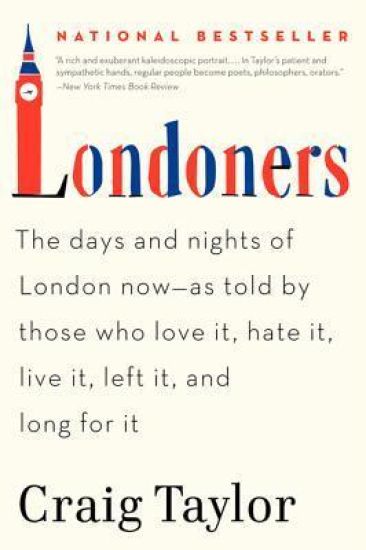
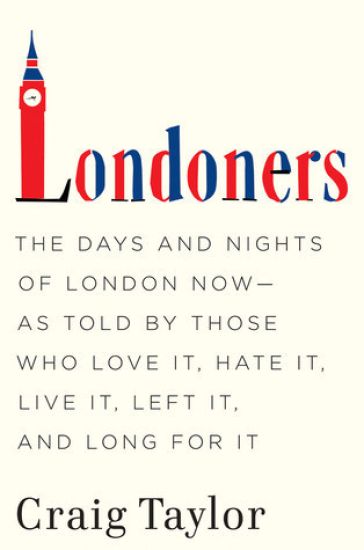
Londoners: The Days and Nights of London Now--As Told by Those Who Love It, Hate It, Live It, Left It, and Long for It
Craig Taylor
Ecco Press
2013
nidottu
"A rich and exuberant kaleidoscopic portrait of a great, messy, noisy, daunting, inspiring, maddening, enthralling, constantly shifting Rorschach test of a place. . . . Delightful. . . . In Taylor's patient and sympathetic hands, regular people become poets, philosophers, orators." -- New York Times Book ReviewLondoners is a fresh and compulsively readable view of one of the world's most fascinating cities-a vibrant narrative portrait of the London of our own time, featuring unforgettable stories told by the real people who make the city hum.Acclaimed writer and editor Craig Taylor has spent years traversing every corner of the city, getting to know the most interesting Londoners, including the voice of the London Underground, a West End rickshaw driver, an East End nightclub doorperson, a mounted soldier of the Queen's Life Guard at Buckingham Palace, and a couple who fell in love at the Tower of London--and now live there. With candor and humor, this diverse cast--rich and poor, old and young, native and immigrant, men and women (and even a Sarah who used to be a George)--shares indelible tales that capture the city as never before.Together, these voices paint a vivid, epic, and wholly original portrait of twenty-first-century London in all its breadth, from Notting Hill to Brixton, from Piccadilly Circus to Canary Wharf, from an airliner flying into London Heathrow Airport to Big Ben and Tower Bridge, and down to the deepest tunnels of the London Underground. Londoners is the autobiography of one of the world's greatest cities.
A Wonder Woman and bride-to-be finds herself worse for wear at the end of a hen night; a funeral director's love of Manchester United proves unhelpful when talking to the bereaved; two overly-vigilant mothers wrestle with their paranoia in the queue for Santa's Grotto; a widow recounts her disastrous return to the world of dating and a father realises that his son is growing away from him as he helps him tie his football boots.In these snippets of overheard conversations from across the length and breadth of the country, Craig Taylor captures the state we're in with humour and pathos and perfect timing. Laugh-out-loud funny, and sometimes heartbreakingly moving, these tiny plays in which every one of us could have a starring role are little windows into other people's lives that reveal the triumphs, disasters, prejudices, horrors and joys of twenty-first-century life.Hugely entertaining and utterly addictive, this is book that can be dipped into or feasted upon in one sitting. It will change the way you listen to the world around you, and train journeys will never be the same again.
The ground-breaking and bestselling group portrait of London today: a book as rich, dynamic, lively, and diverse as the city itself 'Epic' David Nicholls 'Electrifying' The Times 'This is a book to deepen your relationship with London and make you fall in - or out - of love with it all over again... I can't tell you how much I enjoyed it' Evening Standard Here are the voices of London - rich and poor, native and immigrant, women and men - witnessed by acclaimed journalist, playwright and writer Craig Taylor, who spent five years exploring the city and listening to its residents. From the woman whose voice announces the stations on the London Underground to the man who plants the trees along Oxford Street; from a Pakistani currency trader to a Guardsman at Buckingham Palace - together, these voices and many more, paint a vivid, epic and wholly fresh portrait of twenty-first century London. '[A] splendid oral history of the city... A remarkable volume' Guardian 'A substantial account, not just of our imaginary riverside capital, but, more vividly, of himself: as inquirer, investigator, part of a long and valuable lineage' Iain Sinclair, Observer 'Memorable, funny and occasionally melancholy... A rich, satisfying tapestry of metropolitan life' Sunday Times
Londoners: The Days and Nights of London Now--As Told by Those Who Love It, Hate It, Live It, Left It, and Long for It
Craig Taylor
Ecco Press
2012
sidottu
"Craig Taylor is the real deal: a peerless journalist and a beautiful craftsman." --David Rakoff, New York Times bestselling author of The Fraud and Half Empty "Londoners is a wonderful book--I wanted it to be twice as long." --Diana Athill, New York Times bestselling author of Somewhere Towards the End In Londoners, acclaimed journalist Craig Taylor paints readers an epic portrait of today's London that is as rich and lively as the city itself. In the style of Studs Terkel (Working, Hard Times, The Good War) and Dave Isay (Listening Is an Act of Love), Londoners offers up the stories, the gripes, the memories, and the dreams of those in the great and vibrant British metropolis who "love it, hate it, live it, left it, and long for it," from a West End rickshaw driver to a Soldier of the Guard at Buckingham Palace to a recovering heroin addict seeing Big Ben for the very first time. Published just in time for the 2012 London Olympic Games, Londoners is a glorious literary celebration of one of the world's truly great cities.
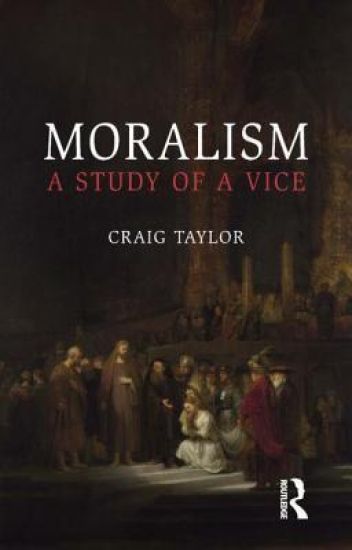
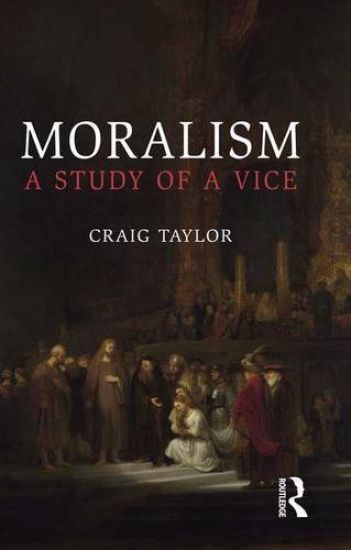
Moralism involves the distortion of moral thought, the distortion of reflection and judgement. It is a vice, and one to which many - from the philosopher to the media pundit to the politician - are highly susceptible. This book examines the nature of moralism in specific moral judgements and the ways in which moral philosophy and theories about morality can themselves become skewed by this vice. This book ranges across a wide range of topics: the problem of the demandingness of morality; the conflict between moral and other values; the contrast between the practice of moral philosophy and other modes of moral thought or reflection; moralism in the media; and, moralism in the public discussion of literature and art. This highly original and provocative book will be of interest to students of philosophy, psychology, theology and media, and to anyone who takes a serious interest in contemporary morality.