Kirjojen hintavertailu. Mukana 12 325 995 kirjaa ja 12 kauppaa.

Kirjailija

Craig Wilson

Kirjat ja teokset yhdessä paikassa: 10 kirjaa, julkaisuja vuosilta 2002-2021, suosituimpien joukossa Make Poverty Business. Vertaile teosten hintoja ja tarkista saatavuus suomalaisista kirjakaupoista.

10 kirjaa

Kirjojen julkaisuhaarukka 2002-2021.

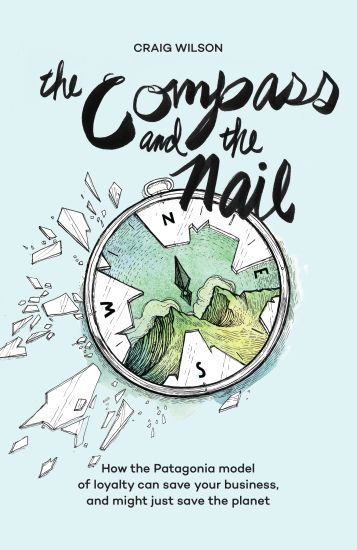
The Compass and the Nail

The Compass and the Nail

Craig Wilson

Rare Bird Books
2021
sidottu
Winner of the 800-CEO-READS Best Marketing Book of 2015Why do some companies create such strong affection for their brands that their customers are compelled to become active brand champions? Is there a secret?The Compass and the Nail presents an unconventional perspective of how particular organizations create rabid fan bases, in turn making them more successful and more profitable. Written by Patagonia’s former lead strategist for consumer marketing, and advisor to such iconic brands as Seventh Generation and Burton Snowboards, Craig Wilson outlines game-changing insights for providers of any product or service who desire fiercely loyal behavior.Wilson’s narrative is one of cultural empathy and thought disruption critical to the new global economy. It is a practical model that defines how companies, governments, and institutions relate to their end users. By illuminating the phenomenon of ?following,” and how it can be methodically applied to a larger context, this book demonstrates how those relationships can be refashioned to optimize human interactive experience. It challenges us to use our economic powers for good to design the new Responsible Economy in an effort to save the planet. If companies realize consumers ?don’t buy what you do, they buy why you do it,” Wilson shows us how.

Kesterson

Kesterson

Craig Wilson

Gatekeeper Press
2021
pokkari
Is corporate greed powerful enough to coverup an environmental disaster of epic proportions? Probably not now but what about in the 1980's. Kesterson is a fast paced environmental thriller that examines that question. The novel is a fictional account of the Kesterson Reservoir saga, a real life horror story involving the deaths and deformed embryos of thousands of waterfowl at a National Wildlife Refuge.As the story unfolds, Kesterson Reservoir is initially hailed as one of the greatest success stories of the arid water world of the western United States. A thriving wildlife refuge is created through the use of farmers' unwanted drainage water. Everything changes when horrific bird deaths are discovered at Kesterson by an adjacent property owner. As his reward for making this grisly discovery, the property owner is murdered in what is made to look like an accident.Two young environmental attorneys will not let the story die. As they build their case that the drainage water is causing the bird deaths and should be stopped, they are pitted against the ruthless director of the nation's largest Water District and the might of the federal government.After a series of twists and turns involving blackmail, intimidation, coverup, evasion, and graft, it looks like the bird deaths will be forsaken. But after new evidence comes in from an unlikely source, the decision on whether to shut down Kesterson is ultimately decided by a novel interpretation of the attorney client privilege.This snappy novel will appeal to readers who love environmental issues, plot twists and surprises.
The Compass and the Nail

The Compass and the Nail

Craig Wilson

Rare Bird Books
2019
pokkari
Winner of the 800-CEO-READS Best Marketing Book of 2015Why do some companies create such strong affection for their brands that their customers are compelled to become active brand champions? Is there a secret?The Compass and the Nail presents an unconventional perspective of how particular organizations create rabid fan bases, in turn making them more successful and more profitable. Written by Patagonia’s former lead strategist for consumer marketing, and advisor to such iconic brands as Seventh Generation and Burton Snowboards, Craig Wilson outlines game-changing insights for providers of any product or service who desire fiercely loyal behavior.Wilson’s narrative is one of cultural empathy and thought disruption critical to the new global economy. It is a practical model that defines how companies, governments, and institutions relate to their end users. By illuminating the phenomenon of ?following,” and how it can be methodically applied to a larger context, this book demonstrates how those relationships can be refashioned to optimize human interactive experience. It challenges us to use our economic powers for good to design the new Responsible Economy in an effort to save the planet. If companies realize consumers ?don’t buy what you do, they buy why you do it,” Wilson shows us how.
A Corporate Solution to Global Poverty

A Corporate Solution to Global Poverty

George Lodge; Craig Wilson

Princeton University Press
2016
pokkari
World leaders have given the reduction of global poverty top priority. And yet it persists. Indeed, in many countries whose governments lack either the desire or the ability to act, poverty has worsened. This book, a joint venture of a Harvard professor and an economist with the International Finance Corporation, argues that the solution lies in the creation of a new institution, the World Development Corporation (WDC), a partnership of multinational corporations (MNCs), international development agencies, and nongovernmental organizations (NGOs). In A Corporate Solution to Global Poverty, George Lodge and Craig Wilson assert that MNCs have the critical combination of capabilities required to build investment, grow economies, and create jobs in poor countries, and thus to reduce poverty. Furthermore, they can do so profitably and thus sustainably. But they lack legitimacy and risk can be high, and so a collective approach is better than one in which an individual company proceeds alone. Thus a UN-sponsored WDC, owned and managed by a dozen or so MNCs with NGO support, will make a marked difference. At a time when big business has been demonized for destroying the environment, enjoying one-sided benefits from globalization, and deceiving investors, the book argues, MNCs have much to gain from becoming more effective in reducing global poverty. This is not a call for philanthropy. Lodge and Wilson believe that corporate support for the World Development Corporation will benefit not only the world's poor but also company shareholders as a result of improved MNC legitimacy and stronger markets and profitability.
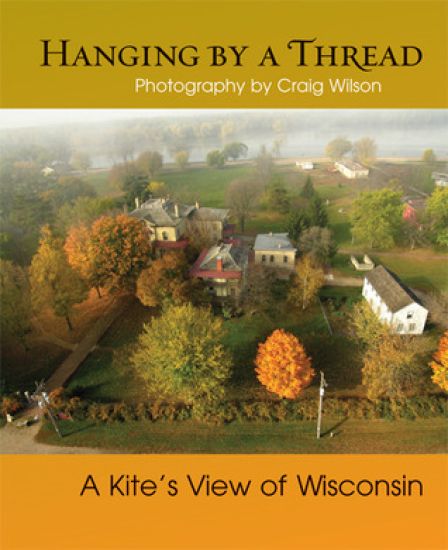
Hanging by a Thread

Hanging by a Thread

Craig Wilson; Brent Nicastro

University of Wisconsin Press
2011
nidottu
This full-color book of photographs records Wisconsin from an unusual viewpoint: a camera suspended from a kite and controlled by photographer Craig M. Wilson from the ground. Taken from fifty to a few hundred feet in the air, Wilson's photos capture natural and man-made views that wouldn't otherwise be possible. The result is a vibrant collection that captures Wisconsin in all its shifting beauty in landscapes and cityscapes, festivals, Door County's lighthouses, Milwaukee's neighborhoods, and the crowd at a Badger football game. Captions are provided in English, Spanish, German, and Mandarin Chinese.
Make Poverty Business

Make Poverty Business

Craig Wilson; Peter Wilson

Greenleaf Publishing
2006
sidottu
Poor people in developing countries could make excellent suppliers, employees and customers but are often ignored by major businesses. This omission leads to increased risk, higher costs and lower sales. Meanwhile, businesses are asked by governments and poverty activists to do more for economic development, but their exhortations are rarely based on a proper business case. Make Poverty Business bridges the gap by constructing a rigorous profit-making argument for multinational corporations to do more business with the poor. It takes economic development out of the corporate social responsibility ghetto and places it firmly in the core business interests of the corporation, and argues that to see the poor only as potential consumers at the bottom of the pyramid (BOP) misses half of the story. Make Poverty Business examines the successes, failures and missed opportunities of a wide range of global companies including Wal-Mart, BP, Unilever, Shell and HSBC when dealing with the poor and with development advocates in the media, NGOs, governments and international organisations. It includes a discussion on how to use a poverty perspective to provoke profitable innovation – not only to create new products and services but also to find new sources of competitive advantage in the supply chain and to develop more sustainable, lower-cost business models in developing countries.Make Poverty Business will be essential reading for international business managers seeking to increase profits and decrease risks in developing countries, development advocates who seek to harness the profit motive to achieve reductions in poverty, and academics looking for practical strategies on how business can implement BOP initiatives in developing countries.
A Corporate Solution to Global Poverty

A Corporate Solution to Global Poverty

George Lodge; Craig Wilson

Princeton University Press
2006
sidottu
World leaders have given the reduction of global poverty top priority. And yet it persists. Indeed, in many countries whose governments lack either the desire or the ability to act, poverty has worsened. This book, a joint venture of a Harvard professor and an economist with the International Finance Corporation, argues that the solution lies in the creation of a new institution, the World Development Corporation (WDC), a partnership of multinational corporations (MNCs), international development agencies, and nongovernmental organizations (NGOs). In A Corporate Solution to Global Poverty, George Lodge and Craig Wilson assert that MNCs have the critical combination of capabilities required to build investment, grow economies, and create jobs in poor countries, and thus to reduce poverty. Furthermore, they can do so profitably and thus sustainably. But they lack legitimacy and risk can be high, and so a collective approach is better than one in which an individual company proceeds alone. Thus a UN-sponsored WDC, owned and managed by a dozen or so MNCs with NGO support, will make a marked difference. At a time when big business has been demonized for destroying the environment, enjoying one-sided benefits from globalization, and deceiving investors, the book argues, MNCs have much to gain from becoming more effective in reducing global poverty. This is not a call for philanthropy. Lodge and Wilson believe that corporate support for the World Development Corporation will benefit not only the world's poor but also company shareholders as a result of improved MNC legitimacy and stronger markets and profitability.
It's the Little Things . . .

It's the Little Things . . .

Craig Wilson

Random House USA Inc
2002
pokkari
In 1996, Craig Wilson began writing a column for USA Today called "The Final Word." In it, he extolled the virtues of the true pleasures in life--clotheslines, freshly cut firewood, sweet corn, and Adirondack chairs--and looked back on his childhood in the country with fondness and an infectious sense of humor. Wilson's message struck a nerve, and now he receives hundreds of letters and e-mails each week from readers who share his sense of nostalgia and appreciate his warm, thoughtful observations on daily life. It's the Little Things... showcases the best of "The Final Word," with the pieces arranged by season. In fall, for example, Wilson remembers his mom's Thanksgiving gravy and his crush on his first-grade teacher; in winter, he holds forth on aluminum Christmas trees and the kiddie table; in spring, he writes about the joys of walking to work and puttering in the garage; and in summer, his thoughts turn to white bucks, front porches, and outdoor showers. The result is a delightful book to share with others and to relish throughout the year.