Kirjojen hintavertailu. Mukana 12 595 353 kirjaa ja 12 kauppaa.

Kirjailija

Crawford Gribben

Kirjat ja teokset yhdessä paikassa: 15 kirjaa, julkaisuja vuosilta 2006-2026, suosituimpien joukossa J.N. Darby and the Roots of Dispensationalism. Vertaile teosten hintoja ja tarkista saatavuus suomalaisista kirjakaupoista.

15 kirjaa

Kirjojen julkaisuhaarukka 2006-2026.

J.N. Darby and the Roots of Dispensationalism

J.N. Darby and the Roots of Dispensationalism

Crawford Gribben

OXFORD UNIVERSITY PRESS INC
2024
sidottu
J.N. Darby and the Roots of Dispensationalism describes the work of one of the most important and under-studied theologians in the history of Christianity. In the late 1820s, John Nelson Darby abandoned his career as a priest in the Church of Ireland to become one of the principal leaders of a small but rapidly growing religious movement that became known as the “Plymouth Brethren.” Darby and other brethren modified the Calvinism that was common among their evangelical contemporaries, developing distinctive positions on key doctrines relating to salvation, the church, the work of the Holy Spirit, and the end times. After his death in 1882, Darby's successors revised and expanded his arguments, and Darby became known as the architect of the most influential system of end-times thinking among the world's half-a-billion evangelicals. This “dispensational premillennialism” exercises extraordinary influence in religious communities, but also in popular culture and geopolitics. But claims that Darby created this theological system may need to be qualified -for all his innovation, this reputation might be undeserved. This book reconstructs Darby's theological development and argues that his innovations were more complex and extensive than their reduction into dispensationalism might suggest. In fact, Darby's thought might be closer to that of his Reformed critics than to that of modern exponents of dispensationalism.
On Being Reformed

On Being Reformed

Matthew C. Bingham; Chris Caughey; R. Scott Clark; Crawford Gribben; D. G. Hart

Birkhauser Verlag AG
2018
sidottu
This book provides a focus for future discussion in one of the most important debates within historical theology within the protestant tradition - the debate about the definition of a category of analysis that operates over five centuries of religious faith and practice and in a globalising religion. In March 2009, TIME magazine listed ‘the new Calvinism’ as being among the ‘ten ideas shaping the world.’ In response to this revitalisation of reformation thought, R. Scott Clark and D. G. Hart have proposed a definition of ‘Reformed’ that excludes many of the theologians who have done most to promote this driver of global religious change. In this book, the Clark-Hart proposal becomes the focus of a debate. Matthew Bingham, Chris Caughey, and Crawford Gribben suggest a broader and (they argue) more historically responsible definition for ‘Reformed,’ as Hart and Scott respond to their arguments.
John Owen

John Owen

Crawford Gribben

BLOOMSBURY PUBLISHING PLC
2026
sidottu
This sweeping collection of essays covers everything from Owen’s eschatology to his relationship with scripture as well as his own personal defeats. Gribben untangles the intricate threads of a complicated and intellectual life to reveal a figure who still holds a deep relevance to the modern world. This work does not simply explore Owen’s theological ideas in isolation, but is keenly aware of the context in which they developed. This allows readers to understand the thought of this important theologian with more depth. With an exemplary focus on historiography and a keen eye for Owen’s evangelical legacy, this book makes compelling reading for anyone interested in late seventeenth century Dissenting Theology.
The Rise and Fall of Christian Ireland

The Rise and Fall of Christian Ireland

Crawford Gribben

Oxford University Press
2024
nidottu
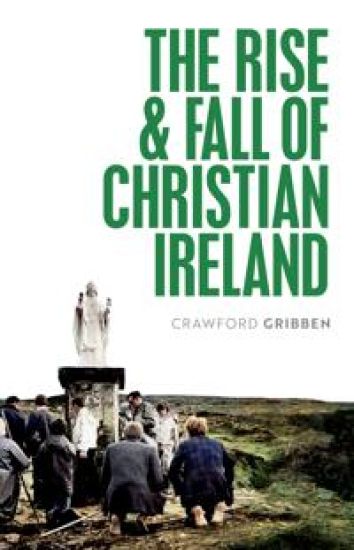
The Rise and Fall of Christian Ireland describes the emergence, long dominance, sudden division, and recent decline of Ireland's most important religion, as a way of telling the history of the island and its peoples. Throughout its long history, Christianity in Ireland has lurched from crisis to crisis. Surviving the hostility of earlier religious cultures and the depredations of Vikings, evolving in the face of Gregorian reformation in the eleventh and twelfth centuries and more radical protestant renewal from the sixteenth century, Christianity has shaped in foundational ways how the Irish have understood themselves and their place in the world. And the Irish have shaped Christianity, too. Their churches have staffed some of the religion's most important institutions and developed some of its most popular ideas. But the Irish church, like the island, is divided. After 1922, a border marked out two jurisdictions with competing religious politics. The southern state turned to the Catholic church to shape its social mores, until it emerged from an experience of sudden-onset secularization to become one of the most progressive nations in Europe. The northern state moved more slowly beyond the protestant culture of its principal institutions, but in a similar direction of travel. In 2021, 1,500 years on from the birth of Saint Columba, Christian Ireland appears to be vanishing. But its critics need not relax any more than believers ought to despair. After the failure of several varieties of religious nationalism, what looks like irredeemable failure might actually be a second chance. In the ruins of the church, new Patricks and Columbas shape the rise of another Christian Ireland.
The Rise and Fall of Christian Ireland

The Rise and Fall of Christian Ireland

Crawford Gribben

Oxford University Press
2021
sidottu
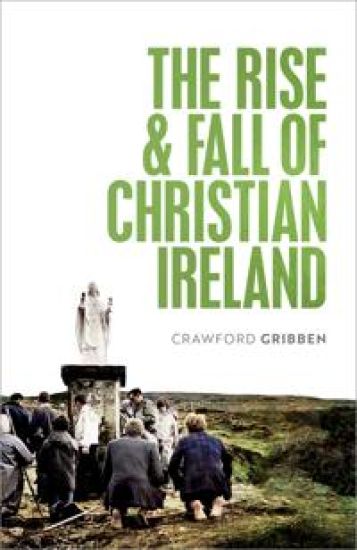
Ireland has long been regarded as a 'land of saints and scholars'. Yet the Irish experience of Christianity has never been simple or uncomplicated. The Rise and Fall of Christian Ireland describes the emergence, long dominance, sudden division, and recent decline of Ireland's most important religion, as a way of telling the history of the island and its peoples. Throughout its long history, Christianity in Ireland has lurched from crisis to crisis. Surviving the hostility of earlier religious cultures and the depredations of Vikings, evolving in the face of Gregorian reformation in the 11th and 12th centuries and more radical protestant renewal from the 16th century, Christianity has shaped in foundational ways how the Irish have understood themselves and their place in the world. And the Irish have shaped Christianity, too. Their churches have staffed some of the religion's most important institutions and developed some of its most popular ideas. But the Irish church, like the island, is divided. After 1922, a border marked out two jurisdictions with competing religious politics. The southern state turned to the Catholic church to shape its social mores, until it emerged from an experience of sudden-onset secularization to become one of the most progressive nations in Europe. The northern state moved more slowly beyond the protestant culture of its principal institutions, but in a similar direction of travel. In 2021, fifteen hundred years on from the birth of Saint Columba, Christian Ireland appears to be vanishing. But its critics need not relax any more than believers ought to despair. After the failure of several varieties of religious nationalism, what looks like irredeemable failure might actually be a second chance. In the ruins of the church, new Columbas and Patricks shape the rise of another Christian Ireland.
Survival and Resistance in Evangelical America

Survival and Resistance in Evangelical America

Crawford Gribben

Oxford University Press Inc
2021
sidottu
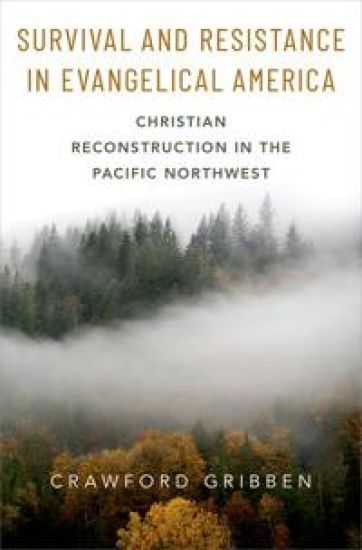
Over the last thirty years, conservative evangelicals have been moving to the Northwest of the United States, where they hope to resist the impact of secular modernity and to survive the breakdown of society that they anticipate. These believers have often given up on the politics of the Christian Right, adopting strategies of hibernation while developing the communities and institutions from which a new America might one day emerge. Their activity coincides with the promotion by prominent survivalist authors of a program of migration to the “American Redoubt,” a region encompassing Idaho, Montana, parts of eastern Washington and Oregon, and Wyoming, as a haven in which to endure hostile social change or natural disaster and in which to build a new social order. These migration movements have independent origins, but they overlap in their influences and aspirations, working in tandem to offer a vision of the present in which Christian values must be defended as American society is rebuilt according to biblical law. This book examines the origins, evolution, and cultural reach of this little-noted migration and considers what it might tell us about the future of American evangelicalism. Drawing on Calvinist theology, the social theory of Christian Reconstruction, and libertarian politics, these believers are projecting significant soft power. Their books are promoted by leading mainstream publishers and listed as New York Times bestsellers. Their strategy is gaining momentum, making an impact in local political and economic life, while being repackaged for a wider audience in publications by a broader coalition of conservative commentators and in American mass culture. This survivalist evangelical subculture recognizes that they have lost the culture war - but another kind of conflict is beginning.
An Introduction to John Owen

An Introduction to John Owen

Crawford Gribben

Crossway Books
2020
pokkari
“This book is a helpful introduction to one of the greatest theologians our world has known and a healthy enticement to feed on Owen’s writings for a lifetime.”—Joel R. Beeke, President, Puritan Reformed Theological Seminary; author, Reformed Preaching; coauthor, Reformed Systematic Theology More than three centuries after his death, Puritan theologian John Owen continues to have an impact on readers. In his eight million published words, he addressed a wide range of topics, from theological and biblical commentary to social and political issues. In this survey of Owen’s life and work, Crawford Gribben captures the vision of the Christian life that Owen himself lived out—and hoped his readers would live out as well.
John Owen and English Puritanism

John Owen and English Puritanism

Crawford Gribben

Oxford University Press Inc
2017
nidottu
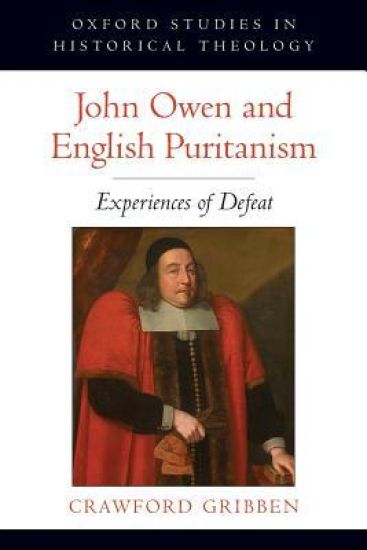
John Owen was a leading theologian in seventeenth-century England. Closely associated with the regicide and revolution, he befriended Oliver Cromwell, was appointed vice-chancellor of the University of Oxford, and became the premier religious statesman of the Interregnum. The restoration of the monarchy pushed Owen into dissent, criminalizing his religious practice and inspiring his writings in defense of high Calvinism and religious toleration. Owen transcended his many experiences of defeat, and his claims to quietism were frequently undermined by rumors of his involvement in anti-government conspiracies. Crawford Gribben's biography documents Owen's importance as a controversial and adaptable theologian deeply involved with his social, political, and religious environments. Fiercely intellectual and extraordinarily learned, Owen wrote millions of words in works of theology and exegesis. Far from personifying the Reformed tradition, however, Owen helped to undermine it, offering an individualist account of Christian faith that downplayed the significance of the church and means of grace. In doing so, Owen's work contributed to the formation of the new religious movement known as evangelicalism, where his influence can still be seen today.
John Owen and English Puritanism

John Owen and English Puritanism

Crawford Gribben

Oxford University Press Inc
2016
sidottu
John Owen was a leading theologian in 17th-century England. As vice-chancellor of Oxford University, he was a man of immense intellectual and cultural significance. Through his association with Oliver Cromwell in particular, he exercised considerable influence on central government, and became the premier religious statesman of the Interregnum. The restoration of the monarchy pushed Owen into dissent, criminalizing his religious practice and inspiring his writings in defense of high Calvinism and religious toleration. But Owen transcended his many experiences of defeat, and his claims to quietism were frequently undermined by rumors of his involvement in anti-government conspiracies. Crawford Gribben's biography documents Owen's interactions with the intellectual and print cultures of his social, political and religious environments; its narrative is structured around Owen's own publications. In contrast to the current scholarly consensus, this book emphasizes Owen's importance as a controversial theologian deeply involved with his social and political environment. Far from personifying the Reformed tradition, he helped to undermine it, offering an individualist account of Christian faith which downplayed the significance of the Church's means of grace. His work contributed to the formation of the new religious movement known as evangelicalism, where his influence still can be seen today.
Writing the Rapture

Writing the Rapture

Crawford Gribben

Oxford University Press Inc
2009
sidottu
In this book, Crawford Gribben offers the only full-length history, description, and analysis of the rapture-novel genre. The late 1980s, which saw a renaissance of the evangelical imagination, culminated in the creation of the Left Behind series, co-authored by Tim La Haye and Jerry B. Jenkins. The novels in this series, Gribben shows, are astonishingly derivative - borrowing entire characters and significant incidents from earlier books. Analyzing the unexpected publishing success of the Left Behind novels, he characterizes the series as a barometer of evangelical popular opinion.
The Puritan Millennium

The Puritan Millennium

Crawford Gribben

Wipf Stock Publishers
2008
nidottu
Puritanism was an intensely eschatological movement. From the beginnings of the movement, Puritan writers developed eschatological interests in distinct contexts and often for conflicting purposes. Their reformist agenda emphasized their eschatological hopes. In a series of readings of texts by John Foxe, James Usser, George Gillespie, John Rogers, John Milton and John Bunyan, this book provides an interdisciplinary exploration of Puritan thinking about the last things.
God's Irishmen

God's Irishmen

Crawford Gribben

Oxford University Press Inc
2007
sidottu
God's Irishmen describes the theological debates that tore the Cromwellian movement apart and provided for its eventual failure. Providing a close and informed analysis of the relatively few texts that survive from the period, Crawford Gribben not only dissects the contentious theological issues but reflects on larger questions about the characteristics of the Protestant churches in Cromwellian Ireland.
Enforcing Reformation in Ireland and Scotland, 1550–1700

Enforcing Reformation in Ireland and Scotland, 1550–1700

Crawford Gribben

Ashgate Publishing Limited
2006
sidottu
The last few years have witnessed a growing interest in the study of the Reformation period within the three kingdoms of Britain, revolutionizing the way in which scholars think about the relationships between England, Scotland and Ireland. Nevertheless, it is a fact that the story of the British Reformation is still dominated by studies of England, an imbalance that this book will help to right. By adopting an international perspective, the essays in this volume look at the motives, methods and impact of enforcing the Protestant Reformation in Ireland and Scotland. The juxtaposition of these two countries illuminates the similarities and differences of their social and political situations while qualifying many of the conclusions of recent historical work in each country. As well as Investigating what 'reformation' meant in the early modern period, and examining its literal, rhetorical, doctrinal, moral and political implications, the volume also explores what enforcing these various reformations could involve. Taken as a whole, this volume offers a fascinating insight into how the political authorities in Scotland and Ireland attempted, with varying degrees of success, to impose Protestantism on their countries. By comparing the two situations, and placing them in the wider international picture, our understanding of European confessionalization is further enhanced.