

Kirjailija
Cristina Berna
Kirjat ja teokset yhdessä paikassa: 411 kirjaa, julkaisuja vuosilta 2018-2026, suosituimpien joukossa Joaquín Sorolla Boote. Vertaile teosten hintoja ja tarkista saatavuus suomalaisista kirjakaupoista.
411 kirjaa
Kirjojen julkaisuhaarukka 2018-2026.
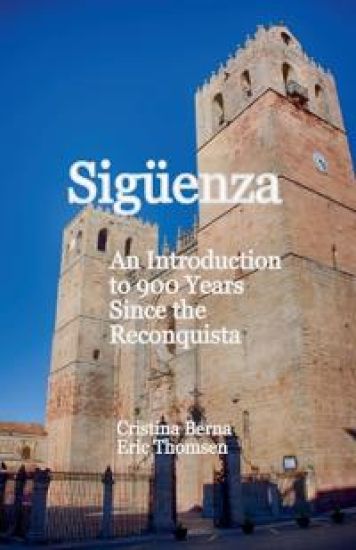
Sigüenza An Introduction to 900 Years Since the Reconquista
Cristina Berna; Eric Thomsen
Missys Clan
2025
pokkari
Sig enza is celebrating 900 years since the Reconquista from the Muslims 12-14 July 2024. The town is also putting in a candidature for World Cultural Heritage and is working to develop the town and environs as a tourist destination. The town has special significance for the authors, who wish Sig enza a great future.Sig enza is a little known gem among the historical cities in Spain, situated in the province of Guadalajara about hundred and thirty kilometers north from Madrid. Sig enza can be one of the oldest cities in Spain, much older that the 900 years celebrated in 2024. Sig enza like other towns in the region is unique as it did not experience the industrial revolution. That is why visiting it is a great opportunity to discover almost intact Medieval and Renaissance architecture. Sig enza has also been the scene of many battles throuhout its history. The region was populated since the Paleolitic. Very rich water sources attracted people from early on. The river Henares runs through Sig enza. Two other rivers flow on its flanks, Rio Dulce and Rio Salado. Rio Salado (the Salted river) makes it very rich in natural salt extracted in salt pans. Situated on the high plateau of Castille, Sig enza is about over 1000 meters above sea level.
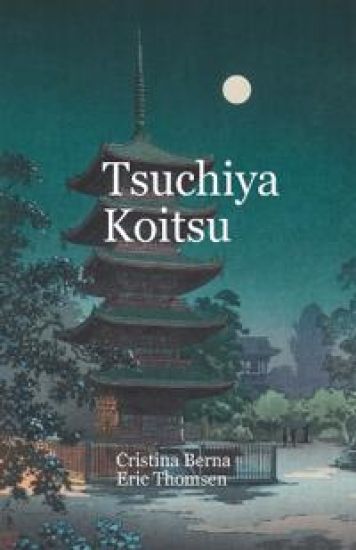
Tsuchiya Kōitsu ( 土屋光逸, (September 23, 1870 - November 13, 1949)) was a Japanese artist in the Shin-hanga movement. He trained under the ukiyo-e master Kobayashi Kiyochika for 19 years, and initially focused on works depicting scenes from the First Sino-Japanese War. In 1931, at the age of 60, he began work for Shōzaburō Watanabe and his art publishing establishment which also published the work of artists like Kawase Hasui and Yoshida Hiroshi. His later work incorporated light effects to increase the emotional impact of his art.Tsuchiya Koitsu was born on September 23, 1870, in Hamamatsu, Shizuoka, Japan. His birth name was either Koichi or Sahei. His artistic talent was recognized at an early age and moved to Tokyo when he was 15. He first had an apprenticeship for the woodblock carver Matsuzaki, but soon became a student of ukiyo-e master Kiyochika Kobayashi who taught him the techniques of woodblock printing and Ogata Gekko. Koitsu's early works were influenced by Kiyochika's style, which was characterized by bold and dynamic compositions. He worked for Kiyochika for 19 years and lived in his house.

Takahashi Shōtei (高橋松亭), born Hiroaki (1871 - 11 February 1945) was a 20th-century Japanese woodblock artist in the shinsaku-hanga and later shin-hanga art movements.When he was 16 years old, he started a job with the Imperial Household Department of Foreign Affairs, where he copied the designs of foreign ceremonial objects.In 1907, as a successful artist, he was recruited by Watanabe Shōzaburō to contribute shinsaku-hanga (souvenir prints) in Japan. Watanabe helped to fulfill the Western demand for newly-styled ukiyo-e woodblock prints which would be similar to familiar historical masters of that genre, especially Hiroshige.In the 1930s, while still working for Watanabe, he also designed some oban (and larger) prints for the publisher Fusui Gabo.Shotei died of pneumonia on February 11, 1945.

Joaqu n Sorolla (born in Valencia 1863 - died in Cercedilla 1923) is one of the most successful Spanish painters ever. He was a genius in capturing the essence of the scene he was painting.Joaqu n Sorolla painted the most wonderful beach scenes, many of them with oxen towing fishing boats. One thing that will surprise you. In spite of Joaqu n Sorolla being Spain's most famous painter of beach scenes and fishing boats, there does not appear to be a single seagull in his paintings. So, what animals did he paint?Apart from the oxen as draught animals, he painted several horses, a donkey and sheep when he painted types of people and local dress which made up his vision of Spain, diverse and colorful yet united.More privately, he painted dogs and a cat as pets, superbly catching their soul and character.
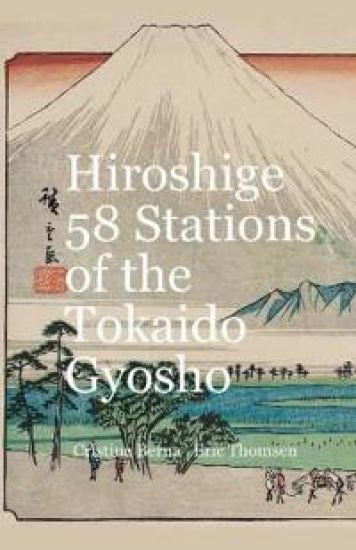
The official title for this work is "The Fifty-three Stations of the Tōkaidō Road" - Tōkaidō gojūsan tsugi no uchi - or simply Gyōsho Tōkaidō.Hiroshige produced these prints eight years after, 1841 - 1844, his first horizontal Hoeidō series published 1833-34, which is included for comparison.These are very delightful large prints with a high attention to detail. The view points are different and sometimes quite surprising. Hiroshige experiments with various details to improve his landscapes.Many themes in the Gyōsho Tōkaidō were explored by Hokusai some 40 years before, but given a fresh new look and often as an activity part of the landscapes.It is possible to travel the same road today and some villages are still looking quite like they did back then, in 1601 - 1604.

Shunsen Natori (名取春仙, February 7, 1886 - March 30, 1960) was a Japanese woodblock printer, considered by many to be the last master in the art of kabuki yakusha-e "actor pictures".He was born Natori Yoshinosuke, the fifth son of a silk merchant, in Yamanashi Prefecture. His family settled in Tokyo shortly after his birth, where he remained until his death in 1960.From the age of eleven he studied with traditional Nihonga (Japanese-style) painter Kubota Beisen, and was given his artist's name "Shunsen". He subsequently studied at the Tokyo School of Fine Arts.Natori Shunsen developed an interest in kabuki actor portraits while working as an illustrator for the newspaper Asahi Shimbun. During this time, he had the opportunity to meet the publisher Watanabe Shōzaburō, who was the primary force behind the shin-hanga movement.Natori's actor portraits were mainly in the ōkubi-e (large head) format which allowed him to focus on the expression and emotions of the character's face.Natori Shunsen was the last artist to create actor portraits in the traditional Japanese woodcut style. Natori Shunsen was the uncontested master of kabuki actor portraits of the Shin Hanga art movement. At the same time, he was one of the most important artists of the Shin Hanga movement.


No, it is not a spelling error. It is not "Dear" friends but "Deer" friends...as in Roe deer - Buck, Roe and Fawn.Actually, they were not "dear" at all the first time When Anjuli and Lille-Tiger saw two deer the first time, their eyes widened, hair stuck out, tails all bottle cleaner brush like. The deer jumped them and galloped down the bridge and disappeared into the Orchard, down a steep slope to the left and the end of the bridge. Shed No 1 to the left, which Anjuli loved.

Tomikichiro Tokuriki 徳力富吉郎, was born on March 22, 1902 and died in 1999 in Kyoto, Japan. Young Tomikichiro's first teacher was his grandfather. He signed himself as Tomiki.Tomikichiro Tokuriki became a modern Japanese woodblock printmaker representing the 12th generation of a Kyoto artisan family designated as the official Kyoto print artists for the famous Honganji Temple. with a two-year preparatory class and four years of regular training. During his college years, the young artist uncovered his fervor for sosaku hanga prints, a movement and later a three year training at the Kyoto College of Art, graduating from Kyoto Art College in 1923. He graduated from Kyoto City School of Fine Arts and Kyoto City Specialist School of Painting in 1924. He was celebrated his hometown, by making woodblock prints of the cityWith the assistance of an old carver and an Ukiyo-e printer, Tomikichiro Tokuriki learned everything to master the complete process of design, carving and printing himself.After World War II, he established the Matsukyu Publishing Company to produce and distribute his own prints and other Shin Hanga and Sosaku Hanga pieces sosaku hanga prints - a movement that had spread from Tokyo to Kyoto. He also began to teach block-carving to artisans and artists, in later years many of them foreigners. In 1948 he also set up a sub-company called Koryokusha consisting of artists who would produce their prints under the financial umbrella of Matsukyu.Tomokichiro Tokuriki is described as a charming man. He was an influential figure in Japan's contemporary print movement. He was the official artist of the Honganji Temple, and his work has been commissioned for various temples throughout Japan, including the famous shrines at Ise. His prints are in the permanent collections of the Museum Fine Arts Boston and the Museum of Modern Art New York.
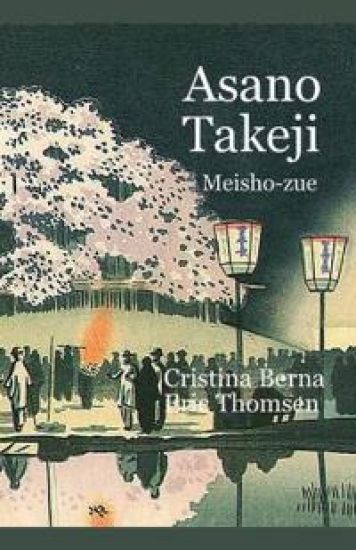
Takeji Asano (1900-1999) was a prominent figure in the realm of Japanese art. He completed his education at Kyoto City School of Fine Arts in 1919, followed by further studies at Kyoto City Specialist School of Painting in 1923.According to Dieter Wanczura, Artelino, Takeji Asano stands as one of the lesser-known yet exceptionally talented artists within the realm of Kyoto shin hanga and sosaku hanga. His art prints, still relatively under the radar, remain reasonably priced, offering art enthusiasts a captivating opportunity to collect exquisite woodblock prints without the burden of a hefty budget.After the war, Asano focused on creating woodblock prints and in 1952, he established his own printmaking studio called "Asano Takeji Mokuhanga Kobo". He was knowledgeable in woodblock printing techniques and particularly skilled in multiple color printing. His works are characterized by a unique sense of color and expression, and he produced portraits, landscapes, and still life paintings.Takeji Asano passed away in 1999 at the remarkable age of ninety-nine. According to Helen Merritt, Asano was actively involved in printmaking even during the 1970s and 1980s.

The Trier Christmas Market is one of the loveliest in Germany. It is set in a wonderful Roman and early Medieval setting. There are 95 attractively decorated chalets in the main market square.There is a program for all the family, which is changing every day, with songsmiths, start tenors and puppet theater. And Santa, of course In the 90 festively decorated wooden booths you will find Christmas articles such as Christmas decorations, wooden toys, candles, hand-blown or engraved glassware, gift articles, ceramics and much more. Good food awaits you as well: bratwurst sausages, potato pancakes, sweets, hot tea and mulled wine. Trier was established as a city by the Celts 400 BC and the Roman conquered it in 16 BC and established a fortified rectangular city still visible today. The city later became the capital of the province of Belgic Gaul; after the Diocletian Reforms, it became the capital of the prefecture of the Gauls, overseeing much of the Western Roman Empire.

The Salzburger Christkindlmarket has 100 stalls with a wide selection of quality products, incl food and drink.There are several stalls dedicated to Nativity "cribs" as the German speakers call them. The market is open weekdays until 20:00 and the artificial light ensures you have a good view.This Christmas market is held in the in the Cathedral Square and Residential Palace Squares. It shows the best of the Tyrolian tradition that the authors have seen so far.With delightful small details as we also saw in Christmas Nativity Spain, with miniature earthenware jugs. Here also metal utensils and a washboard.
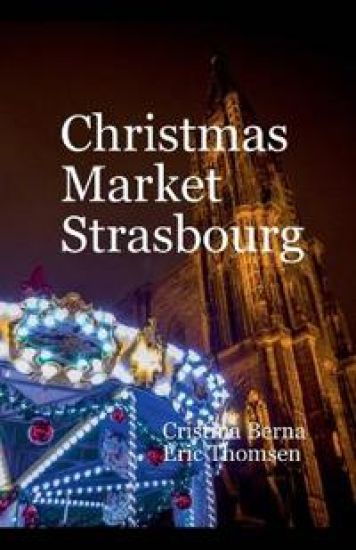
Christkindelsm rik is the Alsatian dialect name of the Christmas market in Strasbourg, held annually on the square in front of the Strasbourg Cathedral since 1570.Considered one of the most famous Christmas markets throughout Europe. The city benefits of a 16 million Euros profit from this 38-day-long tradition. It is famous for its fragrance of mulled wine (French: vin chaud; German: Gl hwein).The city's pride is the grand Gothic cathedral.With 142 metres (466 feet), Strasbourg cathedral was the world's tallest building from 1647 to 1874 (227 years), when it was surpassed by St. Nikolai's Church, Hamburg. Today it is the sixth-tallest church in the world and the highest extant structure built entirely in the Middle Ages.

Let us visit the Christmas market in one of the smallest countries of the world - The Grand-Duchy of Luxembourg.Luxembourg sits right in the center of Western Europe - between France, Belgium and Germany. The size is 2,586 km2.In comparison Rhode Island, USA is 3,140 km2 and Great Britain is 209,331 km2.Luxembourg emerged as independent territory again at the Congress of Vienna in 1815, when the Grand Duchy of Luxembourg became an independent part of The Netherlands, with William I becoming both King of the Netherlands and Grand Duke of Luxembourg - a personal union.The year in Luxembourg is divided by a number of popular festivities and one of them is of course Christmas.The Christmas market is a major Christmas event. It is spread now over five locations in Luxembourg city: Place de la Constitution (with the Ferris Wheel), Place d'Armes (the largest), Place de Paris (near the station), Grund (foods) and Roude P tz - Gran Rue (charities).

Europe has many wonderful old traditions, and one of them is the Christmas market.Salzburg in Austria is one of the best places to go for quality and variety in Christmas markets. Here we show you no less than three different markets.One market is by the magnificent Baroque cathedral. Another by Andr kirche and the third out at Hellbrunn Palace, where the Bishop-Prince used to reside.Salzburg was an independent mini-state ruled by a Bishop-Prince until the Napoleonic wars.You can still feel this self-contained grandeur in the magnificent Baroque architectural pearls of Salzburg city.Christmas markets became a medieval tradition in German speaking lands and ushered in the four week church festival of Advent. In nearby Munich, Germany the Christmas market is first mentioned in 1310. There is only 150 km to Munich here from Salzburg.

Montreux is a city on the shore of Lake Geneva (Lac L man) with abt 25,000 inhabitants. It is part of Canton Vaud, which itself is abt the same area as the previous entity, Canton L man, with the administrative center Lausanne. Montreux was inhabited since the late Bronze Age and an important cross roads during Roman times.The main Montreux Christmas Market - March de No l in French - is called the Lakeside Christmas Market. It rained the day the authors visited but it does not always rain.Part of the Montreux March de No l is covered and illuminated.

The Nuremberg Christkindlesmarkt is one of the oldest Christmas markets in Germany. The pre-Christmas fair on Nuremberg's main market square can be traced back to the middle of the 16th century.Nuremberg is known for many things. The beautiful Gothic Frauenkirche was built on the site of a Jewish synagogue, also the site now of the Hauptmarkt where the main Christmas market takes place. This happened after the expulsion of the Jews from the city due the belief they were involved in the 1349 Black Death.The Nuremberg Christmas market likely evolved from the weekly market in the period 1610 to 1639 to become an independent market starting on St Thomas Day 4 Dec. It was not until 1973 the opening was moved to Friday before Advent, due to the large number of visitors. The traditional market had of course traditional goods for the season, like warrm hats, mittens and scarves. But the famous Lebkuchen - Honey Cakes - and toys were also there.

Whatever gospel you believe in or not, Christmas is for us a break at the end of the year, leading up to New Year.It is a period of holidays, where you can look back at the year'sachievements amidst the heavy shopping and merriment.It is a period where humans show warm feelings and generosity towards each other, and of decorating inside and outside.Animals join this warm spirit.We were feeding the birds and squirrels at the back of the house, close to the wood covered banks of the lake.Naturally our cats were discussing the idea behind the bird feeding house, and its use. They were no doubt disappointed that we didn't pay enough attention to the flow of free meals here. The point about a setting atrap is that you attend to it It's no good just to set a superb trap and then leave it. It's irresponsible

One of the wonderful traditions of Christmas is the Nativity. But you don't have to be Christian or a regular church-goer to love these wonderful displays. The creativity and artistry speak to all children and to the child in us all.Nativity is a scene from the stories of the birth of Jesus. They are in the Gospels of Matthew and Luke. With inspiration in these stories you use either figurines or live people to create the scene and convey the story.These scenes excite especially the children. Their happy smiles and their joy is so wonderfully rewarding. But adults as well enjoy both creating and looking at the nativity scenes.This has developed into a huge handicraft industry in countries like Spain and Italy. Artists and craftsmen work all year round to create their next exhibits, which are sold especially at Christmas markets.Families collect figurines and accessories from the markets and create their own displays at home. We show you figurines from the Christmas Markets of Barcelona, Malaga, Sevilla and Madrid