Kirjojen hintavertailu. Mukana 12 390 323 kirjaa ja 12 kauppaa.

Kirjailija

Cristina Marinho

Kirjat ja teokset yhdessä paikassa: 4 kirjaa, julkaisuja vuosilta 2017-2025, suosituimpien joukossa The Politics and Rhetoric of Commemoration. Vertaile teosten hintoja ja tarkista saatavuus suomalaisista kirjakaupoista.

4 kirjaa

Kirjojen julkaisuhaarukka 2017-2025.

Politicians Manipulating Statistics

Politicians Manipulating Statistics

Michael Billig; Cristina Marinho

Cambridge University Press
2025
pokkari
Highly original and insightful, Billig and Marinho's book investigates how politicians misuse official statistics. Setting this problem in its historical context – and offering vivid case studies of Donald Trump, Boris Johnson and Gérald Darmanin – the authors demonstrate that the manipulation of statistics involves the misuse of words as well as the misuse of numbers. Most importantly, the authors show that politicians will manipulate official statisticians to produce politically convenient, but statistically inappropriate, numbers. Another unique part of the book is that the authors are not content with analysing how statistics are manipulated, but they also rigorously analyse the efforts of statistical agencies in France and Britain to combat such manipulation. The chapters herald unsung heroes who operate largely 'behind the scenes' to expose and oppose the corruption of statistics. An indispensable read for anyone concerned with the intersection of power and data.
Politicians Manipulating Statistics

Politicians Manipulating Statistics

Michael Billig; Cristina Marinho

Cambridge University Press
2025
sidottu
Highly original and insightful, Billig and Marinho's book investigates how politicians misuse official statistics. Setting this problem in its historical context – and offering vivid case studies of Donald Trump, Boris Johnson and Gérald Darmanin – the authors demonstrate that the manipulation of statistics involves the misuse of words as well as the misuse of numbers. Most importantly, the authors show that politicians will manipulate official statisticians to produce politically convenient, but statistically inappropriate, numbers. Another unique part of the book is that the authors are not content with analysing how statistics are manipulated, but they also rigorously analyse the efforts of statistical agencies in France and Britain to combat such manipulation. The chapters herald unsung heroes who operate largely 'behind the scenes' to expose and oppose the corruption of statistics. An indispensable read for anyone concerned with the intersection of power and data.
The Politics and Rhetoric of Commemoration

The Politics and Rhetoric of Commemoration

Michael Billig; Cristina Marinho

Bloomsbury Academic
2019
nidottu
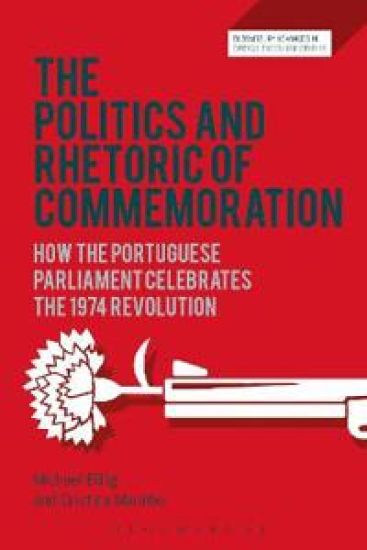
In recent years there has been much interest in collective memory and commemoration. It is often assumed that when nations celebrate a historic day, they put aside the divisions of the present to recall the past in a spirit of unity. As Billig and Marinho show, this does not apply to the Portuguese parliament’s annual celebration of 25 April 1974, the day when the dictatorship, established by Salazar and continued by Caetano, was finally overthrown. Most speakers at the ceremony say little about the actual events of the day itself; and in their speeches they continue with the partisan politics of the present as combatively as ever.To understand this, the authors examine in detail how the members of parliament do politics within the ceremony of remembrance; how they engage in remembering and forgetting the great day; how they use the low rhetoric of manipulation and point-scoring, as well as high-minded political rhetoric. The book stresses that the members of the audience contribute to the meaning of the ceremony by their partisan displays of approval and disapproval. Throughout, the authors demonstrate that, to uncover the deeper meanings of political rhetoric, it is necessary to take note of significant absences. The Politics and Rhetoric of Commemoration illustrates how an in-depth case-study can be invaluable for understanding wider processes. The authors are not content just to uncover unnoticed features of the Portuguese celebration. They use the particular example to provide original insights about the rhetoric of celebrating and the politics of remembering, as well as throwing new light onto the nature of party political discourse.
The Politics and Rhetoric of Commemoration

The Politics and Rhetoric of Commemoration

Michael Billig; Cristina Marinho

Bloomsbury Academic
2017
sidottu
In recent years there has been much interest in collective memory and commemoration. It is often assumed that when nations celebrate a historic day, they put aside the divisions of the present to recall the past in a spirit of unity. As Billig and Marinho show, this does not apply to the Portuguese parliament’s annual celebration of 25 April 1974, the day when the dictatorship, established by Salazar and continued by Caetano, was finally overthrown. Most speakers at the ceremony say little about the actual events of the day itself; and in their speeches they continue with the partisan politics of the present as combatively as ever.To understand this, the authors examine in detail how the members of parliament do politics within the ceremony of remembrance; how they engage in remembering and forgetting the great day; how they use the low rhetoric of manipulation and point-scoring, as well as high-minded political rhetoric. The book stresses that the members of the audience contribute to the meaning of the ceremony by their partisan displays of approval and disapproval. Throughout, the authors demonstrate that, to uncover the deeper meanings of political rhetoric, it is necessary to take note of significant absences. The Politics and Rhetoric of Commemoration illustrates how an in-depth case-study can be invaluable for understanding wider processes. The authors are not content just to uncover unnoticed features of the Portuguese celebration. They use the particular example to provide original insights about the rhetoric of celebrating and the politics of remembering, as well as throwing new light onto the nature of party political discourse.