Kirjojen hintavertailu. Mukana 12 595 353 kirjaa ja 12 kauppaa.

Kirjailija

Cromartie Alan

Kirjat ja teokset yhdessä paikassa: 2 kirjaa, julkaisuja vuosilta 2003-2009, suosituimpien joukossa Sir Matthew Hale, 1609–1676. Vertaile teosten hintoja ja tarkista saatavuus suomalaisista kirjakaupoista.

2 kirjaa

Kirjojen julkaisuhaarukka 2003-2009.

The Constitutionalist Revolution

The Constitutionalist Revolution

Cromartie Alan

Cambridge University Press
2009
pokkari
An innovative account of English constitutional ideas from the mid-fifteenth century to the time of Charles I, showing how the emergence of grand claims for common law, the country's strange unwritten legal system, shaped England's cultural development. Though he does not neglect the role of narrowly religious disagreements, Cromartie brings out the way that 'religious' and 'secular' values came to be closely intertwined: to the majority of Charles's subjects, the rights of the clergy and the king were legal rights; the institutional structure of Church and state was an expression of monarchical power, obedience to the king and to the law was a religious duty. A proper understanding of this cluster of ideas reveals why Charles found England so difficult to control and why both parties in the civil war believed that they were fighting for established institutions.
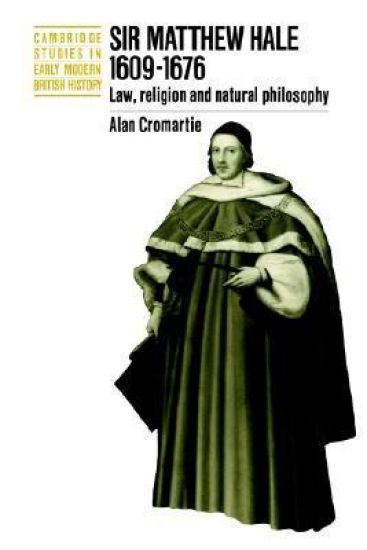
Sir Matthew Hale, 1609–1676

Sir Matthew Hale, 1609–1676

Cromartie Alan

Cambridge University Press
2003
pokkari
Sir Matthew Hale (1609–76) was the greatest common lawyer of his age, and the most universally admired. Although he held office under Oliver Cromwell, this barely affected his standing in Restoration times. A study of Hale’s life and thought necessarily illuminates the central role of the common law in Stuart politics. This book explains Hale’s political ideas, and his subtle understanding of the peculiar character of an ‘unwritten’ law. It also covers his extensive writings on scientific and religious questions, writings which document a shift from puritan to liberal Protestantism. His acute but equivocal response to the science of Descartes and Boyle reveals a fascinating interplay between his ‘latitudinarianism’ and the new natural philosophy. The result is a unique case study, and a comprehensive portrait of a seventeenth-century mind.