Kirjojen hintavertailu. Mukana 12 262 869 kirjaa ja 12 kauppaa.

Kirjailija

Cynthia Estlund

Kirjat ja teokset yhdessä paikassa: 5 kirjaa, julkaisuja vuosilta 2003-2021, suosituimpien joukossa Automation Anxiety. Vertaile teosten hintoja ja tarkista saatavuus suomalaisista kirjakaupoista.

5 kirjaa

Kirjojen julkaisuhaarukka 2003-2021.

Automation Anxiety

Automation Anxiety

Cynthia Estlund

Oxford University Press Inc
2021
sidottu
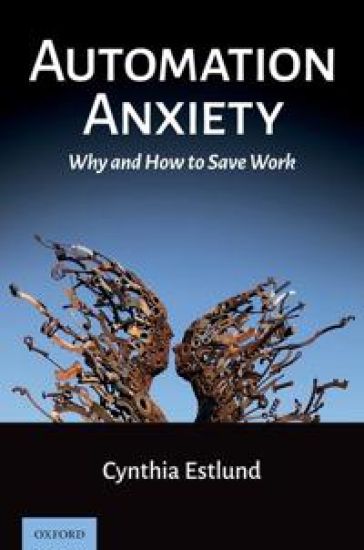
Are super-capable robots and algorithms destined to devour our jobs and idle much of the adult population? Predictions of a jobless future have recurred in waves since the advent of industrialization, only to crest and retreat as new jobs-usually better ones-have replaced those lost to machines. But there's good reason to believe that this time is different. Ongoing innovations in artificial intelligence, machine learning, and robotics are already destroying more decent middle-skill jobs than they are creating, and may be leading to a future of growing job scarcity. But there are many possible versions of that future, ranging from utterly dystopian to humane and broadly appealing. It all depends on how we respond. This book confronts the hotly-debated prospect of mounting job losses due to automation, and the widely-divergent hopes and fears that prospect evokes, and proposes a strategy for both mitigating the losses and spreading the gains from shrinking demand for human labor. We should set our collective sights, it argues, on ensuring access to adequate incomes, more free time, and decent remunerative work even in a future with less of it. Getting there will require not a single "magic bullet" solution like universal basic income or a federal job guarantee but a multi-pronged program centered on conserving, creating, and spreading work. What the book proposes for a foreseeable future of less work will simultaneously help to address growing economic inequality and persistent racial stratification, and makes sense here and now but especially as we face the prospect of net job losses.

A New Deal for China’s Workers?

A New Deal for China’s Workers?

Cynthia Estlund

Harvard University Press
2017
sidottu
China’s labor landscape is changing, and it is transforming the global economy in ways that we cannot afford to ignore. Once-silent workers have found their voice, organizing momentous protests, such as the 2010 Honda strikes, and demanding a better deal. China’s leaders have responded not only with repression but with reforms. Are China’s workers on the verge of a breakthrough in industrial relations and labor law reminiscent of the American New Deal?In A New Deal for China’s Workers? Cynthia Estlund views this changing landscape through the comparative lens of America’s twentieth-century experience with industrial unrest. China’s leaders hope to replicate the widely shared prosperity, political legitimacy, and stability that flowed from America’s New Deal, but they are irrevocably opposed to the independent trade unions and mass mobilization that were central to bringing it about. Estlund argues that the specter of an independent labor movement, seen as an existential threat to China’s one-party regime, is both driving and constraining every facet of its response to restless workers.China’s leaders draw on an increasingly sophisticated toolkit in their effort to contain worker activism. The result is a surprising mix of repression and concession, confrontation and cooptation, flaws and functionality, rigidity and pragmatism. If China’s laborers achieve a New Deal, it will be a New Deal with Chinese characteristics, very unlike what workers in the West achieved in the last century. Estlund’s sharp observations and crisp comparative analysis make China’s labor unrest and reform legible to Western readers.
Regoverning the Workplace

Regoverning the Workplace

Cynthia Estlund

Yale University Press
2010
sidottu
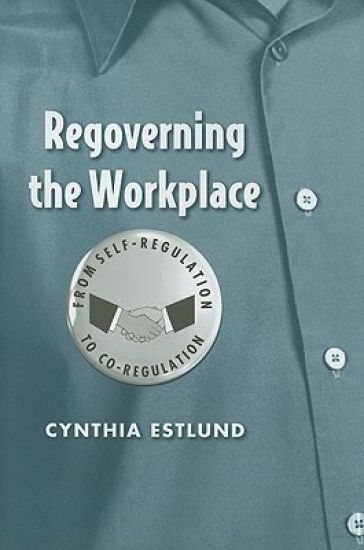
This original book seeks to shape current trends toward employer self-regulation into a new paradigm of workplace governance in which workers participate. The decline of collective bargaining and the parallel rise of employment law have left workers with an abundance of legal rights but no representation at work. Without representation, even workers’ legal rights are often under-enforced. At the same time, however, many legal and social forces have pushed firms to self-regulate—to take on the task of realizing public norms through internal compliance structures. Cynthia Estlund argues that the trend toward self-regulation is here to stay, and that worker-friendly reformers should seek not to stop that trend but to steer it by securing for workers an effective voice within self-regulatory processes. If the law can be retooled to encourage forms of self-regulation in which workers participate, it can help both to promote public values and to revive workplace self-governance.
Working Together

Working Together

Cynthia Estlund

Oxford University Press Inc
2005
nidottu
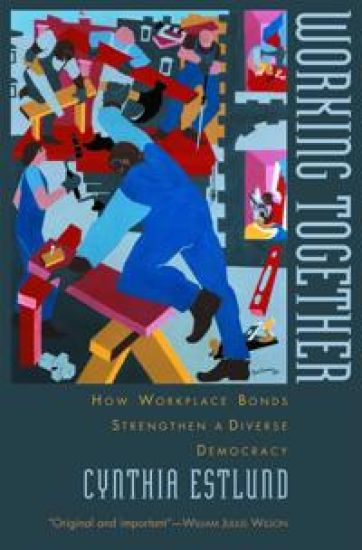
The typical workplace is a hotbed of human relationships--of friendships, conflicts, feuds, alliances, partnerships, coexistence and cooperation. Here, problems are solved, progress is made, and rifts are mended because they need to be - because the work has to get done. And it has to get done among increasingly diverse groups of co-workers. At a time when communal ties in American society are increasingly frayed and segregation persists, the workplace is more than ever the site where Americans from different ethnic, religious, and racial backgrounds meet and forge serviceable and sometimes lasting bonds. What do these highly structured workplace relationships mean for a society still divided by gender and race? Structure and rules are, in fact, central to the answer. Workplace interactions are constrained by economic power and necessity, and often by legal regulation. They exist far from the civic ideal of free and equal citizens voluntarily associating for shared ends. Yet it is the very involuntariness of these interactions that helps to make the often-troubled project of racial integration comparatively successful at work. People can be forced to get along-not without friction, but often with surprising success. This highly original exploration of the paradoxical nature--and the paramount importance--of workplace bonds concludes with concrete suggestions for how law can further realize the democratic possibilities of working together. In linking workplace integration and connectedness beyond work, Estlund suggests a novel and promising strategy for addressing the most profound challenges facing American society.
Working Together

Working Together

Cynthia Estlund

Oxford University Press Inc
2003
sidottu
The typical workplace is a hotbed of human relationships--of friendships, conflicts, feuds, alliances, partnerships, coexistence and cooperation. Here, problems are solved, progress is made, and rifts are mended because they need to be - because the work has to get done. And it has to get done among increasingly diverse groups of co-workers. At a time when communal ties in American society are increasingly frayed and segregation persists, the workplace is more than ever the site where Americans from different ethnic, religious, and racial backgrounds meet and forge serviceable and sometimes lasting bonds. What do these highly structured workplace relationships mean for a society still divided by gender and race? Structure and rules are, in fact, central to the answer. Workplace interactions are constrained by economic power and necessity, and often by legal regulation. They exist far from the civic ideal of free and equal citizens voluntarily associating for shared ends. Yet it is the very involuntariness of these interactions that helps to make the often-troubled project of racial integration comparatively successful at work. People can be forced to get along-not without friction, but often with surprising success. This highly original exploration of the paradoxical nature--and the paramount importance--of workplace bonds concludes with concrete suggestions for how law can further realize the democratic possibilities of working together. In linking workplace integration and connectedness beyond work, Estlund suggests a novel and promising strategy for addressing the most profound challenges facing American society.