Kirjojen hintavertailu. Mukana 12 290 406 kirjaa ja 12 kauppaa.

Kirjailija

Cynthia Hahn

Kirjat ja teokset yhdessä paikassa: 7 kirjaa, julkaisuja vuosilta 2001-2020, suosituimpien joukossa Heart's Desire: The Darnley Jewel and the Human Body. Vertaile teosten hintoja ja tarkista saatavuus suomalaisista kirjakaupoista.

7 kirjaa

Kirjojen julkaisuhaarukka 2001-2020.

Heart's Desire: The Darnley Jewel and the Human Body

Heart's Desire: The Darnley Jewel and the Human Body

Cynthia Hahn

National Galleries of Scotland
2020
sidottu
The Darnley jewel, a masterpiece of the goldsmith's art on display at Edinburgh's Holyrood Palace, has been deemed a love token, but has also been labelled an emblem of political ambition. Taking the shape of a heart, the jewel was produced at a moment (1565-75) when such objects worn by courtiers were a primary means of asserting status and proclaiming allegiances. With a deep medieval history - originally the fleshly power centre of the human body, the seat of the soul, and place of memory and emotion - the heart has many aspects to offer. This book shows how the understanding of the heart changed during the Middle Ages, from spiritual locus of the body, to source of devotion to country, and finally, to the font of love and sentimentality.
Passion Relics and the Medieval Imagination

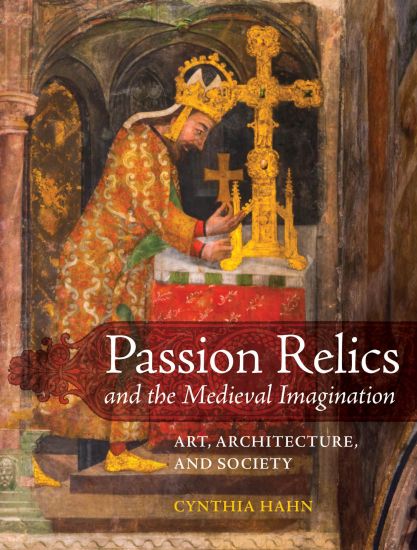
Passion Relics and the Medieval Imagination

Cynthia Hahn

University of California Press
2020
sidottu
Although objects associated with the Passion and suffering of Christ are among the most important and sacred relics venerated by the Catholic Church, this is the first study that considers how they were presented to the faithful. Cynthia Hahn adopts an accessible, informative, and holistic approach to the important history of Passion relics—first the True Cross, and then the collective group of Passion relics—examining their display in reliquaries, their presentation in church environments, their purposeful collection as centerpieces in royal and imperial collections, and finally their veneration in pictorial form as Arma Christi. Tracing the ways that Passion relics appear and disappear in response to Christian devotion and to historical phenomena, ranging from pilgrimage and the Crusades to the promotion of imperial power, this groundbreaking investigation presents a compelling picture of a very important aspect of late medieval and early modern devotion.
The Thing of Mine I Have Loved Best: Meaningful Jewels

The Thing of Mine I Have Loved Best: Meaningful Jewels

Cynthia Hahn

Les Enluminures, Limited
2018
nidottu
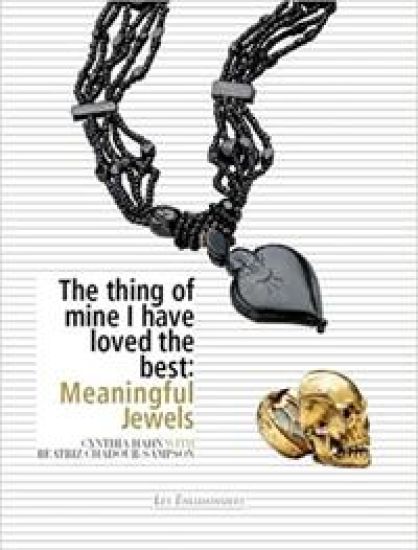
This book concerns objects that were “meaningful” jewels, a term we choose to designate a wide range of precious wearable objects that had particular meaning. An Anglo-Saxon glass pendant, a Spanish “magic belt,” a Mexican lantern pendant (once adorned with New World feathers), and an Imperial Memento Mori Skull, these are just a few of the remarkable objects included. These intimate meaningfuljewels are meant to be opened, touched, manipulated, pinned, gathered and strung. In the same series of books on jewelry inaugurated in 2007 with Toward an Art History of Medieval Rings (repr. 2014), the present volume divides the jewels into six sections (such as “Ways and Means of Prayer,” “Hidden and Revealed,” “Kissed and Touched”) that creatively explore the complex meanings these objectsheld for their owners. Cynthia Hahn, internationally known for her explorative ground-breaking studies of the reliquary arts, has written the stimulating essays and accompanying entries in the body of the book. She has collaborated here with Beatriz Chadour-Sampson, who, with her great mastery of the history of jewelry, has contributed a scholarly catalogue that authenticates, describes, and situates eachobject. Together the essays, entries, and catalogue create a context that helps us see this jewelry in a new way and adds new research that establishes the historical and artistic importance of a relatively little-studied group of “meaningful jewels.” In the words of Cynthia Hahn, “Jewels, and that word here includes jewelry, are literally the foundation of art in the Middle Ages. It is surely not irrelevant thatthese things are so beautiful.”Sandra Hindman, Founder and President of Les Enluminures states “I have bought these pieces one by one over a period of fi fteen years (and put them aside with this project in mind), and to my knowledge no such collection has been assembled, studied, and exhibited in modern times”. She goes on to say, “Not at all unlike the medieval manuscripts I also present, they are some of the most intimateof art objects from the Middle Ages.”
The Reliquary Effect

The Reliquary Effect

Cynthia Hahn

Reaktion Books
2016
sidottu
From skeletons to strips of cloth to little pieces of dust, reliquaries can be found in many forms, and while sometimes they may seem grotesque on their surface, they are nonetheless invested with great spiritual and memorial value. In this book, Cynthia Hahn offers the first full survey in English of the societal value of reliquaries, showing how they commemorate religious and historical events and, more important, inspire awe, faith, and, for many, the miraculous. Hahn looks deeply into the Christian tradition, examining relics and reliquaries throughout history and around the world, going from the earliest years of the cult of saints through to the post-Reformation response. She looks at relic footprints, incorrupt bodies, the Crown of Thorns, the Shroud of Turin, and many other renowned relics, and she shows how the architectural creation of sacred space and the evocation of the biblical tradition of the temple is central to the reliquary s numinous power. She also discusses relics from other traditions especially from Buddhism and Islam and she even looks at how reliquaries figure in contemporary art.Fascinatingly illustrated throughout, this book is a must-read for anyone interested in the enduring power of sacred objects. "
Strange Beauty

Strange Beauty

Cynthia Hahn

Pennsylvania State University Press
2013
pokkari
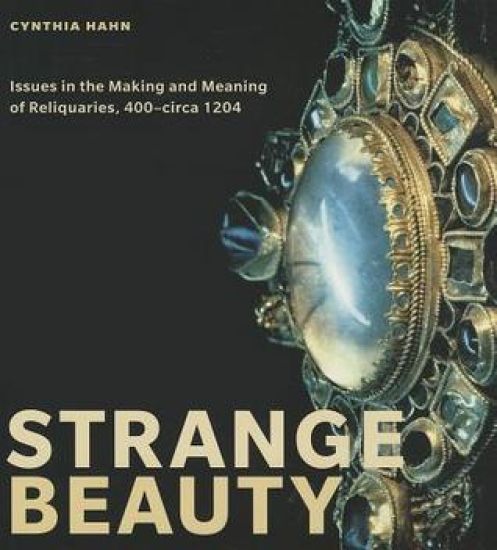
Reliquaries, one of the central art forms of the Middle Ages, have recently been the object of much interest among historians and artists. Until now, however, they have had no treatment in English that considers their history, origins, and place within religious practice, or, above all, their beauty and aesthetic value. In Strange Beauty, Cynthia Hahn treats issues that cut across the class of medieval reliquaries as a whole. She is particularly concerned with portable reliquaries that often contained tiny relic fragments, which purportedly allowed saints to actively exercise power in the world. Above all, Hahn argues, reliquaries are a form of representation. They rarely simply depict what they contain; rather, they prepare the viewer for the appropriate reception of their precious contents and establish the “story” of the relics. They are based on forms originating in the Bible, especially the cross and the Ark of the Covenant, but find ways to renew the vision of such forms. They engage the viewer in many ways that are perhaps best described as persuasive or “rhetorical,” and Hahn uses literary terminology—sign, metaphor, and simile—to discuss their operation. At the same time, they make use of unexpected shapes—the purse, the arm or foot, or disembodied heads—to create striking effects and emphatically suggest the presence of the saint.
Strange Beauty

Strange Beauty

Cynthia Hahn

Pennsylvania State University Press
2012
sidottu
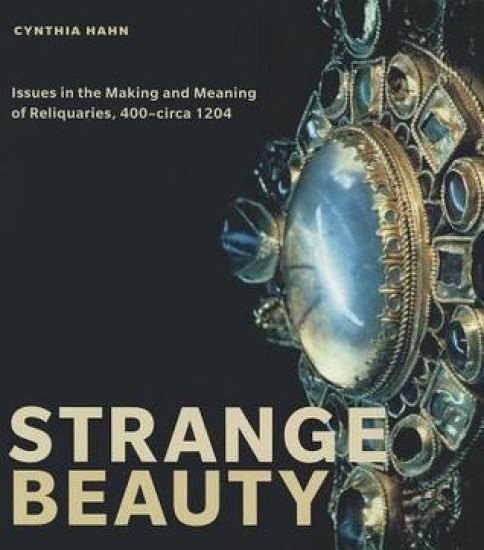
Reliquaries, one of the central art forms of the Middle Ages, have recently been the object of much interest among historians and artists. Until now, however, they have had no treatment in English that considers their history, origins, and place within religious practice, or, above all, their beauty and aesthetic value. In Strange Beauty, Cynthia Hahn treats issues that cut across the class of medieval reliquaries as a whole. She is particularly concerned with portable reliquaries that often contained tiny relic fragments, which purportedly allowed saints to actively exercise power in the world. Above all, Hahn argues, reliquaries are a form of representation. They rarely simply depict what they contain; rather, they prepare the viewer for the appropriate reception of their precious contents and establish the "story" of the relics. They are based on forms originating in the Bible, especially the cross and the Ark of the Covenant, but find ways to renew the vision of such forms. They engage the viewer in many ways that are perhaps best described as persuasive or "rhetorical," and Hahn uses literary terminology-sign, metaphor, and simile-to discuss their operation. At the same time, they make use of unexpected shapes-the purse, the arm or foot, or disembodied heads-to create striking effects and emphatically suggest the presence of the saint.
Portrayed on the Heart

Portrayed on the Heart

Cynthia Hahn

University of California Press
2001
sidottu
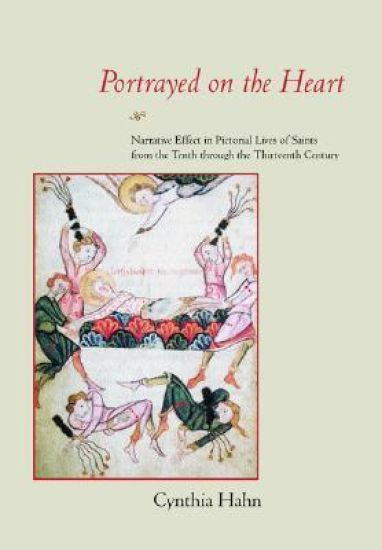
Hagiography, or writing about and illustrating the lives of saints, was one of the most creative areas for artistic inspiration in the literature and arts of the Middle Ages. This book explores the sumptuously illustrated saints' lives that were made in medieval Europe. Cynthia Hahn discusses a broad range of manuscripts and other artifacts, many of which are reproduced here, and provides an analysis of their pictorial and narrative structure. Hahn's book is a virtual compendium of images-many rarely published-as well as a learned study that deepens our understanding of the role of various types of saints, the nature of their audience, and the historical moment when individual works were produced. After two informative introductory chapters setting the historical and narrative context of pictorial hagiography, Hahn considers the Lives of Martyrs and Virgins, Bishops, Monks and Abbots, and Kings and Queens, and concludes with an examination of the extraordinary chronicles and illustrations of the lives of saints by the English monk Matthew Paris. She considers such questions as: Why were illustrated saints' lives produced in such great numbers during this period? Why were they illustrated at all given the trouble and expense of such illustration? And to whom did the saints' lives appeal, and how did their readers use them? As she addresses these and other intriguing questions, Hahn traces changes that occurred over time both in the images and the stories, and shows how their creators, mostly the intellectual elite, were finely attuned to audience reception. This important aspect of hagiographic production has received scant attention in the past, and as she considers this issue in light of contemporary narrative theory, Hahn brings us to a fresh appreciation of these intricately illustrated manuscripts and their multiple audiences.