Kirjojen hintavertailu. Mukana 12 152 606 kirjaa ja 12 kauppaa.

Kirjailija

Cyril J. Weir

Kirjat ja teokset yhdessä paikassa: 7 kirjaa, julkaisuja vuosilta 2007-2019, suosituimpien joukossa Assessing English on the Global Stage. Vertaile teosten hintoja ja tarkista saatavuus suomalaisista kirjakaupoista.

7 kirjaa

Kirjojen julkaisuhaarukka 2007-2019.

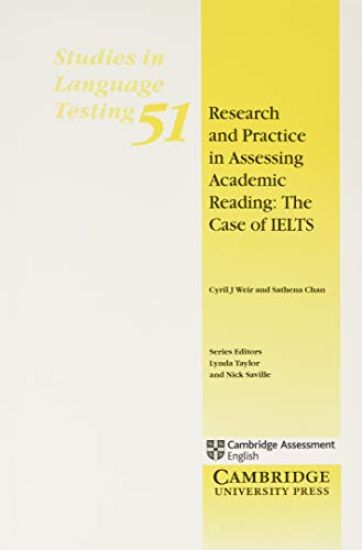
Research and Practice in Assessing Academic Reading: The Case of IELTS

Research and Practice in Assessing Academic Reading: The Case of IELTS

Cyril J. Weir; Sathena Chan

Cambridge University Press
2019
pokkari
This volume describes differing approaches to understanding academic reading ability that have emerged in recent decades and goes on to develop an empirically-grounded framework for validating tests of this skill. The framework is then applied to the IELTS Academic Reading module to investigate a number of different validity perspectives that reflect the socio-cognitive nature of any assessment event. The authors demonstrate how a systematic understanding and application of the framework and its components can help test developers to operationalise their tests so as to fulfill the validity requirements for an academic reading test.
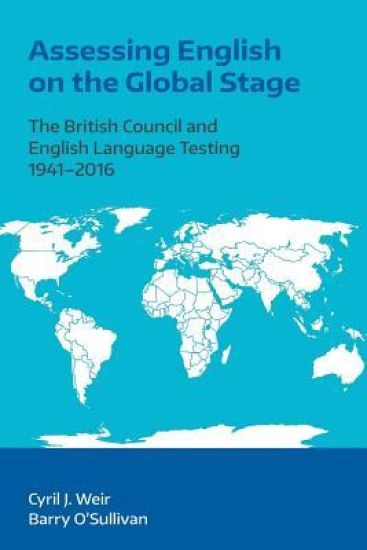
Assessing English on the Global Stage

Assessing English on the Global Stage

Cyril J. Weir

Equinox Publishing Ltd
2017
pokkari
This book tells the story of the British Council's seventy-five year involvement in the field of English language testing. The first section of the book explores the role of the British Council in spreading British influence around the world through the export of British English language examinations and British expertise in language testing. Founded in 1934, the organisation formally entered the world of English language testing with the signing of an agreement with the University of Cambridge Local Examination Syndicate (UCLES) in 1941. This agreement, which was to last until 1993, saw the British Council provide substantial English as a Foreign Language (EFL) expertise and technical and financial assistance to help UCLES develop their suite of English language tests. Perhaps the high points of this phase were the British Council inspired Cambridge Diploma of English Studies introduced in the 1940s and the central role played by the British Council in the conceptualisation and development of the highly innovative English Language Testing Service (ELTS) in the 1970s, the precursor to the present day International English Language Testing System (IELTS). British Council support for the development of indigenous national English language tests around the world over the last thirty years further enhanced the promotion of English and the creation of soft power for Britain. In the early 1990s the focus of the British Council changed from test development to delivery of British examinations through its global network. However, by the early years of the 21st century, the organisation was actively considering a return to test development, a strategy that was realised with the founding of the Assessment Research Group in early 2012. This was followed later that year by the introduction of the Aptis English language testing service; the first major test developed in-house for over thirty years. As well as setting the stage for the re-emergence of professional expertise in language testing within the organisation, these initiatives have resulted in a growing strategic influence for the organisation on assessment in English language education. This influence derives from a commitment to test localisation, the development and provision of flexible, accessible and affordable tests and an efficient delivery, marking and reporting system underpinned by an innovative socio-cognitive approach to language testing. This final period can be seen as a clear return by the British Council to using language testing as a tool for enhancing soft power for Britain: a return to the original raison d'etre of the organisation.
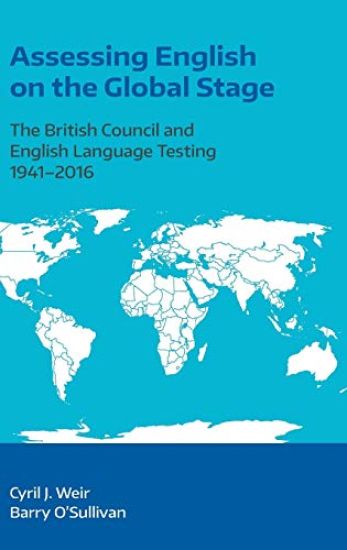
Assessing English on the Global Stage

Assessing English on the Global Stage

Cyril J. Weir

Equinox Publishing Ltd
2017
sidottu
This book tells the story of the British Council's seventy-five year involvement in the field of English language testing. The first section of the book explores the role of the British Council in spreading British influence around the world through the export of British English language examinations and British expertise in language testing. Founded in 1934, the organisation formally entered the world of English language testing with the signing of an agreement with the University of Cambridge Local Examination Syndicate (UCLES) in 1941. This agreement, which was to last until 1993, saw the British Council provide substantial English as a Foreign Language (EFL) expertise and technical and financial assistance to help UCLES develop their suite of English language tests. Perhaps the high points of this phase were the British Council inspired Cambridge Diploma of English Studies introduced in the 1940s and the central role played by the British Council in the conceptualisation and development of the highly innovative English Language Testing Service (ELTS) in the 1970s, the precursor to the present day International English Language Testing System (IELTS). British Council support for the development of indigenous national English language tests around the world over the last thirty years further enhanced the promotion of English and the creation of soft power for Britain. In the early 1990s the focus of the British Council changed from test development to delivery of British examinations through its global network. However, by the early years of the 21st century, the organisation was actively considering a return to test development, a strategy that was realised with the founding of the Assessment Research Group in early 2012. This was followed later that year by the introduction of the Aptis English language testing service; the first major test developed in-house for over thirty years. As well as setting the stage for the re-emergence of professional expertise in language testing within the organisation, these initiatives have resulted in a growing strategic influence for the organisation on assessment in English language education. This influence derives from a commitment to test localisation, the development and provision of flexible, accessible and affordable tests and an efficient delivery, marking and reporting system underpinned by an innovative socio-cognitive approach to language testing. This final period can be seen as a clear return by the British Council to using language testing as a tool for enhancing soft power for Britain: a return to the original raison d'etre of the organisation.
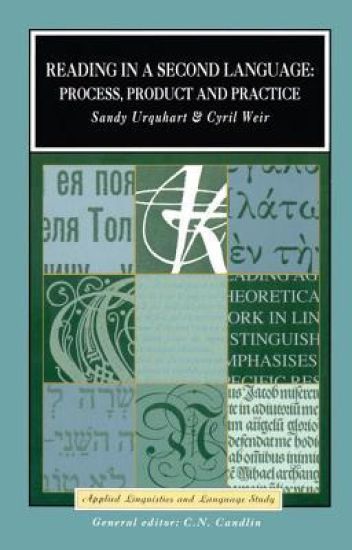
Reading in a Second Language

Reading in a Second Language

A.H. Urquhart; Cyril J. Weir

Routledge
2016
sidottu
Reading in a Second Language sets the testing and teaching of reading against a theoretical background, discussing research from both applied linguistics and cognitive psychology. Where possible, it focuses on research into second language readers and distinguishes different kinds of reading, particularly expeditious as opposed to careful reading, and emphasizes the validity of each.Sandy Urquhart and Cyril Weir relate testing and teaching, discussing similarities and differences, providing a comprehensive survey of both methods with the emphasis on those which have been substantiated or supported by research evidence. Finally, the book proposes specific research topics, and detailed advice on how to construct tests of language for academic purposes and suggestions for further research.
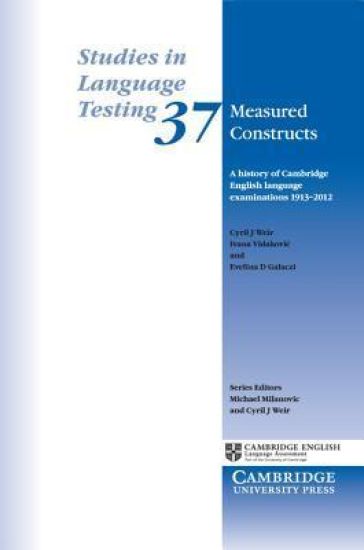
Measured Constructs

Measured Constructs

Cyril J. Weir; Ivana Vidakovic; Evelina D. Galaczi

Cambridge University Press
2013
pokkari
This volume establishes how English language constructs were measured in Cambridge English examinations over the period 1913 to 2012. An addition to the Studies in Language Testing series, this volume provides an overview of English language testing over the last century, with coverage of key theoretical and practical aspects of the assessment of reading, listening, writing and speaking skills. It includes examples of the Cambridge English exams, old and new, and is the first volume to describe in a systematic way the different theoretical influences which have shaped the development of the constructs underlying Cambridge English exams in the last 100 years.
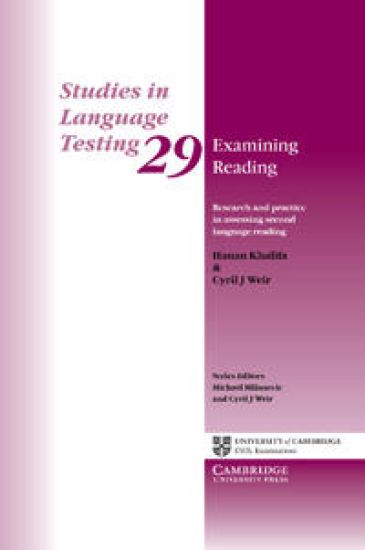
Examining Reading

Examining Reading

Hanan Khalifa; Cyril J. Weir

Cambridge University Press
2009
pokkari
This publication highlights the need for test developers to provide clear explanations of the ability constructs which underpin tests offered in the public domain. An explanation is increasingly required or if the validity of test score interpretation and use are to be supported both logically and with empirical evidence. The book demonstates the application of a comprehensive test validation framework which adopts a socio-cognitive perspective. The framework embraces six core components which reflect the practical nature and quality of an actual testing event. It examines Cambridge ESOL writing tasks from the following perspectives: Test Taker, Cognitive Validity, Context Validity, Scoring Validity, Criterion-related Validity and Consequential Validity. The authors show how an understanding and analysis of the framework and its components in relation to specific writing tests can assist test developers to operationalise their tests more effectively, especially in relation to criterial distinctions across test levels.
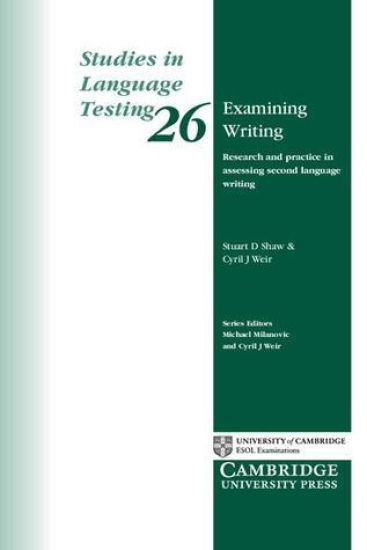
Examining Writing

Examining Writing

Stuart D. Shaw; Cyril J. Weir

Cambridge University Press
2007
pokkari
This publication highlights the need for test developers to provide clear explanations of the ability constructs which underpin tests offered in the public domain. An explanation is increasingly required, if the validity of test score interpretation and use are to be supported both logically, and with empirical evidence. The book demonstates the application of a comprehensive test validation framework which adopts a socio-cognitive perspective. The framework embraces six core components which reflect the practical nature and quality of an actual testing event. It examines Cambridge ESOL writing tasks from the following perspectives: Test Taker, Cognitive Validity, Context Validity, Scoring Validity, Criterion-related Validity and Consequential Validity. The authors show how an understanding and analysis of the framework and its components in relation to specific writing tests can assist test developers to operationalise their tests more effectively, especially in relation to criterial distinctions across test levels.