Kirjojen hintavertailu. Mukana 12 390 323 kirjaa ja 12 kauppaa.
Kirjailija
Cyril O'Regan
Kirjat ja teokset yhdessä paikassa: 18 kirjaa, julkaisuja vuosilta 1994-2024, suosituimpien joukossa Gnostic Return in Modernity. Vertaile teosten hintoja ja tarkista saatavuus suomalaisista kirjakaupoista.
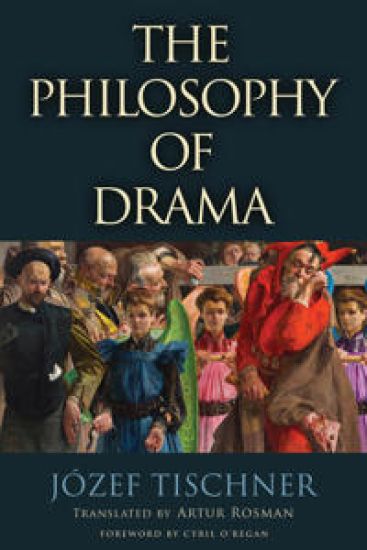
The Philosophy of Drama provides an in-depth and erudite exploration of human existence as a dramatic existence, interpreted in terms of encounter, dialogue, reciprocity, erring, temptation, condemnation, and justification. In this magnum opus, Catholic philosopher Józef Tischner offers a philosophical interpretation of the human experience and articulates a metaphysics of good and evil, arguing that the drama of existence is revealed most clearly through the painful encounter with evil. Long overdue for translation into English, The Philosophy of Drama is one of the most important works of Polish philosophy to date and a major contribution to phenomenology and the philosophy of dialogue. Tischner writes of a drama that is at once personal and social, that is bound both by the stage of the present world and by the flow of time. It supposes human freedom while also recognizing the way in which human beings refuse to take responsibility for their freedom. It is a drama between divine and human freedom, on the one hand, and between the choice for good and evil, between humans as cursed or blessed, on the other. The Philosophy of Drama addresses the profound question of why we should be responsible for one another and for the world in which we live and is essential reading for anyone trying to understand what it is to be human.
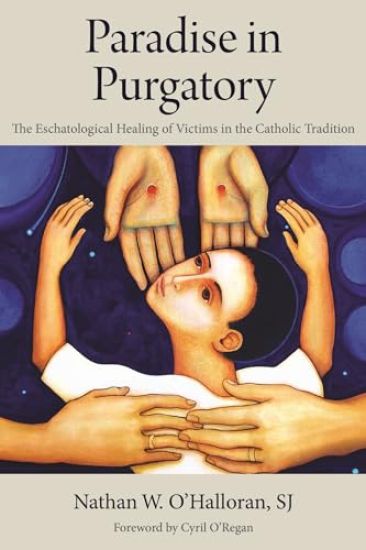
The claim of this book is that it is a precondition for Heaven that victims experience an eschatological healing of their other-inflicted wounds. Nathan O'Halloran, SJ, argues that the best theological space in which to locate this eschatological healing is in what he terms Paradise-in-Purgatory. The doctrine of Purgatory developed as a postmortem theological category for addressing sins committed after baptism and for which adequate penance has not been completed before death. In its full doctrinal articulations at Lyons II, Florence, and Trent, Purgatory is a doctrine concerned with personal, self-inflicted sin. Victims, on the other hand, require healing from other-inflicted sin rather than self-inflicted sin. For this reason, a certain expansion of this Catholic doctrine is required to make theological space for victims.O'Halloran argues that he has found that theological space within the Church's ample tradition. The wellspring from which the doctrine of Purgatory emerged contains a richer content than has been represented thus far by conciliar definitions. Paradise in Purgatory maintains that the soteriological logic out of which Purgatory developed can be extended also to the postmortem healing of victims, and the soteriological logic of the New Testament supports this conclusion. Using as fundamental touchstones the wiping away of victims' tears in the Book of Revelation, and the healing of Dinocrates through the prayers of his sister Perpetua in the Passion of Perpetua and Felicity, O'Halloran argues that victims must have an opportunity to experience full postmortem salvation from other-inflicted sin. The volume concludes that Purgatory can be theologically expanded to include a Paradise-in-Purgatory, i.e., a process that heals the other-inflicted wounds of sin which victims carry with them through death. The wounds of victims cannot be eschatologically discarded but must be subjected to the healing salvation which Christ came to offer.
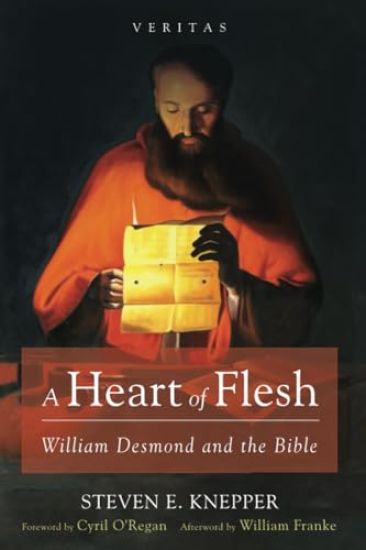
The Irish philosopher William Desmond is one of the most compelling and adventurous Christian thinkers of our time. The essays gathered here undertake a journey through the Bible with Desmond that ranges across biblical theology, philosophy of religion, metaphysics, ethics, aesthetics, political theory, and literary studies. Some of the essays examine the place of the Bible in Desmond's thought, considering his readings of the creation, the Abraham cycle, and the Beatitudes. Other essays bring Desmond's ideas to bear on broad questions that emerge from the Bible about philosophy and revelation, exegesis, theopoetics, eschatology, and tyranny. Still others bring Desmond into conversation with influential philosophers who engage (or conspicuously do not engage) the Bible, such as Hegel, Schopenhauer, Kierkegaard, Heidegger, and Tillich. Together, these essays show the rich possibilities of approaching the Bible with Desmond. All take their bearings from Desmond's "metaxological" approach, which does not seek to claim the final word, which attends to the text rather than simply imposing on it, and which allows for an ongoing dialogue. / Contributors: Ryan G. Duns, SJ / Caitlin Smith Gilson / Joseph K. Gordon / William Christian Hackett / Steven E. Knepper / Renee Kohler-Ryan / Andrew Kuiper / Brendan Thomas Sammon / Terence Sweeney / Ethan Vanderleek / Erik van Versendaal / Robert Wyllie
The Irish philosopher William Desmond is one of the most compelling and adventurous Christian thinkers of our time. The essays gathered here undertake a journey through the Bible with Desmond that ranges across biblical theology, philosophy of religion, metaphysics, ethics, aesthetics, political theory, and literary studies. Some of the essays examine the place of the Bible in Desmond's thought, considering his readings of the creation, the Abraham cycle, and the Beatitudes. Other essays bring Desmond's ideas to bear on broad questions that emerge from the Bible about philosophy and revelation, exegesis, theopoetics, eschatology, and tyranny. Still others bring Desmond into conversation with influential philosophers who engage (or conspicuously do not engage) the Bible, such as Hegel, Schopenhauer, Kierkegaard, Heidegger, and Tillich. Together, these essays show the rich possibilities of approaching the Bible with Desmond. All take their bearings from Desmond's "metaxological" approach, which does not seek to claim the final word, which attends to the text rather than simply imposing on it, and which allows for an ongoing dialogue. / Contributors: Ryan G. Duns, SJ / Caitlin Smith Gilson / Joseph K. Gordon / William Christian Hackett / Steven E. Knepper / Renee Kohler-Ryan / Andrew Kuiper / Brendan Thomas Sammon / Terence Sweeney / Ethan Vanderleek / Erik van Versendaal / Robert Wyllie
The Eucharist in Modern Philosophy is one of the last books written by the renowned Jesuit philosopher Xavier Tilliette (1921–2018), and the first to be translated into English. Jonathan Martin Ciraulo, the translator, also provides an introduction to the thought of Tilliette and the content of this book, while Cyril O'Regan provides the foreword, noting the particular intellectual characteristics of Tilliette and his analysis of eucharistic philosophies.In addition to being known as one of the foremost experts on the German Idealist Friedrich Schelling, Tilliette wrote voluminously on the relationship between modern philosophy and theology, particularly concerning the way in which Christology is central to the development of modern philosophy. In this volume, he extends that project to look at how various philosophers, such as Descartes, Leibniz, Hegel, Blondel, and Marion, as well as poets and mystics, such as de Chardin, Simone Weil, and Paul Claudel, thought extensively about the question of the Eucharist. The result is an enormous diversity of Eucharistic thought, from Descartes' attempt to justify transubstantiation in light of his philosophical revolution, to Feuerbach's supposed exposure of the contradiction inherent to sacramentality, to Antonio Rosmini's Eucharistic piety and speculation, to Maurice Blondel's recovery and expansion of Leibniz's notion of the substantial bond. Tilliette shows that this philosophical conversation about the Eucharist is a living tradition, as the aporias and failures of one generation provide stimulus for all that follows. Much of the work is largely historical, showing in great detail the context of each particular eucharistic philosophy, but Tilliette also evaluates the relative fruitfulness of the various eucharistic theories for philosophy, theology, and the life of the Church. This book demonstrates that the Eucharist has been, and will likely continue to be, a major impetus for philosophical reflection.
This book exhibits the richness and sophistication of Plotinian and Dionysian apophatic theologies by explicating their respective internal ""logics."" It articulates the unique metaphysical status and explanatory role that the One and God, respectively, play in Plotinus's and Dionysius's reflections, showing the way in which apophasis is generated and sustained by the metaphysical-explanatory lines of thought in which the One (Plotinus) and God (Dionysius) function as the ultimate, unconditioned source of everything else. In the context of explanation, negation serves to convey the incomparable reality of the One or of God as beyond being. However, the metaphysical and explanatory lines of thought are themselves situated within the broader context of the soul's ascent to mystical union with the One or with God. From this broader perspective, the discursive practice of negation constitutes the basis of preparing the soul for mystical union. Preparation for mystical union involves the cognitive and trans-cognitive practice of negation, which enables the soul to progress towards and become united with the One or God. This study is motivated by the desire to more deeply understand apophasis as deployed in different philosophical, theological, and religious contexts, including the work of contemporary thinkers such as Jean-Luc Marion.
This book exhibits the richness and sophistication of Plotinian and Dionysian apophatic theologies by explicating their respective internal ""logics."" It articulates the unique metaphysical status and explanatory role that the One and God, respectively, play in Plotinus's and Dionysius's reflections, showing the way in which apophasis is generated and sustained by the metaphysical-explanatory lines of thought in which the One (Plotinus) and God (Dionysius) function as the ultimate, unconditioned source of everything else. In the context of explanation, negation serves to convey the incomparable reality of the One or of God as beyond being. However, the metaphysical and explanatory lines of thought are themselves situated within the broader context of the soul's ascent to mystical union with the One or with God. From this broader perspective, the discursive practice of negation constitutes the basis of preparing the soul for mystical union. Preparation for mystical union involves the cognitive and trans-cognitive practice of negation, which enables the soul to progress towards and become united with the One or God. This study is motivated by the desire to more deeply understand apophasis as deployed in different philosophical, theological, and religious contexts, including the work of contemporary thinkers such as Jean-Luc Marion.
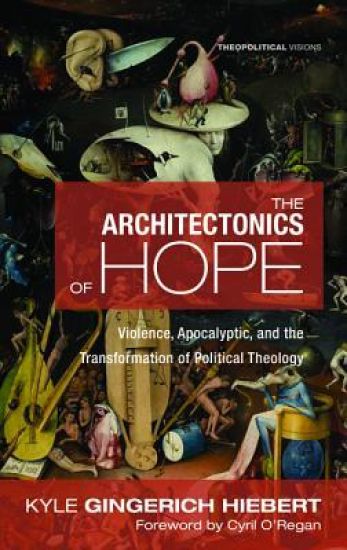
The Architectonics of Hope provides a critical excavation and reconstruction of the Schmittian seductions that continue to bedevil contemporary political theology. Despite a veritable explosion of interest in the work of Carl Schmitt, which increasingly recognizes his contemporary relevance and prescience, there nevertheless remains a curious and troubling reticence within the discipline of theology to substantively engage the German jurist and sometime Nazi apologist. By offering a genealogical reconstruction of the manner and extent to which recognizably Schmittian gestures are unwittingly repeated in subsequent debates that often only implicitly assume they have escaped the violent aporetics that characterize Schmitt's thought, this volume illuminates hidden resonances between ostensibly opposed political theologies. Using the complex relationship between violence and apocalyptic as a guide, the genealogy traces the transformation of political theology through the work of a surprising collection of figures, including Johann Baptist Metz, John Milbank, David Bentley Hart, and John Howard Yoder. ""Theologians must be political because they are embroiled in politics; and they are embroiled in politics because politics is saturated with religious resonances. So here is a new and courageous voice in political theology, taking on the giants--Schmitt, Metz, Radical Orthodoxy, and Yoder--and presenting them with a passionately argued freshness. The book courts controversy, and its dramatic genealogical unfolding of the apocalyptic and violent within political theology intensifies that controversy. But we need younger, confident, theologically astute thinkers to generate the right kind of contestation, and Gingerich Hiebert does that with well-crafted elegance and integrity. His vision of a new and hope-filled way of seeing opens a new chapter in political theology and isn't fearful of exposing the deficiencies of older accounts. The book deserves to be read widely, reviewed widely, and debated widely, because only that way might we move forward in a world steeped in violence with faith, hope, and what he calls 'charitable theological argument.'"" --Graham Ward, Regius Professor of Divinity, Christ Church Oxford, United Kingdom ""Kyle Gingerich Hiebert's compellingly-written, nuanced genealogical account of the connections between violence and apocalyptic in early and late twentieth century political theologies displays an intimate grasp of the relevant conceptual and critical theoretical issues and offers a constructive perspective on what is at stake in this contested terrain."" --Travis Kroeker, McMaster University, Hamilton, Ontario ""This well-argued book offers a fundamental contribution to the expanding field of political theology, by uncovering the influence of Carl Schmitt on a variety of thinkers like Metz, Yoder, and Milbank. In doing so, Gingerich Hiebert connects traditions of thought that seemed non-comparable before. Furthermore, he provides a way to retrieve Schmitt, who is the proverbial elephant in the room in many types of contemporary theology. In this way, Gingerich Hiebert shows an undercurrent in modern political theology that needed to be uncovered."" --Stephan Van Erp, Professor of Fundamental Theology at KU Leuven, Belgium ""Gingerich Hiebert creatively puts Schmitt, Metz, Milbank, Hart, and Yoder into conversation with the result that we not only understand each of them better, but more importantly we have a better grasp of what is at stake in political theology. This book is destined to become a key text for all concerned with political theology."" --Stanley Hauerwas, Duke Divinity School Kyle Gingerich Hiebert (University of Manchester) is Director of the Toronto Mennonite Theological Center at the University of Toronto.
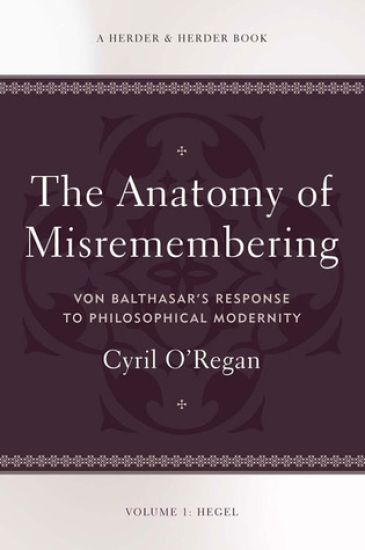
This compelling work is the most comprehensive and sophisticated account to date of the relationship between Hans Urs von Balthasar—a Swiss theologian and Catholic priest—and the German philosopher Georg Hegel. While underscoring the depth and breadth of Balthasar’s engagement with the philosopher, author Cyril O’Regan argues that Balthasar is the most concertedly anti-Hegelian theologian of the 20th century. For him, it is essential to engage Hegel because of his corrections of sclerotic forms of premodern Christian thought, but even more importantly to resist and correct his systematic thought, which represents a comprehensive misremembering of the Christian thought, practices, and forms of life. An important and original work, this book addresses a topic that puts the possibility of an authentic postmodern theology at stake.
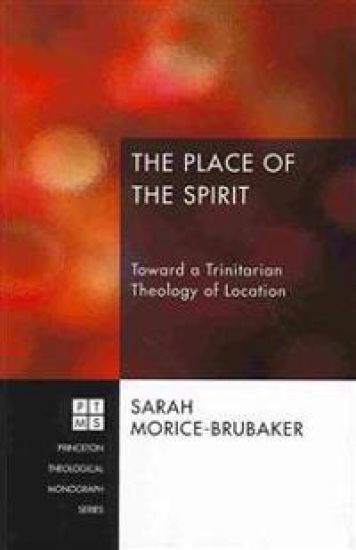
Is there any way to talk theologically about the Trinity and place? What might the ""placedness"" of creation have to do with God's triunity? In The Place of the Spirit, Sarah Morice-Brubaker considers how anxieties about place have influenced Trinitarian theology--both what it is asked to do and the language in which it is expressed. When one is nervous about collapsing God into created horizons, she suggests, one is apt to come up with a model of trinity that refuses place. Distance becomes a primary way of situating the divine persons in relation to each other. Conversely, those theologians who wish to avoid a too-remote God likewise recruit Trinitarian language to suit that purpose. They, too, give that language a placial gloss, expressing triunity in terms of coinherence and mutual indwelling. And yet, suggests Morice-Brubaker, the question, ""What is place, and how can one talk about God and place?"" is underdetermined within much contemporary Trinitarian thought. Thankfully, this question has received full-on attention in other areas of ethics, philosophy, and systematic theology. This book calls for Trinitarian thought to avail itself of those insights and offers some ways in which it may do so.
Argues that the discourse of Jacob Boehme represents the return of Gnostic thought in modernity after a thousand year hiatus. Jacob Boehme, the seventeenth-century German speculative mystic, influenced the philosophers Hegel and Schelling and both English and German Romantics alike with his visionary thought. Gnostic Apocalypse focuses on the way Boehme's thought repeats and surpasses post-reformation Lutheran thinking, deploys and subverts the commitments of medieval mysticism, realizes the speculative thrust of Renaissance alchemy, is open to esoteric discourses such as the Kabbalah, and articulates a dynamic metaphysics. This book critically assesses the striking claim made in the nineteenth century that Boehme's visionary discourse represents within the confines of specifically Protestant thought nothing less than the return of ancient Gnosis. Although the grounds adduced on behalf of the "Gnostic return" claim in the nineteenth century are dismissed as questionable, O'Regan shows that the fundamental intuition is correct. Boehme's visionary discourse does represent a return of Gnosticism in the modern period, and in this lies its fundamental claim to our contemporary philosophical, theological, and literary attention.
Argues that the discourse of Jacob Boehme represents the return of Gnostic thought in modernity after a thousand year hiatus.Jacob Boehme, the seventeenth-century German speculative mystic, influenced the philosophers Hegel and Schelling and both English and German Romantics alike with his visionary thought. Gnostic Apocalypse focuses on the way Boehme's thought repeats and surpasses post-reformation Lutheran thinking, deploys and subverts the commitments of medieval mysticism, realizes the speculative thrust of Renaissance alchemy, is open to esoteric discourses such as the Kabbalah, and articulates a dynamic metaphysics. This book critically assesses the striking claim made in the nineteenth century that Boehme's visionary discourse represents within the confines of specifically Protestant thought nothing less than the return of ancient Gnosis. Although the grounds adduced on behalf of the "Gnostic return" claim in the nineteenth century are dismissed as questionable, O'Regan shows that the fundamental intuition is correct. Boehme's visionary discourse does represent a return of Gnosticism in the modern period, and in this lies its fundamental claim to our contemporary philosophical, theological, and literary attention.
Looks at the influence of Gnosticism in modern intellectual history, philosophy, and theology. Gnostic Return in Modernity demonstrates the possibility that Gnosticism haunts certain modern discourses. Studying Gnosticism of the first centuries of the common era and utilizing narrative analysis, the author shows how Gnosticism returns in a select band of narrative discourses that extends from the seventeenth century German mystic Jacob Boehme through Hegel and Blake down into the contemporary period. The key concept is that of narrative grammar. Unlike the hypothesis of an invariant narrative, a Gnostic narrative grammar allows room for the differences between modern and ancient forms of Gnosticism, and respects the dignity of both periods.
Looks at the influence of Gnosticism in modern intellectual history, philosophy, and theology.Gnostic Return in Modernity demonstrates the possibility that Gnosticism haunts certain modern discourses. Studying Gnosticism of the first centuries of the common era and utilizing narrative analysis, the author shows how Gnosticism returns in a select band of narrative discourses that extends from the seventeenth century German mystic Jacob Boehme through Hegel and Blake down into the contemporary period. The key concept is that of narrative grammar. Unlike the hypothesis of an invariant narrative, a Gnostic narrative grammar allows room for the differences between modern and ancient forms of Gnosticism, and respects the dignity of both periods.