Kirjailija
D. A. Carson
Kirjat ja teokset yhdessä paikassa: 81 kirjaa, julkaisuja vuosilta 1978-2026, suosituimpien joukossa Conscience. Vertaile teosten hintoja ja tarkista saatavuus suomalaisista kirjakaupoista.
Mukana myös kirjoitusasut: D A Carson, D.A. Carson
81 kirjaa
Kirjojen julkaisuhaarukka 1978-2026.
Christian, meet your conscience. What do you do when you disagree with other Christians? How do you determine which convictions are negotiable and which are not? How do you get along with people who have different personal standards? All of these questions have to do with the conscience. Yet there is hardly a more neglected topic among Christians. In this much-needed book, a New Testament scholar and a cross-cultural missionary explore all thirty passages in the New Testament that deal with the conscience, showing how your conscience impacts virtually every aspect of life, ministry, and missions. As you come to see your conscience as a gift from God and learn how to calibrate it under the lordship of Jesus Christ, you will not only experience the freedom of a clear conscience but also discover how to lovingly interact with those who hold different convictions.
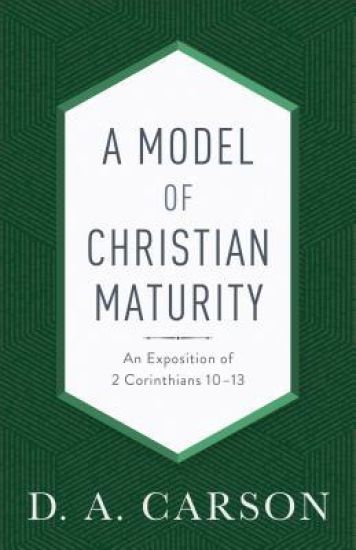
A Model of Christian Maturity: An Exposition of 2 Corinthians 10-13
D. A. Carson
Baker Books
2019
nidottu
Bible scholar D. A. Carson unpacks 2 Corinthians 10-13, Paul's call for us to embrace discipline and obedience, as well as his thoughts on the nature of spiritual boasting and false leadership in the church. Through Paul we explore the struggles, opportunities, and intentions of a Christian under fire, journeying with him as he seeks to guide the Corinthian church and speak to us as well.
Memoires d'Un Pasteur Ordinaire: La Vie Et Les Reflexions de Tom Carson
D. A. Carson
Editions Cruciforme
2013
nidottu
Pourrait-il y avoir meilleure histoire pour encourager les pasteurs que celle racont e par un esprit impr gn de la Bible (celui de Don) au sujet d'une vie impr gn e de la Bible (celle de Tom)? Cet "esprit" s'y applique avec beaucoup d'amour parce que la "vie" en question est celle de son p re, et tout cela avec une bonne dose de cr ativit dans la narration. Constatez le r sultat.John Piper, enseignant et fondateur de Desiring GodCe livre est un cadeau rare et pr cieux de la part d'un des plus grandes rudit du mouvement vang lique. Le Dr Carson est tr s g n reux de nous l guer ainsi l'h ritage discret de son p re.C.J. Mahaney, Sovereign Grace MinistriesLe Dr Carson frappe au coeur de ce qui ne va pas chez nous lorsque nous oublions, en tant que serviteurs, que nous avons t cr es pour vivre simplement sous l' vangile de la gr ce. Lisez ce livre. Vous en serez grandement encourag dans votre vie et votre minist re.Michel Lemaire, pasteur de l' glise Baptiste de la Foi, Drummondville, 1884-2005Ce t moignage personnel est un sain rappel des priorit s c lestes dans l'exercice de notre minist re pastoral et de tout service chr tien.Pierre Constant, pasteur adjoint de l' glise Baptiste Montclair de Hull, 1982-1997; professeur en tudes n o-testamentaire, Toronto Baptist SeminaryLisez ce livre et soyez fortifi . Vous avez entre les mains un m lange d'histoire, d'humour et une admirable sagesse pour la vie chr tienne (et de la sagesse particuli rement pour les pasteurs ).Mark Dever, pasteur, Capitol Hill Baptist Church
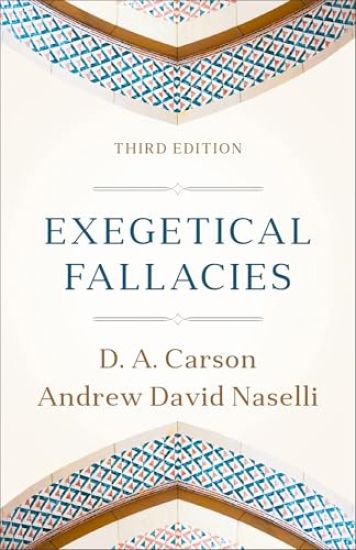
This updated edition of a contemporary classic teaches sound grammatical, lexical, cultural, and theological Bible study practices, offering expert guidance for those seeking to interpret Scripture more accurately. D. A. Carson and Andrew David Naselli teach interpreters to think critically and to develop sound reasons for the choices they make. To do this, interpreters must reject unsound reasons; so the authors identify common mistakes many Bible interpreters make and how to avoid them. The third edition is significantly expanded, examines some new fallacies, and is accessible for beginning students of theology. It is also a helpful resource for any student of biblical languages. "A must for teachers, pastors, and serious Bible students."--Thomas R. Schreiner, The Southern Baptist Theological Seminary
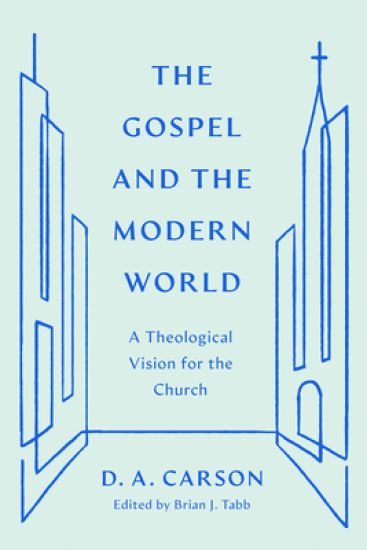
Thirty-Three Collected Essays from D. A. Carson Biblical scholar D. A. Carson has contributed a tremendous amount to the field of evangelical thought, serving as cofounder of the Gospel Coalition, editor of the theological journal Themelios, and, beginning in 2022, as president of the Evangelical Theological Society. Reflecting on his esteemed career, Carson’s colleagues have gathered some of his best work in this warm, enriching collection. The Gospel and the Modern World features 34 of Carson’s essays from Themelios on a wide range of topics, including his vision for the evangelical church, the authoritative word of God, Christ and culture, and Christian discipleship. It also includes articles from editor Brian J. Tabb, Andrew David Naselli, and Collin Hansen. Celebrating an illustrious, Christ-exalting career, this collection imparts years of experience and Christian scholarship to a new generation of readers. A Celebration of the Work of D. A. Carson: Marks Carson’s 2022 presidency of the Evangelical Theological Society and the 50th anniversary of Themelios Informative: A valuable resource for pastors, seminary students, missionaries, and thoughtful Christians Theologically Robust Articles: Includes 34 essays previously published in Themelios, the journal that Carson led as general editor from 2008 to 2018Copublished by Crossway (US) and IVP Apollos (UK and International)
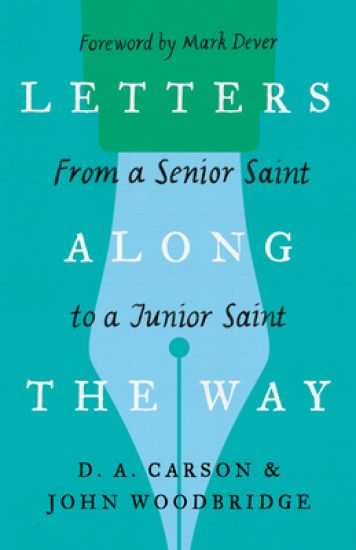
A Novel of Letters from a Theologian to a Young Christian When student Tim Journeyman first wrote to family friend Dr. Paul Woodson, he didn’t know it would start a fifteen-year mentorship that would shape his life and Christian faith. Within their candid letters are words of real-world wisdom—from a “senior saint” to a “junior saint”—covering various areas of living, from the theological to the everyday. Written as fictional correspondence between two men at different stages of life and faith, the novel Letters Along the Way provides important, biblical perspectives on topics such as apologetics, science and faith, inerrancy of the Bible, heart versus head faith, prayer, the changing face of evangelicalism, and trends emerging in American culture. Memorable and Engaging Style: Inspired by C. S. Lewis’s The Screwtape Letters Tackles Moral, Biblical, and Cultural Issues: Topics include marriage, pastoral ministry, temptation, repentance, and more Excellent for Seminary Students and New Believers: Includes a subject index outline to find topics quickly and easilyPublished in partnership with the Gospel Coalition
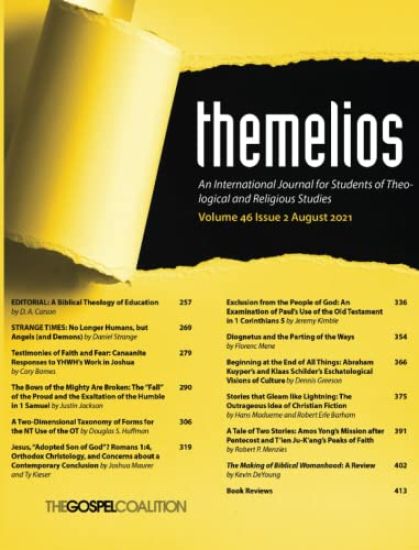
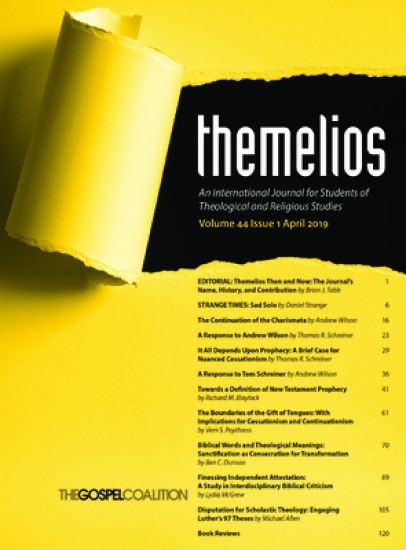
Themelios is an international, evangelical, peer-reviewed theological journal that expounds and defends the historic Christian faith. Themelios is published three times a year online at The Gospel Coalition (http: //thegospelcoalition.org/themelios/) and in print by Wipf and Stock. Its primary audience is theological students and pastors, though scholars read it as well. Themelios began in 1975 and was operated by RTSF/UCCF in the UK, and it became a digital journal operated by The Gospel Coalition in 2008. The editorial team draws participants from across the globe as editors, essayists, and reviewers.General Editor: D. A. Carson, Trinity Evangelical Divinity SchoolManaging Editor: Brian Tabb, Bethlehem College and SeminaryConsulting Editor: Michael J. Ovey, Oak Hill Theological CollegeAdministrator: Andrew David Naselli, Bethlehem College and SeminaryBook Review Editors: Jerry Hwang, Singapore Bible College; Alan Thompson, Sydney Missionary & Bible College; Nathan A. Finn, Southeastern Baptist Theological Seminary; Hans Madueme, Covenant College; Dane Ortlund, Crossway; Jason Sexton, Golden Gate Baptist SeminaryEditorial Board: Gerald Bray, Beeson Divinity SchoolLee Gatiss, Wales Evangelical School of TheologyPaul Helseth, University of Northwestern, St. PaulPaul House, Beeson Divinity SchoolKen Magnuson, The Southern Baptist Theological SeminaryJonathan Pennington, The Southern Baptist Theological SeminaryJames Robson, Wycliffe HallMark D. Thompson, Moore Theological CollegePaul Williamson, Moore Theological CollegeStephen Witmer, Pepperell Christian FellowshipRobert Yarbrough, Covenant Seminary
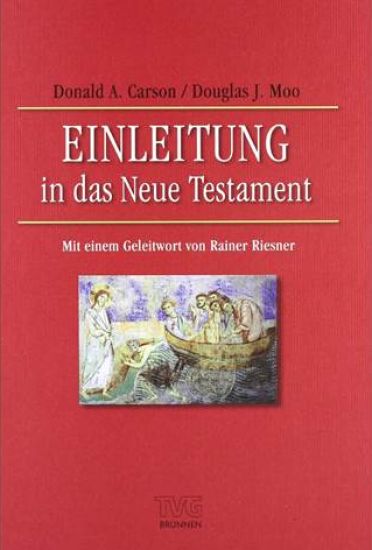
Wer tiefer in die Welt des NT eindringen will, findet hier eine ideale Einstiegslektüre. Die beiden renommierten Theologen Donald A. Carson und Douglas J. Moo betrachten besonders die historischen Fragen wie Autorschaft, Entstehungszeit, Quellen, Anlass und Empfänger der Schriften des NT ausführlich und nicht unkritisch. Zugleich werden die Fragen aber dem Gesamtzeugnis der Heiligen Schrift verpflichtet dargestellt. Der besondere Reiz dieser Einleitung liegt in der Sicht, die von "außerhalb" des Horizonts deutscher Theologie Licht auf diese wichtigen Fragen wirft.
What is the gospel? It seems like a simple question, yet it has been known to incite some heated responses, even in the church. How are we to formulate a clear, biblical understanding of the gospel? Tradition, reason, and experience all leave us ultimately disappointed. If we want answers, we must turn to the Word of God.
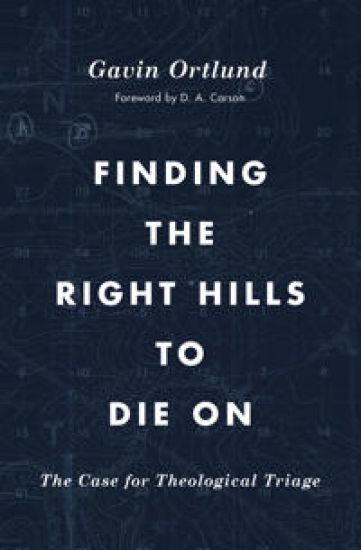
"This is a wise and needed book.”—Russell Moore, President, The Ethics & Religious Liberty Commission of the Southern Baptist Convention In theology, just as in battle, some hills are worth dying on and others are not. But how do we know which ones? When should doctrine divide, and when should unity prevail? Just as a medic on a battlefield treats the severely wounded first and then moves on to the less serious injuries, we must prioritize doctrine in order of importance. Pastor Gavin Ortlund implores us to cultivate humility as we prioritize doctrine into four ranks—essential, urgent, important, and unimportant—so that we will be as effective as possible at advancing the gospel in our time. Published in partnership with the Gospel Coalition.
What is the gospel? It seems like a simple question, yet it has been known to incite some heated responses, even in the church. How are we to formulate a clear, biblical understanding of the gospel? Tradition, reason, and experience all leave us ultimately disappointed. If we want answers, we must turn to the Word of God.Greg Gilbert does so in What Is the Gospel? Beginning with Paul's systematic presentation of the gospel in Romans and moving through the sermons in Acts, Gilbert argues that the central structure of the gospel consists of four main subjects: God, man, Christ, and a response. The book carefully examines each and then explores the effects the gospel can have in individuals, churches, and the world. Both Christian and non-Christian readers will gain a clearer understanding of the gospel in this valuable resource.
Grasp the message of the New Testament by focusing on the essentials.An Introduction to the New Testament focuses on historical questions dealing with authorship, date, sources, purpose, destination, and so forth, ensuring that the New Testament books will be accurately understood within historical settings. For each New Testament document, the authors also provide a substantial summary of the book's content, discuss the book's theological contribution to the overall canon, and give an account of current studies on the book, including recent literary and social-science approaches to interpretation. This second edition reflects significant revision and expansion from the original, making this highly acclaimed text even more valuable. A new chapter provides a historical survey examining Bible study method through the ages. The chapter on Paul has been expanded to include an analysis of debates on the “new perspective.” The discussion of New Testament epistles has been expanded to form a new chapter. This new edition is an ideal textbook for seminary students and will help a new generation better grasp the message of the New Testament.
What is the gospel? It seems like a simple question, yet it has been known to incite some heated responses, even in the church. How are we to formulate a clear, biblical understanding of the gospel? Tradition, reason, and experience all leave us ultimately disappointed. If we want answers, we must turn to the Word of God.Greg Gilbert does so in What Is the Gospel? Beginning with Paul's systematic presentation of the gospel in Romans and moving through the sermons in Acts, Gilbert argues that the central structure of the gospel consists of four main subjects: God, man, Christ, and a response. The book carefully examines each and then explores the effects the gospel can have in individuals, churches, and the world. Both Christian and non-Christian readers will gain a clearer understanding of the gospel in this valuable resource.
Themelios is an international, evangelical, peer-reviewed theological journal that expounds and defends the historic Christian faith. Themelios is published three times a year online at The Gospel Coalition (http: //thegospelcoalition.org/themelios/) and in print by Wipf and Stock. Its primary audience is theological students and pastors, though scholars read it as well. Themelios began in 1975 and was operated by RTSF/UCCF in the UK, and it became a digital journal operated by The Gospel Coalition in 2008. The editorial team draws participants from across the globe as editors, essayists, and reviewers. General Editor: D. A. Carson, Trinity Evangelical Divinity SchoolManaging Editor: Brian Tabb, Bethlehem College and SeminaryConsulting Editor: Michael J. Ovey, Oak Hill Theological CollegeAdministrator: Andrew David Naselli, Bethlehem College and SeminaryBook Review Editors: Jerry Hwang, Singapore Bible College; Alan Thompson, Sydney Missionary & Bible College; Nathan A. Finn, Southeastern Baptist Theological Seminary; Hans Madueme, Covenant College; Dane Ortlund, Crossway; Jason Sexton, Golden Gate Baptist Seminary Editorial Board: Gerald Bray, Beeson Divinity SchoolLee Gatiss, Wales Evangelical School of TheologyPaul Helseth, University of Northwestern, St. PaulPaul House, Beeson Divinity SchoolKen Magnuson, The Southern Baptist Theological SeminaryJonathan Pennington, The Southern Baptist Theological SeminaryJames Robson, Wycliffe HallMark D. Thompson, Moore Theological CollegePaul Williamson, Moore Theological CollegeStephen Witmer, Pepperell Christian FellowshipRobert Yarbrough, Covenant Seminary
God's Word has always had enemies, but in recent years the inspiration and authority of Scripture have been attacked with renewed vigor. Respected scholar D. A. Carson has written widely on the nature of Scripture over the past thirty years, and here presents a timely collection of his work in two parts. In part 1, Carson selects essays written on such themes as how to interpret the Bible, recent developments in the doctrine of Scripture, unity and diversity in the New Testament, and redaction criticism. Presenting a theologically balanced and confessional perspective, Carson defines the terms of a number of debates, critiques interpretive methods and theories, and suggests positive guidelines for future action. Part 2 presents critical reviews of nine books dealing with the inspiration and authority of Scripture. Though substantial in content, Carson's detailed reviews will foster careful thought and perspective in those who are relatively new to the debates surrounding biblical inspiration and authority. This volume is a diverse collection that will prove to be a helpful resource to both seasoned pastors and scholars and those who are just starting serious study of the Bible.
Many factors contributed to the Protestant Reformation, but one of the most significant was the debate over the doctrine of justification by faith alone. In fact, Martin Luther argued that justification is the doctrine on which the church stands or falls. This comprehensive volume of 26 essays from a host of scholars explores the doctrine of justification from the lenses of history, the Bible, theology, and pastoral practice—revealing the enduring significance of this pillar of Protestant theology.
"No interpreter of the creation narratives can avoid interacting with this book." —Derek W. H. Thomas Christians have long discussed and debated the first three chapters of the Bible. How we interpret this crucial section of Scripture has massive implications for how we understand the rest of God’s Word and even history itself. In this important volume, biblical scholar Vern Poythress combines careful exegesis with theological acumen to illuminate the significance of Genesis 1–3. In doing so, he demonstrates the sound interpretive principles that lead to true understanding of the biblical text, while also exploring complex topics such as the nature of time, the proper role of science, interpretive literalism, and more.