Kirjojen hintavertailu. Mukana 12 595 353 kirjaa ja 12 kauppaa.

Kirjailija

D. Bruce Johnstone

Kirjat ja teokset yhdessä paikassa: 3 kirjaa, julkaisuja vuosilta 2010-2012, suosituimpien joukossa Understanding College and University Organization. Vertaile teosten hintoja ja tarkista saatavuus suomalaisista kirjakaupoista.

3 kirjaa

Kirjojen julkaisuhaarukka 2010-2012.

Understanding College and University Organization

Understanding College and University Organization

James L. Bess; D. Bruce Johnstone; Jay R. Dee

Stylus Publishing
2012
muu
Now available in paperback, this two-volume work is intended to help readers develop powerful new ways of thinking about organizational principles, and apply them to policy-making and management in colleges and universities.The book is written with two audiences in mind: administrative and faculty leaders in institutions of higher learning, and students (both doctoral and Master's degree) studying to become upper-level administrators, leaders, and policy makers in higher education.It systematically presents a range of theories that can be applied to many of the difficult management situations that college and university leaders encounter. It provides them with the theoretical background to knowledgeably evaluate the many new ideas that emerge in the current literature, and in workshops and conferences. The purpose is to help leaders develop their own effective management style and approaches, and feel confident that their actions are informed by appropriate theory and knowledge of the latest research in the field.Without theory, organizational leaders are forced to treat each problem that they encounter as unique–as if it were a first-time occurrence. While leaders may have some experience with a particular issue, their solutions are usually not informed by the accumulated wisdom of others who have already encountered and resolved similar situations. The authors approach the theory of the organization and administration of colleges and universities from three quite different perspectives, or paradigms, each relying on different assumptions about the “reality” of organizational life in colleges and universities. The positivist paradigm–primarily an omnibus systems theory–integrates the chapters into a comprehensive, yet easily accessible whole. Social constructionism, the second paradigm, is introduced in each chapter to illuminate the difficulty of seeking and finding meaningful consensus on problems and policies, while also addressing important ethical issues that tend to be overlooked in leadership thought and action. The third paradigm, postmodernism, draws attention to difficulties of logic and communication under the constraints of strictly linear thinking that “authorities” at all levels attempt to impose on organizations.This “multiple paradigm” approach enables readers to become more cognizant of their own assumptions, how they may differ from those of others in their organization, and how those differences may both create difficulties in resolving problems and expand the range of alternatives considered in organizational decision making. The book offers readers the tools to balance the real-world needs to succeed in today’s challenging and competitive environment with the social and ethical aspirations of all its stakeholders and society at large. The authors’ aim is to elucidate how administration can be made more efficient and effective through rational decision-making while also respecting humanistic values. This approach highlights a range of phenomena that require attention if the institution is ultimately to be considered successful.Also available:Volume 1: The State of the SystemTwo volume set
Financing Higher Education Worldwide

Financing Higher Education Worldwide

D. Bruce Johnstone; Pamela N. Marcucci

Johns Hopkins University Press
2010
sidottu
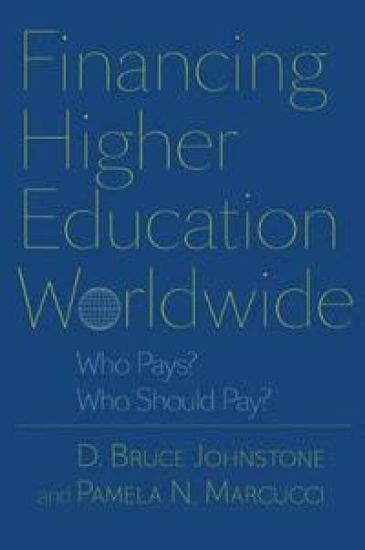
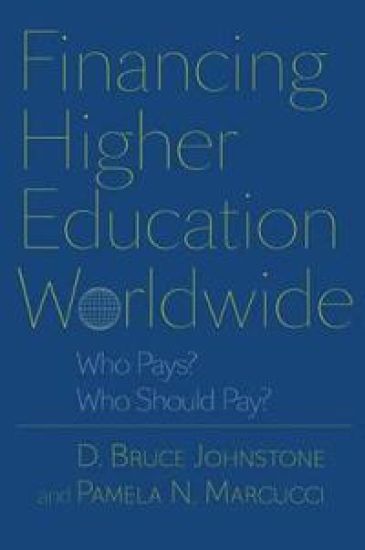
No issue in higher education is as salient, or as controversial, as finance. As demand for higher education around the world grows, so do the costs associated with it, especially as governments shoulder less of the burden. Tuition fees rise and student loan debt grows. Who pays for these surging costs? Who should pay? D. Bruce Johnstone and Pamela N. Marcucci examine the universal phenomenon of cost-sharing in higher education-where financial responsibility shifts from governments and taxpayers to students and families. They find that growing costs for education far outpace public revenue streams that once supported it. Even with financial aid and scholarships defraying some of these costs, students are responsible for a greater share of the cost of higher education. Featuring comprehensive economic and policy data, the authors' international comparative approach shows how economically diverse countries all face similar cost-sharing challenges. So, who should pay for higher education? While cost-sharing is both politically and ideologically debated, Johnstone and Marcucci contend that, for almost all countries, it is imperative for the financial health of colleges and universities, bringing better efficiency, equity, and responsiveness. Financing Higher Education Worldwide combines sophisticated economic explanations with sensitive political and cultural analyses of the financial pressures facing higher education throughout the world.
Financing Higher Education Worldwide

Financing Higher Education Worldwide

D. Bruce Johnstone; Pamela N. Marcucci

Johns Hopkins University Press
2010
pokkari
No issue in higher education is as salient, or as controversial, as finance. As demand for higher education around the world grows, so do the costs associated with it, especially as governments shoulder less of the burden. Tuition fees rise and student loan debt grows. Who pays for these surging costs? Who should pay? D. Bruce Johnstone and Pamela N. Marcucci examine the universal phenomenon of cost-sharing in higher education-where financial responsibility shifts from governments and taxpayers to students and families. They find that growing costs for education far outpace public revenue streams that once supported it. Even with financial aid and scholarships defraying some of these costs, students are responsible for a greater share of the cost of higher education. Featuring comprehensive economic and policy data, the authors' international comparative approach shows how economically diverse countries all face similar cost-sharing challenges. So, who should pay for higher education? While cost-sharing is both politically and ideologically debated, Johnstone and Marcucci contend that, for almost all countries, it is imperative for the financial health of colleges and universities, bringing better efficiency, equity, and responsiveness. Financing Higher Education Worldwide combines sophisticated economic explanations with sensitive political and cultural analyses of the financial pressures facing higher education throughout the world.