

Kirjailija
D. Conway
Kirjat ja teokset yhdessä paikassa: 8 kirjaa, julkaisuja vuosilta 1995-2019, suosituimpien joukossa Classical Liberalism. Vertaile teosten hintoja ja tarkista saatavuus suomalaisista kirjakaupoista.
Mukana myös kirjoitusasut: D Conway
8 kirjaa
Kirjojen julkaisuhaarukka 1995-2019.
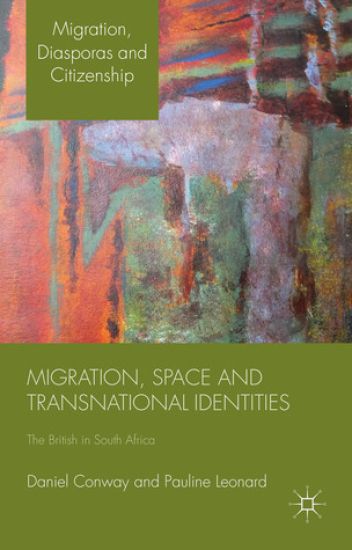
Twenty years after the post-apartheid Government took office, this timely text interrogates the extent to which the attitudes, identities and everyday lives of British people have changed in accordance with the 'new' South Africa. New ethnographic research is drawn upon to explore important questions of mobility, locality and identity.
Twenty years after the post-apartheid Government took office, this timely text interrogates the extent to which the attitudes, identities and everyday lives of British people have changed in accordance with the 'new' South Africa. New ethnographic research is drawn upon to explore important questions of mobility, locality and identity.
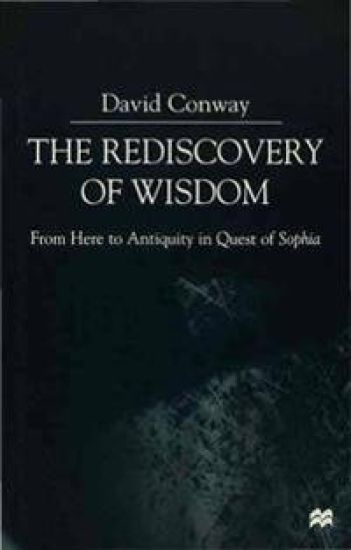
By reconstructing it and tracing its vicissitudes, David Conway rehabilitates a time-honoured conception of philosophy, originating in Plato and Aristotle, which makes theoretical wisdom its aim. Wisdom is equated with possessing a demonstrably correct understanding of why the world exists and has the broad character it does. Adherents of this conception maintained the world to be the demonstrable creation of a divine intelligence in whose contemplation supreme human happiness resides. Their claims are defended against various latter-day scepticisms.
By reconstructing it and tracing its vicissitudes, David Conway rehabilitates a time-honoured conception of philosophy, originating in Plato and Aristotle, which makes theoretical wisdom its aim. Wisdom is equated with possessing a demonstrably correct understanding of why the world exists and has the broad character it does. Adherents of this conception maintained the world to be the demonstrable creation of a divine intelligence in whose contemplation supreme human happiness resides. Their claims are defended against various latter-day scepticisms.
This text defends the ideal of minimum government against the charges put forward by egalitarian welfare liberals, communitarians and conservatives, arguing it best advances human well being.
This text defends the ideal of minimum government against the charges put forward by egalitarian welfare liberals, communitarians and conservatives, arguing it best advances human well being.
`The author's concise and erudite exposition makes the book highly relevant to the study of liberalism and ideologies. Recommended for political scientists, economists, philosophers, and for all levels of students and faculty.' - R.J. Vichot, Florida International University This book restates and defends the classical liberal case for minimal government, arguing that such government would best advance human well-being in all societies. The classical liberal ideal is defended against its main contemporary opponents, taken to be modern welfare liberals, communitarians, and conservatives. These variously oppose minimum government in the names of equality, community, and the need for states to retain the patriotic allegiance of their citizens which conservatives maintain minimal government is unable to do.