Kirjojen hintavertailu. Mukana 12 595 353 kirjaa ja 12 kauppaa.

Kirjailija

D. G. Hart

Kirjat ja teokset yhdessä paikassa: 11 kirjaa, julkaisuja vuosilta 2002-2026, suosituimpien joukossa Protestants and Patriots. Vertaile teosten hintoja ja tarkista saatavuus suomalaisista kirjakaupoista.

Mukana myös kirjoitusasut: D G Hart, D.G Hart

11 kirjaa

Kirjojen julkaisuhaarukka 2002-2026.

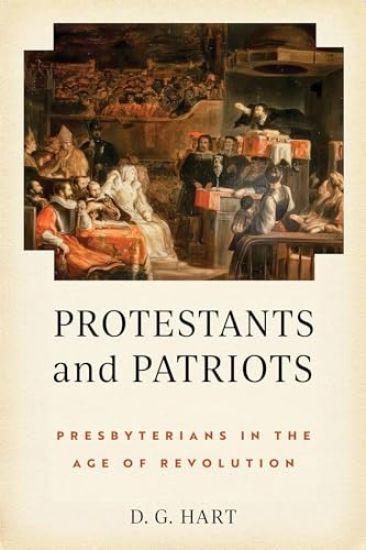
Protestants and Patriots

Protestants and Patriots

D. G. Hart

UNIVERSITY OF NOTRE DAME PRESS
2026
sidottu
D. G. Hart chronicles the transatlantic history of Presbyterianism as a political movement from the sixteenth to the nineteenth centuries, tracing its evolution into a modern, liberal religion. Historians have often described Presbyterianism as a political orientation that leads to rebellion and revolution. Hart interrogates this assumption, instead presenting a complex, larger narrative of Presbyterian understanding of political authority and the role of the church in society. Synthesizing Presbyterian developments in England, Scotland, Ireland, the United States, and Canada from 1560 to 1870, Hart compellingly explains first why Presbyterianism was politically disruptive in Britain for 150 years and then how these Protestants adjusted to liberal democracy. The truly revolutionary side of Presbyterianism took place during the religious and parliamentary wars of Scotland and England during the 1630s and 1640s - almost 150 years before the American Revolution. This age of revolution extended up to the American Founding and the formation of the Dominion of Canada. After 1640, Presbyterians remained politically assertive, but switched from state churches and covenanted monarchs to civil and religious liberties and republican government. Ultimately, as a rigorous faith that refused political compromise, Presbyterianism unintentionally laid the groundwork for religious disestablishment and religious freedom. In so doing, Presbyterians became unlikely defenders of liberal democracy.
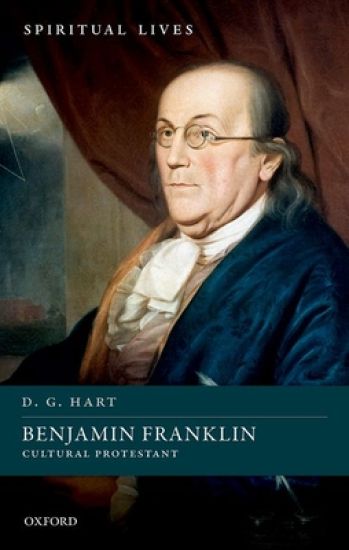
Benjamin Franklin

Benjamin Franklin

D. G. Hart

Oxford University Press
2021
sidottu
Benjamin Franklin grew up in a devout Protestant family with limited prospects for wealth and fame. By hard work, limitless curiosity, native intelligence, and luck (what he called "providence"), Franklin became one of Philadelphia's most prominent leaders, a world recognized scientist, and the United States' leading diplomat during the War for Independence. Along the way, Franklin embodied the Protestant ethics and cultural habits he learned and observed as a youth in Puritan Boston. Benjamin Franklin: Cultural Protestant follows Franklin's remarkable career through the lens of the trends and innovations that the Protestant Reformation started (both directly and indirectly) almost two centuries earlier. His work as a printer, civic reformer, institution builder, scientist, inventer, writer, self-help dispenser, politician, and statesmen was deeply rooted in the culture and outlook that Protestantism nurtured. Through its alternatives to medieval church and society, Protestants built societies and instilled habits of character and mind that allowed figures such as Franklin to build the life that he did. Through it all, Franklin could not assent to all of Protestantism's doctrines or observe its worship, but for most of his life he acknowledged his debt to his creator, revelled in the natural world guided by providence, and conducted himself in a way (imperfectly) to merit divine approval. In this biography, D. G. Hart recognizes Franklin as a cultural or non-observant Protestant, someone who thought of himself as a Presbyterian, ordered his life as other Protestants did, sometimes went to worship services, read his Bible, and prayed, but could not go all the way and join a church.
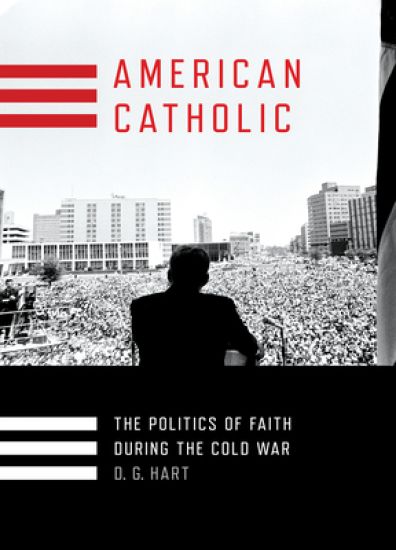
American Catholic

American Catholic

D. G. Hart

Cornell University Press
2020
sidottu
American Catholic places the rise of the United States' political conservatism in the context of ferment within the Roman Catholic Church. How did Roman Catholics shift from being perceived as un-American to emerging as the most vocal defenders of the United States as the standard bearer in world history for political liberty and economic prosperity? D. G. Hart charts the development of the complex relationship between Roman Catholicism and American conservatism, and shows how these two seemingly antagonistic ideological groups became intertwined in advancing a certain brand of domestic and international politics. Contrary to the standard narrative, Roman Catholics were some of the most assertive political conservatives directly after World War II, and their brand of politics became one of the most influential means by which Roman Catholicism came to terms with American secular society. It did so precisely as bishops determined the church needed to update its teaching about its place in the modern world. Catholics grappled with political conservatism long before the supposed rightward turn at the time of the Roe v. Wade decision in 1973. Hart follows the course of political conservatism from John F. Kennedy, the first and only Roman Catholic president of the United States, to George W. Bush, and describes the evolution of the church and its influence on American politics. By tracing the roots of Roman Catholic politicism in American culture, Hart argues that Roman Catholicism's adaptation to the modern world, whether in the United States or worldwide, was as remarkable as its achievement remains uncertain. In the case of Roman Catholicism, the effects of religion on American politics and political conservatism are indisputable.
On Being Reformed

On Being Reformed

Matthew C. Bingham; Chris Caughey; R. Scott Clark; Crawford Gribben; D. G. Hart

Birkhauser Verlag AG
2018
sidottu
This book provides a focus for future discussion in one of the most important debates within historical theology within the protestant tradition - the debate about the definition of a category of analysis that operates over five centuries of religious faith and practice and in a globalising religion. In March 2009, TIME magazine listed ‘the new Calvinism’ as being among the ‘ten ideas shaping the world.’ In response to this revitalisation of reformation thought, R. Scott Clark and D. G. Hart have proposed a definition of ‘Reformed’ that excludes many of the theologians who have done most to promote this driver of global religious change. In this book, the Clark-Hart proposal becomes the focus of a debate. Matthew Bingham, Chris Caughey, and Crawford Gribben suggest a broader and (they argue) more historically responsible definition for ‘Reformed,’ as Hart and Scott respond to their arguments.
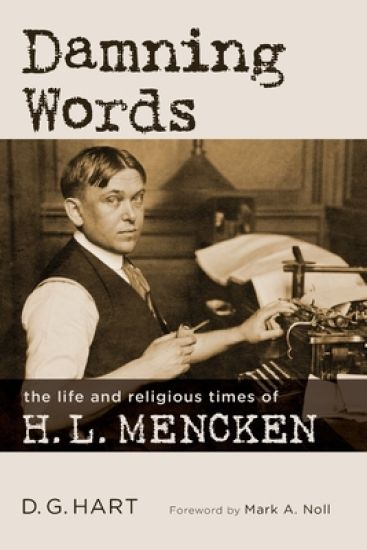
Damning Words

Damning Words

D G Hart

William B. Eerdmans Publishing Company
2016
pokkari
Recounts a famously outspoken agnostic's surprising relationship with Christianity H. L. Mencken (1880-1956) was a reporter, literary critic, editor, author--and a famous American agnostic. From his role in the Scopes Trial to his advocacy of science and reason in public life, Mencken is generally regarded as one of the fiercest critics of Christianity in his day. In this biography D. G. Hart presents a provocative, iconoclastic perspective on Mencken's life. Even as Mencken vividly debunked American religious ideals, says Hart, it was Christianity that largely framed his ideas, career, and fame. Mencken's relationship to the Christian faith was at once antagonistic and symbiotic. Using plenty of Mencken's own words, Damning Words superbly portrays an influential figure in twentieth-century America and, at the same time, casts telling new light on his era.
From Billy Graham to Sarah Palin

From Billy Graham to Sarah Palin

D G Hart

William B. Eerdmans Publishing Company
2011
pokkari
From Billy Graham to Sarah Palin provides an iconoclastic new history of the entrance of evangelical Christians into national American politics. Examining the key players of the "Religious Right" -- Billy Graham, Jerry Falwell, Chuck Colson, James Dobson, Pat Robertson, and many others -- D. G. Hart argues that evangelicalism is (and always has been) a bad fit with classic political conservatism. Hart shows how the uneasy alliance of these unlikely political bedfellows has contributed directly to the fragmentation of today's conservative movement. He contends that the ongoing burden of reconciling the progressive moral idealism of religious conservatives with the sober realism of political conservatives increasingly threatens this precarious partnership. Moreover, Hart suggests that evangelicals are unlikely to remain politically conservative in the long term unless they stop looking to big government to solve societal woes at home and abroad and at last embrace classic small-government conservatism for its own sake.
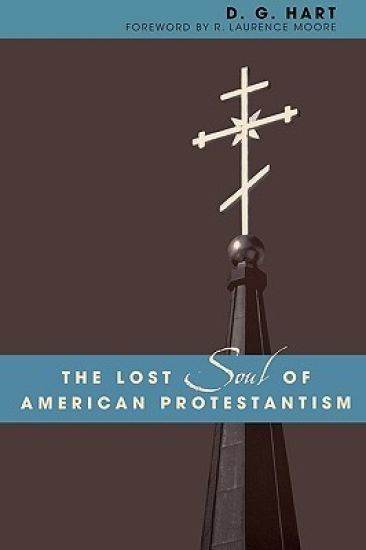
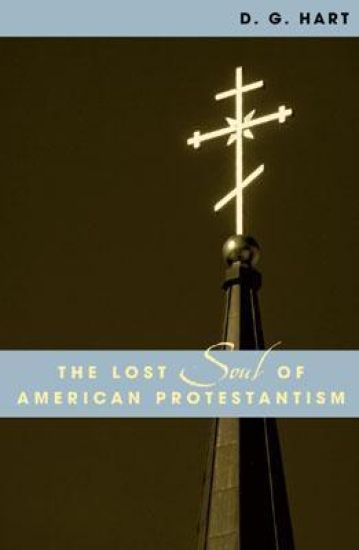
The Lost Soul of American Protestantism

The Lost Soul of American Protestantism

D. G. Hart; R. Laurence Moore

Rowman Littlefield Publishers
2004
nidottu
In The Lost Soul of American Protestantism, D. G. Hart examines the historical origins of the idea that faith must be socially useful in order to be valuable. Through specific episodes in Presbyterian, Lutheran, and Reformed history, Hart presents a neglected form of Protestantism—confessionalism—as an alternative to prevailing religious theory. He explains that, unlike evangelical and mainline Protestants who emphasize faith's role in solving social and personal problems, confessional Protestants locate Christianity's significance in the creeds, ministry, and rituals of the church. Although critics have accused confessionalism of encouraging social apathy, Hart deftly argues that this form of Protestantism has much to contribute to current discussions on the role of religion in American public life, since confessionalism refuses to confuse the well-being of the nation with that of the church. The history of confessional Protestantism suggests that contrary to the legacy of revivalism, faith may be most vital and influential when less directly relevant to everyday problems, whether personal or social. Clear and engaging, D. G. Hart's groundbreaking study is essential reading for everyone exploring the intersection of religion and daily life.
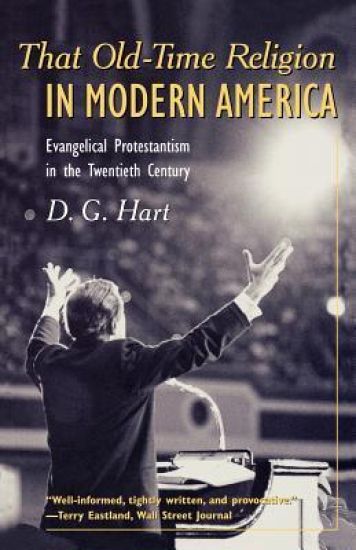
That Old-Time Religion in Modern America
Many Americans commonly associate evangelical Protestants with the scoldings of the religious right and solicitations of money by televangelists. Whether or not these associations are particularly flattering, it is true that a concern for preserving a moral social order as well as an unrelenting desire to make new converts are traits that have defined evangelicalism throughout American history. In this cogent account, D. G. Hart unpacks evangelicalism’s current reputation by tracing its development over the course of the twentieth century. He shows how evangelicals entered the century as full partners in the Protestant denominations and agencies that molded American cultural and intellectual life. Although the fundamentalist controversy of the 1920s marginalized evangelicals in America’s largest denominations, their views about the individual, society, and families went virtually unchallenged in American society because of the ongoing dominance of Protestant churches and institutions. After 1960, when the United States entered a period sometimes called “post-Protestant,” evangelicals began to assert themselves more aggressively in politics and culture, seeking to preserve a Christian society. These evangelical responses to Protestantism’s waning influence in America reveal a curious feature of twentieth-century life: despite its conformity to American ideals, since the 1970s evangelical Protestantism has been perceived as alien to other Americans. Mr. Hart’s illuminating study offers an explanation for this change in evangelicalism’s fortunes by showing the success and limitations of this popular religious movement.
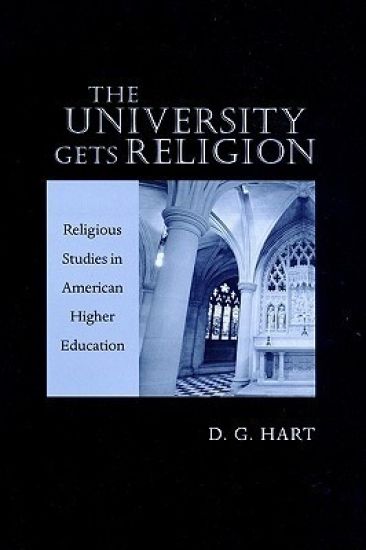
The University Gets Religion

The University Gets Religion

D. G. Hart

Johns Hopkins University Press
2002
pokkari
In The University Gets Religion: Religious Studies in American Higher Education, historian D. G. Hart examines the rise of religion to its current place as one of the largest academic disciplines in contemporary higher education. Protestant ministers and faculty, arguing for the importance of religion to a truly "liberal" education, were especially influential in staffing departments and designing curricula to reflect their own assumptions about the value of religion not just for higher education but for American culture in general. But the success of mainstream Protestantism in fostering the academic study of religion has become the field's greatest burden. Religion scholars have distanced themselves from traditional Protestant orientations while looking for topics better suited to America's cultural diversity. As a result, religion is in the awkward position of being one of the largest scholarly disciplines while simultaneously lacking a solid academic justification. It may be time, Hart argues, for academics to stop trying to secure a religion-friendly university.
The Lost Soul of American Protestantism

The Lost Soul of American Protestantism

D. G. Hart; R. Laurence Moore

Rowman Littlefield Publishers
2002
sidottu
In The Lost Soul of American Protestantism, D. G. Hart examines the historical origins of the idea that faith must be socially useful in order to be valuable. Through specific episodes in Presbyterian, Lutheran, and Reformed history, Hart presents a neglected form of Protestantism—confessionalism—as an alternative to prevailing religious theory. He explains that, unlike evangelical and mainline Protestants who emphasize faith's role in solving social and personal problems, confessional Protestants locate Christianity's significance in the creeds, ministry, and rituals of the church. Although critics have accused confessionalism of encouraging social apathy, Hart deftly argues that this form of Protestantism has much to contribute to current discussions on the role of religion in American public life, since confessionalism refuses to confuse the well-being of the nation with that of the church. The history of confessional Protestantism suggests that contrary to the legacy of revivalism, faith may be most vital and influential when less directly relevant to everyday problems, whether personal or social. Clear and engaging, D. G. Hart's groundbreaking study is essential reading for everyone exploring the intersection of religion and daily life.