Kirjojen hintavertailu. Mukana 12 152 606 kirjaa ja 12 kauppaa.

Kirjailija

D Gopalakrishnan

Kirjat ja teokset yhdessä paikassa: 6 kirjaa, julkaisuja vuosilta 2016-2024, suosituimpien joukossa Basics of Textile Chemical Processing. Vertaile teosten hintoja ja tarkista saatavuus suomalaisista kirjakaupoista.

Mukana myös kirjoitusasut: D. Gopalakrishnan

6 kirjaa

Kirjojen julkaisuhaarukka 2016-2024.

Basics of Management Information System

Basics of Management Information System

D Gopalakrishnan; M Nithiyakumar; M Prakash

Lap Lambert Academic Publishing
2024
pokkari
A management information system can facilitate collaboration and communication as well. Today's management information systems rely largely on technology to compile and present data, but the concept is older than modern computing technologies. One of the most valuable features of a management information system is its ability to pull in internal and external data from a variety of sources and present it in an easy to analyze format. Information isn't worth much if it doesn't serve a purpose. This book may serves to students learn how businesses use information to improve the company's operations. Students also learn how to manage various information systems so that they best serve the needs of managers, staff and customers. Also learn how to create systems for finding and storing data and they learn about computer databases, networks and lots more.
Apparel Manufacturing Technology

Apparel Manufacturing Technology

T. Karthik; P. Ganesan; D. Gopalakrishnan

CRC Press
2020
nidottu
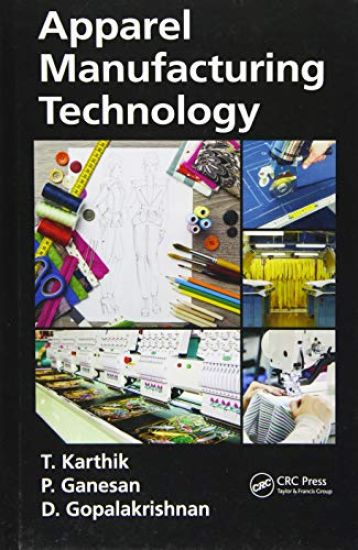
This book aims to provide a broad conceptual and theoretical perspective of apparel manufacturing process starting from raw material selection to packaging and dispatch of goods. Further, engineering practices followed in an apparel industry for production planning and control, line balancing, implementation of industrial engineering concepts in apparel manufacturing, merchandising activities and garment costing have been included, and they will serve as a foundation for future apparel professionals. The book addresses the technical aspects in each section of garment manufacturing process with considered quality aspects. This book also covers the production planning process and production balancing activities.It addresses the technical aspects in each section of garment manufacturing process and quality aspects to be considered in each process. Garment engineering questions each process/operation of the total work content and can reduce the work content and increase profitability by using innovative methods of construction and technology. This book covers the production planning process, production balancing activities, and application of industrial engineering concepts in garment engineering. Further, the merchandising activities and garment costing procedures will deal with some practical examples. This book is primarily intended for textile technology and fashion technology students in universities and colleges, researchers, industrialists and academicians, as well as professionals in the apparel and textile industry.
Technical Textiles

Technical Textiles

D Gopalakrishnan

Daya Pub. House
2019
sidottu
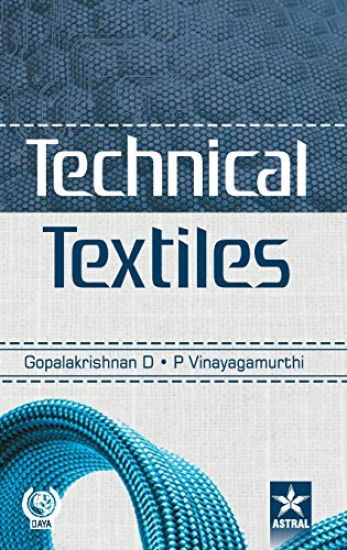
The textile industry is one of the oldest in India and is intrinsically linked to a range of traditions and cultures that is a reflection of the diversity that prevails in our country. One of the segments of this industry that has received significant attention across the world is technical textiles. Technical or engineered textiles are defined as products that are used for functional purposes. Based on usage, there are 12 technical textile segments; Agrotech, Meditech, Buildtech, Mobiltech, Clothtech, Oekotech, Geotech, Packtech, Hometech, Protech, Indutech and Sportech. India continues to be the preferred destination for textile manufacturing and provides a whole lot of advantages in the area of technical textiles. Some technical textiles require encouragement for use by user academics/ industries and some require prescription. Technical Textile presents a basics and readable introduction into the field of technical Textile. It is based on an elementary level course focusing on the Agrotech, Meditech, Mobiltech, Geotech, Protech, and finishing of technical textiles. The book also provides the technicians and engineers in the textile industry fundamental of processes and application for technical textile. The book covers processing information for the technical textiles, describing materials, processes, finishing and applications. To provide a better understanding of the individual technical textile category, each chapter deals with an example describing the respective application for a technical product. In addition, current and future development trends in filtration are discussed
Apparel Manufacturing Technology

Apparel Manufacturing Technology

T. Karthik; P. Ganesan; D. Gopalakrishnan

Productivity Press
2016
sidottu
This book aims to provide a broad conceptual and theoretical perspective of apparel manufacturing process starting from raw material selection to packaging and dispatch of goods. Further, engineering practices followed in an apparel industry for production planning and control, line balancing, implementation of industrial engineering concepts in apparel manufacturing, merchandising activities and garment costing have been included, and they will serve as a foundation for future apparel professionals. The book addresses the technical aspects in each section of garment manufacturing process with considered quality aspects. This book also covers the production planning process and production balancing activities.It addresses the technical aspects in each section of garment manufacturing process and quality aspects to be considered in each process. Garment engineering questions each process/operation of the total work content and can reduce the work content and increase profitability by using innovative methods of construction and technology. This book covers the production planning process, production balancing activities, and application of industrial engineering concepts in garment engineering. Further, the merchandising activities and garment costing procedures will deal with some practical examples. This book is primarily intended for textile technology and fashion technology students in universities and colleges, researchers, industrialists and academicians, as well as professionals in the apparel and textile industry.