Kirjailija
D. H. Lawrence
Kirjat ja teokset yhdessä paikassa: 430 kirjaa, julkaisuja vuosilta 1985-2027, suosituimpien joukossa Women in Love. Vertaile teosten hintoja ja tarkista saatavuus suomalaisista kirjakaupoista.
Mukana myös kirjoitusasut: D H Lawrence, D.H. Lawrence, D H. Lawrence
430 kirjaa
Kirjojen julkaisuhaarukka 1985-2027.
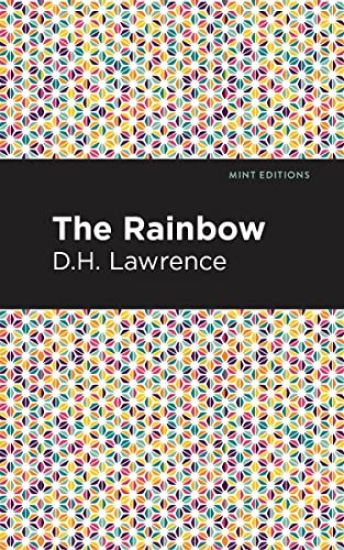
Spanning over a period of sixty-five years, from the 1840s to 1905, The Rainbow by D.H Lawrence follows three generations of the Brangwen family, mapping the change in their romantic relationships amid the industrialization of Great Britain. Their story begins when Tom Brangwen meets a Polish widow named Lydia. The two soon fall in love and get married, though they find that their cultural differences cause more issues than they imagined. Due to a cultural and language barrier, Lydia and Tom find it difficult to connect to one another, but they stay persistent and remain together regardless. Since Lydia had a child with her late husband, Tom adopted her daughter, Anna, as one of his own. When Anna gets married, she and her husband Will shift the focus to their romance, which begins as an innocent and happy affair. During the early phases of their relationship and marriage, Anna and Will were wrapped up into each other, unaware of anything else except for their love. But this romantic daze cannot last for forever. Anna soon returns to reality, much quicker than Will, which causes a rift in their relationship, especially when they have children. Their youngest daughter, Ursula, is able to live more freely than any of the other Brangwen’s. Though she feels the societal pressure that is forced upon her as a woman, Ursula is more concerned with being independent and happy. She is passionate and sensual, seeking out many romantic relationships, including one with her female schoolteacher. But as she grows older, she meets a sweet British solider named Anton. The two remain in an extended and happy relationship, but as the possibility of marriage grows near, Ursula must decide if she feels ready to make such as commitment, or if she ever even wants to be a married woman. Presented in sensual and emotional prose, D.H Lawrence’s The Rainbow effortlessly tackles taboo topics and complex protagonists. With themes of feminism, family, love, homosexuality, and religious rebellion, The Rainbow has invited controversy since the first year it was published, leading it to be banned in Great Britain. Modern readers can now enjoy what the original audience was scandalized by, divulging in a rich storyline of complicated love affairs. This edition of The Rainbow by D.H Lawrence features a new, eye-catching cover design and is printed in a font that is both readable and modern.
After the release of D.H Lawrence’s compelling novel, Sons and Lovers, which details a complicated and borderline abusive relationship between a mother and son, many critics sought issues with the content, accusing Lawrence of writing a shameful and incestuous novel. Amid this criticism, Lawrence was inspired to write Fantasia of the Unconscious, explaining the themes and topics that often find their way into his work while defending himself against the raging criticism of Sons and Lovers. Though Lawrence admits his bias, as well as acknowledging that he is not a scientist nor a scholar, he supports his psychoanalytic claims and raises concerns that had previously been unvoiced. First, Lawrence debunks popular Freudian psychology and Oedipus theories, mainly to defend his novel, Sons and Lovers, which was semi-autobiographical, from the claims that the mother and son depicted in the novel had a sexual relationship. Lawrence continues to analyze social practices and expectations of marriage, raising children, education, and political action. He challenged the very idea of self, which is a cornerstone of Western culture. Furthermore, Lawrence articulates the mental struggles that exists between emotional and intellectual identities, discussing the polarity of each and the cases in which they intersect, causing a turmoil of contradiction. Though he is not trained in the science, D.H Lawrence spent a lifetime writing about human observations that others found too grotesque or taboo to acknowledge, allowing Lawrence to have a certain expertise on such issues. With psychoanalytic theory, Lawrence supports his views, theories, and philosophies that often invited controversy in the literary and social realm. With poem-like prose and abstract ideas, D.H Lawrence proposes theories that surprises and compels readers. Described as being ahead of its time, Fantasia of the Unconscious introduces ideas that can be examined in practice in modern society. With insight on topics of education, marriage, and social norms, Fantasia of the Unconscious is an illuminating guide to D.H Lawrence’s other works. This edition of Fantasia of the Unconscious is now presented in an easy-to-read font and features a new, eye-catching cover design to cater to contemporary readers.
Alvina Houghton is bored by her little town, and feels trapped after her plans to elope with her lover falls through. Though she had previously dreamed of training as a nurse, Alvina is unsure what to do with her life. Alvina comes of age as her father, James, faces the failure of his business. She has a difficult relationship with her father. He is a man who never fully indulged in his passions, but has made eccentric financial decisions. In attempt to secure his daughter’s upbringing and save his fortune, James buys a theater. There, he employs many traveling artists, as well as a handsome and sensual Italian man named Ciccio. After meeting the man, Alvina feels drawn to him, especially since he is well-traveled. The two share a slow-burn courtship, and after a lifetime of being raised around stifled passion, Alvina feels alive. Seduced by Ciccio and desperate for adventure, Alvina decides to run away with Ciccio, fleeing to Naples. As she leaves behind her life of security, comfort, and predictability, Alvina starts to explore desire, spontaneity, and her sexual freedom. Free to do as she wishes with Ciccio, Alvina explores Naples and her own sexual awakening, feeling independent and unfettered. However, even as she finds herself, Alvina also faces the reality of such fleeting freedom. D.H Lawrence’s The Lost Girl is an emotionally compelling narrative featuring strong characters, wit, and prose that is both beautiful and bitter. With themes of feminism, class divisions, and family, The Lost Girl is a relatable story that leaves readers considering fate and the future. Through meticulous detail, readers are given valuable insight on the class distinctions and societal expectations of the 1920s in Europe. D.H Lawrence’s The Lost Girl was awarded the James Tait Black Memorial Prize in 1920 to congratulate its gripping narrative and compelling characters. Now presented in an easy-to-read font and with a striking new cover design, this edition of The Lost Girl by D.H Lawrence restores the novel to modern standards while respecting its original mastery. With these accommodations, contemporary audiences are treated to a reading experience that is both accessible and luxurious.
When Gertrude Coppard, a refined young woman, meets Walter Morel, a rough coalminer, at a Christmas party dance, they feel immediately drawn to each other. After a short romance defined by physical attraction, the couple decide to marry. However, Gertrude soon realizes the financial difficulties of trying to survive off of Walter’s measly salary. These troubles quickly cause the two to fight and grow apart. Walter begins to drink the little money they have away, retreating to a bar every night. Once he becomes abusive, Gertrude becomes dedicated to ensuring that her children do not turn out like their father, and decides to reinvest her love into her two sons, William and Paul. Her oldest, William, is her favorite, and her love is reciprocated; William is only willing to be separated from her when he begins a new job in London, rising from his poor social class. When Paul, Gertrude’s youngest, suffers from pneumonia, she realizes how much she cares for him as well. Unlike William, Paul feels smothered by his mother’s attention, growing complex emotions about her. Both drawn to and disgusted by Gertrude, Paul decides to venture out and find love. When Paul meets Miriam, a smart and kind farmer’s daughter, he feels that they are a great match. Gertrude, however, does not approve. Haunted by this and feeling unsatisfied, Paul leaves Miriam for Clara, a feminist divorcée. Still, Paul is worried about his mother. He realizes that he is the sole cause of her happiness; without his attention, Gertrude has nothing. Conflicted, Paul becomes torn between chasing his own happiness or appeasing his mother. Sons and Lovers by D.H Lawrence is a sensational portrayal of a generational clash and the differing types of abusive relationships. In 1999, the Modern Library ranked Sons and Lovers as ninth on a list of the top one-hundred best novels from the 20th century. Since then, the narrative has also inspired several film adaptations. With strong, sentimental, and scandalous prose, D.H Lawrence creates a narrative that is not soon to be forgotten. This edition of Sons and Lovers by D.H Lawrence features an eye-catching cover design and is printed in a font that is both modern and readable, crafting a reading experience for contemporary audiences that is filled with enjoyment and ease.
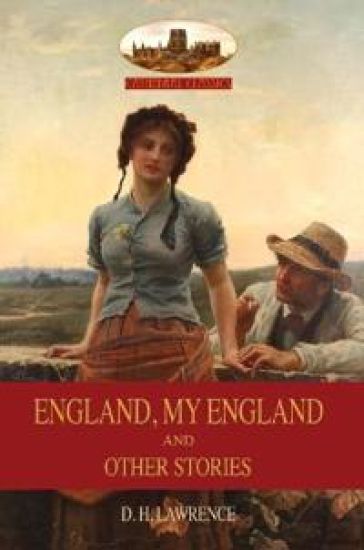
With beautiful prose and defined characters, England, My England is a collection of ten works of short fiction written by the provocative and controversial author, D.H Lawrence. Many of these stories are set during and revolve around World War ?, such as Wintry Peacock. When her husband goes off to war, a woman finds herself moving in with her in-laws as she eagerly waits for his return. Around the time he is meant to come home, a letter arrives for him, written in French. Sent by the husband’s mistress, the letter details the affair he had, and that the mistress was with child because of it. Though the letter also warned of the mistress’s plans to move to England with her baby to be with the husband, the wife was unable to translate the French, leading to a situation of unfortunate misdirect and miscommunication. Other stories among this collection focus on the unfair societal expectations of women. You Touched Me follows the story of an adopted son and dying patriarch blackmailing an eldest daughter into marrying the son. Samson and Delilah depicts the complicated reunion of a husband and wife after the husband had abandoned his wife and newborn child fifteen years prior. Fannie and Annie excellently portrays the societal pressure for women to settle for less as it depicts Fannie, a well-educated woman, returning to her hometown to marry an unmotivated man who has illicit affairs with other women. Exploring the opposite perspective of a similar situation, The Primrose Path inspects the consequences of a man who lives a fleeting lifestyle—jumping from place to place, job to job, and woman to woman. Features themes of love, feminism, and sexuality, D.H Lawrence explores complicated relationships during the 20th century amid a world war and unjust and harmful social expectations. England, My England explores issues of society with a dark and biting tone, creating narratives that are not easily forgotten, and relate to ever-present human struggles. This edition of England, My England by D.H Lawrence features a new eye-catching cover design and is printed in a font that is both modern and readable to cater to a contemporary audience.
After the release of D.H Lawrence’s compelling novel, Sons and Lovers, which details a complicated and borderline abusive relationship between a mother and son, many critics sought issues with the content, accusing Lawrence of writing a shameful and incestuous novel. Amid this criticism, Lawrence was inspired to write Fantasia of the Unconscious, explaining the themes and topics that often find their way into his work while defending himself against the raging criticism of Sons and Lovers. Though Lawrence admits his bias, as well as acknowledging that he is not a scientist nor a scholar, he supports his psychoanalytic claims and raises concerns that had previously been unvoiced. First, Lawrence debunks popular Freudian psychology and Oedipus theories, mainly to defend his novel, Sons and Lovers, which was semi-autobiographical, from the claims that the mother and son depicted in the novel had a sexual relationship. Lawrence continues to analyze social practices and expectations of marriage, raising children, education, and political action. He challenged the very idea of self, which is a cornerstone of Western culture. Furthermore, Lawrence articulates the mental struggles that exists between emotional and intellectual identities, discussing the polarity of each and the cases in which they intersect, causing a turmoil of contradiction. Though he is not trained in the science, D.H Lawrence spent a lifetime writing about human observations that others found too grotesque or taboo to acknowledge, allowing Lawrence to have a certain expertise on such issues. With psychoanalytic theory, Lawrence supports his views, theories, and philosophies that often invited controversy in the literary and social realm. With poem-like prose and abstract ideas, D.H Lawrence proposes theories that surprises and compels readers. Described as being ahead of its time, Fantasia of the Unconscious introduces ideas that can be examined in practice in modern society. With insight on topics of education, marriage, and social norms, Fantasia of the Unconscious is an illuminating guide to D.H Lawrence’s other works. This edition of Fantasia of the Unconscious is now presented in an easy-to-read font and features a new, eye-catching cover design to cater to contemporary readers.
The Man Who Loved Islands: Sixteen Stories (riverrun editions) by D H Lawrence
D H Lawrence
riverrun
2021
nidottu
'Everyone who met him commented on the arresting power of Lawrence's bright and sharp blue eyes, and the beard he later grew would be as red as a fox's brush, but it was not his appearance that Ford was describing. It was his menace' Frances Wilson, from her Introduction to The Man Who Loves Islands------------------------------------------------The Man Who Loved Islands presents Lawrence's skilled, intimate and lively portraits of humanity. In the title story a man buys a ninety-nine year lease on an island and finds himself cast off in its timeless world; in 'The Last Laugh' a couple are confronted with uncanny spectral visions, and an eerie faceless laugh; in 'The Fox' two women maintaining a farm feel the dark shadows of war, and a cunning creature threatens to destroy their livelihood. The stories in this collection are about what the characters know and do not know - about themselves, one another, and the circumambient universe.
England, My England is a collection of short stories by D. H. Lawrence. "England, My England" is a collection of his short stories written between 1913 and 1921 which exhibits this great literary talent. The stories of this volume, many of which are set against the backdrop of World War I, include the following tales: England, My England Tickets, Please The Blind Man Monkey Nuts Wintry Peacock You Touched Me Samson and Delilah The Primrose Path The Horse Dealer's Daughter Fanny And Annie
Et skip seiler i mørket nedover Hudsonfloden. Ombord befinner Juliet og hennes lille sønn seg på vei mot Sicilia. Det er legen hjemme i Amerika som har ordinert hvile i solen, og selv om Juliet ikke tror på dens helende kraft, har hun latt seg overtale. Reisen fører henne bort fra den stive relasjonen til mannen og det grå hjemlandet. Mellom sypressene og kaktusene i sydens sol åpner Juliet seg langsomt for lyset og varmen, og med det livslysten. Men kan solen lyse på henne for all fremtid eller finnes det en slutt?
First published in 1913, "Sons and Lovers" is D. H. Lawrence's provocative semi-autobiographical novel. The work is based in part on his own family, his mother married a miner like the matriarch of the novel and consequently felt constrained by being relegated to a working class life. The story reflects the struggles of Paul Morel, an artist who cannot reciprocate love for other women while under the influence of his stifling mother. Unconsciously taught to despise his father and eschew other women, Paul comes even further under his mother's psychological grip after the death of his older brother. When he eventually does fall in love, the results of his confused affection and desire are painful for all concerned. What follows is a tragic struggle for Paul between the desire for a normal loving relationship and the innate sense of love and fidelity he feels for his mother. While "Sons and Lovers", for its Oedipal allusions and conflict with contemporary views on sexuality, was considered scandalous when first published, it has come to be regarded as one of Lawrence's greatest works, his earliest masterpiece. This edition is printed on premium acid-free paper and includes an introduction by Mark Schorer.
England, My England is the title of a collection of short stories by D. H. Lawrence. Individual items were originally written between 1913 and 1921, many of them against the background of World War I. Most of these versions were placed in magazines or periodicals. Ten were later selected and extensively revised by Lawrence for the England, My England volume.
D. H. Lawrence's skill at dissecting human emotions and conflicting thoughts lends a depth to his writings that few modern writers can match. His innovative application of the "school of realism" gives his characters' internal reflections a searing authenticity which is borne out with great effect in this collection of short stories.Selected from works he had originally published in magazines and periodicals between 1913 and 1921, the stories are set in the post-Edwardian period, many against the background of WWI. After extensive revision, the anthology was published in 1922 under the title, England, My England.Lawrence's prolific output - novels, short stories, poems, plays and essays, to name a few - was often contentious and earned him as much opprobrium at the time as it did credit, but he is now acknowledged as one of the twentieth century's masters of literature.
Tickets, Please; The Blind Man; Monkey Nuts; Wintry Peacock; You Touched Me; Samson And Delilah; The Primrose Path; The Horse Dealer's Daughter; Fanny And Annie
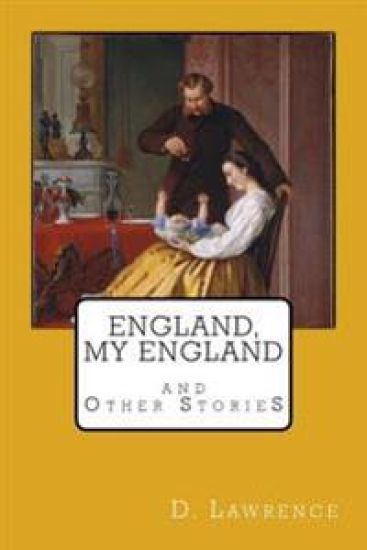
England, My England and Other Stories
D. H. Lawrence
Createspace Independent Publishing Platform
2017
nidottu
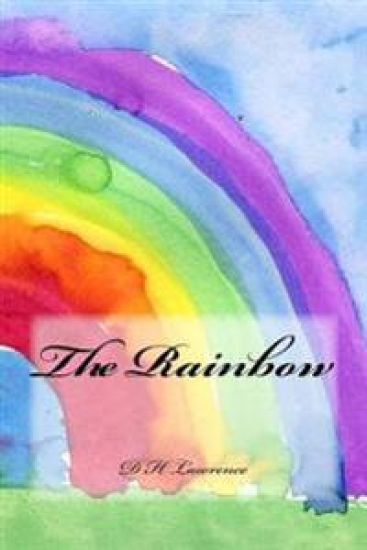
The Rainbow is a novel by the British author DH Lawrence, written in 1915. It tells the story of 3 generations of the Brangwen family, farmers in the hinterland of England, their relationships and passions, as well as unveiling the female soul And issues forbidden at the time. The Rainbow is one of the earliest works of the English writer D. H. Lawrence. Published in 1915 in England, it was confiscated and its specimens burned for being considered obscene and anti-patriotic. Only eleven years later, that ban was lifted in that country. The Rainbow tells the story of three generations of the Brangwen family, a dynasty of farmers and craftsmen who live in the east Midlands of England, on the borders of Nottinghamshire and Derbyshire. The book spans a period of roughly 65 years from the 1840s to 1905, and shows how the love relationships of the Brangwens change against the backdrop of the increasing industrialisation of Britain. The first central character, Tom Brangwen, is a farmer whose experience of the world does not stretch beyond these two counties; while the last, Ursula, his granddaughter, studies at university and becomes a teacher in the progressively urbanised, capitalist and industrial world. The book starts with a description of the Brangwen dynasty, then deals with how Tom Brangwen, one of several brothers, fell in love with a Polish refugee and widow, Lydia. The next part of the book deals with Lydia's daughter by her first husband, Anna, and her destructive, battle-riven relationship with her husband, Will, the son of one of Tom's brothers. The last and most extended part of the book, and also probably the most famous, then deals with Will and Anna's daughter, Ursula, and her struggle to find fulfilment for her passionate, spiritual and sensual nature against the confines of the increasingly materialist and conformist society around her. She experiences a same-sex relationship with a teacher, and a passionate but ultimately doomed love affair with Anton Skrebensky, a British soldier of Polish ancestry. At the end of the book, having failed to find her fulfilment in Skrebensky, she has a vision of a rainbow towering over the Earth, promising a new dawn for humanity: "She saw in the rainbow the earth's new architecture, the old, brittle corruption of houses and factories swept away, the world built up in a living fabric of Truth, fitting to the over-arching heaven." David Herbert Richards Lawrence was an English writer of the 20th century, whose prolific and diverse output included novels, short stories, poems, plays, essays, travel books, paintings, translations, literary criticism and personal letters. His collected works represent an extended reflection upon the dehumanizing effects of modernity and industrialisation. In them, Lawrence confronts issues relating to emotional health and vitality, spontaneity, human sexuality and instinct.
The Trespasser by D.H Lawrence.
D. H. Lawrence
Createspace Independent Publishing Platform
2016
nidottu
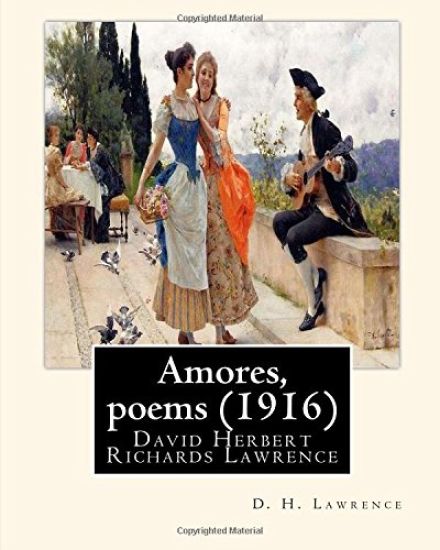
Amores, poems (1916), By D. H. Lawrence: David Herbert Richards Lawrence
D. H. Lawrence
Createspace Independent Publishing Platform
2016
nidottu
David Herbert Richards Lawrence (11 September 1885 - 2 March 1930) was an English novelist, poet, playwright, essayist, literary critic and painter who published as D. H. Lawrence. His collected works, among other things, represent an extended reflection upon the dehumanising effects of modernity and industrialisation. In them, some of the issues Lawrence explores are emotional health, vitality, spontaneity and instinct. Lawrence's opinions earned him many enemies and he endured official persecution, censorship, and misrepresentation of his creative work throughout the second half of his life, much of which he spent in a voluntary exile which he called his "savage pilgrimage".t the time of his death, his public reputation was that of a pornographer who had wasted his considerable talents. E. M. Forster, in an obituary notice, challenged this widely held view, describing him as, "The greatest imaginative novelist of our generation."Later, the influential Cambridge critic F. R. Leavis championed both his artistic integrity and his moral seriousness, placing much of Lawrence's fiction within the canonical "great tradition" of the English novel.
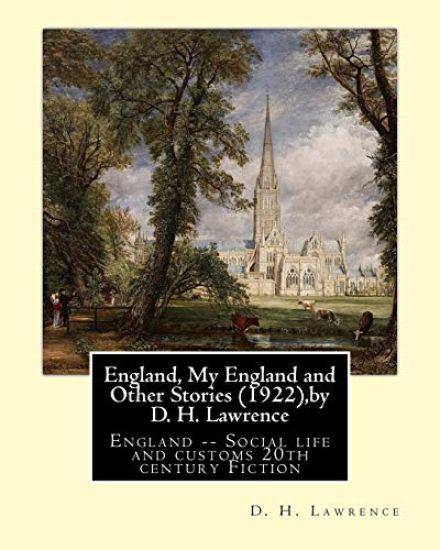
England, My England and Other Stories (1922), by D. H. Lawrence: England -- Social life and customs 20th century Fiction
D. H. Lawrence
Createspace Independent Publishing Platform
2016
nidottu