Kirjojen hintavertailu. Mukana 12 595 353 kirjaa ja 12 kauppaa.

Kirjailija

D.J. Peterson

Kirjat ja teokset yhdessä paikassa: 10 kirjaa, julkaisuja vuosilta 2002-2023, suosituimpien joukossa Emergency Responder Injuries and Fatalities. Vertaile teosten hintoja ja tarkista saatavuus suomalaisista kirjakaupoista.

Mukana myös kirjoitusasut: D J Peterson, D. J. Peterson

10 kirjaa

Kirjojen julkaisuhaarukka 2002-2023.

Emergency Responder Injuries and Fatalities

Emergency Responder Injuries and Fatalities

Ari N. Houser; Brian A. Jackson; James T. Bartis; D.J. Peterson

RAND
2004
pokkari
Summarizes the results of an analysis of available data sources concerning the hazards facing firefighters, police, and emergency medical responders. Collects and synthesizes available data on casualties experienced by the emergency responder population. The authors examined data separately for firefighters, police officers, and emergency medical technicians. These data can provide a route for identifying combinations of kinds and causes of injury, body parts involved, and types of responder activity where injury reduction efforts might be most effectively applied.
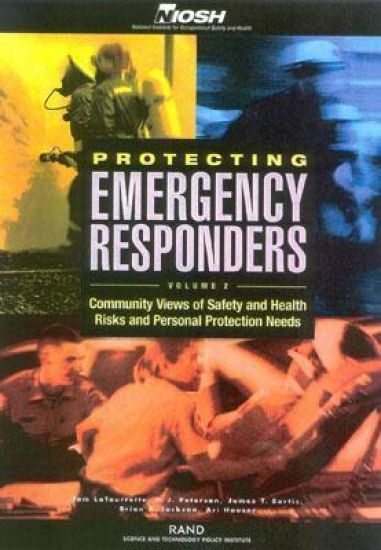
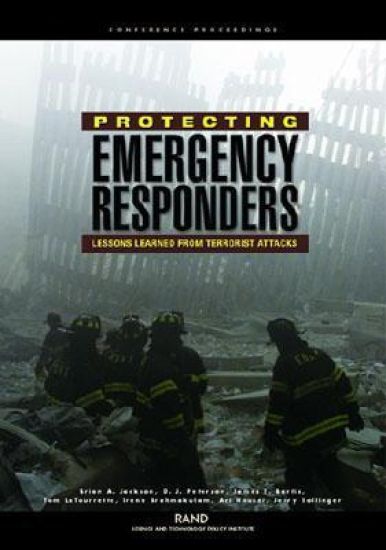
Protecting Emergency Responders

Protecting Emergency Responders

Tom LaTourrette; D.J. Peterson; James Bartis; Brian Jackson; Ari Houser

RAND
2003
nidottu
Firefighters, law enforcement officers, and emergency medical service responders play a critical role in protecting people and property in the event of fires, medical emergencies, terrorist acts, and numerous other emergencies. The authors examine the hazards that responders face and the personal protective technology needed to contend with those hazards. The findings are based on in-depth discussions with 190 members of the emergency responder community and are intended to help define the protective technology needs of responders and develop a comprehensive personal protective technology research agenda.
Protecting Emergency Responders

Protecting Emergency Responders

Brian A. Jackson; D.J. Peterson; James T. Bartis

RAND
2002
pokkari
Protecting emergency-response workers following large-scale terrorist attacks In December 2001, a conference held in New York City brought together individuals with firsthand knowledge of emergency responses to terrorist attacks to discuss ways to improve the health and safety of emergency workers who respond to large-scale disasters. The meeting considered the responses to the September 11, 2001 attacks at the World Trade Center and the Pentagon and the 1995 attack at the Alfred P. Murrah Federal Building in Oklahoma City, Oklahoma, as well as the emergency responses to the anthrax incidents that occurred through Autumn 2001. This book is intended to help managers and decisiomakers understand the unique working and safety environment associated with terrorist incidents, understand the equipment needs of emergency workers, and improve education and training programs and activities directed at the health and safety of emergency responders.
Troubled Lands

Troubled Lands

D. J. Peterson

Routledge
2021
nidottu
The dramatic revelations of environmental catastrophe in the Soviet Union made during the late 1980s and early 1990s were a driving force behind reform in, and later the demise of the communist party-state. But while the Union no longer exists, the independent republics confront the same dilemmas that plagued the Soviet state: Will the goal of econ
Troubled Lands

Troubled Lands

D. J. Peterson

Routledge
2019
sidottu
The dramatic revelations of environmental catastrophe in the Soviet Union made during the late 1980s and early 1990s were a driving force behind reform in, and later the demise of the communist party-state. But while the Union no longer exists, the independent republics confront the same dilemmas that plagued the Soviet state: Will the goal of econ
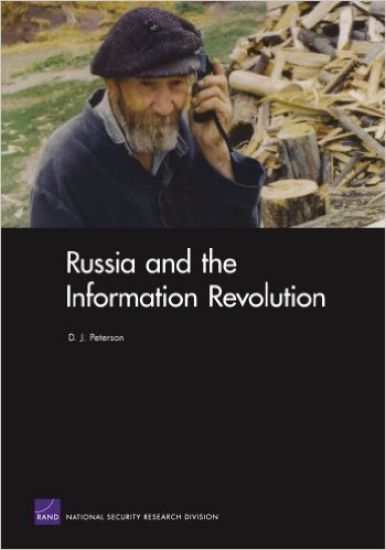
Russia and the Information Revolution
This work, the result of a six-year study, sheds light on Russia's role in the global Information Revolution. It examines Russia's increasing reliance on information and communications technologies (IT) to improve its government institutions, modernize business and industry and stimulate economic growth, broaden information access, and enhance the quality of life for Russian people. The author examines Russia's emerging IT sector, how businesses in Russia are seeking to use IT to enhance productivity and profitability, the impact of IT on government, and the course of the Information Revolution in Russian society.
Oil Shale Development in the United States

Oil Shale Development in the United States

James T. Bartis; Tom LaTourrette; Lloyd Dixon; D.J. Peterson; Gary Cecchine

RAND
2005
pokkari
Public and private institutions in the United States have long been home to a variety of art works, antiquities, and ethnological materials. For years, these collections have been seen as important archives that allow present and future generations to enjoy, appreciate, and value the art of all cultures. In the past decade, however, questions have been raised as to exactly what constitutes legal and ethical ownership of art and other cultural property. Some observers believe that art and ethnological materials should remain in source countries, and have lobbied for an end to art trading. Recent changes to U.S. law may curtail both private and public collecting. Contributors to "Who Owns the Past?" include legal scholars, museum professionals, anthropologists, archaeologists, and collectors. In clear, nontechnical language, they provide a comprehensive overview of the development of cultural property law and practices, as well as recent case law affecting the ability of museums and private collectors to own art from other countries.Topics covered include rights to property, ethical ownership, the public responsibilities of museums, threats to art from war and development, and international cooperation to preserve collections in the developing world. Engaging all perspectives on this debate, "Who Owns the Past?" challenges all who care about the arts to work together toward policies that consider traditional American interests in securing cultural resources, and respect international concerns over loss of heritage.
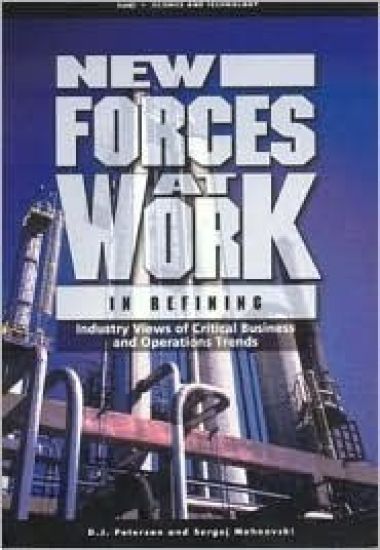
New Forces at Work in Refining

New Forces at Work in Refining

D.J. Peterson; Sergej Mahnovski

RAND
2004
pokkari
This volume reports the results of discussions with representatives of refining firms, technologies and services providers, research institutions and other organizations on current and future trends in the US refining industry.
U.S. Government Funding for Science and Technology Cooperation with Russia

U.S. Government Funding for Science and Technology Cooperation with Russia

Caroline Wagner; Irene Brahmakulam; D.J. Peterson; Linda Staheli

RAND
2002
pokkari
This document details U.S. government spending on cooperative science and technology activities with Russia. The U.S. government spent, on average, 300 million dollars a year during the 1990s to support science and technology (S&T) cooperation with Russia. This document details U.S. government spending on cooperative S&T activities with Russian partners. RAND collected and analyzed data at the project level and surveyed agency officials about specific projects and programs. These data were aggregated by spending into categories created by RAND. The report thus provides an analytic, cross-agency overview, presenting a broad picture of the U.S.-Russia S&T relationship between 1994 and 2000. The U.S. government's projects with Russia have a slightly different pattern than can be observed with other scientifically advanced countries: They are more binational in character, less collaborative, more technology-based, less of a shared effort, and dominated more by spending in aerospace applications. Reports from scientists working with Russian counterparts indicate that the United States is gaining significant scientific benefit from this joint collaboration. Although funding for the U.S.-Russia S&T relationship seems to have dropped in 2001, there has been a revived interest within the U.S. scientific community in working with Russia and an increase in the number of projects being considered.