Kirjojen hintavertailu. Mukana 12 595 353 kirjaa ja 12 kauppaa.

Kirjailija

D.Z. Stone

Kirjat ja teokset yhdessä paikassa: 3 kirjaa, julkaisuja vuosilta 2019-2021, suosituimpien joukossa A Fairy Tale Unmasked. Vertaile teosten hintoja ja tarkista saatavuus suomalaisista kirjakaupoista.

3 kirjaa

Kirjojen julkaisuhaarukka 2019-2021.

A Fairy Tale Unmasked

A Fairy Tale Unmasked

Dieter Vaupel; D.Z. Stone

Vallentine Mitchell Co Ltd
2021
nidottu
A Fairy Tale Unmasked is two books in one. Part One is the story of Dieter Vaupel, a German school teacher who, in 1983, uncovered a hidden past when he and his students began researching what happened in their town during the Nazi regime. The picturesque town of Hessisch Lichtenau was where thousands of slave laborers were forced to work in one of the largest munitions factories in Europe. Vaupel and his students broke through the wall of silence surrounding this history and stood up to threats to leave the past alone. Then, amid further controversy, Vaupel and a group of townspeople contacted former forced workers and invited them to come back to Hessisch Lichtenau. In 1986, Blanka Pudler, who as a 15-year-old girl was sent from Auschwitz as a slave laborer, was one of those who returned. Part Two is Pudler's account of her enslavement, a story she would go on to tell to thousands of German schoolchildren. In 2012 she was awarded the Order of Merit of the Federal Republic of Germany. Part One is written by journalist D.Z. Stone and Part Two is by Dieter Vaupel, based on his interviews with Blanka Pudler. This is an extraordinary collaboration that makes for compelling and captiv
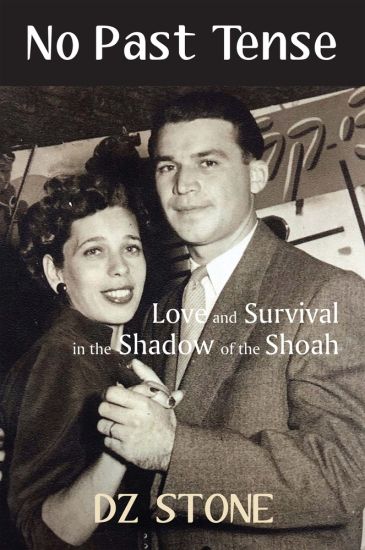
No Past Tense

No Past Tense

D.Z. Stone

Vallentine Mitchell Co Ltd
2019
sidottu
No Past Tense is the biography of Katarina (Kati) Kellner and William (Willi) Salcer, two Czech Jews who as teenagers were swept up by the Holocaust in Hungary and survived Auschwitz and Mauthausen, respectively. Covering their entire lives, weaving in first person "real time" voices, the unique structure of No Past Tense provides a distinctive "whole life" view of the Holocaust. The book begins with their childhoods, education in Budapest, and 16-year-old Kati meeting 19-year-old Willi in the Jewish ghetto in Plesivec, a Slovak village annexed by Hungary in 1938. After liberation from the camps they returned to discover most Jews were gone, and the villagers did not want them back. In defiance, Kati took up residence in a shed on her family’s property, and in reclaiming what was hers, won Willi’s heart. They lived as smugglers in post-war Europe until immigrating illegally to Palestine in 1946. In 1958, saying he did not want the children to know war, Willi convinced Kati to move to America. He did not tell her that punitive tax fines, imposed when the government needed money due to the crisis in the Sinai, shook his faith in Israel. Once in America, after a few bad investments, Willi lost all their money and for the first time Kati suffered panic attacks. But Willi rebuilt his fortune, while Kati rediscovered her courage, and started living again.
No Past Tense

No Past Tense

D.Z. Stone

Vallentine Mitchell Co Ltd
2019
nidottu
No Past Tense is the biography of Katarina (Kati) Kellner and William (Willi) Salcer, two Czech Jews who as teenagers were swept up by the Holocaust in Hungary and survived Auschwitz and Mauthausen, respectively. Covering their entire lives, weaving in first person 'real time' voices as if watching a documentary about themselves, the unique structure of No Past Tense provides a distinctive 'whole life' view of the Holocaust. The book begins with their childhoods, education in Budapest, and 16-year-old Kati meeting 19-year-old Willi in the Jewish ghetto in Plesivec, a Slovak village annexed by Hungary in 1938. After liberation from the camps they returned to discover most Jews were gone, and the villagers did not want them back. In defiance, Kati took up residence in a shed on her family's property, and in reclaiming what was hers, won Willi's heart. They lived as smugglers in post-war Europe until immigrating illegally to Palestine in 1946. Describing Palestine, they talk frankly about rarely addressed issues such as prejudice against 'newcomers' from other Jews. Willi built tanks for the Haganah, the underground Jewish army, and supported the War of Independence but refused to move into homes abandoned by Palestinian Arabs. After discharge from the Israeli Air Force, Willi founded the country's first rubber factory and headed the association of Israeli manufacturers at only 28. In 1958, saying he did not want the children to know war, Willi convinced Kati to move to America. He did not tell her that punitive tax fines, imposed when the government needed money due to the crisis in the Sinai, shook his faith in Israel. Once in America, after a few bad investments, Willi lost all their money and for the first time Kati suffered panic attacks. But Willi rebuilt his fortune, while Kati rediscovered her courage, and started living again.