Kirjojen hintavertailu. Mukana 12 390 323 kirjaa ja 12 kauppaa.

Kirjailija

Daisaku Ikeda

Kirjat ja teokset yhdessä paikassa: 67 kirjaa, julkaisuja vuosilta 1992-2025, suosituimpien joukossa The Flower of Chinese Buddhism. Vertaile teosten hintoja ja tarkista saatavuus suomalaisista kirjakaupoista.

67 kirjaa

Kirjojen julkaisuhaarukka 1992-2025.

Moral Lessons of the Twentieth Century
Mikhail Gorbachev and Daisaku Ikeda are contemporaries raised in different cultures: Gorbachev is a statesman whose origins are the Marx-inspired world of Communism while Ikeda is Buddhist inspired by the thirteenth-century Japanese sage, Nichiren. "Moral Lessons of the Twentieth Century" emerges from a series of conversations between these two men. Together they explore their experiences of life amidst the turmoil of the twentieth century and together they search for a common ethical basis for future development. Their wide-rangeing and often inspiring discussions take place in politics, economics, history, religion and spirituality, and epitomise the value of informed intercultural dialogue and reflection. They conclude that peace, progress and social justice can only be achieved through honest communication and cultural exchange. As the new century begins, they have sought to turn the spotlight on the challenges which face humanity.
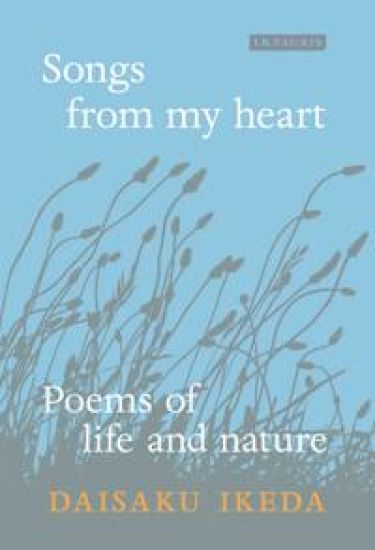
Songs from My Heart

Songs from My Heart

Daisaku Ikeda

I.B. Tauris
2014
nidottu
For many years Daisaku Ikeda has used poetry to express his innermost observations and sensations. He has given poetic voice to feelings that have emerged from real life, and from the activities of an internationally known champion of peace and education and the leader of a worldwide lay Buddhist movement. With a vigour and simplicity that derive from a style rooted in classical rather than colloquial traditions, his poems celebrate the themes of youth and of progress, and the mysteries of the natural world: whether a wind that sighs 'with its melancholy chant to the traveller', or a 'great sky with its transcendent beauty and stillness', or a moon that shines with the light of the 'silver monarch'. These are poignant meditations above all on time, transience and the eternal - rendered visible through a palette of diverse poetic colour, and framed within a universe where all people are called to strive for a better world. Such a world is characterized not by division, but by peace and love. In that sense, these are verses expressive of the author's deepest hopes and sentiments: not merely poems, but keenly felt songs from his heart.
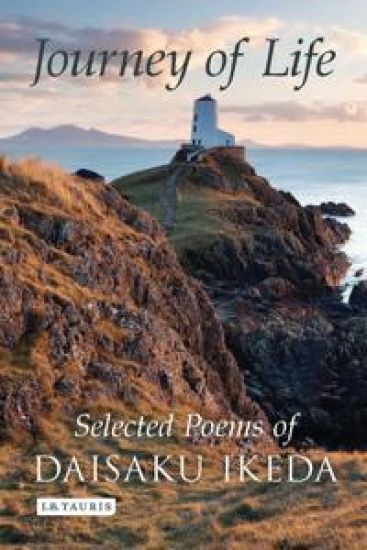
Journey of Life

Journey of Life

Daisaku Ikeda

I.B. Tauris
2014
nidottu
Whether through lyrical celebrations of the wonders of nature; paeans to the steadfastness of women; or salutations to the world leaders who have in their various ways provided inspiration to his lifelong devotion to the causes of peace, justice and education, Daisaku Ikeda in his poems expresses unwavering commitment to the development of a humanistic global culture. These translations, the first of a three-volume collection and based on the Japanese Complete Works of Daisaku Ikeda (Ikeda Daisaku zenshu), cover the years 1945-2007, and explore the many subjects to which the leader of the Soka Gakkai International has devoted his 'poetic heart and mind.' The translators have sought to reproduce the rhythms and timbres of a voice, which- though influenced by the likes of Whitman, Defoe, Dumas, Ibsen, Emerson and Shelley- is yet distinctive and unique. Sometimes the poet adopts a simple vernacular note; at other times the compression associated with Japanese poeic forms haiku and waka. But at all times the poetry maintains a stately rhythm that reflects the dignity of ordinary language and expression. This collection will delight readers familiar with the prose writings of the author as well as those coming to his work for the first time. The poems within it speak, with freedom and feeling, of a world where genuine poetry reigns supreme- and of a world where poetic perception becomes a perception of interconnectedness; between friends. between humanity and nature, or between humanity and the cosmos.
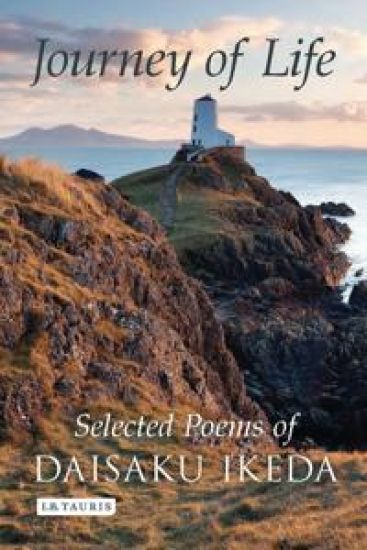
Journey of Life

Journey of Life

Daisaku Ikeda

I.B. Tauris
2014
sidottu
Whether through lyrical celebrations of the wonders of nature; paeans to the steadfastness of women; or salutations to the world leaders who have in their various ways provided inspiration to his lifelong devotion to the causes of peace, justice and education, Daisaku Ikeda in his poems expresses unwavering commitment to the development of a humanistic global culture. These translations, the first of a three-volume collection and based on the Japanese Complete Works of Daisaku Ikeda (Ikeda Daisaku zenshu), cover the years 1945-2007, and explore the many subjects to which the leader of the Soka Gakkai International has devoted his 'poetic heart and mind.' The translators have sought to reproduce the rhythms and timbres of a voice, which- though influenced by the likes of Whitman, Defoe, Dumas, Ibsen, Emerson and Shelley- is yet distinctive and unique. Sometimes the poet adopts a simple vernacular note; at other times the compression associated with Japanese poeic forms haiku and waka. But at all times the poetry maintains a stately rhythm that reflects the dignity of ordinary language and expression. This collection will delight readers familiar with the prose writings of the author as well as those coming to his work for the first time. The poems within it speak, with freedom and feeling, of a world where genuine poetry reigns supreme- and of a world where poetic perception becomes a perception of interconnectedness; between friends. between humanity and nature, or between humanity and the cosmos.
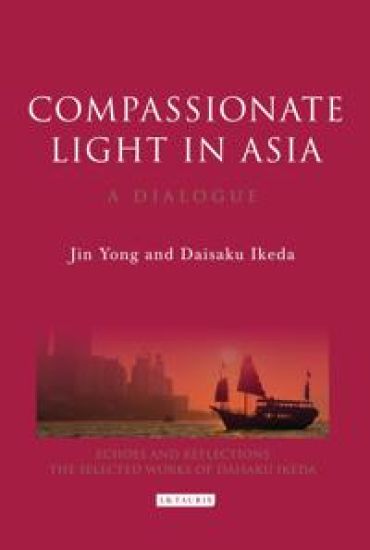
Compassionate Light in Asia

Compassionate Light in Asia

Yong Jin; Daisaku Ikeda

I.B. Tauris
2013
sidottu
'Life is a drama of encounters', writes Daisaku Ikeda at the beginning of this dialogue: 'Beautiful encounters. Momentary encounters. Each person's drama is unique.' This particular encounter, between a celebrated Chinese novelist and prominent Japanese religious leader, illustrates the truth of that reflection. For in the discussion that stemmed from their meetings, Jin Yong (who is sometimes called 'the Asian Dumas') and Daisaku Ikeda were able to find remarkable common ground - what they refer to as a 'karmic bond' - resulting from the particularity of their experiences in wartime and mutual resistance to adversity. Ranging across a variety of engaging themes, the interlocutors explore such topics as the nature of friendship; theories of civilization; world literatures that have inspired them; the importance of free speech; Buddhist perspectives on life and death; and the spiritual search for truth. There is sustained reflection on the horrors of war, and a plea for the importance of memory: Daisaku Ikeda emphasises that 'peace is a battle against forgetfulness', while Jin Yong echoes this in his observation that 'most important is to strive to avoid war, whether it is between countries and whether it be domestic, and thus to enable people to build and improve their lives in a peaceful environment.' Cultural differences between the peoples of China and Japan are explored, sometimes amusingly, with the Japanese propensity for discipline and rules contrasted with the Chinese spirit of creative individualism. But the authors are focused above all on serious issues of meaning and identity, and they reveal the mutual solace both have found - in the face of personal loss and bereavement - in the Buddhist scriptures, especially the Lotus Sutra. Demonstrating a remarkable capacity for empathy throughout, they incarnate in their lives and work an intelligent and sympathetic compassion that represents a beacon of hope to the future direction of Sino-Japanese relations.
José Martí, Cuban Apostle

José Martí, Cuban Apostle

Vitier Cintio; Daisaku Ikeda

I.B. Tauris
2013
sidottu
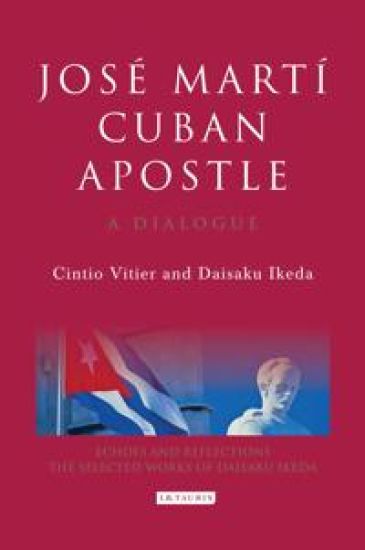
Once called 'the wellspring of the revolution' by Fidel Castro, Jose Marti (1853-1895) is revered as one of the greatest figures in the history of Cuba. Not only was he instrumental in the late nineteenth-century cause of securing Cuban independence from Spain. He is also considered one of Cuba's most brilliant writers, orators and formative intellectuals, who provided inspiration to the young Fidel, Che and their fellow revolutionaries by dedicating his whole life to the goal of national political emancipation. Jose Marti suffered persecution and early imprisonment for his convictions, and in consequence is often referred to as the 'Cuban Apostle'. In this wide-ranging discussion of Marti's life, work and influence, distinguished Cuban poet Cintio Vitier and prominent Buddhist leader Daisaku Ikeda explore their subject's understanding of non-violence; his nationalism that was also a profound openness to difference and dialogue; his spirituality; his poetical writings; and most of all his fundamental dignity, humanity and self-mastery. The book explores above all the nature of sacrifice, and the cost of relinquishing personal happiness for the sake of a great cause. The discussants examine Marti's family life, including his difficult relationships with his wife - Carmen Zayas Bazan - and his parents, who distanced themselves from his revolutionary fervour. Comparisons are drawn between Marti's ideals and Nichiren Buddhism as a source of unfailing hope and courage. As Daisaku Ikeda, follower of Nichiren, says at one point in the dialogue: 'Self-mastery is the hardest thing of all. But to have a spiritual nature worthy of the name, a person must overcome himself, a task that only a true optimist can accomplish. Marti's perspicacity is revealed in his conviction that final victory in life is assured by such optimists.' Marti, like Nichiren, had the unerring ability to turn enemies into friends. And as Cintio Vitier and Daisaku Ikeda reveal, what set Marti apart was not his thought or ideas alone but what emanated from his words and found embodiment in his actions. It was thus that a follower at the time could say of him: we don't understand him, but we are ready to die for him.
New Horizons in Eastern Humanism

New Horizons in Eastern Humanism

Tu Weiming; Daisaku Ikeda

I.B. Tauris
2011
sidottu
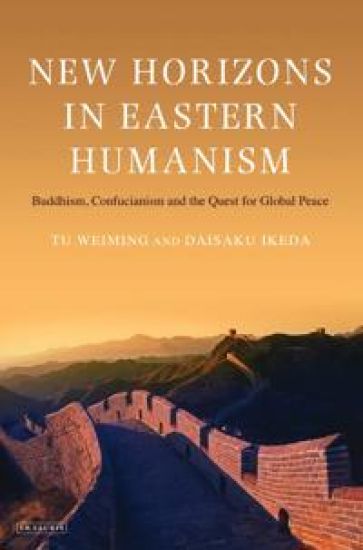
China now attracts global attention in direct proportion to its increasing economic and geopolitical power. But for millennia, the philosophy which has shaped the soul of China is not modern Communism, or even new forms of capitalism, but rather Confucianism. And one of the most striking phenomena relating to China's ascendancy on the world stage is a burgeoning interest, throughout Asia and beyond, in the humanistic culture and values that underlie Chinese politics and finance: particularly the thought of Confucius passed on in the Analects. In this stimulating conversation, two leading thinkers from the Confucian and Buddhist traditions discuss the timely relevance of a rejuvenated Confucian ethics to some of the most urgent issues in the modern world: Sino/Japanese/US relations; the transformation of society through education and dialogue; and the role of world religions in promoting human flourishing. Exploring correspondences between the Confucian and Buddhist world-views, the interlocutors commit themselves to a view of spirituality and religion that, without blurring cultural difference, is focused above all on the 'universal heart': on harmony between people and nature that leads to peace and to a hopeful future for all humanity.
New Horizons in Eastern Humanism

New Horizons in Eastern Humanism

Tu Weiming; Daisaku Ikeda

I.B. Tauris
2011
nidottu
China now attracts global attention in direct proportion to its increasing economic and geopolitical power. But for millennia, the philosophy which has shaped the soul of China is not modern Communism, or even new forms of capitalism, but rather Confucianism. And one of the most striking phenomena relating to China's ascendancy on the world stage is a burgeoning interest, throughout Asia and beyond, in the humanistic culture and values that underlie Chinese politics and finance: particularly the thought of Confucius passed on in the Analects. In this stimulating conversation, two leading thinkers from the Confucian and Buddhist traditions discuss the timely relevance of a rejuvenated Confucian ethics to some of the most urgent issues in the modern world: Sino/Japanese/US relations; the transformation of society through education and dialogue; and the role of world religions in promoting human flourishing. Exploring correspondences between the Confucian and Buddhist world-views, the interlocutors commit themselves to a view of spirituality and religion that, without blurring cultural difference, is focused above all on the 'universal heart': on harmony between people and nature that leads to peace and to a hopeful future for all humanity.
The Flower of Chinese Buddhism

The Flower of Chinese Buddhism

Daisaku Ikeda

Middleway Press
2009
pokkari
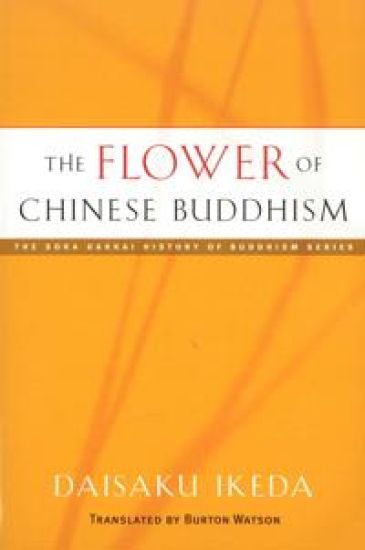
Beginning with the introduction of the religion into China, this chronicle depicts the evolution of Buddhism. The career and achievements of the great Kumarajiva are investigated, exploring the famed philosophical treatises that form the core of East Asian Buddhist literature. Providing a useful and accessible introduction to the influential Tien-t’ai school of Buddhism in Japan as well as the teachings of the 13th-century monk Nichiren, this examination places special emphasis on the faith of the Lotus Sutra and the major works of masters such as Hui-su, Chih-i, and Chanjan. From the early translations of the Buddhist scriptures to the persecution of the T'ang dynasty, this exploration illuminates the role of Buddhism in Chinese society, and by extension, in humanity in general.
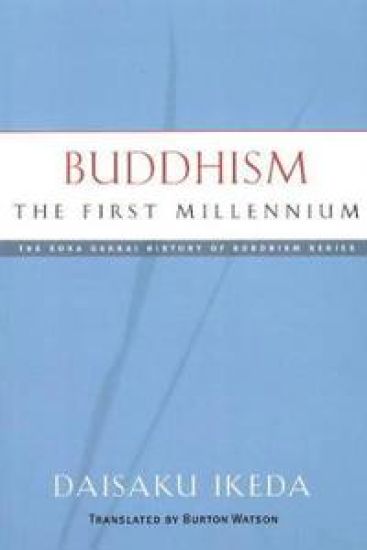
Buddhism

Buddhism

Daisaku Ikeda

Middleway Press
2009
nidottu
Beginning with the events immediately following the dark days after the death of Shakyamuni and continuing over a period of 1,000 years, this dynamic tome covers a vast and complex series of events and developments in the history of Buddhism. Through a thorough examination of its early development in India, a new light is cast on little-known aspects of Buddhist history and its relevance to the understanding of Buddhism today. Topics include the formation of the Buddhist canon, the cultural exchange between the East and West, and the spirit of the Lotus Sutra.
A Lifelong Quest for Peace

A Lifelong Quest for Peace

Linus Pauling; Daisaku Ikeda

I.B. Tauris
2008
sidottu
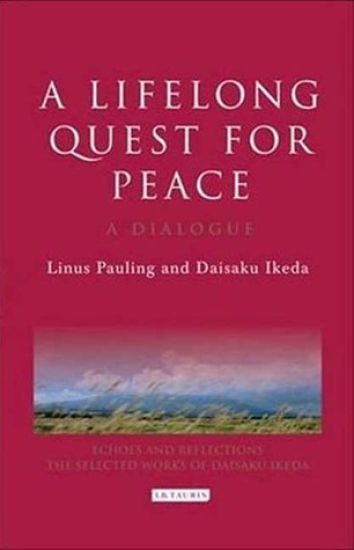
Linus Pauling is celebrated as one of the greatest scientific minds of the last century, whose decisive contributions to an astonishing diversity of fields - including organic and inorganic chemistry, quantum mechanics, molecular biology and medicine - still remain in many respects definitive. Pauling was additionally a tireless campaigner against the perils of nuclear conflict, and his contributions to both science and peace were recognized by the award to him of two separate Nobel Prizes. In this philosophically broad and sinewy book, he engages in complementary discussion with Daisaku Ikeda, President of Soka Gakkai - and another tireless champion for peace and dialogue.Showcasing the central ideas and fundamental values of two of the leading pacifist minds of recent times, "A Lifelong Quest for Peace" ranges over such perennially critical themes as ethics and technology, the appropriate use to which science should be put, the nature of morality and the human quest for progress, justice and equality. Both richly anecdotal and warmly engaging, the discussions offer fascinating insights into and recollections from the interlocutors' early lives and subsequent careers. Pauling and Ikeda thereby demonstrate through warm personal example the essential and lasting value of constructive conversation between people of different backgrounds and contrasting cultures.
The Living Buddha

The Living Buddha

Daisaku Ikeda

Middleway Press
2008
pokkari
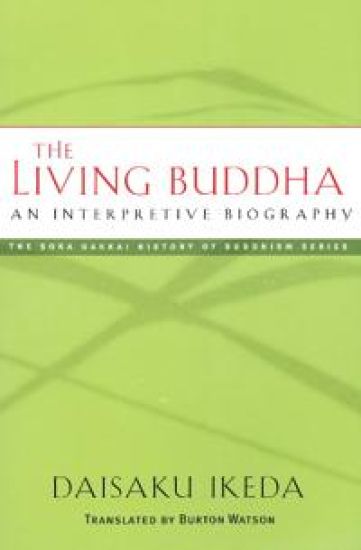
An intimate portrayal of one of history's most important and obscure figures, the Buddha, this chronicle reveals him not as a mystic, but a warm and engaged human being that was very much the product of his turbulent times. This biographical account traces the path of Siddhartha Gautama as he walked away from the pleasure palace that had been his home and joined a growing force of wandering monks, ultimately making his way towards enlightenment beneath the bodhi tree, and spending the next 45 years sharing his insights along the banks of the Ganges. The Buddhist canon is expertly harvested to provide insight into the Buddha's inner life and to grant a better understanding of how he came to play his pivotal role as founder of one of the world's largest religions.
A Dialogue Between East and West

A Dialogue Between East and West

Diez-Hochleitner Ricardo; Daisaku Ikeda

I.B. Tauris
2008
nidottu
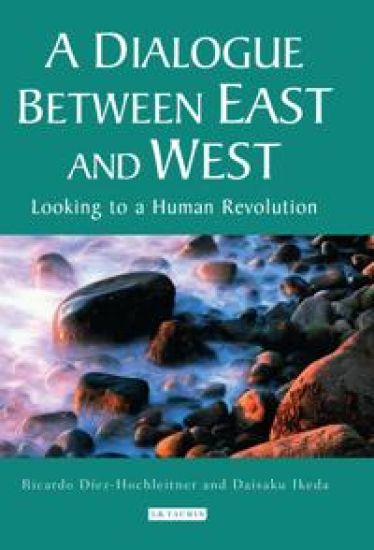
How far do cultures affect the future of the planet? Can the debate on the environment and global warming be influenced by the cultures of East and West understanding each other better? In this consistently provocative dialogue, two of the most influential thinkers of recent times propose that only a 'human revolution' - a shift in the hearts and minds of individuals - can stimulate a revolution in humanity's relationship with the planet. Such a planetary revolution first requires a transformation of moral and political leadership, and an orientation towards the future rather than a preoccupation with the short-termist policies of the present.Responding to humanity's ills from the Buddhist perspective, and with all the accumulated wisdom of the eastern philosophical tradition, Daisaku Ikeda calls for politicians to take as their mainstays a respect for the dignity of life and an eloquence to inspire in people a sense of community and courage. Correspondingly, renowned western economist and scholar of education Ricardo Diez-Hochleitner stresses the importance of proper educational planning and development in addressing the challenges posed by poverty, inequality and climate change. While acknowledging the scale of the task that lies ahead, both men offer an inspiring and hopeful vision for the future.
Dawn After Dark

Dawn After Dark

Daisaku Ikeda; Huyghe Rene

I.B. Tauris
2007
sidottu
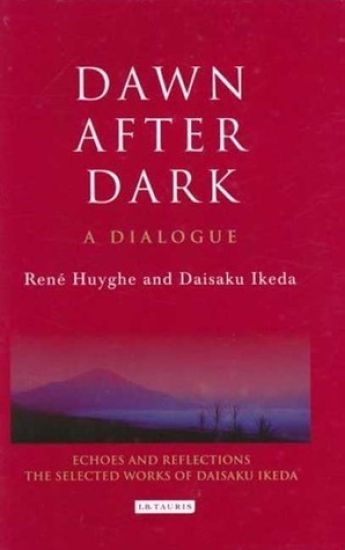
Since the earliest days of human history, and in all cultures, religion and art have always complemented one another. But the intellectual and spiritual dimension of this interaction has all too often been taken for granted and is never properly explored. Rarely has the dialogue between religion and art been better examined than in this book. In their profound and moving conversations, philosopher of aesthetics Rene Huyghe and Buddhist leader Daisaki Ikeda compare modes of thought from the opposite ends of the earth: from traditions, cultures and religions as different from each other as can be. Their guiding theme is the rediscovery of a common humanity through the artistic intuition and religious impulse shared by all peoples. The Dialogue ranges widely, analysing the contemporary predicament from twin perspectives of beauty and the divine. Huyghe and Ikeda look to active solutions to this predicament - at the key to harmony in life, and at the means of reforming our inner lives. Discussing artistic creativity, its spiritual value, and the differing arts of East and West, the interlocutors conclude by evaluating the crucial role played by religion in helping humanity come to terms with the mysteries and challenges of the unknown.
A Quest for Global Peace

A Quest for Global Peace

Joseph Rotblat; Daisaku Ikeda

I.B. Tauris
2007
sidottu
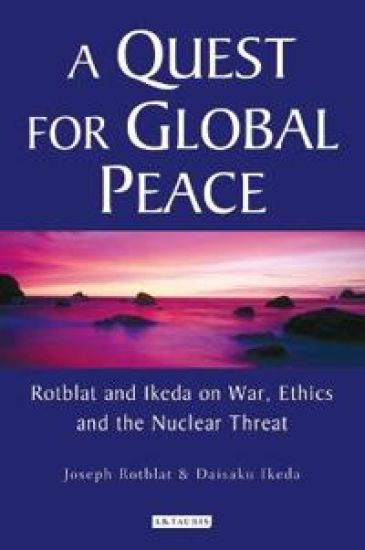
One of the 'inventors' of the nuclear bomb, Sir Joseph Rotblat very soon turned away from weapons research to make a prolonged and principled stand against the dangers of nuclear proliferation. A physicist of great brilliance, he metamorphosed into a campaigner of admired moral conviction and leadership. This series of dialogues between two leading ethical thinkers brings together the courage and humanity of Rotblat with the spiritual wisdom and global visionary outlook of Daisaku Ikeda, the leader of the world's largest and most influential lay Buddhist organisation. Together they reflect on fundamental issues of war and peace, the ethics of nuclear deterrence and the trajectory of Joseph Rotblat's career, from the Manhattan Project to the Pugwash Conference and his Nobel Prize. Rotblat's life-long mantra was that scientists have a moral responsibility to save lives, not destroy them. The integrity of both writers emerges powerfully and inspiringly from their wide-ranging discussions, which serve as a stark warning against the dangers of a resurgent atomic weapons race.
Ethical Visions of Education

Ethical Visions of Education

Daisaku Ikeda

Teachers' College Press
2007
sidottu
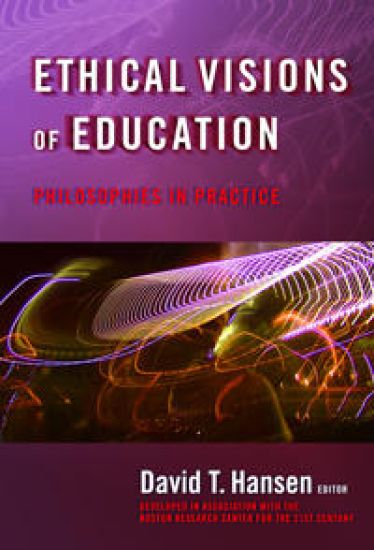
Putting good ideas into practice is one of the greatest challenges facing any educator. Eminent thinkers - John Dewey, Jane Addams, and others - dedicated their lives to producing ways of thinking about education and human welfare that have influenced many persons' lives. At the same time, these renowned thinkers were also trying to solve problems that every classroom teacher faces, namely, how to help children grow and learn as global citizens in a complex world. This pathbreaking book edited by David T. Hansen provides readers with a collection of insights drawn from a diverse array of thinkers that proves there is nothing quite as practical as a good educational philosophy. It will challenge readers to articulate their own working vision of how to integrate the ""big ideas"" about education into daily practice.
Courage

Courage

Daisaku Ikeda

Middleway Press
2006
sidottu
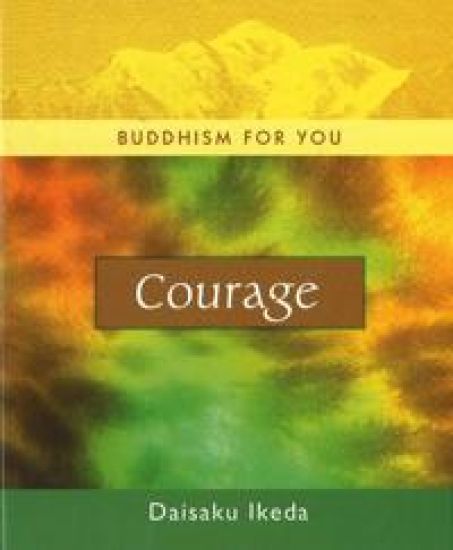
Based on the tenets of the Japanese monk Nichiren, these guides provide insight and advice on injecting Buddhist philosophies into one’s relationships and spirituality. Drawing on ancient themes of compassion and happiness, these compilations distill the essence of Buddhist scripture. These instructions for applying the readings to modern life will also teach about the many facets of love, determination, courage, and prayer. The concise, easy-to-follow entries are ideal for anyone looking to discover and cultivate a more spiritual life.
Buddhism Day by Day

Buddhism Day by Day

Daisaku Ikeda

Middleway Press
2006
pokkari
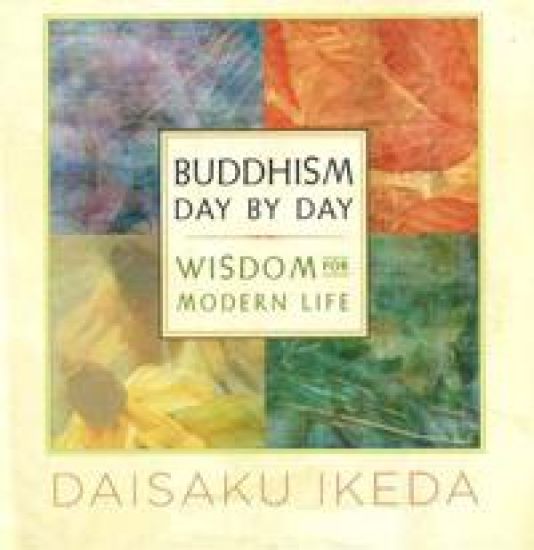
With brief, easily absorbed wisdom from the precepts of Nichiren, a 13th-century Buddhist priest, this collection of day-to-day musings can be enjoyed by casual readers and devoted followers alike. Covering a wide span of topics—from life and death to courage and winning—the practical information and encouragement are ideal for those seeking to find a deeper understanding of this ancient philosophy.
Determination

Determination

Daisaku Ikeda

Middleway Press
2006
sidottu
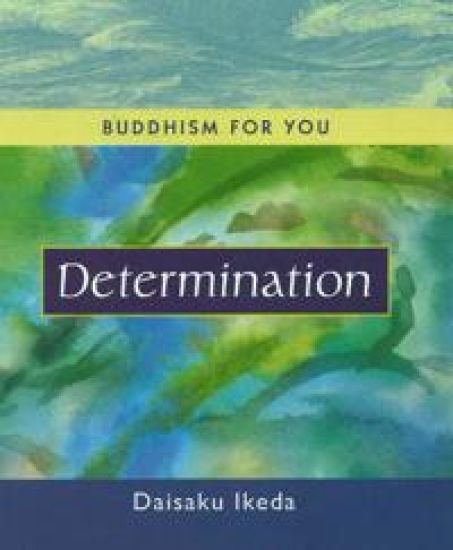
Based on the tenets of the Japanese monk Nichiren, these guides provide insight and advice on injecting Buddhist philosophies into one’s relationships and spirituality. Drawing on ancient themes of compassion and happiness, these compilations distill the essence of Buddhist scripture. These instructions for applying the readings to modern life will also teach about the many facets of love, determination, courage, and prayer. The concise, easy-to-follow entries are ideal for anyone looking to discover and cultivate a more spiritual life.
A Quest for Global Peace

A Quest for Global Peace

Rotblat Joseph; Daisaku Ikeda

I.B. Tauris
2006
nidottu
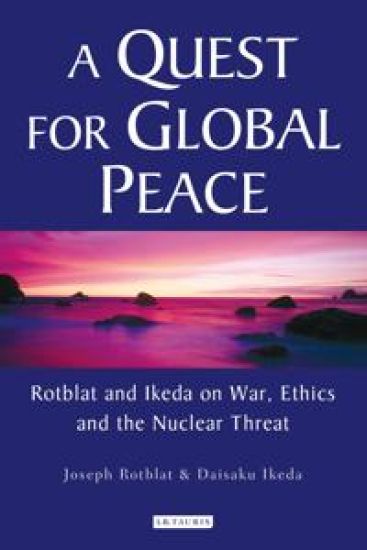
One of the 'inventors' of the nuclear bomb, Sir Joseph Rotblat very soon turned away from weapons research to make a prolonged and principled stand against the dangers of nuclear proliferation. A physicist of great brilliance, he metamorphosed into a campaigner of admired moral conviction and leadership. This series of dialogues between two leading ethical thinkers brings together the courage and humanity of Rotblat with the spiritual wisdom and global visionary outlook of Daisaku Ikeda, the leader of the world's largest and most influential lay Buddhist organisation. Together they reflect on fundamental issues of war and peace, the ethics of nuclear deterrence and the trajectory of Joseph Rotblat's career, from the Manhattan Project to the Pugwash Conference and his Nobel Prize. Rotblat's life-long mantra was that scientists have a moral responsibility to save lives, not destroy them. The integrity of both writers emerges powerfully and inspiringly from their wide-ranging discussions, which serve as a stark warning against the dangers of a resurgent atomic weapons race.