Kirjojen hintavertailu. Mukana 12 390 323 kirjaa ja 12 kauppaa.

Kirjailija

Dale Jacquette

Kirjat ja teokset yhdessä paikassa: 21 kirjaa, julkaisuja vuosilta 1996-2019, suosituimpien joukossa Ontology. Vertaile teosten hintoja ja tarkista saatavuus suomalaisista kirjakaupoista.

21 kirjaa

Kirjojen julkaisuhaarukka 1996-2019.

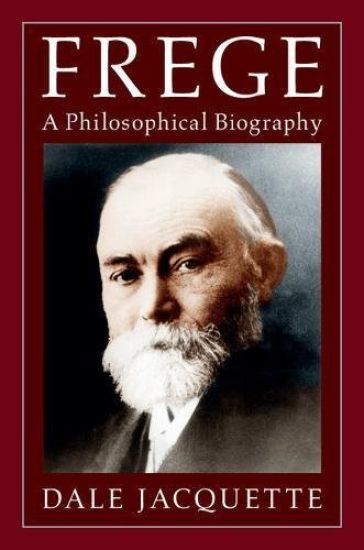
Frege

Frege

Dale Jacquette

Cambridge University Press
2019
sidottu
Gottlob Frege (1848–1925) is one of the founding figures of analytic philosophy, whose contributions to logic, philosophical semantics, philosophy of language, and philosophy of mathematics set the agenda for future generations of theorists in these and related areas. Dale Jacquette's lively and incisive biography charts Frege's life from its beginnings in small-town north Germany, through his student days in Jena, to his development as an enduringly influential thinker. Along the way Jacquette considers Frege's ground-breaking Begriffschrift (1879), in which he formulated his 'ideal logical language', his magisterial Grundgesetze der Arithmetik (1893 and 1903), and his complex relation to thinkers including Husserl and especially Russell, whose Paradox had such drastic implications for Frege's logicism. Jacquette concludes with a thoughtful assessment of Frege's legacy. His rich and informative biography will appeal to all who are interested in Frege's philosophy.

JOURNALISTIC ETHICS

JOURNALISTIC ETHICS

DALE JACQUETTE

TAYLORFRANCIS
2019
nidottu
Moral Responsibility in the Media. Journalistic Ethics Moral Responsibility in the Media examines the moral rights and responsibilities of journalists to provide what Dale Jacquette calls truth telling in the public interest. With 31 case studies from contemporary journalistic practice, the book demonstrates the immediate practical implications of ethics for working journalists as well as for those who read or watch the news. This case-study approach is paired with a theoretical grounding, and issues include freedom of the press, censorship and withholding sensitive information for the greater public
Journalistic Ethics

Journalistic Ethics

Dale Jacquette

Routledge
2017
sidottu
Journalistic Ethics: Moral Responsibility in the Media examines the moral rights and responsibilities of journalists to provide what Dale Jacquette calls "truth telling in the public interest." With 31 case studies from contemporary journalistic practice, the book demonstrates the immediate practical implications of ethics for working journalists as well as for those who read or watch the news. This case-study approach is paired with a theoretical grounding, and issues include freedom of the press, censorship and withholding sensitive information for the greater public good, protection of confidential sources, journalistic respect for privacy, objectivity, perspective and bias, and editorial license and its obligations. This is a book for anyone who now works in journalism, or is considering a career as a journalist. It is also important groundwork for everyone who follows the day's events in newspapers, radio, television, or on the internet.
Alexius Meinong, The Shepherd of Non-Being

Alexius Meinong, The Shepherd of Non-Being

Dale Jacquette

Springer International Publishing AG
2016
nidottu
This book explores the thought of Alexius Meinong, a philosopher known for his unconventional theory of reference and predication. The chapters cover a natural progression of topics, beginning with the origins of Gegenstandstheorie, Meinong’s theory of objects, and his discovery of assumptions as a fourth category of mental states to supplement his teacher Franz Brentano’s references to presentations, feelings, and judgments.The chapters explore further the meaning and metaphysics of fictional and other nonexistent intended objects, fine points in Meinongian object theory are considered and new and previously unanticipated problems are addressed. The author traces being and non-being and aspects of beingless objects including objects in fiction, ideal objects in scientific theory, objects ostensibly referred to in false science and false history and intentional imaginative projection of future states of affairs. The chapters focus on an essential choice of conceptual, logical, semantic, ontic and more generally metaphysical problems and an argument is progressively developed from the first to the final chapter, as key ideas are introduced and refined. Meinong studies have come a long way from Bertrand Russell’s off-target criticisms and recent times have seen a rise of interest in a Meinongian approach to logic and the theory of meaning. New thinkers see Meinong as a bridge figure between analytic and continental thought, thanks to the need for an adequate semantics of meaning in philosophy of language and philosophy of mind, making this book a particularly timely publication.?
Alexius Meinong, The Shepherd of Non-Being

Alexius Meinong, The Shepherd of Non-Being

Dale Jacquette

Springer International Publishing AG
2015
sidottu
This book explores the thought of Alexius Meinong, a philosopher known for his unconventional theory of reference and predication. The chapters cover a natural progression of topics, beginning with the origins of Gegenstandstheorie, Meinong’s theory of objects, and his discovery of assumptions as a fourth category of mental states to supplement his teacher Franz Brentano’s references to presentations, feelings, and judgments.The chapters explore further the meaning and metaphysics of fictional and other nonexistent intended objects, fine points in Meinongian object theory are considered and new and previously unanticipated problems are addressed. The author traces being and non-being and aspects of beingless objects including objects in fiction, ideal objects in scientific theory, objects ostensibly referred to in false science and false history and intentional imaginative projection of future states of affairs. The chapters focus on an essential choice of conceptual, logical, semantic, ontic and more generally metaphysical problems and an argument is progressively developed from the first to the final chapter, as key ideas are introduced and refined. Meinong studies have come a long way from Bertrand Russell’s off-target criticisms and recent times have seen a rise of interest in a Meinongian approach to logic and the theory of meaning. New thinkers see Meinong as a bridge figure between analytic and continental thought, thanks to the need for an adequate semantics of meaning in philosophy of language and philosophy of mind, making this book a particularly timely publication.?
Logic and How it Gets That Way

Logic and How it Gets That Way

Dale Jacquette

Acumen Publishing Ltd
2013
nidottu
In this challenging and provocative analysis, Dale Jacquette argues that contemporary philosophy labours under a number of historically inherited delusions about the nature of logic and the philosophical significance of certain formal properties of specific types of logical constructions. Exposing some of the key misconceptions about formal symbolic logic and its relation to thought, language and the world, Jacquette clears the ground of some very well-entrenched philosophical doctrines about the nature of logic, including some of the most fundamental seldom-questioned parts of elementary propositional and predicate-quantificational logic. Having presented difficulties for conventional ways of thinking about truth functionality, the metaphysics of reference and predication, the role of a concept of truth in a theory of meaning, among others, Jacquette proceeds to reshape the network of ideas about traditional logic that philosophy has acquired along with modern logic itself. In so doing Jacquette is able to offer a new perspective on a number of existing problems in logic and philosophy of logic.
The Philosophy of Mind

The Philosophy of Mind

Dale Jacquette

Continuum International Publishing Group Ltd.
2009
nidottu
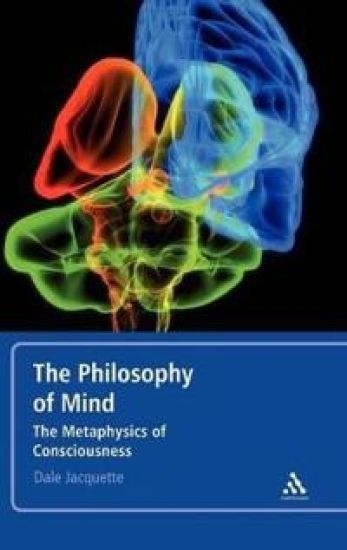
This work offers a clear and accessible introduction to the philosophy of mind, ideal for use on undergraduate courses. In "The Philosophy of Mind: The Metaphysics of Consciousness", Dale Jacquette provides students and professionals with a concise and accessible overview of this fascinating subject. The book covers all the key topics and debates in the philosophy of mind and introduces the full range of choices available in approaching the mind-body problem. Exploring classical and contemporary texts, the book surveys the subject's historical background and current applications. Crucially, Jacquette offers a defence of property dualism as an alternative solution to the mind-body problem, instead of the mainstream eliminativist and reductivist strategies.Clearly structured and featuring useful diagrams, study questions and advice on further reading, the book is ideal for classroom use. Fully revised, updated and expanded to meet the needs of a new generation of philosophy students, this second edition is the ideal companion to the study of the philosophy of mind.
The Philosophy of Mind

The Philosophy of Mind

Dale Jacquette

Continuum International Publishing Group Ltd.
2009
sidottu
In Philosophy of Mind: The Metaphysics of Consciousness, Dale Jacquette provides students and professionals with a concise and accessible overview of this fascinating subject. The book covers all the key topics and debates in the philosophy of mind and introduces the full range of choices available in approaching the mind-body problem. Exploring classical and contemporary texts, the book surveys the subject's historical background and current applications. Crucially, Jacquette offers a defence of property dualism as an alternative solution to the mind-body problem, instead of the mainstream eliminativist and reductivist strategies. Clearly structured and featuring useful diagrams, a glossary of key terms, and advice on further reading, the book is ideal for classroom use. Fully revised, updated and expanded to meet the needs of a new generation of philosophy students, this second edition is the ideal companion to the study of the philosophy of mind.
Dialogues on the Ethics of Capital Punishment

Dialogues on the Ethics of Capital Punishment

Dale Jacquette

Rowman Littlefield Publishers
2009
nidottu
One in the series New Dialogues in Philosophy, edited by the author himself, Dale Jacquette presents a fictional dialogue over a three-day period on the ethical complexities of capital punishment. Jacquette moves his readers from outlining basic issues in matters of life and death, to questions of justice and compassion, with a concluding dialogue on the conditional and unconditional right to life. Jacquette's characters talk plainly and thoughtfully about the death penalty, and readers are left to determine for themselves how best to think about the morality of putting people to death.
Logic and How it Gets That Way

Logic and How it Gets That Way

Dale Jacquette

Acumen Publishing Ltd
2008
sidottu
In this challenging and provocative analysis, Dale Jacquette argues that contemporary philosophy labours under a number of historically inherited delusions about the nature of logic and the philosophical significance of certain formal properties of specific types of logical constructions. Exposing some of the key misconceptions about formal symbolic logic and its relation to thought, language and the world, Jacquette clears the ground of some very well-entrenched philosophical doctrines about the nature of logic, including some of the most fundamental seldom-questioned parts of elementary propositional and predicate-quantificational logic. Having presented difficulties for conventional ways of thinking about truth functionality, the metaphysics of reference and predication, the role of a concept of truth in a theory of meaning, among others, Jacquette proceeds to reshape the network of ideas about traditional logic that philosophy has acquired along with modern logic itself. In so doing Jacquette is able to offer a new perspective on a number of existing problems in logic and philosophy of logic.
Dialogues on the Ethics of Capital Punishment

Dialogues on the Ethics of Capital Punishment

Dale Jacquette

Rowman Littlefield Publishers
2008
sidottu
One in the series New Dialogues in Philosophy, edited by the author himself, Dale Jacquette presents a fictional dialogue over a three-day period on the ethical complexities of capital punishment. Jacquette moves his readers from outlining basic issues in matters of life and death, to questions of justice and compassion, with a concluding dialogue on the conditional and unconditional right to life. Jacquette's characters talk plainly and thoughtfully about the death penalty, and readers are left to determine for themselves how best to think about the morality of putting people to death.
The Philosophy of Schopenhauer

The Philosophy of Schopenhauer

Dale Jacquette

Acumen Publishing Ltd
2005
nidottu
Dale Jacquette charts the development of Schopenhauer's ideas from the time of his early dissertation on The Fourfold Root of the Principle of Sufficient Reason through the two editions of his magnum opus The World as Will and Representation to his later collections of philosophical aphorisms and competition essays. Jacquette explores the central topics in Schopenhauer's philosophy including his metaphysics of the world as representation and Will, his so-called pessimistic philosophical appraisal of the human condition, his examination of the concept of death, his dualistic analysis of free will, and his simplified non-Kantian theory of morality. Jacquette shows how these many complex themes fit together in a unified portrait of Schopenhauer's philosophy. The synthesis of Plato, Kant and Buddhist and Hindu ideas is given particular attention as is his influence on Nietzsche, first a follower and then arch opponent of Schopenhauer's thought, and the early Wittgenstein. The book provides a comprehensive and in-depth historical and philosophical introduction to Schopenhauer's distinctive contribution to philosophy.
The Philosophy of Schopenhauer

The Philosophy of Schopenhauer

Dale Jacquette

Acumen Publishing Ltd
2005
sidottu
Dale Jacquette charts the development of Schopenhauer's ideas from the time of his early dissertation on The Fourfold Root of the Principle of Sufficient Reason through the two editions of his magnum opus The World as Will and Representation to his later collections of philosophical aphorisms and competition essays. Jacquette explores the central topics in Schopenhauer's philosophy including his metaphysics of the world as representation and Will, his so-called pessimistic philosophical appraisal of the human condition, his examination of the concept of death, his dualistic analysis of free will, and his simplified non-Kantian theory of morality. Jacquette shows how these many complex themes fit together in a unified portrait of Schopenhauer's philosophy. The synthesis of Plato, Kant and Buddhist and Hindu ideas is given particular attention as is his influence on Nietzsche, first a follower and then arch opponent of Schopenhauer's thought, and the early Wittgenstein. The book provides a comprehensive and in-depth historical and philosophical introduction to Schopenhauer's distinctive contribution to philosophy.
Pathways in Philosophy

Pathways in Philosophy

Dale Jacquette

Oxford University Press Inc
2003
nidottu
This introduction to philosophy combines the two approaches most commonly employed to teach philosophy to college freshmen - the problems approach and the historical approach. It includes chapters on the major problems or questions in philosophy - what we can know, what exists, the mind-body problem, the existence of God, what is moral, etc. - and it addresses these problems by focusing each chapter on a particular text by a major philosopher.
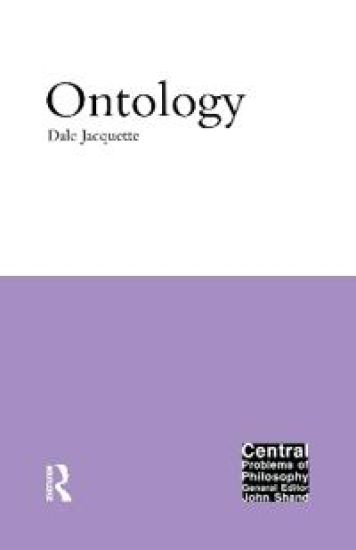
Ontology

Ontology

Dale Jacquette

McGill-Queen's University Press
2002
nidottu
In the first part of the book, Dale Jacquette explores questions of pure philosophical ontology: what is meant by the concept of being, why does something exist rather than nothing, and why there is only one logically contingent actual world. The author argues that logic provides the only possible answers to these fundamental problems of pure ontology. In the second part of the book Jacquette examines issues of applied scientific ontology and provides a critical survey of some of the most influential traditional ontologies, such as the distinction between appearance and reality and the categories of substance and transcendence. The ontology of physical entities - space, time, matter, and causation - are examined as well as the ontology of abstract entities - sets, numbers, properties, relations, and propositions. The special problems posed by the subjectivity of mind and of God are also explored. The book concludes with a chapter on the ontology of culture, language, and art.
Ontology

Ontology

Dale Jacquette

Acumen Publishing Ltd
2002
nidottu
The philosophical study of what exists and what it means for something to exist is one of the core concerns of metaphysics. This introduction to ontology provides readers with a comprehensive account of the central ideas of the subject of being. This book is divided into two parts. The first part explores questions of pure philosophical ontology: what is meant by the concept of being, why there exists something rather than nothing, and why there is only one logically contingent actual world. Dale Jacquette shows how logic provides the only possible answers to these fundamental problems. The second part of this book examines issues of applied scientific ontology. Jacquette offers a critical survey of some of the most influential traditional ontologies, such as the distinction between appearance and reality, and the categories of substance and transcendence. The ontology of physical entities - space, time, matter and causation - is examined as well as the ontology of abstract entities such as sets, numbers, properties, relations and propositions. The special problems posed by the subjectivity of mind and of postulating a god are also explored in detail. The final chapter examines the ontology of culture, language and art.
Ontology

Ontology

Dale Jacquette

Acumen Publishing Ltd
2002
sidottu
The philosophical study of what exists and what it means for something to exist is one of the core concerns of metaphysics. This introduction to ontology provides readers with a comprehensive account of the central ideas of the subject of being. This book is divided into two parts. The first part explores questions of pure philosophical ontology: what is meant by the concept of being, why there exists something rather than nothing, and why there is only one logically contingent actual world. Dale Jacquette shows how logic provides the only possible answers to these fundamental problems. The second part of the book examines issues of applied scientific ontology. Jacquette offers a critical survey of some of the most influential traditional ontologies, such as the distinction between appearance and reality, and the categories of substance and transcendence. The ontology of physical entities - space, time, matter and causation - is examined as well as the ontology of abstract entities such as sets, numbers, properties, relations and propositions. The special problems posed by the subjectivity of mind and of postulating a god are also explored in detail. The final chapter examines the ontology of culture, language and art.
The School of Alexius Meinong

The School of Alexius Meinong

Liliana Albertazzi; Dale Jacquette

Ashgate Publishing Limited
2001
sidottu
This book presents an historical and conceptual reconstruction of the theories developed by Meinong and a group of philosophers and experimental psychologists in Graz at the turn of the 19th century. Adhering closely to original texts, the contributors explore Meinong's roots in the school of Brentano, complex theories such as the theory of intentional reference and direct reference, and ways of developing philosophy which are closely bound up with the sciences, particularly psychology. Providing a faithful reconstruction of both Meinong's contributions to science and the school that arose from his thought, this book shows how the theories of the Graz school raise the possibility of engaging in the scientific metaphysics and ontology that for so long have been considered off limits.
Wittgenstein's Thought in Transition

Wittgenstein's Thought in Transition

Dale Jacquette

Purdue University Press
1997
sidottu
Ludwig Wittgenstein (1889-1951) inspired two major philosophical revolutions. The ideas presented in his Tractus Logico-Philosophicus are standardly contrasted with those in his later Blue and Brown Books and Philosophical Investigations. Yet scant attention has been paid to why Wittgenstein later rejected his early ideas and proposed a radically different view.Wittgenstein's Thought in Transition offers a detailed exposition of Wittgenstein's philosophy as a continuous engagement with a single set of problems. Dale Jacquette argues that the key to understanding the transition in Wittgenstein's thought is his 1929 essay "Some Remarks on Logical Form," which is reprinted in this book. Wittgenstein disowned the essay, then came to see its failure as refuting his early theory altogether and began to investigate the requirements of meaning with a new method that resulted in the characteristic innovations of his later period. A comprehensive account of Wittgenstein's early philosophy sets the stage for the first systematic commentary on the 1929 essay to appear in the extensive literature on Wittgenstein. The main themes of Wittgenstein's later work are then presented against the background of his rejection of the early theory. The book concludes with a critical assessment of Wittgenstein's legacy as among the most important contributions to contemporary philosophy.