
Kirjailija
Dale W. Jones
Kirjat ja teokset yhdessä paikassa: 5 kirjaa, julkaisuja vuosilta 2017-2021, suosituimpien joukossa The Great Northern Railway in Marias Pass. Vertaile teosten hintoja ja tarkista saatavuus suomalaisista kirjakaupoista.
Mukana myös kirjoitusasut: Dale W Jones
5 kirjaa
Kirjojen julkaisuhaarukka 2017-2021.

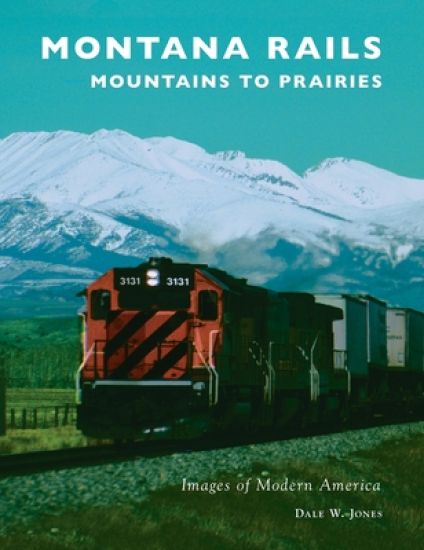
For nearly 150 years, railroads have been transforming the Montana landscape, from Continental Divide peaks to windswept prairies. Steel rails arrived on May 9, 1880, when the narrow-gauge Utah & Northern reached Monida Pass south of Butte. At the zenith of rail line construction during the 1890s and early 20th century, all major transcontinental railroads crisscrossed Montana: the Union Pacific; Northern Pacific; Chicago, Burlington & Quincy (CB&Q); Great Northern; Chicago, Milwaukee & St. Paul (Milwaukee Road); and Soo Line. Through the years, many original railroads evolved into the Burlington Northern Railroad, Burlington Northern Santa Fe (BNSF), and Montana Rail Link with unique short lines along the way. Though routes and operations have changed, the scenery of Big Sky Country remains the same. Take a journey across Montana rails, from the mountains to the prairies.

The last half of the 19th century was typified by tycoons and shrewd railroad barons. A key figure in the development of the Spokane International Railway was James Jerome Hill, or simply Jim Hill. Spokane businessmen regarded Hill as a tyrant and considered his Great Northern and Northern Pacific railroads unwelcome monopolies in Northeast Washington and the Idaho Panhandle. In 1905, Daniel Chase D.C. Corbin broke the Hill lines' stronghold by forming the Spokane International Railway as a 140-mile rail line from Spokane, Washington, to Eastport, Idaho, to interchange traffic from the Canadian border to the Pacific. Today, the route continues to be profitable under Union Pacific Railroad ownership with commodities shipped to Western markets via the Canadian Pacific Railway. This book shares the story of the Spokane International Railway and traces its international and local connections with every major railroad in the Pacific Northwest.
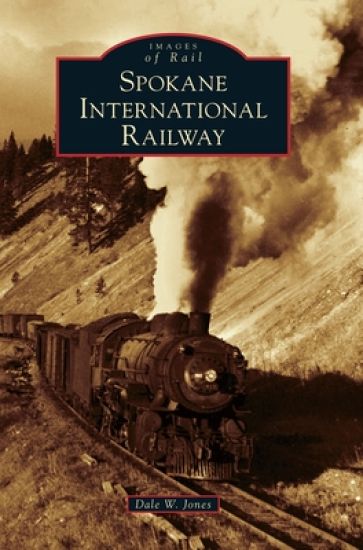
The last half of the 19th century was typified by tycoons and shrewd railroad barons. A key figure in the development of the Spokane International Railway was James Jerome Hill, or simply Jim Hill. Spokane businessmen regarded Hill as a tyrant and considered his Great Northern and Northern Pacific railroads unwelcome monopolies in Northeast Washington and the Idaho Panhandle. In 1905, Daniel Chase "D.C." Corbin broke the Hill lines' stronghold by forming the Spokane International Railway as a 140-mile rail line from Spokane, Washington, to Eastport, Idaho, to interchange traffic from the Canadian border to the Pacific. Today, the route continues to be profitable under Union Pacific Railroad ownership with commodities shipped to Western markets via the Canadian Pacific Railway. This book shares the story of the Spokane International Railway and traces its international and local connections with every major railroad in the Pacific Northwest.

Montana's Marias Pass is the lowest rail crossing through the Rocky Mountains. The tracks snake through narrow canyons, traverse the swift Middle Fork of the Flathead River, and twist through numerous snowsheds and tunnels to crest the 5,213-foot Continental Divide. James Jerome Hill was the driving force behind Great Northern Railway's mission to find the most economical route to the Pacific coast, with surveyor John F. Stevens taking a major role in locating the pass. Browning is the eastern gateway into Marias Pass as the railroad approaches the Rocky Mountain Front; continuing west from Summit, the tracks parallel Bear Creek and the Middle Fork of the Flathead River downgrade through Essex to Glacier National Park and into the Flathead Valley.