Kirjojen hintavertailu. Mukana 12 390 323 kirjaa ja 12 kauppaa.

Kirjailija

Damien Freeman

Kirjat ja teokset yhdessä paikassa: 10 kirjaa, julkaisuja vuosilta 2011-2024, suosituimpien joukossa Art's Emotions. Vertaile teosten hintoja ja tarkista saatavuus suomalaisista kirjakaupoista.

10 kirjaa

Kirjojen julkaisuhaarukka 2011-2024.

The End of Settlement

The End of Settlement

Damien Freeman

Connor Court Publishing Pty Ltd
2024
pokkari
Has Australia reached the end of settlement?Reflecting on his pivotal role in the development of a proposal to recognise Australia's Indigenous peoples in the Constitution, Damien Freeman explains how something that started off as an exercise in settlement politics ended in a failed referendum.From Alfred Deakin's development of the Australian Settlement to Bob Hawke and Paul Keating's dismantling of it with John Howard's support, the capacity to reach consensus despite enduring disagreements has been an important feature of Australian politics.Freeman draws on Paul Kelly's The End of Certainty, Roger Scruton's Our Church, and John Howard's A Sense of Balance to develop an account of the settlement politics that has been such a fundamental feature of Australian political history.In an era of diminishing trust and increasing polarisation, it seems that settlement politics may no longer be possible, instead giving way to populism and identity politics.The End of Settlement poses some challenging yet vital questions about the direction in which we want Australian politics to travel in the aftermath of the 2023 referendum.Damien Freeman is a writer, lawyer, and philosopher who was appointed a member of the University of NSW's John Howard Prime Ministerial Library advisory board in 2022, an honorary fellow of Australian Catholic University in 2023, and a research fellow of Catholic Schools NSW's Kathleen Burrow Research Institute and a fellow of the Robert Menzies Institute at the University of Melbourne in 2024.
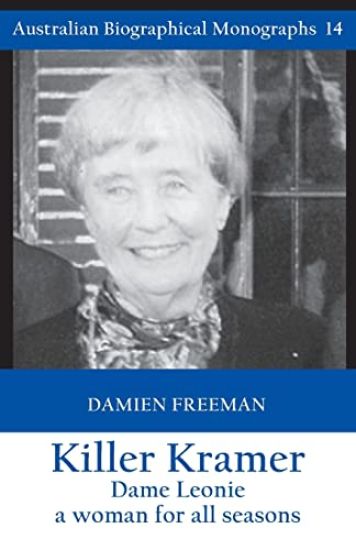
Killer Kramer, Dame Leonie

Killer Kramer, Dame Leonie

Damien Freeman

Connor Court Publishing Pty Ltd
2022
pokkari
This is the first biography of Dame Leonie Kramer, who held the Chair of Australian Literature at the University of Sydney from 1968 to 1989 and was dubbed 'Killer Kramer' by Nobel laureate and nemesis, Patrick White.Dame Leonie was the first woman to be a professor at Sydney University and the first to serve as its chancellor and as the ABC's chairman.She exerted a formidable influence in Australia's cultural, intellectual, and public life for over half a century, during which time she liked to think of herself as a radical conservative.Damien Freeman is the principal policy advisor at the PM Glynn Institute, Australian Catholic University, and General Editor of the Kapunda Press. His books include Roddy's Folly: R. P. Meagher QC - art lover and lawyer and Abbott's Right: the conservative tradition from Menzies to Abbott.
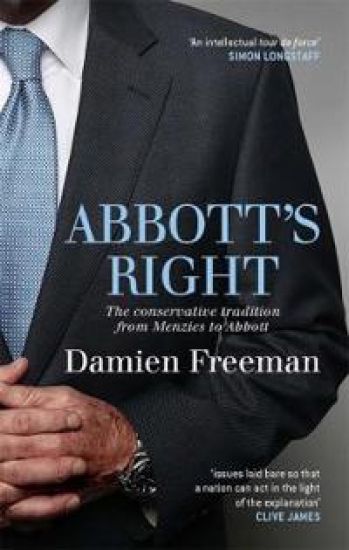
Abbott's Right

Abbott's Right

Damien Freeman

Melbourne University Press
2017
pokkari
Tony Abbott may have been a Rhodes Scholar, but some commentators are convinced that he offered nothing more than three-word slogans. Abbott's Right challenges this perception, and presents Abbott as someone who rejoices in the political battle of ideas. It looks at how the contemporary conservative voice that Abbott champions was fashioned by Sir Robert Menzies, Malcolm Fraser and John Howard, and reflects on what it means to be conservative in modern Australia. It argues that the Liberal Party should return to its conservative roots as a centre-right party and signals how, as such, it might address the public policy challenges in the years ahead. Tony Abbott responds to Freeman's analysis in an afterword, and sets it in the context of the questions that Donald Trump's ascendancy poses for conservatives and Labor alike.
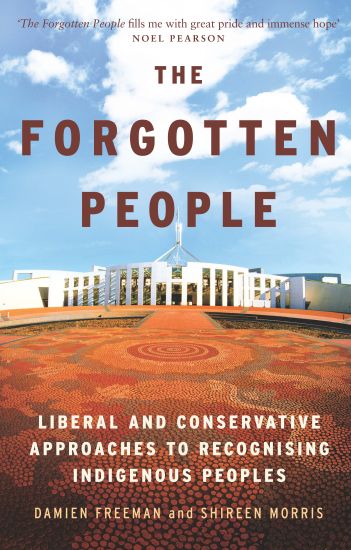
The Forgotten People

The Forgotten People

Damien Freeman; Shireen Morris

Melbourne University Press
2016
nidottu
It is easy to assume that constitutional recognition of indigenous Australians is a project of the left in Australia, and something that the right staunchly opposes. This collection challenges that assumption. It frames indigenous constitutional recognition in the context of conservative and liberal philosophical thought, and demonstrates that there may indeed be a set of reforms for constitutional recognition that can achieve the symbolic and substantive change sought by indigenous leaders, while at the same time addressing the critical concerns of constitutional conservatives and classical liberals. More than that, this collection demonstrates the genuine goodwill that many Australians share for the cause of indigenous recognition that is both practically useful and symbolically powerful. Prestigious Australian leaders and thinkers from diverse fields, including defence, business, journalism, law and religion, share their thoughts on what recognition means to them and how it might be achieved.
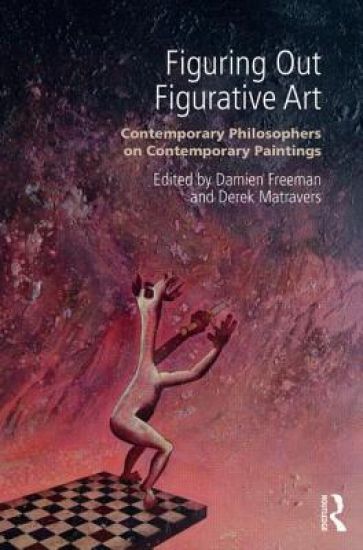
Figuring Out Figurative Art

Figuring Out Figurative Art

Derek Matravers; Damien Freeman

Acumen Publishing Ltd
2014
nidottu
In 1797 Friedrich Schlegel wrote that "philosophy of art usually lacks one of two things: either the philosophy, or the art." This collection of essays contains both the philosophy and the art. It brings together an international team of leading philosophers to address diverse philosophical issues raised by recent works of art. Each essay engages with a specific artwork and explores the connection between the image and the philosophical content. Thirteen contemporary philosophers demonstrate how philosophy can aid interpretation of the work of ten contemporary artists, including: Jesse Prinz on John CurrinBarry C. Smith and Edward Winters on Dexter DalwoodLydia Goehr and Sam Rose on Tom de FrestonRaymond Geuss on Adrian Ghenie and Chantal JoffeHallvard Lillehammer on Paul NobleM. M. McCabe and Alexis Papazoglou on Ged QuinnNoël Carroll on Paula RegoSimon Blackburn and Jerrold Levinson on George ShawSondra Bacharach on Yue Minjun.The discussion ranges over ethical, political, psychological and religious concepts, such as irony, disgust, apathy, inequality, physiognomy and wonder, to historical experiences of war, Marx-inspired political movements and Thatcherism, and standard problems in the philosophy of art, such as expression, style, depiction and ontology of art, as well as major topics in art history, such as vanitas painting, photography, pornography, and Dadaism. Many of the contributors are distinguished in areas of philosophy other than aesthetics and are writing about art for the first time. All show how productive the engagement can be between philosophy, more generally, and art.
Figuring Out Figurative Art

Figuring Out Figurative Art

Derek Matravers; Damien Freeman

Acumen Publishing Ltd
2014
sidottu
In 1797 Friedrich Schlegel wrote that "philosophy of art usually lacks one of two things: either the philosophy, or the art." This collection of essays contains both the philosophy and the art. It brings together an international team of leading philosophers to address diverse philosophical issues raised by recent works of art. Each essay engages with a specific artwork and explores the connection between the image and the philosophical content. Thirteen contemporary philosophers demonstrate how philosophy can aid interpretation of the work of ten contemporary artists, including: Jesse Prinz on John CurrinBarry C. Smith and Edward Winters on Dexter DalwoodLydia Goehr and Sam Rose on Tom de FrestonRaymond Geuss on Adrian Ghenie and Chantal JoffeHallvard Lillehammer on Paul NobleM. M. McCabe and Alexis Papazoglou on Ged QuinnNoël Carroll on Paula RegoSimon Blackburn and Jerrold Levinson on George ShawSondra Bacharach on Yue Minjun.The discussion ranges over ethical, political, psychological and religious concepts, such as irony, disgust, apathy, inequality, physiognomy and wonder, to historical experiences of war, Marx-inspired political movements and Thatcherism, and standard problems in the philosophy of art, such as expression, style, depiction and ontology of art, as well as major topics in art history, such as vanitas painting, photography, pornography, and Dadaism. Many of the contributors are distinguished in areas of philosophy other than aesthetics and are writing about art for the first time. All show how productive the engagement can be between philosophy, more generally, and art.
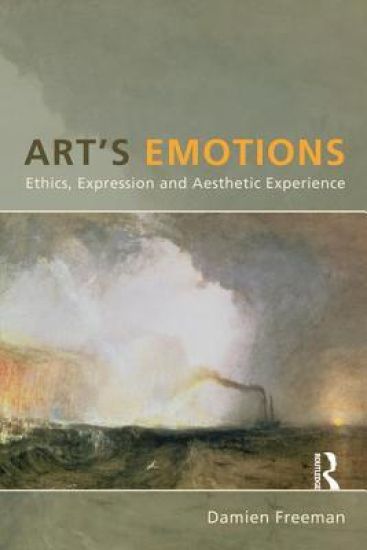
Art's Emotions

Art's Emotions

Damien Freeman

Acumen Publishing Ltd
2011
sidottu
Despite the very obvious differences between looking at Manet’s Woman with a Parrot and listening to Elgar’s Cello Concerto, both experiences provoke similar questions in the thoughtful aesthete: why does the painting seem to express reverie and the music, nostalgia? How do we experience the reverie and nostalgia in such works of art? Why do we find these experiences rewarding in similar ways? As our awareness of emotion in art, and our engagement with art’s emotions, can make such a special contribution to our life, it is timely for a philosopher to seek to account for the nature and significance of the experience of art’s emotions. Damien Freeman develops a new theory of emotion that is suitable for resolving key questions in aesthetics. He then reviews and evaluates three existing approaches to artistic expression, and proposes a new approach to the emotional experience of art that draws on the strengths of the existing approaches. Finally, he seeks to establish the ethical significance of this emotional experience of art for human flourishing. Freeman challenges the reader not only to consider how art engages with emotion, but how we should connect up our answers to questions concerning the nature and value of the experiences offered by works of art.
Art's Emotions

Art's Emotions

Damien Freeman

Acumen Publishing Ltd
2011
nidottu
Despite the very obvious differences between looking at Manet’s Woman with a Parrot and listening to Elgar’s Cello Concerto, both experiences provoke similar questions in the thoughtful aesthete: why does the painting seem to express reverie and the music, nostalgia? How do we experience the reverie and nostalgia in such works of art? Why do we find these experiences rewarding in similar ways? As our awareness of emotion in art, and our engagement with art’s emotions, can make such a special contribution to our life, it is timely for a philosopher to seek to account for the nature and significance of the experience of art’s emotions. Damien Freeman develops a new theory of emotion that is suitable for resolving key questions in aesthetics. He then reviews and evaluates three existing approaches to artistic expression, and proposes a new approach to the emotional experience of art that draws on the strengths of the existing approaches. Finally, he seeks to establish the ethical significance of this emotional experience of art for human flourishing. Freeman challenges the reader not only to consider how art engages with emotion, but how we should connect up our answers to questions concerning the nature and value of the experiences offered by works of art.