Kirjojen hintavertailu. Mukana 12 333 234 kirjaa ja 12 kauppaa.

Kirjailija

Damion Searls

Kirjat ja teokset yhdessä paikassa: 15 kirjaa, julkaisuja vuosilta 2009-2026, suosituimpien joukossa Inkblots. Vertaile teosten hintoja ja tarkista saatavuus suomalaisista kirjakaupoista.

15 kirjaa

Kirjojen julkaisuhaarukka 2009-2026.
Inkblots

Inkblots

Damion Searls

SimonSchuster Ltd
2026
pokkari
The captivating, untold story of Hermann Rorschach and his famous inkblot test, which has shaped our view of human personality and become a fixture in popular culture.
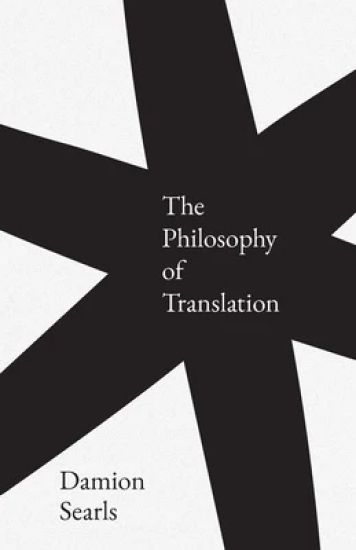
The Philosophy of Translation

The Philosophy of Translation

Damion Searls

YALE UNIVERSITY PRESS
2026
nidottu
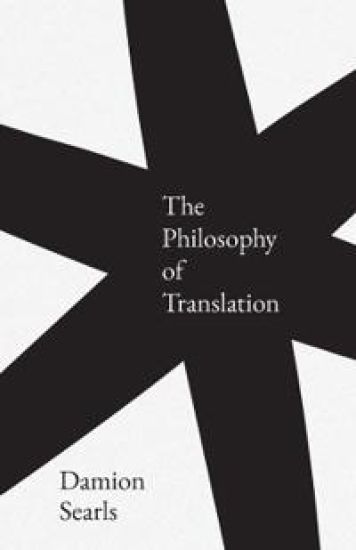
A deep dive into the nature of translation from one of its most acclaimed practitioners "Searls's philosophy is ultimately one of freedom--to move beyond mere equivalence, to translate how a text communicates rather than simply what it says."--Max Norman, New Yorker Avoiding theoretical debates and clich d metaphors, award-winning translator Damion Searls has written a fresh, approachable, and convincing account of what translation really is and what translators actually do. As the translator of sixty books from multiple languages, Searls has spent decades grappling with words on the most granular level: nouns and verbs, accents on people's names, rhymes, rhythm, "untranslatable" cultural nuances. Here, he connects a wealth of specific examples to larger philosophical issues of reading and perception. Translation, he argues, is fundamentally a way of reading--but reading is much more than taking in information, and translating is far from a mechanical process of converting one word to another. This sharp and inviting exploration of the theory and practice of translation is for anyone who has ever marveled at the beauty, force, and movement of language.
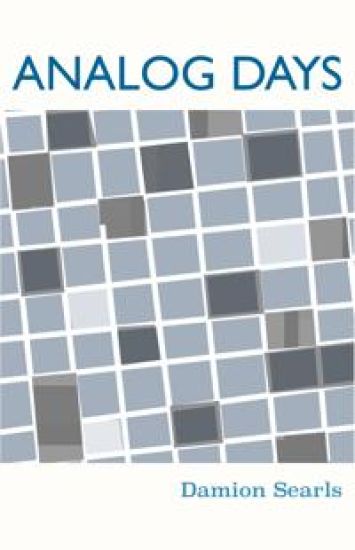
Analog Days

Analog Days

Damion Searls

Coffee House Press
2025
pokkari
Acclaimed translator Damion Searls's exuberant debut novella navigates the bittersweet tug-of-war between nostalgia and living life meaningfully in a world buzzing with constant connection and information overload.Analog Days is a snapshot of a circle of friends living through the sorrows and joys of a particular inflection point in history. Amid the ever-present news cycles, watching the world shift around them, they fall back on film and friendship and art as the last bastions of meaning in their fragmented lives. Moving from coffee shops to bars, from New York City to San Francisco, Analog Days immerses us in the individual lives set adrift among the pivotal events of our recent history.
The Philosophy of Translation

The Philosophy of Translation

Damion Searls

YALE UNIVERSITY PRESS
2025
sidottu
A deep dive into the nature of translation from one of its most acclaimed practitioners “Searls’s philosophy is ultimately one of freedom—to move beyond mere equivalence, to translate how a text communicates rather than simply what it says.”—Max Norman, New Yorker Avoiding theoretical debates and clichéd metaphors, award-winning translator Damion Searls has written a fresh, approachable, and convincing account of what translation really is and what translators actually do. As the translator of sixty books from multiple languages, Searls has spent decades grappling with words on the most granular level: nouns and verbs, accents on people’s names, rhymes, rhythm, “untranslatable” cultural nuances. Here, he connects a wealth of specific examples to larger philosophical issues of reading and perception. Translation, he argues, is fundamentally a way of reading—but reading is much more than taking in information, and translating is far from a mechanical process of converting one word to another. This sharp and inviting exploration of the theory and practice of translation is for anyone who has ever marveled at the beauty, force, and movement of language.
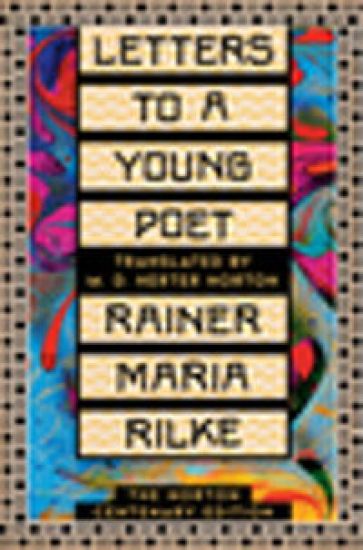
Letters to a Young Poet

Letters to a Young Poet

Rainer Maria Rilke; Julia Reidhead; Damion Searls

WW NORTON CO
2023
sidottu
These letters from the poet and mystic Rainer Maria Rilke to a nineteen-year-old cadet and aspiring poet have inspired millions of readers since they were first published in English in 1934. The first and most popular translator of this work was Mary Dows Herter Norton—a polymath extraordinaire who played a crucial role in elevating Rilke’s global reputation. The Norton Centenary Edition commemorates this extraordinary woman, known as “Polly” to friends and colleagues, and celebrates the 100th anniversary of the publishing company she co-founded. With a foreword by Damion Searls and an afterword by Norton’s current president, Julia Reidhead, this handsome new edition brings Rilke’s enduring wisdom about life, love and art to a new generation.
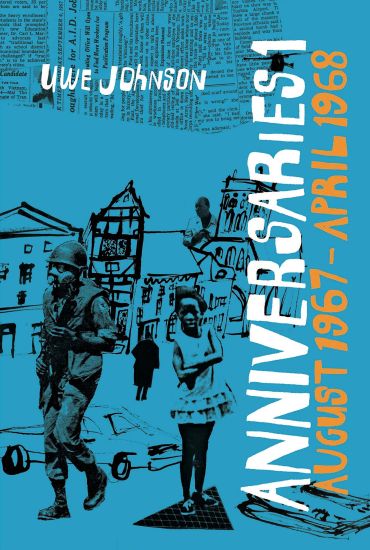
Anniversaries, Volume 1

Anniversaries, Volume 1

Uwe Johnson; Damion Searls

NYRB Classics
2021
nidottu
The first volume of a titanic masterpiece of twentieth-century literature, named one of the best books of 2019 by The New York Times critics. It is August 1967, and Gesine Cresspahl, born in Germany the year that Hitler came to power, a survivor of war, of Soviet occupation, and of East German Communism, has been living with her ten-year-old daughter, Marie, in New York City for six years. Mother and daughter find themselves caught up in the countless stories of the world around them: stories of work and school and their neighborhood, with its shifting and varied cast of characters, as well as the stories that Gesine reads in The New York Times every day--about Che Guevara, racial violence, the war in Vietnam, and the US elections to come. Now, with Marie growing up, Gesine has decided to tell her daughter the story of her own childhood in a small north German town in the 1930s and 1940s. Amidst memories of Germany's criminal and disastrous past and the daily barrage of news from a world in disarray, Gesine, conscientious, self-scrutinizing, with a sharp sense of humor, struggles to describe what she has learned over the years and what she hopes to pass on to Marie. Marie, articulate, quizzical, with a perspective that is very much her own, has plenty of questions too. Uwe Johnson's intimate portrait of a mother and daughter is also a panorama of past and present history and the world at large. Comparable in richness of invention and depth of feeling to Joyce's Ulysses and Proust's In Search of Lost Time, Anniversaries is one of the world's great novels.
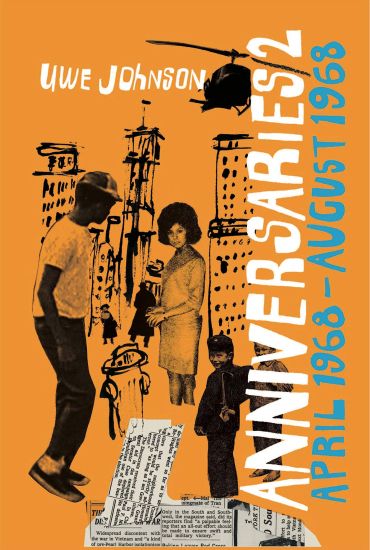
Anniversaries, Volume 2

Anniversaries, Volume 2

Uwe Johnson; Damion Searls

NYRB Classics
2021
nidottu
The second volume of a titanic masterpiece of twentieth-century literature, named one of the best books of 2019 by The New York Times critics. Beginning in August 1967 and ending in August 1968, Uwe Johnson's Anniversaries unfolds the story of a year in the life of Gesine Cresspahl, a German migr living in New York, and her ten-year-old daughter, Marie, a year during which Gesine tells Marie her own story of growing up under the Nazis and during and after World War II in a small north German town near the Baltic Sea. Comparable in richness of invention and depth of feeling to Joyce's Ulysses and Proust's In Search of Lost Time, Anniversaries is one of the world's great novels. Anniversaries, Volume 2 begins on April 20. Before long Marie will be devastated by the assassination of Robert F. Kennedy, even as the news of the Prague Spring has awakened Gesine's long-dashed hopes that Socialism could be a humanism. Meanwhile, her boss at the bank has his own ideas about Czechoslovakia, and Gesine faces the prospect of having to move there for work. Continuing the story of her past from Anniversaries, Volume 1, Gesine describes the Soviet occupation of her hometown, Jerichow, where her father was installed as mayor and ended up in a brutal prison camp. Gesine herself charts a rebellious course through school, ever more bitterly conscious of the moral ugliness of life behind the Iron Curtain. As the year of the novel comes to its end, past and present converge and the novel circles back to its beginnings: Gesine tells Marie about her father, Jakob, dead before she was born, about leaving East Germany, and, as history threatens to take them away from New York, about the beginning of their life together in the city that they have both come to love.
Marshlands

Marshlands

André Gide; Damion Searls

The New York Review of Books, Inc
2021
nidottu
A slim but powerful work of metafiction by a Nobel Prize-winning French writer and intellectual. Andr Gide is the inventor of modern metafiction and of autofiction, and his short novel Marshlands shows him handling both forms with a deft and delightful touch. The protagonist of Marshlands is a writer who is writing "Marshlands," which is about a reclusive character who lives all alone in a stone tower. The narrator, by contrast, is anything but a recluse: He is an indefatigable social butterfly, flitting about the Paris literary world and always talking about, what else, the wonderful book he is writing--Marshlands. He tells his friends about the book, and they tell him what they think, which is not exactly flattering, and of course those responses become part of the book in the reader's hand. Marshlands is both a poised satire of literary pretension and a superb literary invention, and Damion Searls's new translation of this early masterwork by one of the key figures of twentieth-century literature brings out all the sparkle of the original.
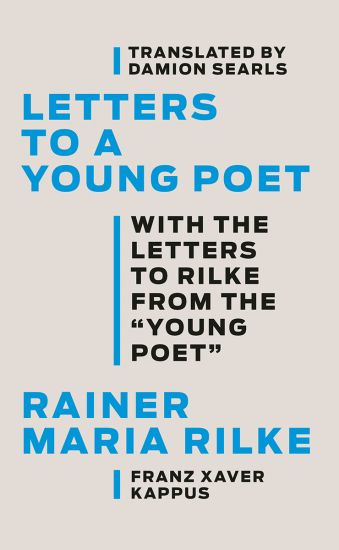
Letters to a Young Poet

Letters to a Young Poet

Rainer Maria Rilke; Franz Xaver Kappus; Damion Searls

Liveright Publishing Corporation
2020
sidottu
For more than ninety years, eager writers and young poets, even those simply looking for a purpose in life, have embraced the wisdom of Rainer Maria Rilke’s Letters to a Young Poet, first published in 1929. Most readers and scholars assumed that the letters from young poet were forever lost to posterity. Yet, shockingly, the letters were recently discovered by Erich Unglaub, a Rilke scholar, and published in German in 2019. The acclaimed translator Damion Searls has now not only retranslated Rilke’s original letters but also translated the letters by Franz Xaver Kappus, an Austrian military cadet and aspiring poet. This timeless edition, in addition to joining the two sets of letters together for the first time in English, provides a new window into the workings of Rilke’s visionary poetic and philosophical mind, allowing us to re-experience the literary genius of one of the most inspiring works of twentieth-century literature.
Charisma and Disenchantment: The Vocation Lectures

Charisma and Disenchantment: The Vocation Lectures

Max Weber; Damion Searls

The New York Review of Books, Inc
2020
nidottu
A new translation of two celebrated lectures on politics, academia, and the disenchantment of the world. In 1919, just months before he died unexpectedly of pneumonia, the sociologist Max Weber published two lectures that he had recently delivered at the invitation of a group of students. The question the students asked Weber to address in these lectures was simple and haunting. In a modern world characterized by the division of labor, constant economic expansion, and unrelenting change, was vocation, in intellectual work or politics, still possible? Responding to the students' sense of urgency, Weber offered his clearest account of "the disenchantment of the world," as well as a seminal discussion of the place of values in the university classroom and academic research. Similarly, in his politics lecture he gave students what is undoubtedly his pithiest version of his account of the nature of political authority. Weber's attempts to rethink vocation remain as relevant and as stirring as ever.
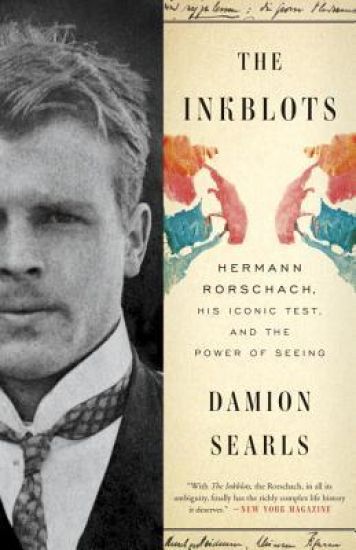
The Inkblots: Hermann Rorschach, His Iconic Test, and the Power of Seeing
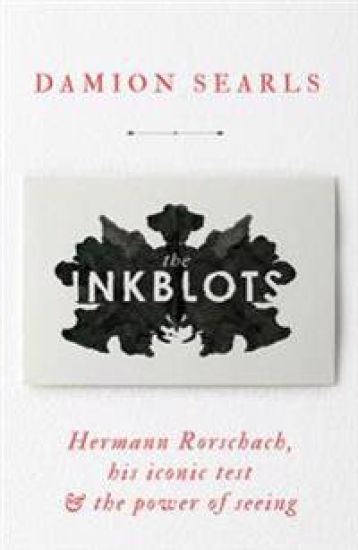
An NPR Best Book of the YearA New York Post Best Book of the YearA Times Thought Book of the YearAn Irish Independent Best Book of the Year The captivating, untold story of Hermann Rorschach and his famous inkblot test In 1917, working alone in a remote Swiss asylum, psychiatrist Hermann Rorschach devised an experiment to probe the human mind: a set of ten carefully designed inkblots. For years he had grappled with the theories of Freud and Jung while also absorbing the aesthetic movements of the day, from Futurism to Dadaism. A visual artist himself, Rorschach had come to believe that who we are is less a matter of what we say, as Freud thought, than what we see. After Rorschach's early death, his test quickly made its way to America, where it took on a life of its own. Co-opted by the military after Pearl Harbor, it was a fixture at the Nuremberg trials and in the jungles of Vietnam. It became an advertising staple, a clich in Hollywood and journalism, and an inspiration to everyone from Andy Warhol to Jay Z. The test was also given to millions of defendants, job applicants, parents in custody battles, and people suffering from mental illness or simply trying to understand themselves better. And it is still used today. In this first-ever biography of Rorschach, Damion Searls draws on unpublished letters and diaries and a cache of previously unknown interviews with Rorschach's family, friends, and colleagues to tell the unlikely story of the test's creation, its controversial reinvention, and its remarkable endurance--and what it all reveals about the power of perception. Elegant and original, The Inkblots shines a light on the twentieth century's most visionary synthesis of art and science.
Inkblots

Inkblots

Damion Searls

Simon Schuster Ltd
2017
pokkari
The captivating, untold story of Hermann Rorschach and his famous inkblot test, which has shaped our view of human personality and become a fixture in popular culture.
Magic Lantern of Marcel Proust

Magic Lantern of Marcel Proust

Howard Moss; Damion Searls

Paul Dry Books, Inc
2012
nidottu
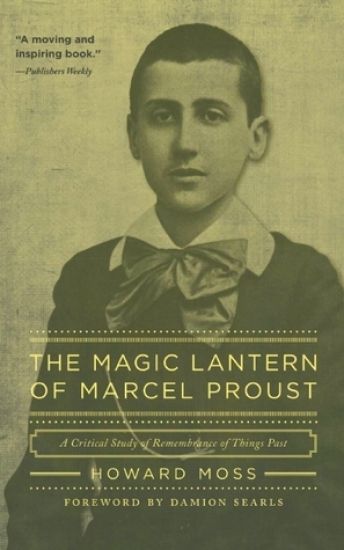
" "The Magic Lantern of Marcel Proust"] reduces the ungainly and intricately designed masterpiece to its shape, and with hardly a wasted word...The paragraphs on habit and memory are truly wonderfulwonderful as explication, as psychology, and as philosophy."John Updike"Almost everything Moss says seems to me right, illuminating, and new. This is the book of a mature and individual mind and sensibility, with a deep experience of moral, social, psychological, and aesthetic values which is rare among critics." George D. Painter"A moving and inspiring book. Moss clears away dark corners, clarifies motivations, and places the huge work within the reader's perspective. A book of great value to the scholar and the general reader." "Publishers Weekly"""Remembrance of Things Past" is more than a novel; it is a work in which a single person's life is transformed into a mythology, with its own pantheon of gods, its own religious rituals, and its own moral laws. A total vision, it does not rely on any system outside itself for support. It is as if Dante had set out to write the "Paradiso" and the "Inferno" utilizing only the facts of his own existence without any reference to Christianity...Other novelists describe or invent worlds. "Remembrance of Things Past" is an entire universe created and interpreted by Marcel Proust." from Chapter 1"Moss lays out the sweeping claims and overarching structure of "Remembrance of Things Past"the significance of Swann's Way and the Guermantes Way, or why there are such long party scenesand is equally good at bringing to light all sorts of tiny, revealing details." from the new Foreword by Damion SearlsHoward Moss was poetry editor of the "New Yorker" for almost forty years. He also wrote more than a dozen books of poetry, plays, criticism, and a book of arch parody-microbiographies of cultural figures, "Instant Lives," illustrated by Edward Gorey.Damion Searls is the author of "What We Were Doing and Where We Were Going" (stories) and has written for "Harper s," "Bookforum," "n+1," and "The Believer." As a translatorof authors including Marcel Proust ("On Reading")he received a Guggenheim Fellowship in 2012."
What We Were Doing and Where We Were Going

What We Were Doing and Where We Were Going

Damion Searls

Dalkey Archive Press
2009
nidottu
In his debut collection, Damion Searls gives us five extraordinary tales of the life of the mind in America today. “56 Water Street” and “Goldenchain” follow writers whose projects only lead them deeper into the labyrinth of modern relationships and friendships. The nasty office satire “The Cubicles” and the atmospheric “A Guide to San Francisco” take place in the sun and fog of West Coast dreams. In the final story, “Dialogue Between the Two Chief World Systems,” a Hungarian beauty creates a scholarly conundrum with surprising parallels to the book as a whole. Set amidst Ethiopian healing scrolls and sponges of the Adriatic and the guy who invented flashing the temperature on bank clocks, What We Were Doing and Where We Were Going plays in the intersection of knowledge and life in contemporary America. Searls’s flights of fancy and painterly eye for detail introduce a range of intelligent characters feeling their way toward complex moral and personal truths.