Kirjojen hintavertailu. Mukana 12 595 353 kirjaa ja 12 kauppaa.

Kirjailija

Damon J. Wischik

Kirjat ja teokset yhdessä paikassa: 2 kirjaa, julkaisuja vuosilta 2004-2020, suosituimpien joukossa On the path to AI. Vertaile teosten hintoja ja tarkista saatavuus suomalaisista kirjakaupoista.

2 kirjaa

Kirjojen julkaisuhaarukka 2004-2020.

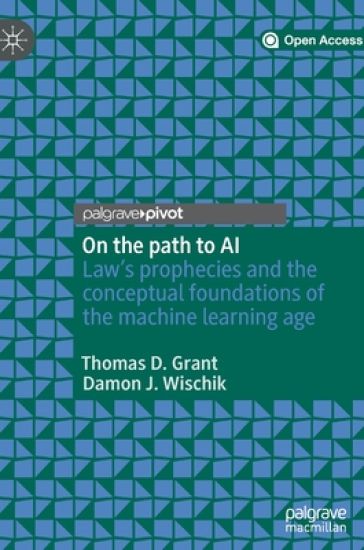
On the path to AI

On the path to AI

Thomas D. Grant; Damon J. Wischik

Springer Nature Switzerland AG
2020
sidottu
This open access book explores machine learning and its impact on how we make sense of the world. It does so by bringing together two ‘revolutions’ in a surprising analogy: the revolution of machine learning, which has placed computing on the path to artificial intelligence, and the revolution in thinking about the law that was spurred by Oliver Wendell Holmes Jr in the last two decades of the 19th century. Holmes reconceived law as prophecy based on experience, prefiguring the buzzwords of the machine learning age—prediction based on datasets.On the path to AI introduces readers to the key concepts of machine learning, discusses the potential applications and limitations of predictions generated by machines using data, and informs current debates amongst scholars, lawyers and policy makers on how it should be used and regulated wisely. Technologists will also find useful lessons learned from the last 120 years of legal grappling with accountability, explainability, and biased data.

Big Queues

Big Queues

Ayalvadi J. Ganesh; Neil O'Connell; Damon J. Wischik

Springer-Verlag Berlin and Heidelberg GmbH Co. K
2004
nidottu
Big Queues aims to give a simple and elegant account of how large deviations theory can be applied to queueing problems. Large deviations theory is a collection of powerful results and general techniques for studying rare events, and has been applied to queueing problems in a variety of ways. The strengths of large deviations theory are these: it is powerful enough that one can answer many questions which are hard to answer otherwise, and it is general enough that one can draw broad conclusions without relying on special case calculations.