Kirjojen hintavertailu. Mukana 12 657 676 kirjaa ja 12 kauppaa.

Kirjailija

Dan Gardner

Kirjat ja teokset yhdessä paikassa: 12 kirjaa, julkaisuja vuosilta 2009-2025, suosituimpien joukossa Superforecasting: The Art and Science of Prediction. Vertaile teosten hintoja ja tarkista saatavuus suomalaisista kirjakaupoista.

12 kirjaa

Kirjojen julkaisuhaarukka 2009-2025.

Superforecasting: The Art and Science of Prediction

Superforecasting: The Art and Science of Prediction

Philip E. Tetlock; Dan Gardner

Crown Publishing Group (NY)
2016
nidottu
NEW YORK TIMES BESTSELLER - NAMED ONE OF THE BEST BOOKS OF THE YEAR BY THE ECONOMIST "The most important book on decision making since Daniel Kahneman's Thinking, Fast and Slow."--Jason Zweig, The Wall Street Journal Everyone would benefit from seeing further into the future, whether buying stocks, crafting policy, launching a new product, or simply planning the week's meals. Unfortunately, people tend to be terrible forecasters. As Wharton professor Philip Tetlock showed in a landmark 2005 study, even experts' predictions are only slightly better than chance. However, an important and underreported conclusion of that study was that some experts do have real foresight, and Tetlock has spent the past decade trying to figure out why. What makes some people so good? And can this talent be taught? In Superforecasting, Tetlock and coauthor Dan Gardner offer a masterwork on prediction, drawing on decades of research and the results of a massive, government-funded forecasting tournament. The Good Judgment Project involves tens of thousands of ordinary people--including a Brooklyn filmmaker, a retired pipe installer, and a former ballroom dancer--who set out to forecast global events. Some of the volunteers have turned out to be astonishingly good. They've beaten other benchmarks, competitors, and prediction markets. They've even beaten the collective judgment of intelligence analysts with access to classified information. They are "superforecasters." In this groundbreaking and accessible book, Tetlock and Gardner show us how we can learn from this elite group. Weaving together stories of forecasting successes (the raid on Osama bin Laden's compound) and failures (the Bay of Pigs) and interviews with a range of high-level decision makers, from David Petraeus to Robert Rubin, they show that good forecasting doesn't require powerful computers or arcane methods. It involves gathering evidence from a variety of sources, thinking probabilistically, working in teams, keeping score, and being willing to admit error and change course. Superforecasting offers the first demonstrably effective way to improve our ability to predict the future--whether in business, finance, politics, international affairs, or daily life--and is destined to become a modern classic.
Superforecasting

Superforecasting

Philip Tetlock; Dan Gardner

Cornerstone
2016
pokkari
Tetlock's latest project â?? an unprecedented, government-funded forecasting tournament involving over a million individual predictions â?? has since shown that there are, however, some people with real, demonstrable foresight.
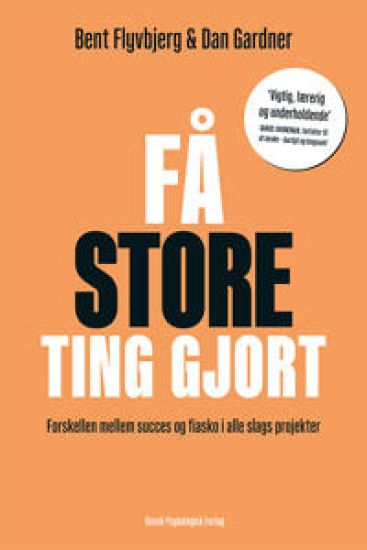
Få store ting gjort

Få store ting gjort

Bent Flyvbjerg; Dan Gardner

Psykologisk Forlag
2024
nidottu
Drøm stort – og se drømmen blive virkelighed!Alle storbyer i verden har historier om bragende fiaskoer – om milliardbyggerier og anlægsprojekter, der løb løbsk i astronomiske budgetoverskridelser og heftige forsinkelser.Når det går galt i megaprojekterne, går det for det meste meget galt. Igen og igen ender de storevisioner i vilde mareridt. Verden er også fuld af kuldsejlede projekter i mindre skala: opstart af virksomheder, husombygninger og nye IT-systemer. Resultatet lever sjældent op til forventningerne. Men hvorfor? Professor Bent Flyvbjerg har viet sin karriere til at forstå, hvad der adskiller succes fra fiasko i projekter. I Få store ting gjort trækker han på sin ekspertise i megaprojekter over hele verden, bigdata og forskning. Bogen er fuld af levende historier om projekter, der gik godt eller skidt, lige fra megaprojekter som operahusene i København og Sydney, Storebæltsforbindelsen og udviklingen af Pixar-film til en lille håbløs køkkenrenovering. Få store ting gjort graver dybt i projektfortællingerne og identificerer de værste – og helt almindelige – faldgruber og fejlslutninger. Bogen udleder principperne for god projektledelse, hvor man planlægger langsomt og gennemtænkt – og handler hurtigt og beslutsomt, når projektet skal føres ud i livet.Om forfatterne.Bent Flyvbjerg er professor ved University of Oxford og IT-Universitetet i København. Han er økonomisk geograf og verdens førende ekspert i megaprojekter ifølge den globale revisionsvirksomhed KPMG. Dan Gardner er journalist og forfatter til bøgerne Risk (på dansk 'Frygtens anatomi'), Future Babble og Superforecasting, der alle har været på New York Times' bestsellerliste. * * * * * *Få store ting gjort er kåret som Årets ledelsesbog 2024 af Børsen.
How Big Things Get Done

How Big Things Get Done

Bent Flyvbjerg; Dan Gardner

PAN MACMILLAN
2024
pokkari
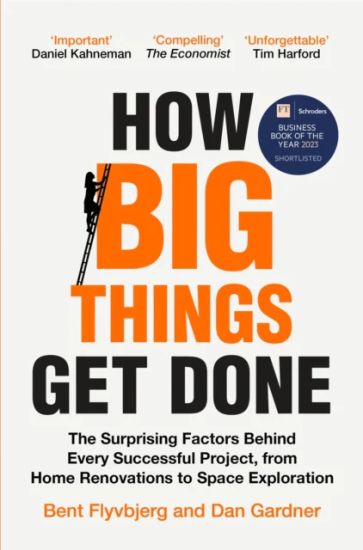
Best Books of the Year – The Financial Times and The EconomistShortlisted for the Financial Times and Schroders Business Book of the Year Award 2023World expert Bent Flyvbjerg and bestselling author Dan Gardner reveal the secrets to successfully planning and delivering ambitious projects on any scale.‘Important, timely, instructive and entertaining’ – Daniel Kahneman, bestselling author of Thinking, Fast and SlowNothing is more inspiring than a big vision that becomes a triumphant new reality. Think of how Apple’s iPod went from a project with a single employee to an enormously successful product launch in eleven months. But such successes are the exception. Consider how London’s Crossrail project delivered five years late and billions over budget. More modest endeavours, whether launching a small business, organizing a conference, or just finishing a work project on time, also commonly fail. Why?Understanding what distinguishes the triumphs from the failures has been the life’s work of Oxford professor Bent Flyvbjerg. In How Big Things Get Done, he identifies the errors that lead projects to fail, and the research-based principles that will make yours succeed:Understand your odds. If you don’t know them, you won’t win.Plan slow, act fast. Getting to the action quick feels right. But it’s wrong.Think right to left. Start with your goal, then identify the steps to get there.Find your Lego. Big is best built from small.Master the unknown unknowns. Most think they can’t, so they fail. Flyvbjerg shows how you can.Full of vivid examples ranging from the building of the Sydney Opera House to the making of the latest Pixar blockbusters, How Big Things Get Done reveals how to get any ambitious project done – on time and on budget.'Entertaining . . . compelling . . . there are lessons here for managers of all stripes' – The Economist
How Big Things Get Done

How Big Things Get Done

Bent Flyvbjerg; Dan Gardner

Crown Publishing Group, Division of Random House Inc
2023
sidottu
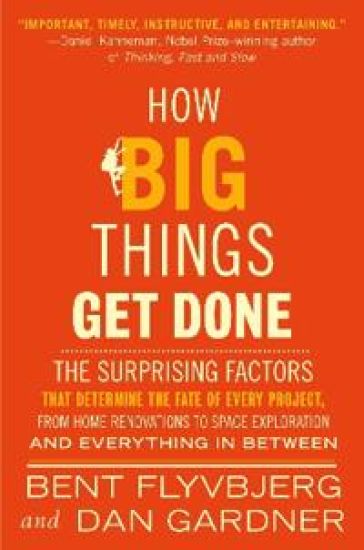
The secrets to successfully planning and delivering projects on any scale--from home renovation to space exploration--by the world's leading expert on megaprojects "This book is important, timely, instructive, and entertaining. What more could you ask for?"--Daniel Kahneman, Nobel Prize-winning author of Thinking, Fast and Slow "Over-budget and over-schedule is an inevitability. Incompetence and grift is outrageous. Bent Flyvbjerg, with this terrific data-driven book, has shown that there is another way."--Frank Gehry Nothing is more inspiring than a big vision that becomes a triumphant, new reality. Think of how the Empire State Building went from a sketch to the jewel of New York's skyline in twenty-one months, or how Apple's iPod went from a project with a single employee to a product launch in eleven months. These are wonderful stories. But most of the time big visions turn into nightmares. Remember Boston's "Big Dig"? Almost every sizeable city in the world has such a fiasco in its backyard. In fact, no less than 92% of megaprojects come in over budget or over schedule, or both. The cost of California's high-speed rail project soared from $33 billion to $100 billon--and won't even go where promised. More modest endeavors, whether launching a small business, organizing a conference, or just finishing a work project on time, also commonly fail. Why? Understanding what distinguishes the triumphs from the failures has been the life's work of Oxford professor Bent Flyvbjerg, dubbed "the world's leading megaproject expert." In How Big Things Get Done, he identifies the errors in judgment and decision-making that lead projects, both big and small, to fail, and the research-based principles that will make you succeed with yours. For example: - Understand your odds. If you don't know them, you won't win.- Plan slow, act fast. Getting to the action quick feels right. But it's wrong. - Think right to left. Start with your goal, then identify the steps to get there.- Find your Lego. Big is best built from small.- Be a team maker. You won't succeed without an "us."- Master the unknown unknowns. Most think they can't, so they fail. Flyvbjerg shows how you can.- Know that your biggest risk is you. Full of vivid examples ranging from the building of the Sydney Opera House, to the making of the latest Pixar blockbusters, to a home renovation in Brooklyn gone awry, How Big Things Get Done reveals how to get any ambitious project done--on time and on budget.
Konsten att förutsäga framtiden : en bok om superprognostik

Konsten att förutsäga framtiden : en bok om superprognostik

Philip E. Tetlock; Dan Gardner

Bokförlaget Daidalos
2016
sidottu
Alla gör vi förutsägelser, i stort och i smått. Om världshändelser, om vem som vinner val eller fotbollsmatcher, om samhällsekonomi och privatekonomi, om vad som kommer att ske på jobbet och så vidare. Vi är alla prognostiker, men de flesta av oss är dåliga på att förutsäga framtiden. Psykologen Philip Tetlock visade i sin uppmärksammade bok "Expert Political Judgment" hur dåliga politiska experter är på att göra förutsägelser trots att de gör det hela tiden. Men bland de experter han studerade fanns också en del som var påfallande träffsäkra. I "Konsten att förutsäga framtiden" presenterar han resultaten av ett omfattande forskningsprojekt som har involverat tusentals människor som ställt prognoser om världshändelser. Dessa var inte experter på det de tillfrågades om, men en del av dem visade sig vara utomordentligt träffsäkra. De var "superprognostiker". Vad gjorde dem så bra på att förutsäga? Hur samlade de information, hur resonerade de och hur förhöll de sig till sitt eget resonerande och till ny information? Och vad kan vi andra lära oss om tankefel som vi lätt gör, men som superprognostikerna lyckas undvika. Lättillgängligt och underhållande redogör Tetlock tillsammans med Dan Gardner för sina forskningsresultat. Daniel Kahneman, nobelpristagare i ekonomi och känd för sin banbrytande forskning om tankefel, säger följande om boken: "... en underbar bok om hur Tetlock och hans forskarlag fick vanliga människor att slå experter. Det är också en handbok för klart tänkande i en osäker värld. Läs den!"."Philip Tetlock är en världsledande expert inom ett viktigt fält. ... en underbar bok om hur Tetlock och hans forskarlag fick vanliga människor att slå experter. Det är också en handbok för klart tänkande i en osäker värld. Läs den! /Daniel Kahneman "Det är en väldigt bra bok. Den borde faktiskt vara obligatorisk läsning – något jag aldrig tidigare skrivit i en recension. Den borde finnas på varje chefs och investerares läslista ..." /Management Today Tetlock, tillsammans med sin medförfattare Dan Gardner, redovisar och diskuterar projektet i den mycket läsvärda ”Konsten att förutsäga framtiden”. De undersöker några av deltagarna i den grupp de arbetat med – de som visat sig vara mycket bra på att förutsäga framtiden – från tre olika perspektiv. De studerar deras intelligens, deras matematiska förmåga och deras konsumtion av nyheter – och finner i nyanserade och intressanta resultat att alla dessa tre faktorer har en positiv påverkan på deltagarnas förutsägelser, men att de inte ensamma räcker för att förklara de extremt goda resultat som vissa av deltagarna uppvisar." /SvD Under strecket
Future Babble

Future Babble

Dan Gardner

Ebury Press
2012
pokkari
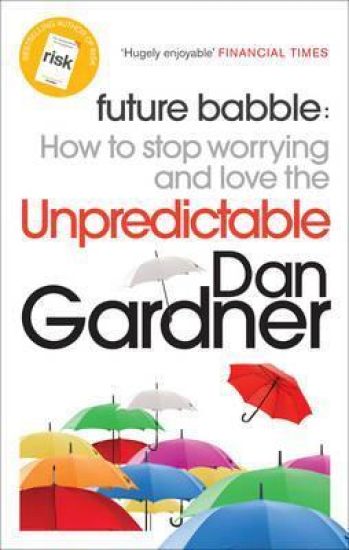
In 2008, as the price of oil surged above $140 a barrel, experts said it would soon hit $200; a few months later it plunged to $30. Face it, experts are about as accurate as dart-throwing monkeys. And yet every day we ask them to predict the future. This book examines this phenomenon, showing why our brains yearn for certainty about the future.
Risk

Risk

Dan Gardner

Virgin Books
2009
pokkari
Shows how our flawed strategies for perceiving risk influence our lives, often with unforeseen and sometimes - tragic consequences. This book uncovers one of the central puzzles of our time: why are the safest people in history living in a culture of fear?