Kirjojen hintavertailu. Mukana 12 595 353 kirjaa ja 12 kauppaa.

Kirjailija

Dana Lee Baker

Kirjat ja teokset yhdessä paikassa: 6 kirjaa, julkaisuja vuosilta 2011-2022, suosituimpien joukossa Toddler Injustices. Vertaile teosten hintoja ja tarkista saatavuus suomalaisista kirjakaupoista.

6 kirjaa

Kirjojen julkaisuhaarukka 2011-2022.

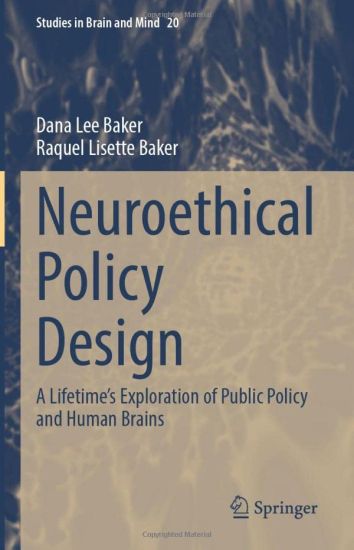
Neuroethical Policy Design

Neuroethical Policy Design

Dana Lee Baker; Raquel Lisette Baker

Springer Nature Switzerland AG
2022
sidottu
This volume focuses on the emergent field of neuroethics comparing and contrasting how two democracies, Canada and the United States, have begun adapting public policy design to better fit human minds. The book focuses on issues relevant to all members of the general population and discusses a series of policy issues arranged roughly in the order in which they become relevant in a typical person’s lifetime. After the introductory chapter each chapter considers an area of public policy particularly relevant to a different stage of life—from early childhood education policy, to policies for higher education and the workplace, to end of life decisions in living wills and advance directives. The author puts forth that making the shift towards more neurologically appropriate policy will likely be a gradual process hampered primarily by two issues. The first is the inability of neuroscientists to come to agreement on increasingly sophisticated research findings. The second issue points out that bringing policy and neurology into a more synchronous relationship requires a commitment to prolonged effort involves the largely unrecognized reality of entrenched neurological interests. The first chapter introduces the concept of disconnect between policy design with traditional understandings of the brain and goes on to highlight developments in the science of human neurology in recent years. To help contextualize the book, examples of neurological misperceptions are explored in this introductory chapter. Chapters Two through Eleven each explores a specific type of policy, incorporating understandings of the human brain which, modern neuroscience suggests, are debatable.?

Law and Neurodiversity

Law and Neurodiversity

Dana Lee Baker; Laurie A. Drapela; Whitney Littlefield

University of British Columbia Press
2021
pokkari
Law and Neurodiversity offers invaluable guidance on how autism research can inform and improve juvenile justice policies in Canada and the United States. This perceptive work examines the history of institutionalization, the evolution of disability rights, and advances in juvenile justice that incorporate considerations of neurological difference into court practice. In Canada, the diversion of delinquent autistic youth away from formal processing has fostered community-based strategies for them under state authority in its place. US policies rely more heavily on formal responses, often employing detention in juvenile custody facilities. These differing approaches profoundly affect how services such as education are delivered to youth with autism. Building on a rigorous exploration of how assessment, rehabilitation, and community re-entry differ between the two countries, Law and Neurodiversity offers a much-needed comparative analysis of autism and juvenile justice policies on both sides of the forty-ninth parallel.
Law and Neurodiversity

Law and Neurodiversity

Dana Lee Baker; Laurie A. Drapela; Whitney Littlefield

University of British Columbia Press
2020
sidottu
Law and Neurodiversity offers invaluable guidance on how autism research can inform and improve juvenile justice policies in Canada and the United States. This perceptive work examines the history of institutionalization, the evolution of disability rights, and advances in juvenile justice that incorporate considerations of neurological difference into court practice. In Canada, the diversion of delinquent autistic youth away from formal processing has fostered community-based strategies for them under state authority in its place. US policies rely more heavily on formal responses, often employing detention in juvenile custody facilities. These differing approaches profoundly affect how services such as education are delivered to youth with autism. Building on a rigorous exploration of how assessment, rehabilitation, and community re-entry differ between the two countries, Law and Neurodiversity offers a much-needed comparative analysis of autism and juvenile justice policies on both sides of the forty-ninth parallel.
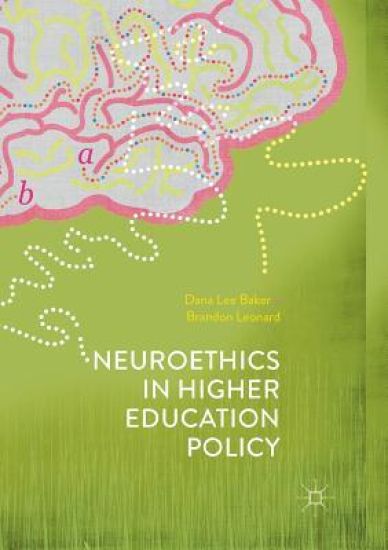
Neuroethics in Higher Education Policy

Neuroethics in Higher Education Policy

Dana Lee Baker; Brandon Leonard

Palgrave Macmillan
2018
nidottu
This book focuses on neuroethics in higher education in the United States. After introducing readers to the philosophical and policy foundations of the neuroethics of higher education, this book explores essential conundrums in the neuroethical practice of higher education in modern democracies. Focusing on neuroethics from the perspective of universally designed learning and policy design sets this project apart from other work in the field. Advances in neuroscience and changes in attitudes towards disability have identified mechanisms by which higher education infrastructures interact with both individuals considered neurotypical and those with identified disabilities to diminish students’ capacity to enter, persist, and complete higher education. Policy to date has focused on identified disabilities as a requirement for accommodations. This strategy both underestimates the effect of ill-fitting infrastructures on those considered neurologically typical and serves to stratify the student body. As a result, neuroethical gaps abound in higher education.
Neuroethics in Higher Education Policy

Neuroethics in Higher Education Policy

Dana Lee Baker; Brandon Leonard

Palgrave Macmillan
2016
sidottu
This book focuses on neuroethics in higher education in the United States. After introducing readers to the philosophical and policy foundations of the neuroethics of higher education, this book explores essential conundrums in the neuroethical practice of higher education in modern democracies. Focusing on neuroethics from the perspective of universally designed learning and policy design sets this project apart from other work in the field. Advances in neuroscience and changes in attitudes towards disability have identified mechanisms by which higher education infrastructures interact with both individuals considered neurotypical and those with identified disabilities to diminish students’ capacity to enter, persist, and complete higher education. Policy to date has focused on identified disabilities as a requirement for accommodations. This strategy both underestimates the effect of ill-fitting infrastructures on those considered neurologically typical and serves to stratify the student body. As a result, neuroethical gaps abound in higher education.