Kirjojen hintavertailu. Mukana 12 595 353 kirjaa ja 12 kauppaa.

Kirjailija

Daniel Bensaid

Kirjat ja teokset yhdessä paikassa: 14 kirjaa, julkaisuja vuosilta 2009-2021, suosituimpien joukossa The Dispossessed. Vertaile teosten hintoja ja tarkista saatavuus suomalaisista kirjakaupoista.

Mukana myös kirjoitusasut: Daniel Bensaïd

14 kirjaa

Kirjojen julkaisuhaarukka 2009-2021.

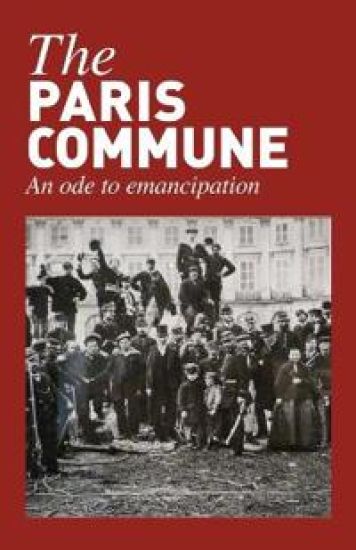
The Paris Commune

The Paris Commune

Michael Lowy; Penelope Duggan; Daniel Bensaid

Resistance Books
2021
pokkari
The Paris Commune of 1871 was one of the first working class attempts at the social emancipation of the oppressed and exploited. Between 18 March and 29 May 1871, the popular classes succeeded for a while in breaking their chains. It was a short period when people could take control of their lives. The Paris Commune is an inspiration today. The memory of the past and its struggles strengthens the fight for the utopia of the future.This book, The Paris Commune - An ode to emancipation, is a collection of writings by Daniel Bensa d, Olivier Besancenot, Sandra Bloodworth, Judy Cox, Penelope Duggan, Mathilde Larr re, Michael L wy, Kay Mann, Eric Toussaint.
The Dispossessed

The Dispossessed

Daniel Bensaïd

University of Minnesota Press
2021
nidottu
Excavating Marx’s early writings to rethink the rights of the poor and the idea of the commons in an era of unprecedented privatization The politics of dispossession are everywhere. Troubling developments in intellectual property, genomics, and biotechnology are undermining established concepts of property, while land appropriation and ecological crises reconfigure basic institutions of ownership. In The Dispossessed, Daniel Bensaïd examines Karl Marx’s early writings to establish a new framework for addressing the rights of the poor, the idea of the commons, and private property as a social institution.In his series of articles from 1842–43 about Rhineland parliamentary debates over the privatization of public lands and criminalization of poverty under the rubric of the “theft of wood,” Marx identified broader anxieties about customary law, property rights, and capitalist efforts to privatize the commons. Bensaïd studies these writings to interrogate how dispossession continues to function today as a key modality of power. Brilliantly tacking between past and present, The Dispossessed discloses continuity and rupture in our relationships to property and, through that, to one another.In addition to Bensaïd’s prescient work of political philosophy, The Dispossessed includes new translations of Marx’s original “theft of wood” articles and an introductory essay by Robert Nichols that lucidly contextualizes the essays.
The Dispossessed

The Dispossessed

Daniel Bensaïd

University of Minnesota Press
2021
sidottu
Excavating Marx’s early writings to rethink the rights of the poor and the idea of the commons in an era of unprecedented privatization The politics of dispossession are everywhere. Troubling developments in intellectual property, genomics, and biotechnology are undermining established concepts of property, while land appropriation and ecological crises reconfigure basic institutions of ownership. In The Dispossessed, Daniel Bensaïd examines Karl Marx’s early writings to establish a new framework for addressing the rights of the poor, the idea of the commons, and private property as a social institution.In his series of articles from 1842–43 about Rhineland parliamentary debates over the privatization of public lands and criminalization of poverty under the rubric of the “theft of wood,” Marx identified broader anxieties about customary law, property rights, and capitalist efforts to privatize the commons. Bensaïd studies these writings to interrogate how dispossession continues to function today as a key modality of power. Brilliantly tacking between past and present, The Dispossessed discloses continuity and rupture in our relationships to property and, through that, to one another.In addition to Bensaïd’s prescient work of political philosophy, The Dispossessed includes new translations of Marx’s original “theft of wood” articles and an introductory essay by Robert Nichols that lucidly contextualizes the essays.
Recorded Fragments

Recorded Fragments

Daniel Bensaïd

Resistance Books
2020
nidottu
Recorded Fragments - Twelve reflections on the 20th century with Daniel Bensa dThese interviews with Daniel Bensa d were a project broadcast on the radio station 'Fr quence Paris Plurielle' (106.3 FM). During recording sessions in 2007 and 2008, Daniel Bensa d proposed further interviews on twelve events associated with key dates of the workers' movement. In these, he gives his insight into events such as the October Revolution, the Spanish Civil War, the assassination of Lumumba, the 1973 coup in Chile, the fall of the Berlin Wall. These twelve events - milestones of the 'short twentieth century' - are necessarily a biased and partial choice. In the interviews, one hears, or rather one reads in this book, some of the main analyses that structure Daniel Bensa d's thinking, but also that of part of the radical left at the very beginning of the 21st century.
An Impatient Life

An Impatient Life

Daniel Bensaïd; Tariq Ali

Verso Books
2015
nidottu
A philosopher and activist, eager to live according to ideals forged in study and discussion, Daniel Bensaïd was a man deeply entrenched in both the French and the international left. Raised in a staunchly red neighbourhood of Toulouse, where his family owned a bistro, he grew to be France's leading Marxist public intellectual, much in demand on talk shows and in the press. A lyrical essayist and powerful public speaker, at his best expounding large ideas to crowds of students and workers, he was a founder member of the Ligue Communiste and thrived at the heart of a resurgent far left in the 1960s, which nurtured many of the leading figures of today's French establishment.The path from the joyous explosion of May 1968, through the painful experience of defeat in Latin America and the world-shaking collapse of the USSR, to the neoliberal world of today, dominated as it is by global finance, is narrated in An Impatient Life with Bensaïd's characteristic elegance of phrase and clarity of vision. His memoir relates a life of ideological and practical struggle, a never-resting endeavour to comprehend the workings of capitalism in the pursuit of revolution.
An Impatient Life

An Impatient Life

Daniel Bensaïd; Tariq Ali

Verso Books
2013
sidottu
In the classic tradition of the philosopher-activist, Daniel Bensaïd tells the story of a life deeply entwined with the history of both the French and the international Left. From his family bistro in a staunchly red neighborhood of Toulouse to the founding of the Jeunesses communistes revolutionnaires in the 1960s, from the joyous explosion of May 1968 to the painful experience of defeat in Latin America, from the re-reading of Marx to the "Marrano" trail, Bensaïd relates a life of ideological and practical struggle in which he unflinchingly sought to understand capitalism without ever succumbing to its temptations.
Democracy in What State?

Democracy in What State?

Giorgio Agamben; Alain Badiou; Daniel Bensaid; Wendy Brown; Jean-Luc Nancy; Jacques Rancière; Kristin Ross; Slavoj Žižek

Columbia University Press
2012
pokkari
"Is it meaningful to call oneself a democrat? And if so, how do you interpret the word?" In responding to this question, eight iconoclastic thinkers prove the rich potential of democracy, along with its critical weaknesses, and reconceive the practice to accommodate new political and cultural realities. Giorgio Agamben traces the tense history of constitutions and their coexistence with various governments. Alain Badiou contrasts current democratic practice with democratic communism. Daniel Bensaid ponders the institutionalization of democracy, while Wendy Brown discusses the democratization of society under neoliberalism. Jean-Luc Nancy measures the difference between democracy as a form of rule and as a human end, and Jacques Ranciere highlights its egalitarian nature. Kristin Ross identifies hierarchical relationships within democratic practice, and Slavoj Zizek complicates the distinction between those who desire to own the state and those who wish to do without it. Concentrating on the classical roots of democracy and its changing meaning over time and within different contexts, these essays uniquely defend what is left of the left-wing tradition after the fall of Soviet communism. They confront disincentives to active democratic participation that have caused voter turnout to decline in western countries, and they address electoral indifference by invoking and reviving the tradition of citizen involvement. Passionately written and theoretically rich, this collection speaks to all facets of modern political and democratic debate.
Democracy in What State?

Democracy in What State?

Giorgio Agamben; Alain Badiou; Daniel Bensaid; Wendy Brown; Jean-Luc Nancy; Jacques Rancière; Kristin Ross; Slavoj Žižek

Columbia University Press
2011
sidottu
"Is it meaningful to call oneself a democrat? And if so, how do you interpret the word?" In responding to this question, eight iconoclastic thinkers prove the rich potential of democracy, along with its critical weaknesses, and reconceive the practice to accommodate new political and cultural realities. Giorgio Agamben traces the tense history of constitutions and their coexistence with various governments. Alain Badiou contrasts current democratic practice with democratic communism. Daniel Bensaid ponders the institutionalization of democracy, while Wendy Brown discusses the democratization of society under neoliberalism. Jean-Luc Nancy measures the difference between democracy as a form of rule and as a human end, and Jacques Ranciere highlights its egalitarian nature. Kristin Ross identifies hierarchical relationships within democratic practice, and Slavoj Zizek complicates the distinction between those who desire to own the state and those who wish to do without it. Concentrating on the classical roots of democracy and its changing meaning over time and within different contexts, these essays uniquely defend what is left of the left-wing tradition after the fall of Soviet communism. They confront disincentives to active democratic participation that have caused voter turnout to decline in western countries, and they address electoral indifference by invoking and reviving the tradition of citizen involvement. Passionately written and theoretically rich, this collection speaks to all facets of modern political and democratic debate.
Marx for Our Times

Marx for Our Times

Daniel Bensaïd

Verso Books
2009
nidottu
The end of Soviet Socialism signalled to some observers that the ghost of Marx had finally been laid to rest. But history's refusal to grind to a halt and the global credit crisis that began in 2008 have rekindled interest in capitalism's most persistent critic.Written during the mid-nineties, a period of Western complacency and neo-liberal reaction, Marx for Our Times is a critical reading of dialectical materialism as a method of resistance. Without denying the contradictory character of Marx's thought, and with a sensitivity to the plurality of theories it has inspired, Daniel Bensaid sets out to discover what in Marx remains dynamic and relevant in our era of accelerating economic change.Marx's theory emerges, not as a doctrinal system, but as an intellectual tool of social struggle and global transformation in a world where capital continues to dominate social relations.