Kirjailija
Daniel C. Dennett
Kirjat ja teokset yhdessä paikassa: 38 kirjaa, julkaisuja vuosilta 1985-2025, suosituimpien joukossa Darwin's Dangerous Idea. Vertaile teosten hintoja ja tarkista saatavuus suomalaisista kirjakaupoista.
38 kirjaa
Kirjojen julkaisuhaarukka 1985-2025.
An anniversary edition of a classic in cognitive science, with a new introduction by the author.When Brainstorms was published in 1978, the interdisciplinary field of cognitive science was just emerging. Daniel Dennett was a young scholar who wanted to get philosophers out of their armchairs-and into conversations with psychologists, linguists, computer scientists. This collection of seventeen essays by Dennett offers a comprehensive theory of mind, encompassing traditional issues of consciousness and free will. Using careful arguments and ingenious thought experiments, the author exposes familiar preconceptions and hobbling intuitions. The essays are grouped into four sections: "Intentional Explanation and Attributions of Mentality"; "The Nature of Theory in Psychology"; "Objects of Consciousness and the Nature of Experience"; and "Free Will and Personhood."This anniversary edition includes a new introduction by Dennett, "Reflections on Brainstorms after Forty Years," in which he recalls the book's original publication by Harry and Betty Stanton of Bradford Books and considers the influence and afterlife of some of the essays. For example, "Mechanism and Responsibility" was Dennett's first articulation of his concept of the intentional stance; "Are Dreams Experiences?" anticipates the major ideas in his 1991 book Consciousness Explained; and "Where Am I?" has been variously represented in a BBC documentary, a student's Javanese shadow puppet play, and a feature-length film made in the Netherlands, Victim of the Brain.
Från bakterier till Bach och tillbaka: Medvetandets evolution
Daniel C. Dennett
Fri Tanke Förlag
2017
sidottu
Hur blev vi medvetna varelser? Denna fråga har gäckat psykologer, fysiker, poeter och filosofer i århundraden. Hur har människans hjärna utvecklat dess unika förmåga till att skapa, drömma och förklara? Darwins lärjungar har länge försökt förklara medvetandets, språkets och kulturens uppkomst genom naturligt urval i teorier som låter lovande men ofta är kontroversiella och förvirrande. Vår förståelse av hjärnans anatomi och funktion har aldrig varit bättre än nu, ändå förblir frågan om hur våra själar uppstår en obesvarad gåta. I Från bakterier till Bach, bygger Daniel Dennett på idéer från datavetenskapen och evolutionsbiologi för att visa hur en reflekterande hjärna kan ha uppstått genom naturligt urval. Dennett förklarar att en viktig förändring skedde när människor utvecklade förmågan att dela memer, eller sätt att göra saker som inte baseras på genetisk instinkt. Språket, laddat med memer, gav turbofart åt detta samspel. Konkurrens mellan memer en typ av naturligt urval resulterade i tankeverktyg som blev så effektiva att de tillät oss att utforma våra egna memer. Resultatet blev en hjärna som inte bara kan uppfatta och kontrollera, utan också skapa och förstå. Den här boken sätter agendan för en ny generation filosofer, forskare and tänkare. Boken kommer att underhålla och inspirera all de som vill veta mer om medvetandets existens och natur.
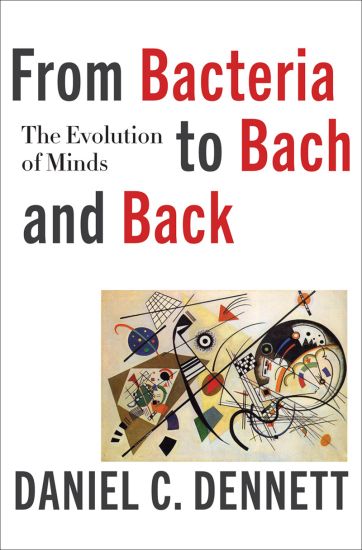
From Bacteria to Bach and Back: The Evolution of Minds
Daniel C. Dennett
W. W. Norton Company
2017
sidottu
How did we come to have minds?For centuries, this question has intrigued psychologists, physicists, poets, and philosophers, who have wondered how the human mind developed its unrivaled ability to create, imagine, and explain. Disciples of Darwin have long aspired to explain how consciousness, language, and culture could have appeared through natural selection, blazing promising trails that tend, however, to end in confusion and controversy. Even though our understanding of the inner workings of proteins, neurons, and DNA is deeper than ever before, the matter of how our minds came to be has largely remained a mystery.That is now changing, says Daniel C. Dennett. In From Bacteria to Bach and Back, his most comprehensive exploration of evolutionary thinking yet, he builds on ideas from computer science and biology to show how a comprehending mind could in fact have arisen from a mindless process of natural selection. Part philosophical whodunit, part bold scientific conjecture, this landmark work enlarges themes that have sustained Dennett's legendary career at the forefront of philosophical thought.In his inimitable style--laced with wit and arresting thought experiments--Dennett explains that a crucial shift occurred when humans developed the ability to share memes, or ways of doing things not based in genetic instinct. Language, itself composed of memes, turbocharged this interplay. Competition among memes--a form of natural selection--produced thinking tools so well-designed that they gave us the power to design our own memes. The result, a mind that not only perceives and controls but can create and comprehend, was thus largely shaped by the process of cultural evolution.An agenda-setting book for a new generation of philosophers, scientists, and thinkers, From Bacteria to Bach and Back will delight and entertain anyone eager to make sense of how the mind works and how it came about.
First published in 2002. In this pioneering book, Daniel Dennett sets out clearly what he believed constituted a genuine analysis of the mind. His work over the last twenty years and more, culminating in his major study, Consciousness Explained, has increased rather than diminished the power of his first book. This edition also includes the 1986 preface which places the book in the context of recent work in the area.
Content and Consciousness is an original and ground-breaking attempt to elucidate a problem integral to the history of Western philosophical thought: the relationship of the mind and body. In this formative work, Dennett sought to develop a theory of the human mind and consciousness based on new and challenging advances in the field that came to be known as cognitive science. This important and illuminating work is widely-regarded as the book from which all of Dennett’s future ideas developed. It is his first explosive rebuttal of Cartesian dualism and one of the founding texts of philosophy of mind.
Caught in the Pulpit
Daniel C. Dennett; Linda LaScola; Richard Dawkins
Pitchstone Publishing
2015
pokkari
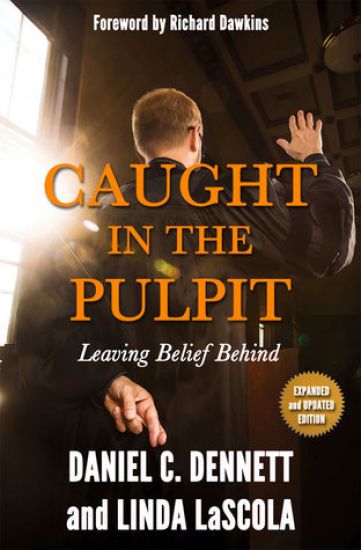
What is it like to be a preacher or rabbi who no longer believes in God? In this expanded and updated edition of their groundbreaking study, Daniel C. Dennett and Linda LaScola comprehensively and sensitively expose an inconvenient truth that religious institutions face in the new transparency of the information age—the phenomenon of clergy who no longer believe what they publicly preach. In confidential interviews, clergy from across the ministerial spectrum—from liberal to literal—reveal how their lives of religious service and study have led them to a truth inimical to their professed beliefs and profession. Although their personal stories are as varied as the denominations they once represented, or continue to represent—whether Catholic, Baptist, Episcopalian, Methodist, Mormon, Pentecostal, or any of numerous others—they give voice not only to their own struggles but also to those who similarly suffer in tender and lonely silence. As this study poignantly and vividly reveals, their common journey has far-reaching implications not only for their families, their congregations, and their communities—but also for the very future of religion.
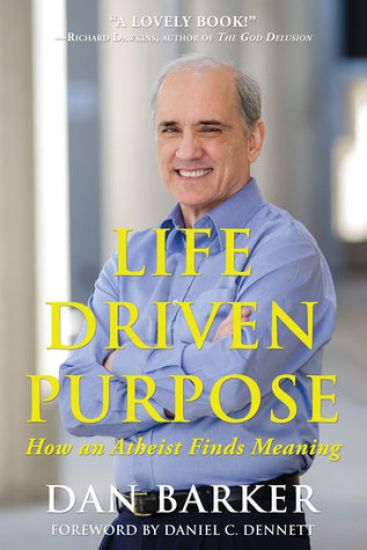
Every thinking person wants to lead a life of meaning and purpose. For thousands of years, holy books have told us that such a life is available only through obedience and submission to some higher power. Today, the faithful keep popular devotionals and tracts within easy reach on bedside tables and mobile devices, all communicating this common message: “Life is meaningless without God.” In this volume, former pastor Dan Barker eloquently, powerfully, and rationally upends this long-held belief. Offering words of enrichment, emancipation, and inspiration, he reminds us how millions of atheists lead happy, loving, moral, and purpose-filled lives. Practicing what he preaches, he also demonstrates through his own personal journey that life is valuable for its own sake—that meaning and purpose come not from above, but from within.
Over a storied career, Daniel C. Dennett has engaged questions about science and the workings of the mind. His answers have combined rigorous argument with strong empirical grounding. And a lot of fun. Intuition Pumps and Other Tools for Thinking offers seventy-seven of Dennett's most successful "imagination-extenders and focus-holders" meant to guide you through some of life's most treacherous subject matter: evolution, meaning, mind, and free will. With patience and wit, Dennett deftly deploys his thinking tools to gain traction on these thorny issues while offering readers insight into how and why each tool was built. Alongside well-known favorites like Occam's Razor and reductio ad absurdum lie thrilling descriptions of Dennett's own creations: Trapped in the Robot Control Room, Beware of the Prime Mammal, and The Wandering Two-Bitser. Ranging across disciplines as diverse as psychology, biology, computer science, and physics, Dennett's tools embrace in equal measure light-heartedness and accessibility as they welcome uninitiated and seasoned readers alike. As always, his goal remains to teach you how to "think reliably and even gracefully about really hard questions." A sweeping work of intellectual seriousness that's also studded with impish delights, Intuition Pumps offers intrepid thinkers--in all walks of life--delicious opportunities to explore their pet ideas with new powers.
In Intuition Pumps, Daniel Dennett, one of the world's leading philosophers, and author of Consciousness Explained and Freedom Evolves, offers aspiring thinkers his personal trove of mind-stretching thought experimentsThinking is hard. A few of us may be natural geniuses; others are blessed with reserves of willpower. Then there's the rest of us: not prodigies and short on time, but still aspiring to understand the world. What can we do? Daniel Dennett, one of the world's most original thinkers, reveals a collection of his favourite thinking tools, or 'intuition pumps'. From Occam's Razor to the benefit of mistakes, the 90% rule to avoiding 'deepitites', this entertaining guide will enable you to tackle life's most fundamental questions - evolution, meaning, consciousness and free will - and teach you to think truly independently and creatively.Daniel Dennett is one of the most original and provocative thinkers in the world. A brilliant polemicist and philosopher, he is famous for challenging unexamined orthodoxies. His books include Brainstorms, Brainchildren, Elbow Room, Consciousness Explained, Darwin's Dangerous Idea and Freedom Evolves. He lives in North Andover, Massachusetts.'One of the world's most original and provocative thinkers' Daily Telegraph'A master class' Guardian 'Intelligence, insight and flair ... They don't come much bigger than Daniel Dennett' Julian Baggini, Guardian'A philosopher's box of tools for the musing mind' Melvin Konner, Nature'You'll enjoy and be challenged by it'Steven Rose, Guardian'A lively primer on the radical answers Mr. Dennett has elaborated to the big questions in his nearly five decades in philosophy' Jennifer Schuessler, The New York Times'America's most important and entertaining philosopher' Observer
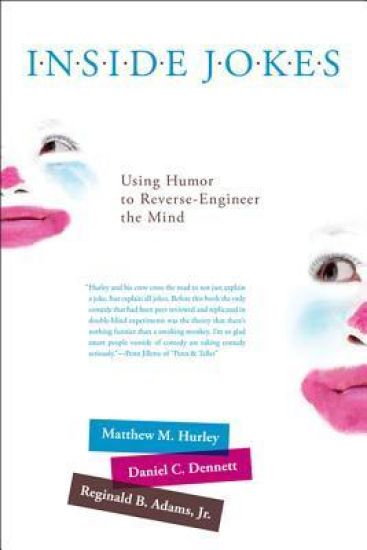
An evolutionary and cognitive account of the addictive mind candy that is humor.Some things are funny-jokes, puns, sitcoms, Charlie Chaplin, The Far Side, Malvolio with his yellow garters crossed-but why? Why does humor exist in the first place? Why do we spend so much of our time passing on amusing anecdotes, making wisecracks, watching The Simpsons? In Inside Jokes, Matthew Hurley, Daniel Dennett, and Reginald Adams offer an evolutionary and cognitive perspective. Humor, they propose, evolved out of a computational problem that arose when our long-ago ancestors were furnished with open-ended thinking. Mother Nature-aka natural selection-cannot just order the brain to find and fix all our time-pressured misleaps and near-misses. She has to bribe the brain with pleasure. So we find them funny. This wired-in source of pleasure has been tickled relentlessly by humorists over the centuries, and we have become addicted to the endogenous mind candy that is humor.
An examination of the two most radical dissociation syndromes of the human pain experience-pain without painfulness and painfulness without pain-and what they reveal about the complex nature of pain and its sensory, cognitive, and behavioral components.In Feeling Pain and Being in Pain, Nikola Grahek examines two of the most radical dissociation syndromes to be found in human pain experience: pain without painfulness and painfulness without pain. Grahek shows that these two syndromes-the complete dissociation of the sensory dimension of pain from its affective, cognitive, and behavioral components, and its opposite, the dissociation of pain's affective components from its sensory-discriminative components (inconceivable to most of us but documented by ample clinical evidence)-have much to teach us about the true nature and structure of human pain experience.Grahek explains the crucial distinction betweenfeeling pain and being in pain, defending it on both conceptual and empirical grounds. He argues that the two dissociative syndromes reveal the complexity of the human pain experience: its major components, the role they play in overall pain experience, the way they work together, and the basic neural structures and mechanisms that subserve them.Feeling Pain and Being in Pain does not offer another philosophical theory of pain that conclusively supports or definitively refutes either subjectivist or objectivist assumptions in the philosophy of mind. Instead, Grahek calls for a less doctrinaire and more balanced approach to the study of mind-brain phenomena.
Content and Consciousness is an original and ground-breaking attempt to elucidate a problem integral to the history of Western philosophical thought: the relationship of the mind and body. In this formative work, Dennett sought to develop a theory of the human mind and consciousness based on new and challenging advances in the field that came to be known as cognitive science. This important and illuminating work is widely-regarded as the book from which all of Dennett’s future ideas developed. It is his first explosive rebuttal of Cartesian dualism and one of the founding texts of philosophy of mind.
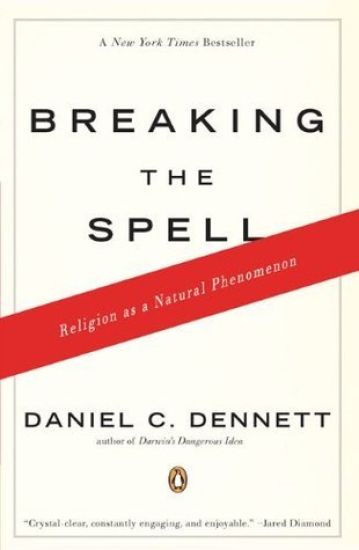
A Tufts University professor explores the nature of faith and how religion shapes everyday life and the future, addressing controversial issues about the relevance and rational qualities of faith while tracing the history of organized religion from its roots in folk beliefs to its key role in modern issues. By the author of Darwin's Dangerous Idea. Reprint. 100,000 first printing.
Monille, kenties useimmille, uskonto on asioista tärkein. Se lohduttaa heitä kärsimyksessä, on olennainen osa heidän avioliittoaan ja lastensa kasvatusta ja vie yhteistyöhön, jonka tulokset ovat sekä ihmeellisiä että hirveitä.Uskonto on niin vahva voima maailmassamme, että sitä on yritettävä ymmärtää kaikessa monimutkaisuudessaan, mutta useimmat uskontojen kannattajat vastustavat jyrkästi jokaista, joka haluaa tutkia heidän käytäntöjään ja uskomuksiaan luonnontieteen menetelmin, parhailla käytössämme olevilla välineillä.Tässä teoksessa maineikas amerikkalainen filosofi Daniel C. Dennett pyrkii selvittämään uskontojen perheen hämmästyttävän ilmiömaailman. Miksi ja miten niillä on uskolliset kannattajansa? Mistä niiden voima nousee? Miksi ne muokkaavat niin monien elämää niin vahvasti?Mistä syntyy omistautuminen Jumalalle? Mikä oli psykologinen ja kulttuurinen maaperä, jossa uskonto syntyi? Onko se addiktio vai aito tarve, joka tulisi säilyttää hintaan mihin hyvänsä? Onko se sokean evolutiivisen vaiston tuote vai rationaalisen valinnan tulos? Onko Jumalaan uskovilla hyvä syy uskoonsa? Ovatko ihmiset oikeassa sanoessaan, että uskonto on paras tapa elää hyvä elämä? Ennen kaikkea onko uskonto moraalin perusteiden välttämätön edellytys?Tässä haastavassa teoksessa Daniel C. Dennett väittää, että uskonnon perimmäisiä kysymyksiä ympäröivästä salamyhkäisyydestä on luovuttava, jotta uskonto ymmärrettäisiin nykyistä paremmin ja jotta näihin kysymyksiin saataisiin rationaalinen vastaus.Uskonto on aivan liian tärkeä asia luonnontieteellisen tarkastelun ulkopuolelle jätettäväksi.
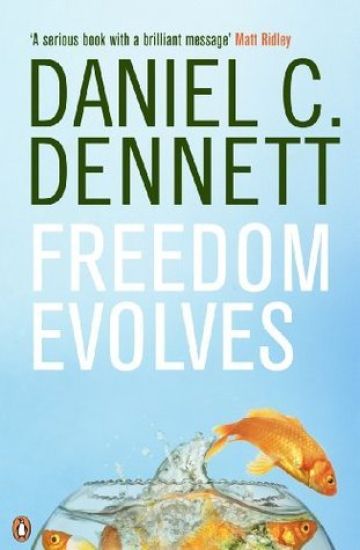
Can there be freedom and free will in a deterministic world? Renowned philosopher Daniel Dennett emphatically answers "yes " Using an array of provocative formulations, Dennett sets out to show how we alone among the animals have evolved minds that give us free will and morality. Weaving a richly detailed narrative, Dennett explains in a series of strikingly originalarguments--drawing upon evolutionary biology, cognitive neuroscience, economics, and philosophy--that far from being an enemy of traditional explorations of freedom, morality, and meaning, the evolutionary perspective can be an indispensable ally. In Freedom Evolves, Dennett seeks to place ethics on the foundation it deserves: a realistic, naturalistic, potentially unified vision of our place in nature.
How are we able to understand and anticipate each other in everyday life, in our daily interactions? Through the use of such "folk" concepts as belief, desire, intention, and expectation, asserts Daniel Dennett in this first full-scale presentation of a theory of intentionality that he has been developing for almost twenty years. We adopt a stance, he argues, a predictive strategy of interpretation that presupposes the rationality of the people-or other entities-we are hoping to understand and predict.These principles of radical interpretation have far-reaching implications for the metaphysical and scientific status of the processes referred to by the everday terms of folk psychology and their corresponding terms in cognitive science.While Dennett's philosophical stance has been steadfast over the years, his views have undergone successive enrichments, refinements, and extensions. The Intentional Stance brings together both previously published and original material: four of the book's ten chapters-its first and the final three-appear here for the first time and push the theory into surprising new territory. The remaining six were published earlier in the 1980s but were not easily accessible; each is followed by a reflection-an essay reconsidering and extending the claims of the earlier work. These reflections and the new chapters represent the vanguard of Dennett's thought. They reveal fresh lines of inquiry into fundamental issues in psychology, artificial intelligence, and evolutionary theory as well as traditional issues in the philosophy of mind. A Bradford Book.
First published in 2002. In this pioneering book, Daniel Dennett sets out clearly what he believed constituted a genuine analysis of the mind. His work over the last twenty years and more, culminating in his major study, Consciousness Explained, has increased rather than diminished the power of his first book. This edition also includes the 1986 preface which places the book in the context of recent work in the area.