

Kirjailija
Daniel C. Maguire
Kirjat ja teokset yhdessä paikassa: 6 kirjaa, julkaisuja vuosilta 1998-2013, suosituimpien joukossa Sacred Energies. Vertaile teosten hintoja ja tarkista saatavuus suomalaisista kirjakaupoista.
6 kirjaa
Kirjojen julkaisuhaarukka 1998-2013.

Is war inevitable? Is it so woven into the fabric of our being that it always was and always will be? "Early Christians," says Maguire, "were unanimous in opposing this view." They didn't see war as normal but an outrage and even a sacrilege. Maguire argues that later Christians succumbed to the supposed "normalcy" of war and developed what later became known as the "just-war theory," which was actually devised as a deterrent to the rush to war.

This book explains Christianity's indispensable moral conviction about God's care, rapport with the earth, the nature of ownership, the bond between justice and peace, the nature of enmity, the illogic of militarism, and the creative potential of the human species. It also includes questions for group discussion.
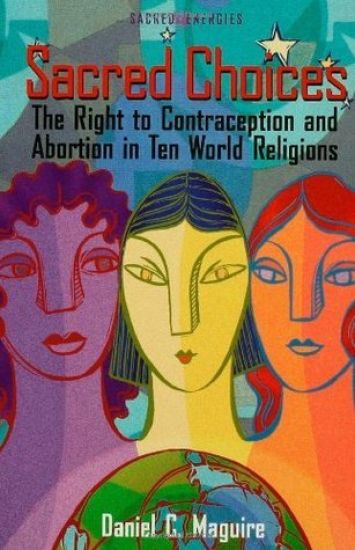
Breaking the silence about choice As the world teeters on the edge of overpopulation, this new addition to the Sacred Energies series aims to show how ten major religious traditions in fact contain strong affirmations of the right to family planning, including contraception and even, when necessary, abortion. Maguire first shows how interrelated overpopulation is with poverty, ethnic injustice, gender injustice, and the maldistribution of economic resources. Often the world's religions (most notoriously perhaps, Roman Catholicism) are thought to contribute only to the problem, rather than solutions, through their hostility to sex, education and equal rights for women, and birth control. In fact, argues Maguire, the ten scholars who consulted for several years about how these traditions treat issues of contraception and abortion find in them a true religious awe at the sacredness of life, a genuine openness to sexuality as a dimension of the sacred, and "alongside the 'no choice' position . . . a 'pro-choice' position that is too little known, even by adherents to the religion. That is the key message of this book." About the Author: Daniel C. Maguire is Professor of Ethics in the Theology Department of Marquette University. He is also President of the Religious Consultation on Population, Reproductive Health and Ethics. Among his many books are Death by Choice (1974), The Moral Choice (1975), The Moral Revolution (1986), and The Moral Core of Judaism and Christianity (1993).

Full Subtitle: When the World's Religions Sit Down to Talk about the Future of Human Life and the Plight of This Planet This short volume seeks to capture the energy and dynamism of these world religious traditions-a central force in human history and society-for illuminating and addressing major global issues: population growth, environmental destruction, freedom, the rights of women and minorities, the place of economics and work, issues of sexuality and the body. Based on consultations of leading scholars and religious leaders from a variety of traditions, and worked out in conjunction with international conferences sponsored by the Religious Consultation on Population, Reproductive Health, and Ethics, this book highlights the special insights and lessons each major religious tradition has to offer today.
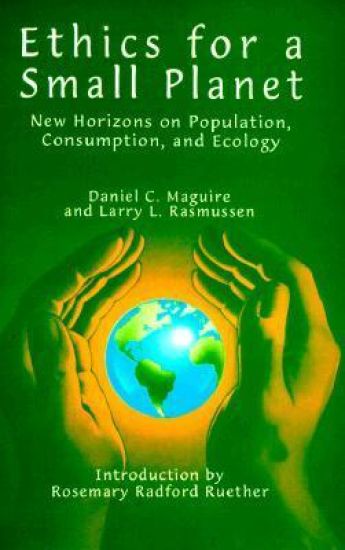
Ethics for a Small Planet
Daniel C. Maguire; Larry L. Rasmussen
State University of New York Press
1998
pokkari
A radical new look at the religious, economic, and political roots of terracide and how things can change for the better.This book offers an original assessment of the crisis caused by the combined impact of overpopulation, overconsumption, and economic and political injustice. It summons religious scholarship into urgent dialogue with the other disciplines and with the world's policymakers. The authors seek a new understanding of religion and its power since, for good or for ill, the world's religions will be players in the crises relating to population and the threat of ecocide. Two-thirds of the world's people affiliate with these religions and the other third cannot escape the influence of these symbol-filled cultural powerhouses.Ethics for a Small Planet offers complementary studies by two major social ethicists on these issues. Daniel C. Maguire indicts our male-dominated religions for the problems they have caused for our ecology and reproductive ethics. He raises the controversial questions of whether the very concept of God is a problem and whether Christianity's notions of afterlife and a divinized male have done more harm than good. Larry L. Rasmussen also recognizes that the problems of our planet are largely male-made and rich-dominated. He writes that Europeans packaged a form of earth-unfriendly capitalism and shipped it all over the world with missionary zeal. He ably scans the long history that led to the current manic rush to push the earth beyond its limits, and goes on to suggest moral norms and policy guidelines for sustainable communities and genuinely shared power.Both authors argue that there are positive and renewable moral energies in the world's religions and that unless religion, understood as a response to the sanctity of life, animates our ethical debates, the prospects for the world are grim. The sense of the sacred is presented here as the nucleus of the good and the only force that can bring about the lifestyle changes and power reallocations that are necessary to prevent terracide.