Kirjojen hintavertailu. Mukana 12 281 463 kirjaa ja 12 kauppaa.
Kirjailija
Daniel Conway
Kirjat ja teokset yhdessä paikassa: 16 kirjaa, julkaisuja vuosilta 1996-2025, suosituimpien joukossa The Venerable John Ogilvie, S.J.: A Sketch of His Life (1915). Vertaile teosten hintoja ja tarkista saatavuus suomalaisista kirjakaupoista.
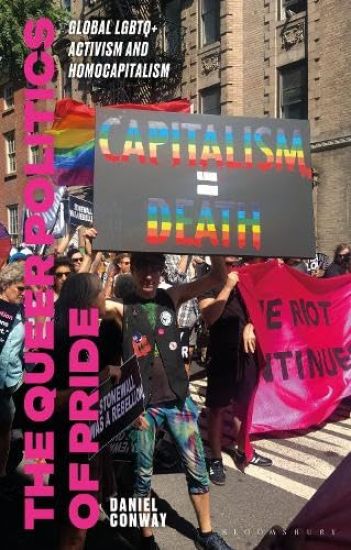
The first book to explore the global politics of LGBTQ+ Pride, exploring the impacts, controversies and potential of Pride in across the world.Pride originated in the United States as a specific festival, season of public events and site of protest aiming to celebrate and affirm LGBTQ+ community, generate greater visibility and campaign for increased rights. Now held in over 200 towns and cities across the world, Pride festivals can attract millions of attendees and have been at the forefront of LGBTQ+ activism. However, in recent years it has attracted controversy, with its political and social purpose widely debated by LGBTQ+ groups and in the media.Drawing from extensive fieldwork in South and East Asia, South Africa, the Philippines, Cuba and New York, The Queer Politics of Pride explores and conceptualises the contemporary politics of LGBTQ+ Pride and queer activism in global contexts. Building on critical queer scholarship, the book includes the perspectives and critiques of grassroots queer activists and applies contemporary social, political and international theory to conceptualise Pride as part of the global processes of capitalism and its socio-political and spatial dynamics.By exploring the politics and controversies of Pride, Conway addresses broader questions about the contemporary LGBTQ+ advocacy movement including the influence and place of corporate sponsorship and advocacy, relationship with state institutions, the rise of an LGBT global elite and its implications for influence and marginalisation, diplomatic involvement in LGBT advocacy and the place of Pride in defining, revealing and concealing LGBTQ+ identities, progress and whose lives are valued (and devalued).
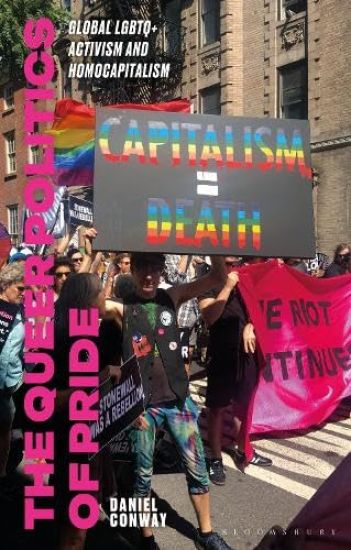
The first book to explore the global politics of LGBTQ+ Pride, exploring the impacts, controversies and potential of Pride in across the world.Pride originated in the United States as a specific festival, season of public events and site of protest aiming to celebrate and affirm LGBTQ+ community, generate greater visibility and campaign for increased rights. Now held in over 200 towns and cities across the world, Pride festivals can attract millions of attendees and have been at the forefront of LGBTQ+ activism. However, in recent years it has attracted controversy, with its political and social purpose widely debated by LGBTQ+ groups and in the media.Drawing from extensive fieldwork in South and East Asia, South Africa, the Philippines, Cuba and New York, The Queer Politics of Pride explores and conceptualises the contemporary politics of LGBTQ+ Pride and queer activism in global contexts. Building on critical queer scholarship, the book includes the perspectives and critiques of grassroots queer activists and applies contemporary social, political and international theory to conceptualise Pride as part of the global processes of capitalism and its socio-political and spatial dynamics.By exploring the politics and controversies of Pride, Conway addresses broader questions about the contemporary LGBTQ+ advocacy movement including the influence and place of corporate sponsorship and advocacy, relationship with state institutions, the rise of an LGBT global elite and its implications for influence and marginalisation, diplomatic involvement in LGBT advocacy and the place of Pride in defining, revealing and concealing LGBTQ+ identities, progress and whose lives are valued (and devalued).
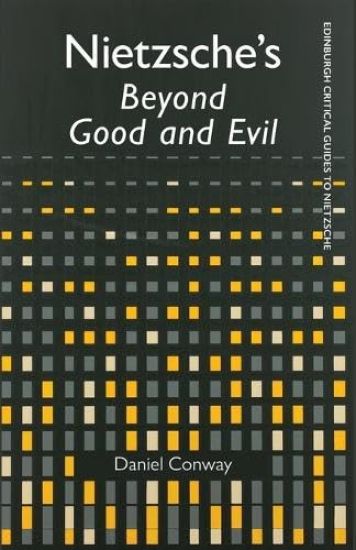
Daniel Conway guides you through one of the most clearly developed statements of Nietzsche's mature philosophy, section by section. Adopting an interpretative approach throughout, Daniel Conway treats Beyond Good and Evil as a coherent, unified and carefully crafted complete text. When treated this way, the text reveals itself as a guide to the education that Nietzsche prescribes for his best readers, at the brink of the new post-moral era. Conway makes sense of the overarching aims and structure of the book at the same time as providing a broader context for the arguments Nietzsche makes and the positions he stakes out. Requiring no prior knowledge of the text or of Nietzsche, he guides you through the text with the reward of a more developed reading of the distinctly political agenda that emerges in the second half.
Daniel Conway guides you through one of the most clearly developed statements of Nietzsche's mature philosophy, section by section. Adopting an interpretative approach throughout, Daniel Conway treats Beyond Good and Evil as a coherent, unified and carefully crafted complete text. When treated this way, the text reveals itself as a guide to the education that Nietzsche prescribes for his best readers, at the brink of the new post-moral era. Conway makes sense of the overarching aims and structure of the book at the same time as providing a broader context for the arguments Nietzsche makes and the positions he stakes out. Requiring no prior knowledge of the text or of Nietzsche, he guides you through the text with the reward of a more developed reading of the distinctly political agenda that emerges in the second half.
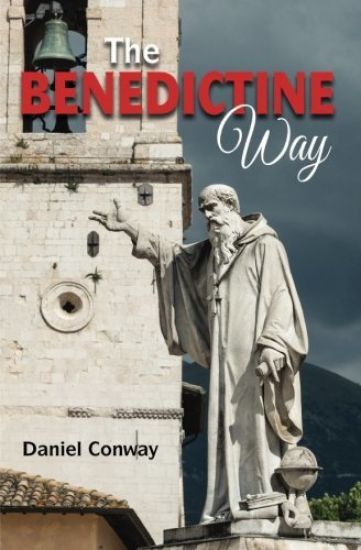
In this book of reflections about Benedictine spirituality, author Daniel Conway shares with readers his reflections on the joy and peace that he has found in and through 50 years of association with women and men who follow the "Benedictine Way." In spite of what some would say, the Benedictine way is not primarily about the fuga mundi (withdrawal or "flight from the world"). It is, instead, a way of "being in the world but not of it," a manner of engagement that allows Christians to enjoy all the good things God has made without turning them into false idols that distort our values and consume us in the process. Archabbot Kurt Stasiak of Saint Meinrad summarizes Benedictine monasticism as "seeking God in community" which presumes a commitment to being guided by others and helping others find God. Prayer and fidelity to the common life are the principal ways that followers of St. Benedict seek God in community over the course of a whole lifetime. Archabbot Kurt goes on to say that "mutual obedience to the Rule, the abbot and to each other is the way to God" for monks and for all who strive to live according to the teaching of St. Benedict. Once it is understood and lived authentically, the Benedictine Way is truly a way of peace and joy. That never happens overnight. It takes time to absorb the principles and practices of Benedictine spirituality and to integrate them into our minds and hearts. This is true for vowed monks whose whole lives are dedicated to living the Rule of Benedict in a particular place and time. It's also true for ordinary people who are not called to be monks but who are seeking ways to live the Gospel that can help them cope with the madness of everyday living "in the world."
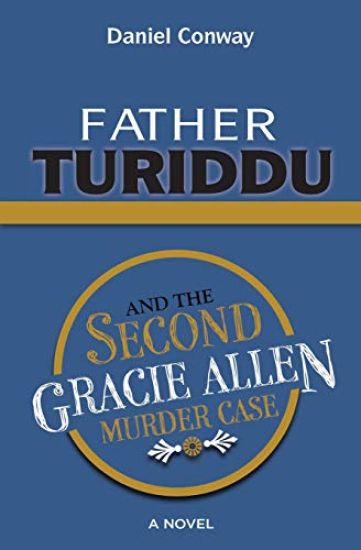
Father Turiddu and The Second Gracie Allen Murder Case unites two absolutely unique, one-of-a-kind characters: Actress Gracie Allen who was famous for her "illogical logic" and young Father Sal Turiddu (pronounced Too-REE-doo) whose adventures over more than 60 years in his beloved city of St. Louis would earn him the title, Il salvatore della citt (Savior of the City). Daniel Conway is the author of three Father Turiddu novels: Father Turiddu the Savior of the City, Father Turiddu Returns: the Cardinal and the Inquisitor and Father Turiddu and the Polar Vortex. Unlike the three previous Father Turiddu novels, which describe the adventures of "Father T" when he is an 80 year-old pastor, the new novel takes place nearly 60 years earlier. Father Salvatore E. Turiddu is a newly ordained priest in his first assignment at the Italian parish on "The Hill." Accompanying his mother, Rosalia, and his sister Phyllis, to a benefit performance given by the comedy team of George Burns and Gracie Allen, the young priest is given his first opportunity to try out the problem-solving skills that would distinguish him as an exceptional priest and community leader. Here is a description of the first encounter between Gracie Allen and Father Turiddu: On seeing Father T, Gracie Allen cried out in her loudest little voice, "Oh, Father. I'm so happy you're here. It's my cousin Otis. He's in big trouble." "What kind of trouble, Miss Allen?" the young priest asked. "He's in jail-accused of murdering someone he didn't know. Can you help him, Father? He's such a good boy at heart." "Why are you asking me for help, Miss Allen? I'm not a lawyer or a detective, and I've only been ordained a priest for two months." "I'm psychic, Father, and I know you can help me solve this murder case. I have some experience you know. Many years ago I helped a famous detective, Philo Vance, solve a crime just like this one. They even made a movie about it called "The Gracie Allen Murder Case." "Miss Allen, I'm a priest, not a detective. Solving murder mysteries is not something we were taught in the seminary." "Don't you worry, Father. I told you I'm psychic. I know you can do it. Will you promise me you'll try?" "I promise to visit your cousin and see what I can do to help him. After that, it's in the hands of the Sacred Heart." Father Turiddu and The Second Gracie Allen Murder Case tells the delightful story of how these two remarkable characters-a zany comedienne and a dedicated young priest-join forces to solve a murder and free an innocent man. Readers will enjoy the twists and turns of the story. They will fall in love with Gracie (again?) and grow in admiration and respect for Father T. At that moment, George Burns appeared at the dressing room door. "Say goodnight, Gracie. "Goodnight," End of story.
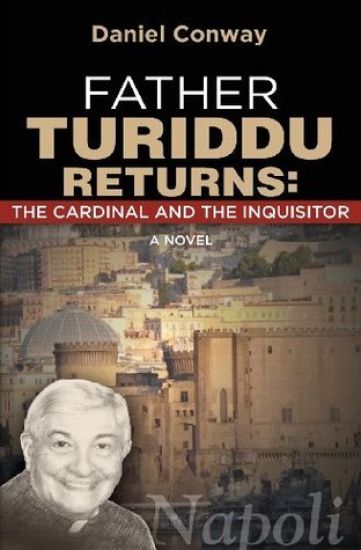
Just after nine o'clock, Father Salvatore E. Turiddu walked through the front door of Interpol's Rome headquarters and asked to see the agent in charge. He didn't have to wait long before he was introduced to the chief inspector, the head of the Rome office. Father T (as everyone calls him) explained that he was a priest from the United States whose family came from Sicily. He told the chief inspector that he was a close friend of the cardinal who had recently been threatened by terrorists and that the purpose of his visit was to learn more about this unfortunate situation and offer his assistance. "I regret to inform you, Monsignore," the chief inspector said to Father T, "that your friend the cardinal was abducted last night from a small monastery in Umbria where he was staying after receiving several terrorist threats here in Rome and at the Vatican." "Jesus, Mary and Joseph, what a catastrophe " exclaimed Father T. "I may be 82 years old, but I'm going to use all the gifts God gave me to make sure that my friend and former archbishop is not harmed by these terrorist goons " Father Turiddu Returns: The Cardinal and the Inquisitor is a novel, a fictional story, that celebrates the all too real life and ministry of one of the Catholic Church's most unique and beloved priests. The story celebrates values that are timeless--friendship, loyalty, love for the truth and the refusal to betray fundamental beliefs. Like Father Brown, Father Dowling and other priest-detectives who solve crimes while serving as full-time pastors, Father T uses his knowledge of human nature and his absolute trust in God's grace to lead him where others cannot go and to solve mysteries that baffle civil authorities. "I think you're nuts," Father T's cousin told him. "But I know I can't talk you out of it if your mind is made up. It's a Sicilian thing, I know. But I'm Sicilian, too, and my advice is: Don't do it. You're 82 years old and it's too dangerous " Readers will enjoy Father Turiddu's fictional adventures, but even more they will love the man, the character and the priest who never hesitates to do whatever it takes to help those who are in need.
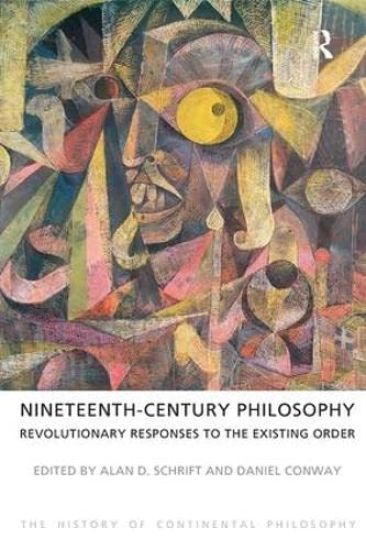
The second half of the 19th Century saw a revolution in both European politics and philosophy. Philosophical fervour reflected political fervour. Five great critics dominated the European intellectual scene: Ludwig Feuerbach, Karl Marx, Soren Kierkegaard, Fyodor Dostoevsky, and Friedrich Nietzsche. "Nineteenth-Century Philosophy" assesses the response of each of these leading figures to Hegelian philosophy - the dominant paradigm of the time - to the shifting political landscape of Europe and the United States, and also to the emerging critique of modernity itself. Both individually and collectively, these thinkers succeeded in revolutionizing theology, philosophy, psychology, and politics. The period also saw the emergence of new schools of thought and new disciplinary thinking. The volume covers the birth of sociology and the social sciences, the development of French spiritualism, the beginning of American pragmatism, the rise of science and mathematics, and the maturation of hermeneutics and phenomenology.
The second half of the 19th Century saw a revolution in both European politics and philosophy. Philosophical fervour reflected political fervour. Five great critics dominated the European intellectual scene: Ludwig Feuerbach, Karl Marx, Soren Kierkegaard, Fyodor Dostoevsky, and Friedrich Nietzsche. "Nineteenth-Century Philosophy" assesses the response of each of these leading figures to Hegelian philosophy - the dominant paradigm of the time - to the shifting political landscape of Europe and the United States, and also to the emerging critique of modernity itself. Both individually and collectively, these thinkers succeeded in revolutionizing theology, philosophy, psychology, and politics. The period also saw the emergence of new schools of thought and new disciplinary thinking. The volume covers the birth of sociology and the social sciences, the development of French spiritualism, the beginning of American pragmatism, the rise of science and mathematics, and the maturation of hermeneutics and phenomenology.
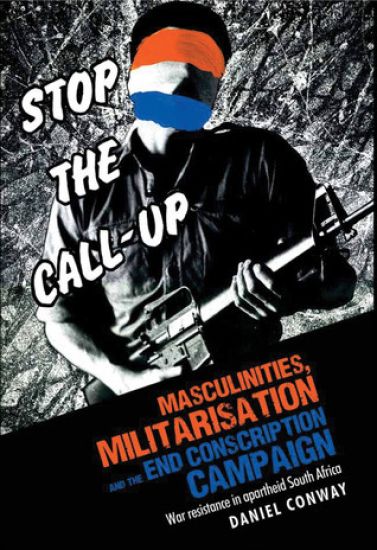
Masculinities, militarisation and the End Conscription Campaign explores the gendered dynamics of apartheid-era South Africa’s militarisation and analyses the defiance of compulsory military service by individual white men, and the anti-apartheid activism of the white men and women in the End Conscription Campaign (ECC), the most significant white anti-apartheid movement to happen in South Africa. Military conscription and objection to it are conceptualised as gendered acts of citizenship and premised on and constitutive of masculinities. Conway draws upon a range of materials and disciplines to produce this socio-political study. Sources include interviews with white men who objected to military service in the South African Defence Force (SADF); archival material, including military intelligence surveillance of the ECC; ECC campaigning material, press reports and other pro-state propaganda. The analysis is informed by perspectives in sociology, international relations, history and from work on contemporary militarised societies such as those in Israel and Turkey. This book also explores the interconnections between militarisation, sexuality, race, homophobia and political authoritarianism.
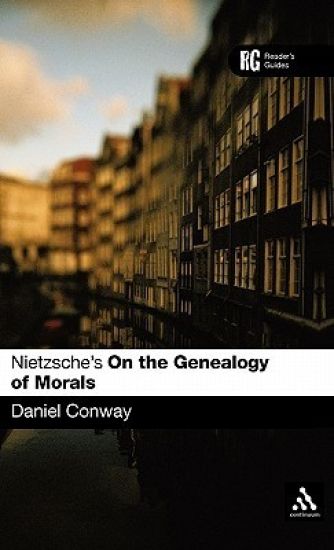
Nietzsche is one of the most important and widely read philosophers of all time and his On the Genealogy of Morals is one of the most accessible and frequently studied of all his works - a key text in the study of moral philosophy. This is a hugely important and exciting, yet challenging, piece of philosophical writing. In Nietzsche's 'On the Genealogy of Morals': A Reader's Guide, Daniel Conway explains the philosophical background against which the book was written, the wider context of Western morality in general and the key themes and topics inherent in the text. The book then guides the reader through the four sections of the text to a clear understanding of how they relate to each other and to the text as a whole, before exploring the reception and influence of this classic philosophical work. This is the ideal companion to study of this most influential and challenging of texts.
This is a Reader's Guide to this classic 'anti-moral' text by an eminent Nietzsche academic. Nietzsche is one of the most important and widely read philosophers of all time and his "On the Genealogy of Morals" is one of the most accessible and frequently studied of all his works - a key text in the study of moral philosophy. This is a hugely important and exciting, yet challenging, piece of philosophical writing. In Nietzsche's "On the Genealogy of Morals: A Reader's Guide", Daniel Conway explains the philosophical background against which the book was written, the wider context of Western morality in general and the key themes and topics inherent in the text. The book then guides the reader through the four sections of the text to a clear understanding of how they relate to each other and to the text as a whole, before exploring the reception and influence of this classic philosophical work. This is the ideal companion to study of this most influential and challenging of texts.
In this study Daniel Conway shows how Nietzsche's political thinking bears a closer resemblance to the conservative republicanism of his predecessors than to the progressive liberalism of his contemporaries. The key contemporary figures such as Habermas, Foucault, McIntyre, Rorty and Rawls are also examined in the light of Nietzsche's political legacy. Nietzsche and the Political also draws out important implications for contemporary liberalism and feminist thought, above all showing Nietzsche's continuing relevance to the shape of political thinking today.
In this study Daniel Conway shows how Nietzsche's political thinking bears a closer resemblance to the conservative republicanism of his predecessors than to the progressive liberalism of his contemporaries. The key contemporary figures such as Habermas, Foucault, McIntyre, Rorty and Rawls are also examined in the light of Nietzsche's political legacy. Nietzsche and the Political also draws out important implications for contemporary liberalism and feminist thought, above all showing Nietzsche's continuing relevance to the shape of political thinking today.