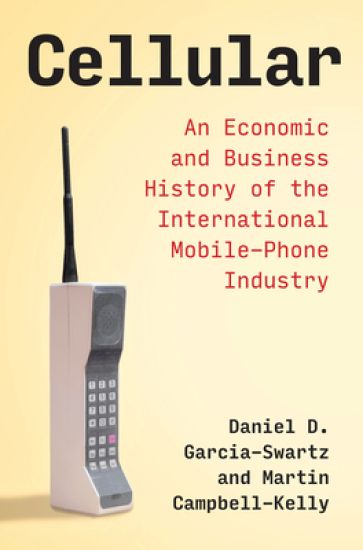
Tracks the evolution of the international cellular industry from the late 1970s to the present. The development of the mobile-phone industry into what we know today required remarkable cooperation between companies, governments, and industrial sectors. Companies developing cellular infrastructure, cellular devices, cellular network services, and eventually software and mobile semiconductors had to cooperate, not simply compete, with each other. In this global history of the mobile-phone industry, Daniel D. Garcia-Swartz and Martin Campbell-Kelly examine its development in the United States, Europe, Japan, and several emerging economies, including China and India. They present the evolution of mobile phones from the perspective of vendors of telephone equipment and network operators, users whose lives have been transformed by mobile phones, and governments that have fostered specific mobile-phone standards. Cellular covers the technical aspects of the cellphone, as well as its social and political impact. Beginning with the 1980s, the authors trace the development of closed (proprietary) and open (available to all) cellular standards, the impact of network effects as cellular adoption increased, major technological changes affecting mobile phone hardware, and the role of national governments in shaping the industry. The authors also consider the changing roles that cellular phones have played in the everyday lives of people around the world and the implications 5G technology may have for the future. Finally, they offer statistics on how quickly the cellular industry grew in different regions of the world and how firms competed in those various markets. Cellular is published in the History of Computing Series. This distinguished series has played a major role in defining scholarship in the history of computing. Hallmarks of the series are its technical detail and interpretation of primary source materials.