
Kirjailija
Daniel Defoe
Kirjat ja teokset yhdessä paikassa: 1 668 kirjaa, julkaisuja vuosilta 1872-2026, suosituimpien joukossa A New Test Of The Church Of England's Loyalty. Vertaile teosten hintoja ja tarkista saatavuus suomalaisista kirjakaupoista.
1 668 kirjaa
Kirjojen julkaisuhaarukka 1872-2026.
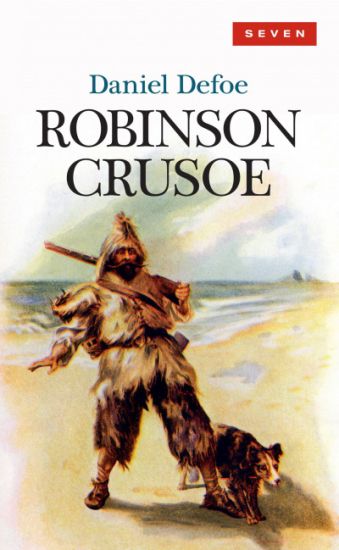
Daniel Defoen seikkailukirja Robinson Crusoe vuodelta 1719 on eurooppalaisen romaanin kypsän kauden ensimmäinen merkkiteos ja ilmeisesti maailman ensimmäinen aito bestseller. Tarinan suosio on jatkunut keskeytyksettä lähes kolmesataa vuotta, ja sitä ovat ylistäneet niin Jean-Jacques Rousseau, Karl Marx, James Joyce kuin Edgar Allan Poe. Juhani Lindholmin suomennos on kirjan ensimmäinen lyhentämätön versio sitten vuoden 1911.

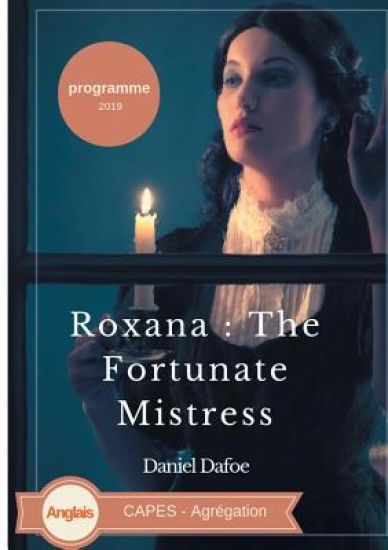
Roxana: The Fortunate Mistress (full title: The Fortunate Mistress: Or, A History of the Life and Vast Variety of Fortunes of Mademoiselle de Beleau, Afterwards Called the Countess de Wintselsheim, in Germany, Being the Person known by the Name of the Lady Roxana, in the Time of King Charles II) is a 1724 novel by Daniel Defoe. The novel examines the possibility of eighteenth-century women owning their own estate despite a patriarchal society, as with Roxana's celebrated claim that "the Marriage Contract is ... nothing but giving up Liberty, Estate, Authority, and everything, to the Man". The novel further draws attention to the incompatibility between sexual freedom and freedom from motherhood: Roxana becomes pregnant many times due to her sexual exploits, and it is one of her children, Susan, who come back to expose her, years later, near the novel's close, helping to precipitate her flight abroad, subsequent loss of wealth, and (ambiguous) repentance.The character of Roxana can be described as a proto-feminist because she carries out her actions of prostitution for her own ends of freedom but before a feminist ideology was fully formed, (though Defoe also works to undercut the radicalism of her position). The book also explores the clash of values between the Restoration court and the middle-class. Roxana also discusses the issues of truth and deceit. As the text is a first-person narration and written to simulate a real first-hand account of a woman, first comes the issue of subjectivity, but also the underlying lie as to the veracity of the text. The reader can only trust in Roxana to give us a true account of her story, but as she often lies to other characters in the book, and even to herself, she is not a reliable narrator. Furthermore, the whole construction of her character is made on lies and disguises. Her name, or names, are not mentioned until the end of the novel, so even the most basic aspect of her identity--her name--is a mystery for the majority of the novel. And the name that is most associated to her: Roxana, is based on a lie and on a disguise, namely the Turkish dress. Published anonymously, and not attributed to Defoe till 1775, Roxana was nonetheless a popular hit in the eighteenth century, frequently reprinted in altered versions to suit the taste of the day: thus the 1775 edition, which called itself The New Roxana, had been sentimentalised to meet the tastes of the day. Only gradually from the 19th century onwards did the novel begin to be treated as serious literature: Ethel Wilson has been one of the 20th century authors subsequently influenced by its matter-of-factness and freedom from cant. (wikipedia.org)

Roxana: The Fortunate Mistress (full title: The Fortunate Mistress: Or, A History of the Life and Vast Variety of Fortunes of Mademoiselle de Beleau, Afterwards Called the Countess de Wintselsheim, in Germany, Being the Person known by the Name of the Lady Roxana, in the Time of King Charles II) is a 1724 novel by Daniel Defoe. The novel examines the possibility of eighteenth-century women owning their own estate despite a patriarchal society, as with Roxana's celebrated claim that "the Marriage Contract is ... nothing but giving up Liberty, Estate, Authority, and everything, to the Man". The novel further draws attention to the incompatibility between sexual freedom and freedom from motherhood: Roxana becomes pregnant many times due to her sexual exploits, and it is one of her children, Susan, who come back to expose her, years later, near the novel's close, helping to precipitate her flight abroad, subsequent loss of wealth, and (ambiguous) repentance.The character of Roxana can be described as a proto-feminist because she carries out her actions of prostitution for her own ends of freedom but before a feminist ideology was fully formed, (though Defoe also works to undercut the radicalism of her position). The book also explores the clash of values between the Restoration court and the middle-class. Roxana also discusses the issues of truth and deceit. As the text is a first-person narration and written to simulate a real first-hand account of a woman, first comes the issue of subjectivity, but also the underlying lie as to the veracity of the text. The reader can only trust in Roxana to give us a true account of her story, but as she often lies to other characters in the book, and even to herself, she is not a reliable narrator. Furthermore, the whole construction of her character is made on lies and disguises. Her name, or names, are not mentioned until the end of the novel, so even the most basic aspect of her identity--her name--is a mystery for the majority of the novel. And the name that is most associated to her: Roxana, is based on a lie and on a disguise, namely the Turkish dress. Published anonymously, and not attributed to Defoe till 1775, Roxana was nonetheless a popular hit in the eighteenth century, frequently reprinted in altered versions to suit the taste of the day: thus the 1775 edition, which called itself The New Roxana, had been sentimentalised to meet the tastes of the day. Only gradually from the 19th century onwards did the novel begin to be treated as serious literature: Ethel Wilson has been one of the 20th century authors subsequently influenced by its matter-of-factness and freedom from cant. (wikipedia.org)
Roxana: The Fortunate Mistress (full title: The Fortunate Mistress: Or, A History of the Life and Vast Variety of Fortunes of Mademoiselle de Beleau, Afterwards Called the Countess de Wintselsheim, in Germany, Being the Person known by the Name of the Lady Roxana, in the Time of King Charles II) is a 1724 novel by Daniel Defoe. The novel examines the possibility of eighteenth-century women owning their own estate despite a patriarchal society, as with Roxana's celebrated claim that "the Marriage Contract is ... nothing but giving up Liberty, Estate, Authority, and everything, to the Man".The novel further draws attention to the incompatibility between sexual freedom and freedom from motherhood: Roxana becomes pregnant many times due to her sexual exploits, and it is one of her children, Susan, who come back to expose her, years later, near the novel's close, helping to precipitate her flight abroad, subsequent loss of wealth, and (ambiguous) repentance. The character of Roxana can be described as a proto-feminist because she carries out her actions of prostitution for her own ends of freedom but before a feminist ideology was fully formed, (though Defoe also works to undercut the radicalism of her position). The book also explores the clash of values between the Restoration court and the middle-class. Roxana also discusses the issues of truth and deceit. As the text is a first-person narration and written to simulate a real first-hand account of a woman, first comes the issue of subjectivity, but also the underlying lie as to the veracity of the text. The reader can only trust in Roxana to give us a true account of her story, but as she often lies to other characters in the book, and even to herself, she is not a reliable narrator. Furthermore, the whole construction of her character is made on lies and disguises. Her name, or names, are not mentioned until the end of the novel, so even the most basic aspect of her identity - her name - is a mystery for the majority

Memoirs Of The Life And Time Of Daniel De Foe
Walter Wilson; Daniel Defoe
Hutson Street Press
2025
pokkari

Memoirs Of The Life And Time Of Daniel De Foe
Walter Wilson; Daniel Defoe
Hutson Street Press
2025
sidottu

The Great English Short-Story Writers
W J (William James) Dawson; John Brown; Daniel Defoe
Anson Street Press
2025
sidottu
The Great English Short-Story Writers
W J (William James) Dawson; John Brown; Daniel Defoe
Anson Street Press
2025
pokkari
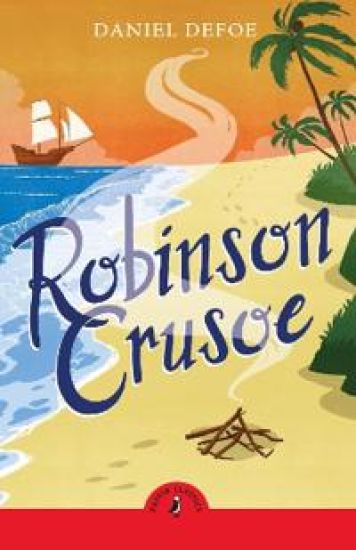
Puffin Classics: the definitive collection of timeless stories, for every childRediscover the Puffin Classics collection and bring the best-loved classics to a new generation - including this thrilling edition of Robinson Crusoe.After surviving a terrible shipwreck, Robinson Crusoe discovers he is the only human on an island far from any shipping routes or rescue. At first he is devastated, but slowly, with patience and imagination, he transforms his island into a tropical paradise. For twenty-four years he lives with no human companionship - until one fateful day, when he discovers he is not alone...

'I liv'd indeed like a Queen; or if you will have me confess, that my Condition had still the Reproach of a Whore, I may say, I was sure, the Queen of Whores.' Left destitute by her husband, the heroine of Defoe's final novel has to choose between her virtue and her life. Choosing survival, she makes her way as a kept woman and courtesan. The Fortunate Mistress (1724), also known under the title Roxana, tells the story of how she climbs society's ladder by dint of her own enterprise, shedding and gaining multiple identities as she moves through the worlds of business and finance, and across the trade capitals of Europe. Amassing a fortune, her taste for men and luxuries veers increasingly to the aristocratic and exotic, culminating when she dances before the King at a masquerade dressed in the garb of a Turkish Sultana--at which point she is granted the name by which she is known to history, Roxana. Despite her rise, Roxana's past never recedes from view, and her choices eventally begin to weigh on her, prompting an excruciating self-reckoning that is only compounded as the children she has abandoned return, threatening to expose this past to public view. Defoe resists easy solutions in a sprawling and complex novel which shows an unprecedented degree of psychological realism: readers experience the interplay of circumstance, need, desire, religion, and social convention that can allow the development of a moral sense, or conspire to suppress it. ABOUT THE SERIES: For over 100 years Oxford World's Classics has made available the widest range of literature from around the globe. Each affordable volume reflects Oxford's commitment to scholarship, providing the most accurate text plus a wealth of other valuable features, including expert introductions by leading authorities, helpful notes to clarify the text, up-to-date bibliographies for further study, and much more.
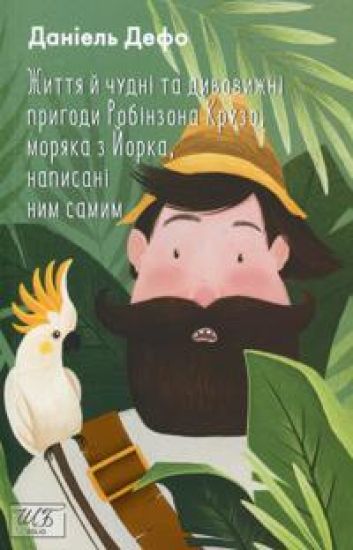
Zhittja j chudni ta divovizhni prigodi Robinzona Kruzo, morjaka z Jorka, napisani nim samim
Daniel Defoe
Folio
2024
nidottu
Vidomij anglijskij pismennik, zasnovnik jevropejskogo realistichnogo romanu novogo chasu Daniel Defo (1660-1731) - avtor ponad 350 tvoriv, prote same "Robinzon Kruzo" zrobiv jogo znamenitim. U romani rozpovidajetsja pro prigodi morjaka iz Jorka, jakij 1659 roku vidpliv iz Braziliji do beregiv Afriki. Odnak korabel potrapiv u shtorm, usja komanda zaginula, a Robinzon opinivsja sam-odin na bezljudnomu ostrovi. Vazhlivoju podijeju u zhitti golovnogo geroja staje porjatunok dikuna P'jatnitsi, jakogo vin vchit chitati, pisati, pravilno gotuvati jizhu, striljati z rushnitsi. Bilsh detalno diznatisja pro schodenni vidkrittja i divovizhni prigodi, jaki trapilisja z Robinzonom za 28 dovgikh rokiv na ostrovi, mozhna na storinkakh tsijeji knigi.PerekladachVolodimir Derzhavin
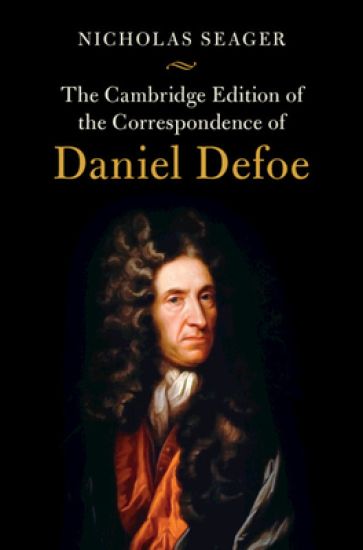
The Cambridge Edition of the Correspondence of Daniel Defoe
Daniel Defoe
Cambridge University Press
2022
sidottu
This comprehensive and authoritative edition of the correspondence of Daniel Defoe situates each letter in its biographical, literary, and historical contexts. A unique source for a turbulent period of British history, Defoe's correspondence spans topics including the first age of party marked by Tory and Whig rivalry, religious tensions between the Church and Dissenters, the uncertainty of the monarchical succession, the birth of Great Britain and its establishment as a global empire, and the use of the press to mould public opinion. As well as an introduction discussing Defoe's epistolary habits and the distinctive features of his letters, headnotes and annotations explain each document's occasion, beginning in 1703 with Defoe hunted by the government for sedition, and ending in 1730 with him again in hiding, fleeing creditors months before his death. The volume is illustrated with examples of Defoe's letters, offering a fresh window onto Defoe's manuscript habits.
Serious Reflections During the Life and Surprising Adventures of Robinson Crusoe with his Vision of the Angelick World
Daniel Defoe
Rutgers University Press
2022
nidottu
Serious Reflections During the Life and Surprising Adventures of Robinson Crusoe with his Vision of the Angelick World, first published in 1720 and considered a sequel to The Farther Adventures of Robinson Crusoe, is a collection of essays written in the voice of the Crusoe character. Expressing Defoe’s thoughts about many moral questions of the day, the narrator takes up isolation, poverty, religious liberty, and epistemology. Defoe also used this volume to revive his interest in poetry, not the satiric poetry of the early eighteenth century, but the more inspirational verse that appeared in some of his later works. Serious Reflections also includes an imaginative flight in which Crusoe wanders among the planets, a return to the moon voyage impulse of Defoe’s 1705 work The Consolidator. Illuminating the ideas and philosophy of this most influential of English novelists, it is invaluable for any student of the period.

Defoe’s The Farther Adventures of Robinson Crusoe was almost always published together with The Life and Strange Surprizing Adventures of Robinson Crusoe. Only after 1950 was the first volume printed alone—a shorter work for some classes. But in addition to fulfilling the promise of the first volume, The Farther Adventures is an exciting adventure novel by itself. Crusoe returns to his island to learn about his colony, and then travels to Madagascar, India, and China before returning to England after some exciting encounters. Complete with an introduction, line notes, and full bibliographical notes, this is an edition like no other. Published by Bucknell University Press. Distributed worldwide by Rutgers University Press.
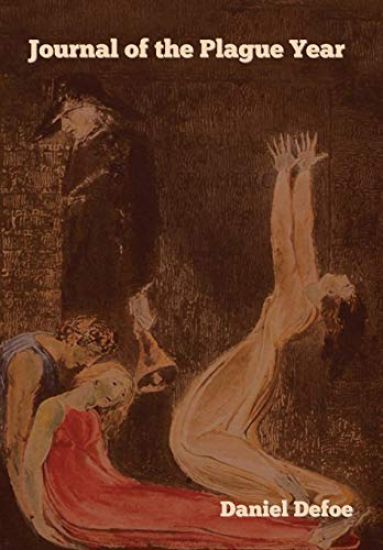
A Journal of the Plague Year is a novel by Daniel Defoe, first published in March 1722.The novel is a fictionalized account of one man's experiences of the year 1665, in which the Great Plague struck the city of London. The book is told roughly chronologically, though without sections or chapter headings.Although it purports to have been written several years after the event, it actually was written in the years just prior to the book's first publication in March 1722. Defoe was only five years old in 1665, and the book itself was published under the initials H. F. The novel probably was based on the journals of Defoe's uncle, Henry Foe.In the book, Defoe goes to great pains to achieve an effect of verisimilitude, identifying specific neighborhoods, streets, and even houses in which events took place. Additionally, it provides tables of casualty figures and discusses the credibility of various accounts and anecdotes received by the narrator.

Daniel Defoe, born Daniel Foe, was an English writer, journalist, and pamphleteer, who gained enduring fame for his novel Robinson Crusoe. Defoe is notable for being one of the earliest proponents of the novel, as he helped to popularize the form in Britain, and is even referred to by some as among the founders of the English novel.Excerpts from this work of his: ...I doubt not but the title of this book will amuse some of my reading friends a little at first; they will make a pause, perhaps, as they do at a witch's prayer, and be some time resolving whether they had best look into it or not, lest they should really raise the Devil by reading his story. ...It must certainly therefore be a most useful undertaking to give the true history of this Tyrant of the air, this God of the world, this terror and aversion of mankind, which we call Devil; to show what he is, and what he is not, where he is, and where he is not, when he is in us, and when he is not; for I cannot doubt but that the Devil is really and bona fide in a great many of our honest weak-headed friends, when they themselves know nothing of the matter.