Kirjojen hintavertailu. Mukana 12 152 606 kirjaa ja 12 kauppaa.
Kirjailija
Daniel Dennett
Kirjat ja teokset yhdessä paikassa: 11 kirjaa, julkaisuja vuosilta 1992-2025, suosituimpien joukossa The Mind's I. Vertaile teosten hintoja ja tarkista saatavuus suomalaisista kirjakaupoista.
Från barndomen i Beirut till Harvards föreläsningssalar blickar filosofen Daniel Dennett tillbaka på ett långt yrkesliv, där frågan om tankens själva natur, medvetandet, har utgjort kärnan. Möten med filosofiska giganter som Quine, Gilbert Ryle, Richard Rorty och Thomas Nagel har präglat hans paradigmsättande filosofi och ett stort intresse för artificiell intelligens och psykologi har resulterat i många banbrytande samarbeten med ingenjörer, neurologer och biologer. Han var också en av nyateismens “fyra ryttare” tillsammans med Richard Dawkins, Sam Harris och Christopher Hitchens. Jag har tänkt är Daniel C. Dennetts filosofiska memoarer över sitt liv i tänkandets tjänst.“Så orättvist av en man att bli begåvad med en sådan ström av stimulerande tankar. Stimulerande är en underskattning.”– Richard Dawkins“En generös bok skriven av en person som har haft ett enastående inflytande på filosofin”– Times Literary Supplement
With the release of ChatGPT, large language models (LLMs) have become a prominent topic of international public and scientific debate. The genie is out of the bottle, but does it have a mind? Can philosophical considerations help us to work out how we can live with such smart machines? In this book, distinguished philosophers explore questions such as whether these new machines are able to act, whether they are social agents, whether they have communicative skills, and if they might even become conscious. The book includes contributions from Syed AbuMusab, Constant Bonard, Stephen Butterfill, Daniel Dennett, Paula Droege, Keith Frankish, Frederic Gilbert, Ying-Tung Lin, Sven Nyholm, Joshua Rust, Eric Schwitzgebel, Henry Shevlin, Anna Strasser, Alessio Tacca, Michael Wilby, and a graphic novel by Anna and Moritz Strasser as a bonus
Die neunj hrige Elle Harris hatte ein kleines Problem. Aufgewachsen in einem s kularen Haushalt, in einer von Religion dominierten Umgebung, ist Elle eine der wenigen Kinder in der 3. Klasse die nicht religi s ist. Als sie sich mit Freunden und Klassenkameraden unterhielt, fand sie heraus, dass diese viele Schwierigkeiten damit hatten sich jemanden vorzustellen, der weder in die Kirche geht noch betet. Einige andere wunderten sich wie Elle das Richtige vom Falschen unterscheiden kann, ohne dass sie es von den religi sen Lehrern oder aus den heiligen B chern erf hrt.Die Unterhaltungen die Elle f hrte waren nicht voreingenommen oder umstritten, sondern das Ergebnis ehrlicher Neugier. Nach der Schule bat Elle ihren Vater um Hilfe, ihre Gef hle und Meinungen auf eine Weise zu erkl ren, die f r die anderen in der Schule Sinn machen w rde. Aus diesen Unterhaltungen kamen die Ideen, die allm hlich zu dem Buch Elle die Humanistin f hrten... eine warme, klar ausgedr ckte Einleitung in den Humanismus f r junge Leser.
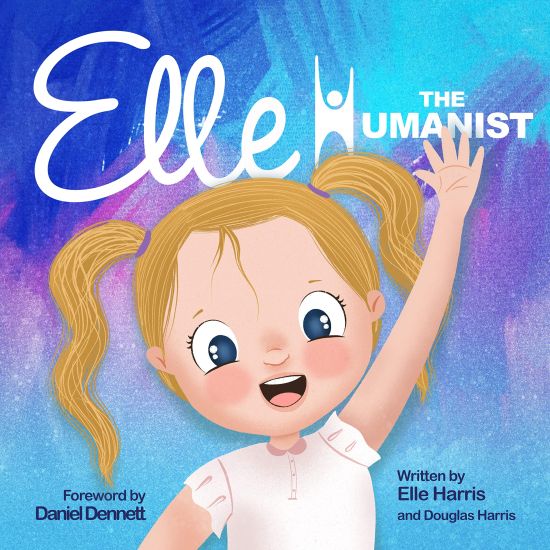
Elle the Humanist is a beautifully illustrated book by nine-year-old Elle Harris, presenting humanist ideas and ethics in a way that's warm, welcoming, and accessible for young readers. It features a foreword by renowned philosopher and author Daniel Dennett. Elle had a small problem. Growing up in a secular household, but in a community dominated by one religion, Elle was one of the few kids in her third-grade class who wasn't religious. When she talked to friends and classmates, she found that many of them had a hard time imagining someone who didn't go to church or pray. Some others wondered how Elle could know right from wrong without religious leaders or sacred books to tell her. The conversations Elle found herself having weren't judgmental or contentious, but the result of honest curiosity. After school, Elle would ask her dad to help her explain what she believed and how she felt in a way that would make sense to the other kids at school. From those talks came ideas that eventually became Elle the Humanist a warm, clearly expressed introduction to humanism for young readers.
Elle the Humanist is a beautifully illustrated book by nine-year-old Elle Harris, presenting humanist ideas and ethics in a way that's warm, welcoming, and accessible for young readers. It features a foreword by renowned philosopher and author Daniel Dennett. Elle had a small problem. Growing up in a secular household, but in a community dominated by one religion, Elle was one of the few kids in her third-grade class who wasn't religious. When she talked to friends and classmates, she found that many of them had a hard time imagining someone who didn't go to church or pray. Some others wondered how Elle could know right from wrong without religious leaders or sacred books to tell her. The conversations Elle found herself having weren't judgmental or contentious, but the result of honest curiosity. After school, Elle would ask her dad to help her explain what she believed and how she felt in a way that would make sense to the other kids at school. From those talks came ideas that eventually became Elle the Humanist a warm, clearly expressed introduction to humanism for young readers.
In Neuroscience and Philosophy three prominent philosophers and a leading neuroscientist clash over the conceptual presuppositions of cognitive neuroscience. The book begins with an excerpt from Maxwell Bennett and Peter Hacker's Philosophical Foundations of Neuroscience (Blackwell, 2003), which questions the conceptual commitments of cognitive neuroscientists. Their position is then criticized by Daniel Dennett and John Searle, two philosophers who have written extensively on the subject, and Bennett and Hacker in turn respond. Their impassioned debate encompasses a wide range of central themes: the nature of consciousness, the bearer and location of psychological attributes, the intelligibility of so-called brain maps and representations, the notion of qualia, the coherence of the notion of an intentional stance, and the relationships between mind, brain, and body. Clearly argued and thoroughly engaging, the authors present fundamentally different conceptions of philosophical method, cognitive-neuroscientific explanation, and human nature, and their exchange will appeal to anyone interested in the relation of mind to brain, of psychology to neuroscience, of causal to rational explanation, and of consciousness to self-consciousness. In his conclusion Daniel Robinson (member of the philosophy faculty at Oxford University and Distinguished Professor Emeritus at Georgetown University) explains why this confrontation is so crucial to the understanding of neuroscientific research. The project of cognitive neuroscience, he asserts, depends on the incorporation of human nature into the framework of science itself. In Robinson's estimation, Dennett and Searle fail to support this undertaking; Bennett and Hacker suggest that the project itself might be based on a conceptual mistake. Exciting and challenging, Neuroscience and Philosophy is an exceptional introduction to the philosophical problems raised by cognitive neuroscience.
In Neuroscience and Philosophy three prominent philosophers and a leading neuroscientist clash over the conceptual presuppositions of cognitive neuroscience. The book begins with an excerpt from Maxwell Bennett and Peter Hacker's Philosophical Foundations of Neuroscience (Blackwell, 2003), which questions the conceptual commitments of cognitive neuroscientists. Their position is then criticized by Daniel Dennett and John Searle, two philosophers who have written extensively on the subject, and Bennett and Hacker in turn respond. Their impassioned debate encompasses a wide range of central themes: the nature of consciousness, the bearer and location of psychological attributes, the intelligibility of so-called brain maps and representations, the notion of qualia, the coherence of the notion of an intentional stance, and the relationships between mind, brain, and body. Clearly argued and thoroughly engaging, the authors present fundamentally different conceptions of philosophical method, cognitive-neuroscientific explanation, and human nature, and their exchange will appeal to anyone interested in the relation of mind to brain, of psychology to neuroscience, of causal to rational explanation, and of consciousness to self-consciousness. In his conclusion Daniel Robinson (member of the philosophy faculty at Oxford University and Distinguished Professor Emeritus at Georgetown University) explains why this confrontation is so crucial to the understanding of neuroscientific research. The project of cognitive neuroscience, he asserts, depends on the incorporation of human nature into the framework of science itself. In Robinson's estimation, Dennett and Searle fail to support this undertaking; Bennett and Hacker suggest that the project itself might be based on a conceptual mistake. Exciting and challenging, Neuroscience and Philosophy is an exceptional introduction to the philosophical problems raised by cognitive neuroscience.
With contributions from Jorge Luis Borges, Richard Dawkins, John Searle, and Robert Nozick, The Mind's I explores the meaning of self and consciousness through the perspectives of literature, artificial intelligence, psychology, and other disciplines. In selections that range from fiction to scientific speculations about thinking machines, artificial intelligence, and the nature of the brain, Hofstadter and Dennett present a variety of conflicting visions of the self and the soul as explored through the writings of some of the twentieth century's most renowned thinkers.
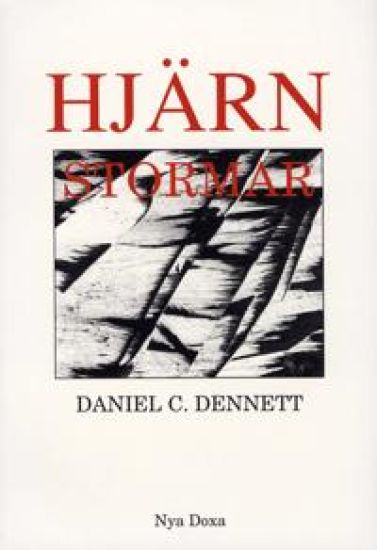
Dennett diskuterar de grundläggande frågorna rörande medvetandet. Han presenterar sin syn på vad trosföreställningar är och deras roll vid förklarandet av mänskligt handlande. Vidare försöker han förklara vilka medvetandets objekt är, och medvetandets natur. En grundtes är att frågan om ett komplext system, t.ex. en dator, kan ha ett medveteande eller känna smärta, är beroende av vilken "hållning" man intar till systemet. Om man inte kan låta bli att behandla det som om det har ett medvetande, så kan man säga att det finns i systemet. Teorin tillämpas i boken på följande frågor: Vad är en person? Hur kan en person ha en fri vilja? Hur kan denna fria vilja förenas med ett personligt ansvar?